



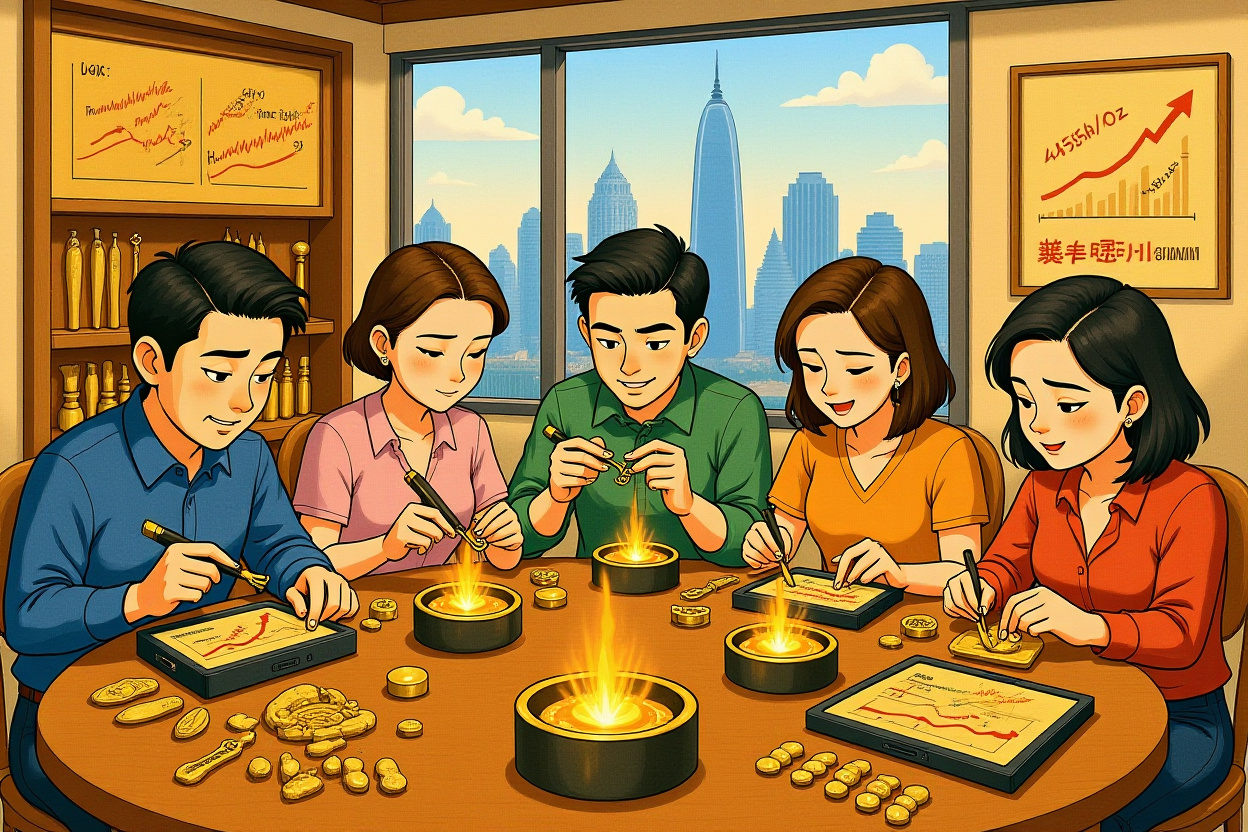
– Gold prices have skyrocketed, with international spot gold breaching $4555 per ounce and domestic jewelry prices nearing 1400 yuan per gram, signaling a robust precious metals rally.
– A surge in ‘home gold crafting’ is captivating China’s youth, driven by desires for personalized jewelry and cost savings, but this DIY trend carries significant risks.
– Experts caution that improper techniques in home gold smithing can lead to substantial gold loss and safety hazards, including toxic fume exposure.
– The traditional gold crafting industry is experiencing a renaissance, with young ’00s artisans bringing innovation and new career opportunities to the field.
– Consumers are advised to approach home gold crafting with caution, prioritizing safety and considering professional services to avoid financial and physical harm.
The relentless climb of gold prices has not only captivated global investors but also sparked a unique domestic trend in China: home gold crafting. As international spot gold shattered records, reaching above $4555 per ounce, and domestic brands like Lao Feng Xiang (老凤祥) pushed jewelry prices toward 1400 yuan per gram, a new wave of enthusiasts is turning to DIY methods to craft personalized gold items. This phenomenon, while appealing for its cost-effectiveness and creative freedom, is fraught with dangers that experts urgently highlight. The focus phrase, home gold crafting, encapsulates both the opportunity and the peril in this burgeoning movement.
The Meteoric Rise of Gold Prices and Market Dynamics
The recent surge in gold prices is a global narrative with profound implications for Chinese markets. On March 27, Eastern Time, gold and silver experienced a late-night rally, with spot gold momentarily exceeding $4555 per ounce. This international momentum swiftly translated to domestic shores, where gold jewelry prices adjusted upwards, influencing consumer behavior and investment strategies.
Domestic Gold Jewelry Prices Approach 1400 Yuan per Gram
On March 28, major Chinese gold jewelry brands announced significant price increases. For instance:
– Lao Feng Xiang (老凤祥) quoted 1396 yuan per gram, up 28 yuan from the previous day.
– Lao Miao Gold (老庙黄金) reported 1397 yuan per gram, a 32 yuan rise.
– Zhou Sheng Sheng (周生生) set prices at 1391 yuan per gram, increasing by 27 yuan.
This upward trajectory reflects broader economic factors, including inflation hedges and currency fluctuations, making gold a focal point for both investors and consumers. The rally underscores gold’s role as a safe-haven asset amid market volatility, with potential spillover effects on Chinese equity sectors like mining and luxury goods.
International Precious Metals Rally Sets the Stage
The global precious metals market has been buoyed by geopolitical tensions, monetary policy expectations, and safe-haven demand. Central bank activities, such as those by the People’s Bank of China (中国人民银行), influence domestic gold reserves and pricing. For Chinese equities, this rally can boost related stocks but also increase input costs for manufacturers, highlighting the interconnectedness of commodity and equity markets. Investors should monitor indicators like the U.S. dollar index and commodity ETFs for broader signals.
The Cultural Shift: Why Young Chinese Are Embracing Gold Crafting
Beyond investment, gold is becoming a medium of personal expression in China. The ancient craft of gold smithing, known as “da jin” (打金), is experiencing a revival, particularly among the youth, driven by social media and economic pragmatism.
From Investment to Expression: Gold as ‘New Guochao’
Young consumers are repurposing old gold jewelry into modern designs, blending sentimental value with contemporary aesthetics. This practice, often referred to as “new guochao” (新国潮), merges cultural heritage with financial utility. As Wang Huiqun (王惠群), Secretary-General of the Shanghai Gold Jewelry Trade Association, notes, “Gold crafting involves specific techniques and environmental requirements; consumers should choose reputable workshops and clarify all details beforehand.” This trend reflects a broader shift towards experiential consumption in China’s retail landscape.
Economic Drivers: Saving on Brand Premiums and Customization
Professional gold crafting offers significant cost savings compared to retail jewelry. Basic crafting fees range from 10 to 40 yuan per gram, while intricate designs like非遗花丝 (intangible cultural heritage filigree) or手工錾刻 (hand engraving) can cost hundreds. This affordability, coupled with customization, makes home gold crafting an attractive alternative for budget-conscious youth. However, the DIY approach requires skill and caution, as emphasized by experts warning against underestimating the complexities involved.
The New Face of Goldsmithing: ’00s Artisans and Industry Evolution
The gold crafting industry is witnessing an influx of young talent, with ’00s generation artisans leading the charge. Their fresh perspectives are driving innovation and meeting evolving consumer demands, revitalizing a traditional trade.
Innovation and Demand: How Young Teams Are Reshaping the Craft
Shop owners report that young teams excel in creativity and customer engagement. For example, a gold crafting shop in Shanghai’s Yuyuan area employs mostly ’00s artisans, with the oldest being 28. These artisans leverage social media trends to design pieces that resonate with peers, such as minimalist rings or engraved pendants. This evolution is part of a larger trend where traditional industries adapt to digital-native consumers, potentially creating investment opportunities in craft-based startups.
Career Pathways: Earnings and Opportunities in Modern Goldsmithing
The industry offers viable career options, with entry-level goldsmiths earning around 10,000 yuan monthly, and skilled engravers making up to 15,000 yuan. As Zhou Baolin (周宝林), a shop manager, explains, “There are no strict age or education limits, making it accessible for graduates and career changers.” This democratization fosters a new ecosystem around gold crafting, contributing to job creation and skills development in China’s service sector. For investors, this signals growth in vocational training and small business sectors.
The Dark Side of DIY: Uncovering the Risks of Home Gold Crafting
While the allure of home gold crafting is strong, the risks are substantial. Many enthusiasts, lured by online tutorials, attempt DIY projects without adequate preparation, leading to frequent failures and financial losses.
Safety First: The Hidden Dangers of High-Temperature Operations
Gold melting requires temperatures over 1000 degrees Celsius, posing severe fire and burn hazards. Wang Chao (王超), Director of the Ningbo Quality Inspection Institute Gold and Jewelry Testing Center, warns, “Home operations carry risks; proper ventilation, protective gear, and safe distances are crucial.” Additionally, impurities in gold can release toxic fumes, such as mercury vapor, causing health issues. These safety concerns underscore why home gold crafting should not be taken lightly, especially in residential settings.
Financial Quagmire: How Operational Errors Lead to Gold Loss
The most common pitfall in home gold crafting is financial loss due to operational errors. Mistakes in mold preparation, casting, or welding can result in gold wastage or damage, often irrecoverable. Wang Chao adds, “The loss from errors often exceeds expectations, and repairing botched projects with professionals incurs extra costs.” This undermines the perceived savings of DIY approaches, turning home gold crafting into a costly endeavor. For instance, improper use of石膏模具 (plaster molds) can cause fractures, leading to gold residue that is difficult to reclaim.
Navigating the Trend: Expert Recommendations and Consumer Advice
To safely engage with gold crafting, consumers must balance enthusiasm with prudence. Experts provide clear guidelines to mitigate risks, ensuring that the home gold crafting trend does not lead to adverse outcomes.
Best Practices for Safe Gold Crafting
– Always work in a well-ventilated area with fire-resistant surfaces, such as耐火板 (fireproof boards).
– Use professional-grade tools and protective equipment, such as thick gloves and long tongs, available from e-commerce platforms.
– Source high-purity gold from reputable dealers to avoid impurity-related hazards.
– Start with simple projects and gradually advance to complex designs under guidance from experienced crafters.
When to Seek Professional Help
For valuable or sentimental pieces, consulting experienced goldsmiths is advisable. Professional workshops offer quality assurance and insurance against losses. Regulatory bodies like the China Gold Association (中国黄金协会) may introduce standards for home gold crafting, but for now, consumer education is key. Investors should note that increased demand for professional services could boost related businesses in the jewelry and craftsmanship sectors.
In summary, the convergence of soaring gold prices and cultural trends has ignited a passion for home gold crafting in China. While this movement offers creative and financial benefits, it is imperative to acknowledge the associated risks. Experts unanimously advise caution, emphasizing that DIY endeavors should not compromise safety or economic sense. For investors, this trend highlights broader consumer behavior shifts in the gold market, potentially influencing retail and manufacturing sectors. As you consider participation in gold crafting, prioritize knowledge and safety—sometimes, the true value lies in professional hands. Stay informed on gold market developments and consult certified professionals before embarking on any gold crafting project to protect your investments and well-being.