



Executive Summary: Key Market Insights
In a dramatic shift driven by global economic uncertainties, gold has once again proven its status as a safe-haven asset, with prices reaching unprecedented levels. Concurrently, a cultural and consumer trend centered around gold crafting, or ‘da jin’, has erupted, particularly among younger demographics seeking value and personalization. This article delves into the financial mechanics behind the gold surge, the resurgence of an ancient craft, and the critical warnings from industry professionals. For market participants, understanding this nexus of investment and consumer behavior is essential for navigating risks and opportunities in the Chinese gold sector.
The critical takeaways for investors and professionals include:
– Spot gold prices breached $4,555 per ounce in late March, propelling domestic retail gold jewelry prices perilously close to the 1,400 yuan per gram psychological barrier, with major brands like 老凤祥 (Lao Feng Xiang) and 老庙黄金 (Lao Miao Gold) reporting daily increases of over 20 yuan.
– The practice of gold crafting, involving melting and shaping raw gold into jewelry, has seen a viral resurgence, amassing over 13 billion views on social media platforms, indicating a powerful shift towards experiential and value-retentive consumption.
– A new generation of artisans, often ’00后’ (post-2000 birth), is entering the professional gold crafting industry, commanding monthly wages between 10,000 to 15,000 yuan and revitalizing the sector with modern aesthetics and digital savvy.
– The dangerous trend of home gold crafting is gaining traction, with consumers purchasing low-cost kits online, but experts from the 宁波市质检院黄金珠宝检测中心 (Ningbo Quality Inspection Institute Gold and Jewelry Testing Center) warn of severe safety hazards and substantial financial losses due to operational errors.
– Regulatory bodies and industry associations, such as the 上海黄金饰品行业协会 (Shanghai Gold Jewelry Trade Association), urge consumers to prioritize safety and professional services, highlighting that the allure of DIY cost-saving often leads to greater expenses and risks.
The Gold Rush: Unpacking Record Prices and Market Dynamics
The global precious metals market witnessed a seismic event on March 27th, as gold and silver prices surged overnight. This spike has direct and immediate implications for China’s domestic market, where gold is not only an investment vehicle but a deeply ingrained cultural asset. The surge in home gold crafting interest is a direct consumer response to these soaring prices, as individuals seek more control over their gold assets in a high-cost environment.
Domestic Jewelry Prices Approach Historic Highs
On March 28th, price lists from leading Chinese jewelers confirmed the relentless upward trajectory. 老凤祥 (Lao Feng Xiang) quoted 1396 yuan per gram, a 28-yuan increase from the previous day. Similarly, 老庙黄金 (Lao Miao Gold) reached 1397 yuan/gram, and 周生生 (Chow Sang Sang) hit 1391 yuan/gram. This rapid appreciation, compressing the traditional premium between raw bullion and retail jewelry, has forced consumers to rethink value. For the financially savvy, this environment makes alternative gold consumption methods, like home gold crafting, appear economically rational, despite the perils.
Global Macroeconomic Drivers Fueling the Rally
Analysts point to a confluence of factors: persistent inflationary pressures, geopolitical tensions, and shifting expectations for U.S. monetary policy. Gold’s traditional role as a hedge against currency devaluation and systemic risk is amplified in the current climate. For international investors monitoring Chinese equities, the strength in gold signals broader risk-off sentiment that can impact commodity-related stocks and consumer discretionary sectors. The rise of home gold crafting is a micro-trend within this macro narrative, reflecting individual attempts to personalize and optimize gold holdings outside formal financial channels.
The ‘Da Jin’ Revolution: Why Gold Crafting is Capturing a Generation
Far from being a niche hobby, gold crafting has evolved into a mainstream movement. This section explores the mechanics and appeal of this practice, which sits at the intersection of finance, craftsmanship, and digital culture. The trend underscores a broader shift towards ‘value-for-money’ experiences in Chinese consumer markets, particularly among younger cohorts disillusioned with traditional retail markups.
Deconstructing the Gold Crafting Process
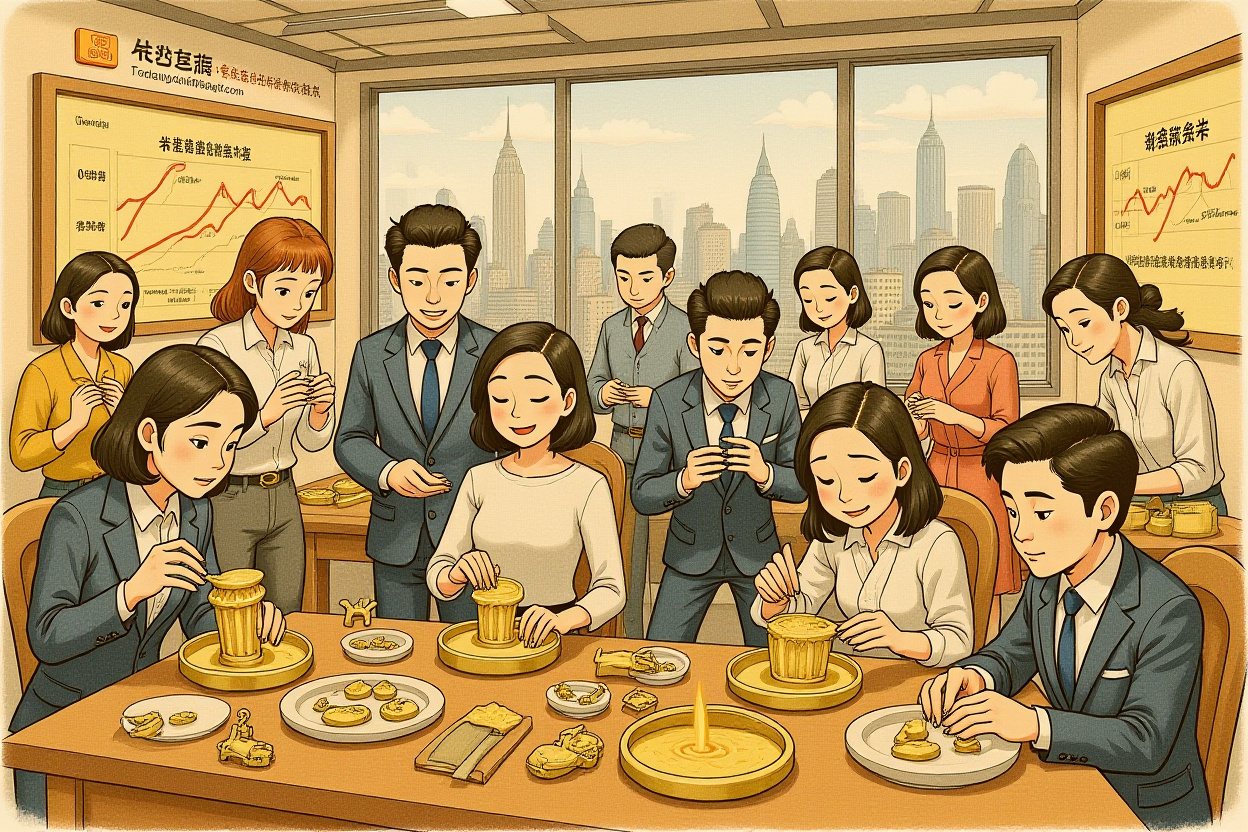
Gold crafting, or ‘da jin’, involves a series of precise steps: melting gold, pouring it into molds, shaping, filing, and polishing to create rings, bracelets, or pendants. In professional workshops, this process takes one to three hours, with labor costs ranging from 10 to 40 yuan per gram for basic items, and soaring to hundreds for intricate techniques like非遗花丝 (intangible cultural heritage filigree). Compared to the significant brand premiums at major retailers—often exceeding 100 yuan per gram—this offers palpable savings. The home gold crafting trend attempts to replicate this process domestically, seeking even greater cost efficiency but introducing significant complexity.
The Social Media Engine and the ‘New Guochao’
Social media platforms have been the primary accelerant. Hashtags related to gold crafting have garnered over 13 billion views, filled with tutorials and success stories. This digital ecosystem promotes home gold crafting as an accessible and rewarding DIY project. Consumers report that repurposing old family jewelry through crafting preserves sentimental value while updating aesthetics, creating a ‘新国潮’ (new national trend) that blends emotional, aesthetic, and financial utility. This powerful narrative is driving unprecedented interest in hands-on gold asset management.
Professional Gold Crafting’s Renaissance: Economic Opportunities and Young Artisans
As demand surges, the professional gold crafting industry is undergoing a transformative revival. This isn’t your grandfather’s smithy; it’s a modern, creative enterprise attracting young talent. This development has implications for labor markets and small business growth within China’s consumer economy.
The New Face of the Industry: ’00后’ Artisans
Workshop owners report that their teams are increasingly young. One shop manager in Shanghai’s 黄浦区豫园街道 (Huangpu District Yuyuan Street) noted that her ten goldsmiths are mostly ’00后’, with the oldest being 28. These young artisans bring fresh design perspectives, proficiency with digital tools for customer interaction, and an innate understanding of contemporary trends. Their entry challenges the perception of crafting as a fading trade, repositioning it as a viable and lucrative career path. Zhou Baolin (周宝林), a shop manager, indicated that skilled craftsmen can earn monthly wages around 15,000 yuan, a competitive salary that attracts diverse entrants, from graduates to career-changers.
Market Structure and Consumer Guidance
Wang Huiquan (王惠群), Secretary-General of the 上海黄金饰品行业协会 (Shanghai Gold Jewelry Trade Association), advises consumers to exercise due diligence. ‘When engaging in gold crafting,’ she states, ‘choose larger, established workshops, observe the craftsman’s skill firsthand, and clarify all terms and costs in advance.’ This professional guidance is crucial as the market expands rapidly, and quality can vary. The association’s recommendations serve as a benchmark for safe and satisfactory transactions, a stark contrast to the unregulated realm of home gold crafting.
The Allure and Peril of Home Gold Crafting
This is the core of the expert warnings: the democratization of gold crafting through DIY kits poses profound risks. The home gold crafting phenomenon is a case study in how viral trends can outpace safety knowledge and technical skill. The focus phrase ‘home gold crafting’ encapsulates this risky, yet growing, segment of personal finance and hobbyism.
The DIY Toolkit: Accessibility and Illusion of Simplicity
A basic home gold crafting kit, readily available on e-commerce platforms for 100-200 yuan, typically includes a torch, crucible, tongs, files, borax, molding clay, and digital scales. Tutorials proliferate online, outlining steps like preparing a fireproof base, heating the mold, and quenching the cast piece. However, as experts note, these videos often showcase ideal outcomes, masking the high failure rate. Wang Chao (王超), Director of the Gold and Jewelry Testing Center at the 宁波市质检院 (Ningbo Quality Inspection Institute), cautions that ‘home gold crafting is not as simple as following a tutorial. Factors like mold quality and individual dexterity lead to highly variable results.’
Quantifying the Risks: From Safety to Financial Loss
The risks of home gold crafting are twofold and severe. First, safety hazards: gold melts at over 1064°C. Operating high-temperature torches in domestic settings without proper ventilation or protective gear risks fires, burns, and toxic fume inhalation. Wang Chao (王超) specifically warns about impurities in gold: ‘If the metal contains volatile elements like mercury, heating can release toxic vapors, leading to poisoning in poorly ventilated spaces.’
Second, and perhaps more insidious for cost-conscious individuals, is financial loss. The promise of home gold crafting is saving on labor fees, but the reality often involves substantial gold loss. Common errors include improper mold preparation causing castings to shatter, or faulty welding leading to metal separation. These mistakes scatter or trap gold in unusable forms, resulting in recovery losses of 10-20% or more. Many DIY enthusiasts end up taking their damaged pieces to professional shops for repair, incurring costs far exceeding the saved ‘gong fei’ (labor fee). This makes home gold crafting a potential value trap rather than a savvy financial move.
Expert Analysis and Forward-Looking Guidance
Synthesizing insights from industry and regulatory voices provides a roadmap for navigating this trend. The consensus is clear: while the interest in gold as an asset and medium of expression is valid, the method matters immensely.
Institutional Perspectives on Consumer Protection
The warnings from the 宁波市质检院黄金珠宝检测中心 (Ningbo Quality Inspection Institute Gold and Jewelry Testing Center) are particularly salient. Director Wang Chao (王超) emphasizes a rational assessment: ‘For those with strong hands-on ability and who take stringent safety precautions, it might be feasible. But for most, the probability of failure and risk is high.’ This measured view counters the overly optimistic narrative found online. The institute’s role in quality control for the broader market underscores the technical complexity that home workshops lack.
Strategic Implications for Investors and the Industry
For financial professionals, this trend signals several market dynamics. The gold price surge reinforces the metal’s strategic role in portfolios, but the home gold crafting boom indicates a retail-level attempt to arbitrage high retail markups. This could pressure traditional jewelry retailers to adapt their pricing and service models. Furthermore, the growth of professional crafting workshops represents a budding small-business sector with investment potential. However, the risks associated with DIY activities highlight the need for consumer education—a area where financial institutions and advisors can add value by guiding clients toward secure methods of gold investment and utilization.
Navigating the Golden Crossroads: Synthesis and Recommendations
The simultaneous surge in gold prices and the home gold crafting trend presents a unique confluence of investment fervor and consumer experimentation. While the empowerment of managing one’s precious metals is financially literate in spirit, the execution at home is fraught with danger. The key takeaway is that gold’s value is enduring, but its transformation requires expertise.
Consumers and investors should prioritize safety and value preservation. Consider professional gold crafting services for customization, as they offer a balance of personalization, quality assurance, and insured safety. For those intrigued by the process, seeking introductory courses from accredited artisans or institutions is a far safer alternative to solitary DIY attempts. Ultimately, gold’s allure is timeless, but modern engagement with it must be informed and prudent. As the market continues to evolve, staying apprised of both price movements and associated consumer trends will be crucial for making sound financial decisions in the vibrant yet volatile world of Chinese gold.