



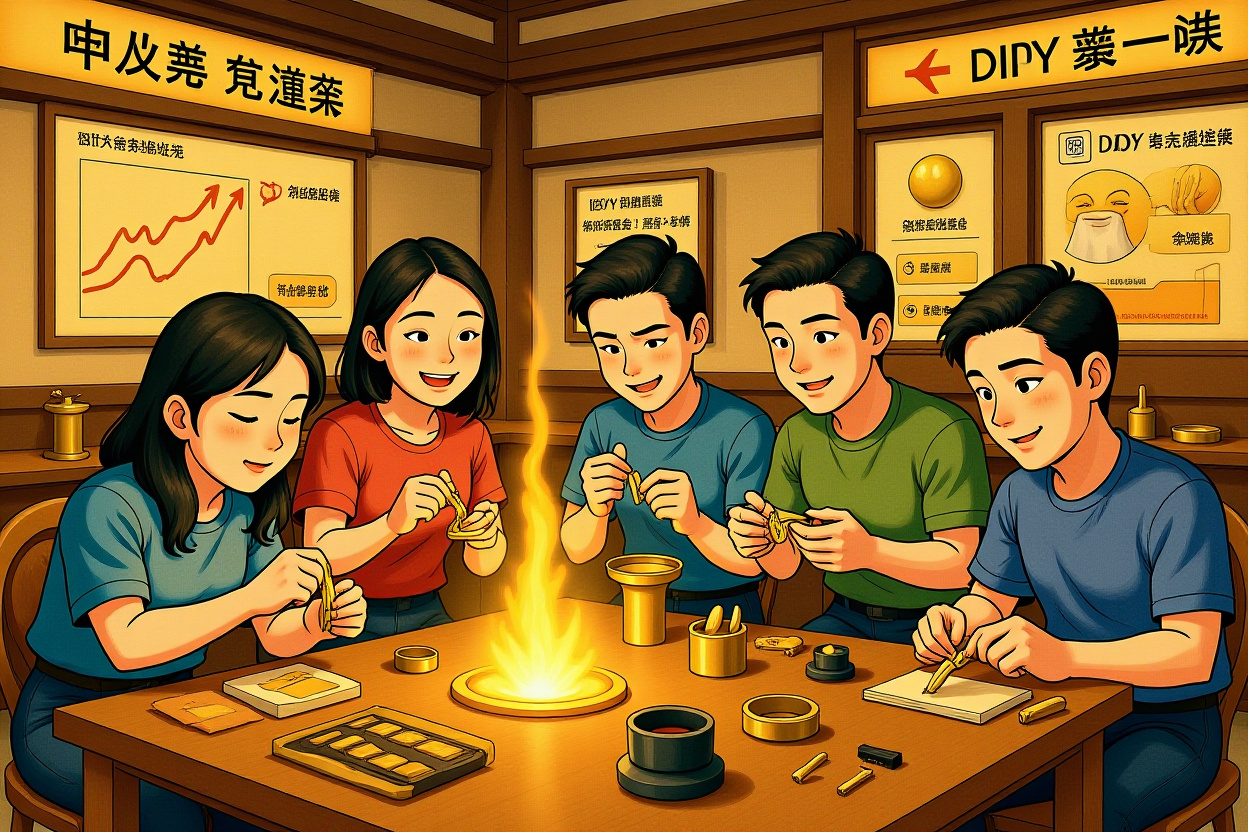
Executive Summary: Key Takeaways on the Gold Forging Phenomenon
– Gold prices surged globally, with spot gold exceeding $4,555 per ounce on March 27, driving domestic Chinese gold jewelry prices near 1,400 yuan per gram.
– The ancient craft of gold forging (打金) is experiencing a resurgence, particularly among young consumers seeking cost-effective and personalized alternatives to branded jewelry.
– A new generation of “00后” (post-2000s) goldsmiths is entering the industry, blending traditional skills with modern innovation and catering to rising demand.
– Home gold forging has become a viral DIY trend on social media, but experts warn of significant safety hazards and financial risks due to operational errors and gold loss.
– Investors and consumers should approach gold forging with caution, prioritizing professional services or thorough research to mitigate potential pitfalls in this booming market.
The Unprecedented Gold Rally: Market Dynamics and Domestic Impact
In a dramatic late-night surge on March 27 Eastern Time, gold and silver prices skyrocketed, with spot gold breaching the $4,555 per ounce threshold. This global rally has sent shockwaves through Chinese equity and commodity markets, underscoring gold’s enduring role as a safe-haven asset amid economic uncertainty. For sophisticated investors tracking Chinese equities, this price movement highlights interconnected market forces, from inflation fears to currency fluctuations, that demand close monitoring. The immediate domestic repercussion was a sharp uptick in retail gold jewelry prices, pushing the cost per gram toward historic highs and sparking renewed consumer interest in alternative gold investment and consumption methods.
Domestic Gold Jewelry Prices Hit New Highs
By March 28, major Chinese gold jewelry brands had adjusted their prices upward, reflecting the international bullion surge. Key players like Lao Feng Xiang (老凤祥) quoted 1,396 yuan per gram, a 28-yuan increase from the previous day. Similarly, Lao Miao Gold (老庙黄金) raised its price to 1,397 yuan per gram, up 32 yuan, while Chow Sang Sang (周生生) increased to 1,391 yuan per gram, a 27-yuan rise. This price escalation has made traditional gold purchases less accessible for many, fueling the search for more affordable options like gold forging. The trend is particularly relevant for institutional investors analyzing consumer behavior shifts in China’s retail and luxury sectors, as it signals a move toward value-driven and experiential spending.
Global Drivers Behind the Gold Surge
The gold price rally is underpinned by multiple factors, including geopolitical tensions, expectations of central bank policy shifts, and a weakening U.S. dollar. For Chinese market participants, this aligns with broader economic indicators such as the yuan’s (人民币) performance and domestic inflation rates. The People’s Bank of China (中国人民银行) has maintained a cautious stance on monetary policy, influencing gold’s attractiveness as a hedge. Additionally, increased gold reserves by central banks, including China’s, have bolstered long-term demand. This context is crucial for fund managers evaluating gold-related equities or ETFs within Chinese markets, as price volatility may impact mining stocks and jewelry retailers listed on exchanges like the Shanghai Stock Exchange (上海证券交易所).
The Resurgence of Gold Forging: An Ancient Craft Reimagined
What is Gold Forging and Why is it Popular?The Economics: Cost Savings and PersonalizationThe New Face of Goldsmithing: Young Artisans Enter the FrayThe gold forging boom has catalyzed a wave of young professionals entering the field, often dubbed “00后” goldsmiths for their post-2000s birth years. These artisans bring fresh creativity and digital savvy, leveraging platforms like抖音 (Douyin) and小红书 (Xiaohongshu) to showcase their work and attract clients. One gold forging shop owner noted that after opening three years ago, her business now employs 20 staff across two locations, with 10 goldsmiths all under age 28. This youthful influx is revitalizing a traditional industry, as younger teams excel in innovation and精准把握客户的需求 (accurately grasping customer needs). The sector offers accessible entry points, with no strict age or学历 (educational background) requirements, making it an attractive career pivot for graduates or professionals seeking hands-on, creative work.
“00后” Goldsmiths: Innovation and Demand
Career Opportunities and Earnings in GoldsmithingThe growth of gold forging has spurred related sectors, including tool sales, training courses, and quality certification. Vocational schools and online platforms now offer goldsmithing programs, with enrollment rising by 15% annually. For investors, this represents a niche within China’s broader artisan economy, which is gaining traction amid government support for traditional crafts under cultural revival initiatives. Companies like腾讯 (Tencent) and阿里巴巴 (Alibaba) have invested in related e-commerce platforms, facilitating tool sales and tutorial access. However, the industry faces challenges such as skill standardization and regulatory oversight, highlighting the need for professional bodies like the Shanghai Gold Jewelry Industry Association to establish guidelines for safety and quality.
The DIY Phenomenon: Home Gold Forging Takes Off
How Home Gold Forging Works: Tools and TutorialsThe Allure and Illusion of DIY Gold CraftingThe appeal of home gold forging lies in its perceived affordability and creative fulfillment. By avoiding店租 (shop rents) and labor fees, individuals can potentially save 50-70% on jewelry creation. Additionally, the hands-on experience offers a sense of accomplishment and connection to the material. However, this illusion is quickly dispelled by现实 (reality): most DIYers underestimate the skill required for tasks like soldering or polishing, leading to frustration and waste. Wang Chao (王超), Director of the Gold and Jewelry Testing Center at Ningbo Product Quality Inspection Institute (宁波市质检院), explains that while theoretically feasible, home gold forging demands strong动手能力 (hands-on ability) and学习能力 (learning capacity). He cautions that even with proper tools, defects in molds or impurities in gold can derail projects, making professional assistance often necessary for satisfactory results.
Expert Warnings: Navigating the Risks of Home Gold Forging
Safety Hazards: From Burns to Toxic FumesThe safety risks of home gold forging extend beyond burns. Inadequate ventilation can accumulate harmful gases, while improper tool use might cause fires or explosions. For instance, gas torches require careful handling to avoid leaks, and molding materials like borax can be irritating if inhaled. The宁波市质检院 (Ningbo Product Quality Inspection Institute) recommends that DIYers conduct operations outdoors or in专业环境 (professional environments) with exhaust systems. Additionally, using certified tools from reputable suppliers, rather than cheap online kits, can mitigate some dangers. These precautions are essential for anyone venturing into home gold forging, as negligence could result in severe injuries or long-term health issues, overshadowing any cost savings.
Financial Pitfalls: Unexpected Gold Loss and Additional Costs
Synthesizing Insights for Informed Decision-MakingThe convergence of soaring gold prices and the home gold forging trend presents both opportunities and challenges for market participants. For investors, this phenomenon reflects broader shifts in Chinese consumer behavior toward experiential and value-driven assets, potentially influencing equities in jewelry, retail, and tool manufacturing sectors. For consumers, gold forging offers a path to personalized jewelry and financial optimization, but requires diligent risk assessment. Experts like Wang Huiqun (王惠群) and Wang Chao (王超) advocate for a balanced approach: leveraging professional services for complex projects while reserving DIY attempts for simple, well-researched tasks. As home gold forging continues to gain traction, education and regulation will be key to ensuring safety and sustainability in this evolving market.
To navigate this landscape, consider consulting resources such as the Shanghai Gold Jewelry Industry Association’s guidelines or attending workshops offered by certified goldsmiths. For those interested in gold as an investment, diversify through instruments like gold ETFs or mining stocks listed on Chinese exchanges, while staying informed on regulatory updates from the中国证券监督管理委员会 (China Securities Regulatory Commission). Ultimately, whether engaging in gold forging or traditional gold buying, informed caution and professional advice are paramount to capitalizing on this golden opportunity without falling into costly traps.