



Executive Summary: Key Takeaways
– Gold prices soared overnight, with spot gold breaking $4555 per ounce and domestic Chinese jewelry prices nearing 1400 yuan per gram, driven by global market volatility.
– A surge in ‘home gold crafting’ is captivating young consumers seeking cost savings and personalization, but experts warn of significant safety hazards and financial risks.
– Professional gold crafting is evolving into a lucrative career path, with young artisans earning up to 15,000 yuan monthly, injecting innovation into the traditional industry.
– DIY attempts often lead to operational failures and gold loss, highlighting the importance of seeking reputable craftsmen and avoiding impulsive home projects.
– Investors should monitor this trend’s impact on gold retail and investment products, considering both opportunities and regulatory perspectives for informed decision-making.
The Precious Metal Rally: Unpacking the Gold Price Surge
On March 27 Eastern Standard Time, global gold markets witnessed a dramatic spike, with spot gold prices soaring to breach $4555 per ounce. This overnight rally, fueled by geopolitical tensions and economic uncertainties, has sent shockwaves through domestic Chinese markets. By March 28, major Chinese gold jewelry brands had swiftly adjusted their retail prices upward, with per-gram rates approaching the psychological barrier of 1400 yuan. This price movement underscores gold’s enduring role as a safe-haven asset, but it has also triggered a behavioral shift among consumers, particularly the younger generation, who are increasingly turning to alternative gold consumption methods like home gold crafting to navigate the high-cost environment.
Domestic Price Adjustments and Market Data
The domestic response to the international gold surge was immediate and pronounced. Key brands reported significant price hikes: Lao Feng Xiang (老凤祥) raised its price to 1396 yuan per gram, up 28 yuan from the previous day; Lao Miao Gold (老庙黄金) increased to 1397 yuan per gram, a jump of 32 yuan; and Chow Sang Sang (周生生) adjusted to 1391 yuan per gram, rising by 27 yuan. These adjustments reflect the direct correlation between global benchmark prices and local retail markets, influenced by factors such as the US dollar fluctuations and central bank policies. For context, the Shanghai Gold Exchange (上海黄金交易所) serves as a primary reference for domestic pricing, and its recent data indicates sustained bullish sentiment. This price escalation is not merely a statistical blip—it represents a broader trend where consumers are reassessing their approach to gold ownership, seeking value beyond traditional retail purchases.
The Gold Crafting Renaissance: From Ancient Art to Modern Obsession
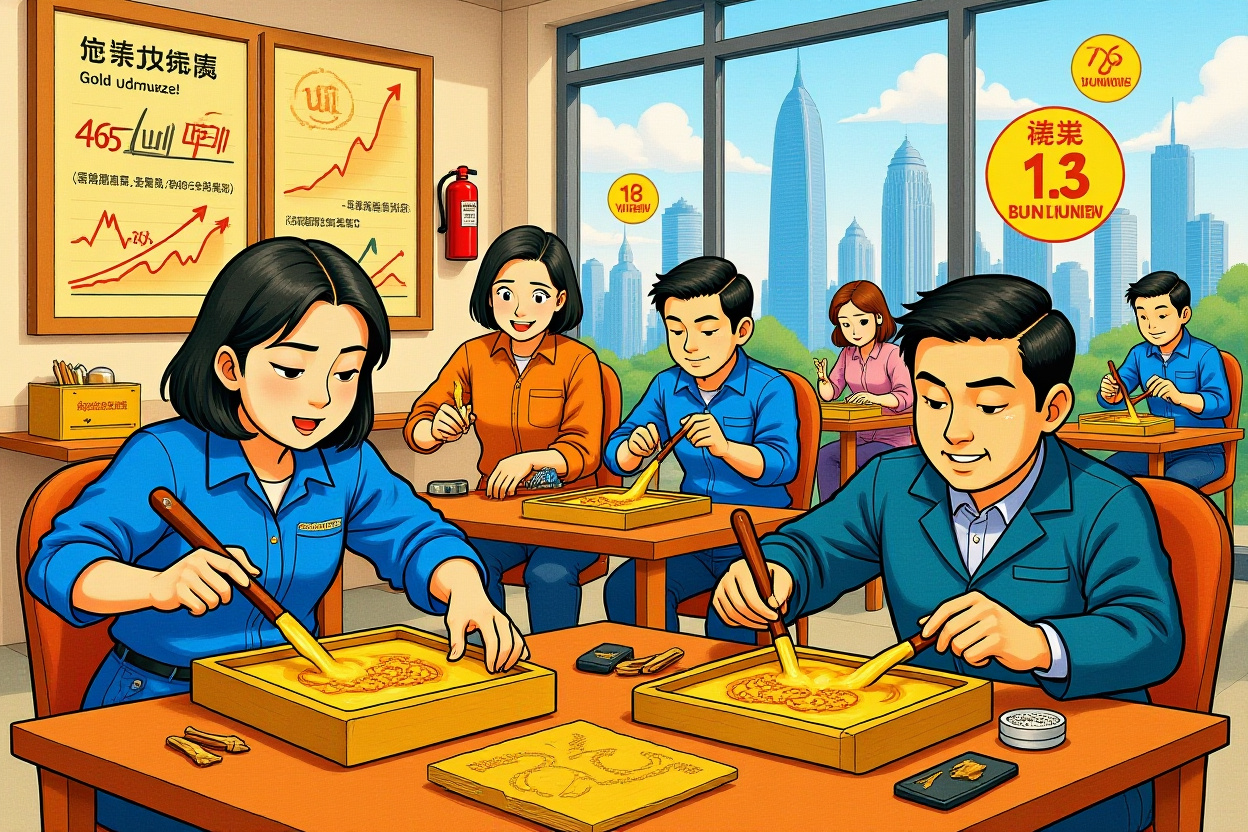
As gold prices climb, an unexpected trend has emerged: the revival of gold crafting, an ancient technique involving melting, molding, shaping, and polishing gold into custom jewelry. This practice, once a niche artisan skill, has exploded in popularity, particularly among millennials and Gen Z consumers. On social media platforms, topics like ‘打金’ (gold crafting) have amassed over 1.3 billion views, driven by tutorials and success stories. The appeal lies in its dual promise of cost-effectiveness and personalization; by opting for gold crafting, consumers can bypass the hefty brand premiums and standardized designs of retail stores, creating pieces that reflect individual style while retaining the intrinsic value of the metal. This home gold crafting movement is reshaping consumer behavior, blending aesthetic desire with financial pragmatism.
The Emotional and Financial Appeal for Young Consumers
Professional Gold Crafting: A New Career Frontier for the YouthThe gold crafting boom isn’t limited to consumers—it’s spawning a new generation of artisans. Across China, young people are entering this field, bringing fresh creativity and technological savvy to a traditional trade. For instance, one gold crafting shop owner noted that after recognizing the trend’s growth three years ago, she expanded to two locations with 20 employees, including 10 gold craftsmen predominantly from the ‘post-00s’ generation, the oldest being 28. These young artisans leverage social media to showcase their work and attract clients, blending techniques like非遗花丝 (intangible cultural heritage filigree) and手工錾刻 (hand engraving) with modern designs. Their ability to innovate and intuitively understand client preferences is driving the industry’s evolution, making gold crafting a viable and attractive career path in today’s gig economy.
Economic Opportunities and Earnings Potential
Financially, gold crafting offers substantial rewards. According to Zhou Baolin (周宝林), a store manager in Shanghai’s Yuyuan area, entry-level gold craftsmen typically earn around 10,000 yuan per month, while skilled specialists in engraving or complex techniques can command up to 15,000 yuan monthly. This income level, coupled with low barriers to entry regarding age or formal education, makes the field accessible to recent graduates or career changers. The growth is fueled by rising demand for custom pieces, as consumers seek alternatives to mass-produced jewelry. Industry analysts suggest that this professional segment could see further expansion, especially if gold prices remain elevated, creating a symbiotic relationship between market trends and employment opportunities. For investors, this signals potential in ancillary businesses, from tool manufacturing to training services, within the gold crafting ecosystem.
The DIY Phenomenon: Home Gold Crafting Takes Center Stage
Parallel to the professional boom, a more grassroots movement has taken hold: home gold crafting, where individuals attempt DIY projects using basic tools purchased online. Driven by social media influencers sharing ‘successful’ tutorials, this trend promises significant cost savings—by avoiding artisan fees, which range from 10 to 40 yuan per gram for basic pieces to over 100 yuan for intricate work. A quick search on e-commerce platforms reveals ‘gold crafting kits’ priced between 100 to 200 yuan, including essentials like crucibles, torches, molds, and protective gear. The process typically involves steps such as melting gold with a torch, pouring it into molds, and polishing the final product, all done in home settings. However, this home gold crafting craze is fraught with challenges, as many enthusiasts underestimate the technical skills required, leading to a high rate of failure and subsequent reliance on professionals for repairs.
The Reality Behind Social Media Tutorials
Despite the allure of easy-to-follow videos, home gold crafting is far from straightforward. Reports from Beijing-based gold crafting shops indicate a surge in customers seeking help after failed DIY attempts, often due to errors in mold preparation or temperature control. One influencer’s detailed tutorial, which includes precautions like using耐火板 (fireproof boards) to prevent gold splatter, still results in frequent mishaps among followers. Wang Chao (王超), Director of the Gold and Jewelry Testing Center at the Ningbo Product Quality Inspection Institute (宁波市质检院), explains, ‘From a theoretical standpoint, home gold crafting is possible with proper skill, but most people face uncertainties. Gold melts at over 1000°C, posing serious safety risks, and imperfect molds can lead to defective outcomes.’ This gap between online portrayal and practical execution underscores the need for cautious engagement in home gold crafting, emphasizing that it’s not a guaranteed money-saver.
Navigating the Risks: Expert Warnings on Home Gold Crafting
As the home gold crafting trend gains momentum, experts are issuing stark warnings about its hidden dangers. Beyond the obvious fire and burn hazards from high-temperature operations, there are subtler threats, such as toxic fume exposure. Wang Chao (王超) cautions, ‘If the gold contains impurities like mercury, heating can release toxic vapors, especially in poorly ventilated spaces, leading to health risks.’ Additionally, financial losses are a major concern; operational errors often cause gold损耗 (loss) beyond expectations, with common mistakes including improper石膏模具 (plaster mold) preparation that results in shattered castings or焊接 (welding) failures that leave gold irrecoverable. These pitfalls can turn a supposedly frugal project into a costly endeavor, as repairing botched DIY work typically requires professional intervention, adding expenses that negate initial savings. Therefore, a rational assessment of home gold crafting’s feasibility is crucial before diving in.
Safety Protocols and Best Practices
To mitigate risks, experts recommend strict safety measures if attempting home gold crafting. These include working in well-ventilated areas, wearing protective gear like thick gloves and goggles, using long-handled tools to maintain distance from heat sources, and ensuring gold purity to avoid volatile metal content. Wang Chao (王超) adds, ‘Individuals with strong动手能力 (hands-on ability) might succeed, but for others, failure rates are high. It’s essential to recognize the limitations and not rely solely on online tutorials.’ Furthermore, consulting with professionals or attending workshops can provide foundational knowledge. For those considering this route, starting with small, low-value projects is advisable to gauge competency. Ultimately, while home gold crafting offers creative freedom, it demands respect for the material’s properties and the associated hazards, balancing enthusiasm with precaution.
Market Implications and Strategic Insights for Investors
The convergence of rising gold prices and the gold crafting trend has broader implications for financial markets and investors. On one hand, it may dampen traditional gold jewelry sales as consumers shift toward custom crafting, potentially affecting retailers like Lao Feng Xiang (老凤祥) or Chow Sang Sang (周生生). On the other hand, it could boost demand for raw gold bars or granules, as crafting requires purer forms of the metal, influencing suppliers and refiners. Investors should monitor companies involved in gold crafting tools, training, or certification services, as these ancillary sectors might experience growth. Additionally, the trend highlights gold’s multifaceted role—not just as a commodity or currency hedge but as a participatory asset where consumer engagement drives value. For institutional investors, this signals opportunities in niche market segments aligned with youth-driven消费升级 (consumption upgrading).
Regulatory and Industry Perspectives
Synthesizing the Gold Crafting LandscapeIn conclusion, the recent gold price surge has catalyzed a multifaceted trend encompassing professional artisanship and risky DIY endeavors. While home gold crafting appeals to cost-conscious and creative consumers, it carries substantial safety and financial risks that experts like Wang Chao (王超) strongly warn against. The professional gold crafting industry, meanwhile, is thriving, offering economic opportunities and innovation. For market participants, this presents both challenges and avenues for growth, from retail adaptations to investment in supporting sectors. As gold continues to play a critical role in global and Chinese markets, informed decision-making is paramount. We encourage readers to approach home gold crafting with caution, seek reputable artisans for custom projects, and consult financial advisors to leverage gold-related opportunities strategically. Stay updated with market trends and expert analyses to navigate this dynamic environment effectively.