



Executive Summary
The recent explosive rally in gold prices has catalyzed a unique consumer trend within China, with significant implications for the precious metals market and retail investment landscape.
– Global gold prices soared past $4555 per ounce, pushing domestic branded gold jewelry prices in China to near 1400 yuan per gram, a record high that is altering consumer behavior.
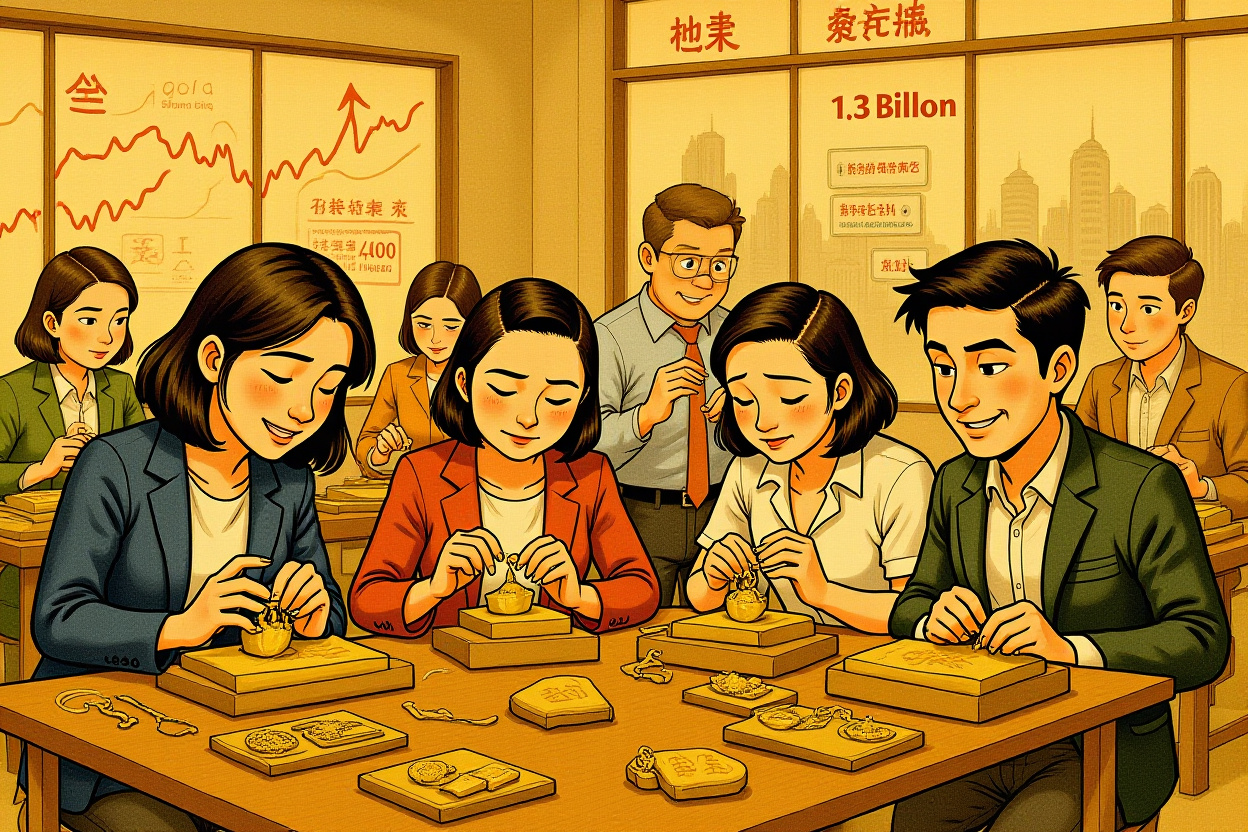
– A DIY gold crafting movement is gaining massive traction among young Chinese, driven by desires for cost savings, personalization, and cultural connection, with social media views exceeding 1.3 billion.
– This trend is revitalizing the traditional goldsmith trade, attracting a new generation of “00后” (post-2000s) craftsmen and creating fresh economic opportunities in the sector.
– Experts from bodies like the宁波市质检院黄金珠宝检测中心 (Ningbo Product Quality Inspection Institute Gold and Jewelry Testing Center) issue stark warnings: home-based DIY gold crafting carries substantial safety hazards and high risks of financial loss due to operational errors.
– For investors, this cultural shift represents a nuanced demand driver for physical gold, warranting close observation of its potential impact on premiums, recycling rates, and overall market liquidity.
The Precious Metals Rally: Context and Immediate Impact
The financial markets witnessed a dramatic move in the precious metals complex. On the evening of March 27th Eastern Time, spot gold and silver prices surged sharply, with gold momentarily breaking above the $4555 per ounce level. This global momentum immediately reverberated through the Chinese domestic market.
Domestic Gold Jewelry Prices Approach a Symbolic Threshold
By March 28th, the price adjustments from major Chinese jewelry retailers reflected the international bullish fervor. The listed prices for domestic足金首饰 (pure gold jewelry) from leading brands all showed significant intraday increases, inching closer to the psychologically important 1400 yuan per gram mark.
– 老凤祥 (Lao Feng Xiang) quoted 1396 yuan/gram, up 28 yuan from 1368 yuan/gram the previous day.
– 老庙黄金 (Lao Miao Gold) quoted 1397 yuan/gram, a rise of 32 yuan from 1365 yuan/gram.
– 周生生 (Chow Sang Sang) quoted 1391 yuan/gram, increasing by 27 yuan from 1364 yuan/gram.
This rapid appreciation has fundamentally changed the cost-benefit analysis for gold consumers, making the substantial brand premiums and craftsmanship fees charged by retail stores a focal point for budgetary scrutiny. It is within this high-price environment that the allure of DIY gold crafting has found fertile ground.
The DIY Gold Crafting Renaissance: More Than a Hobby
Understanding the DIY Gold Crafting Process
The Economic Driver: Scrutinizing the Cost EquationThe math is compelling for cost-conscious buyers. With brand jewelry prices including hefty premiums for design, branding, and store overhead, the total cost for a 10-gram bracelet can easily exceed 14,000 yuan. Through DIY gold crafting, using one’s own gold and paying only the labor fee, the same item might cost several hundred yuan less. This direct economic incentive is the primary engine behind the DIY gold crafting boom. However, as the trend migrates from professional shops to home kitchens, the risk-reward profile changes dramatically.
The New Faces of an Ancient Trade: Demographic and Economic Shifts
Young Craftsmen Forge New Career PathsThe Dark Side of the Trend: Unpacking the Risks of Home-Based DIY Gold CraftingThe Allure and Illusion of Home Workshops
Tangible Dangers: Safety and Financial LossMarket Implications and Strategic Considerations for InvestorsDecoding Demand Dynamics in the Gold Market
Investment and Consumer Guidance in a Volatile ClimateSynthesizing the Gold Rush NarrativeThe confluence of soaring gold prices and a vibrant Do-It-Yourself culture has spawned a significant micro-trend within China’s consumer economy. DIY gold crafting offers a compelling mix of financial pragmatism, cultural expression, and personal agency, capturing the imagination of a younger generation. It is revitalizing a traditional craft and creating new economic niches.
However, the excitement must be tempered by a clear-eyed assessment of risk. The warnings from experts are unequivocal: amateur DIY gold crafting at home is fraught with danger and is far more likely to lead to loss than savings. For the market, this behavior adds a layer of complexity to gold demand analysis, highlighting the metal’s unique position at the intersection of investment, consumption, and culture.
The forward-looking guidance is clear. Consumers should seek professional craftsmanship for their gold projects. Investors should factor in these behavioral shifts as part of the demand-side equation for Chinese gold. As prices remain elevated, the DIY gold crafting phenomenon is a potent reminder that in the markets, as in the workshop, value is often best realized through expertise, caution, and informed decision-making.