



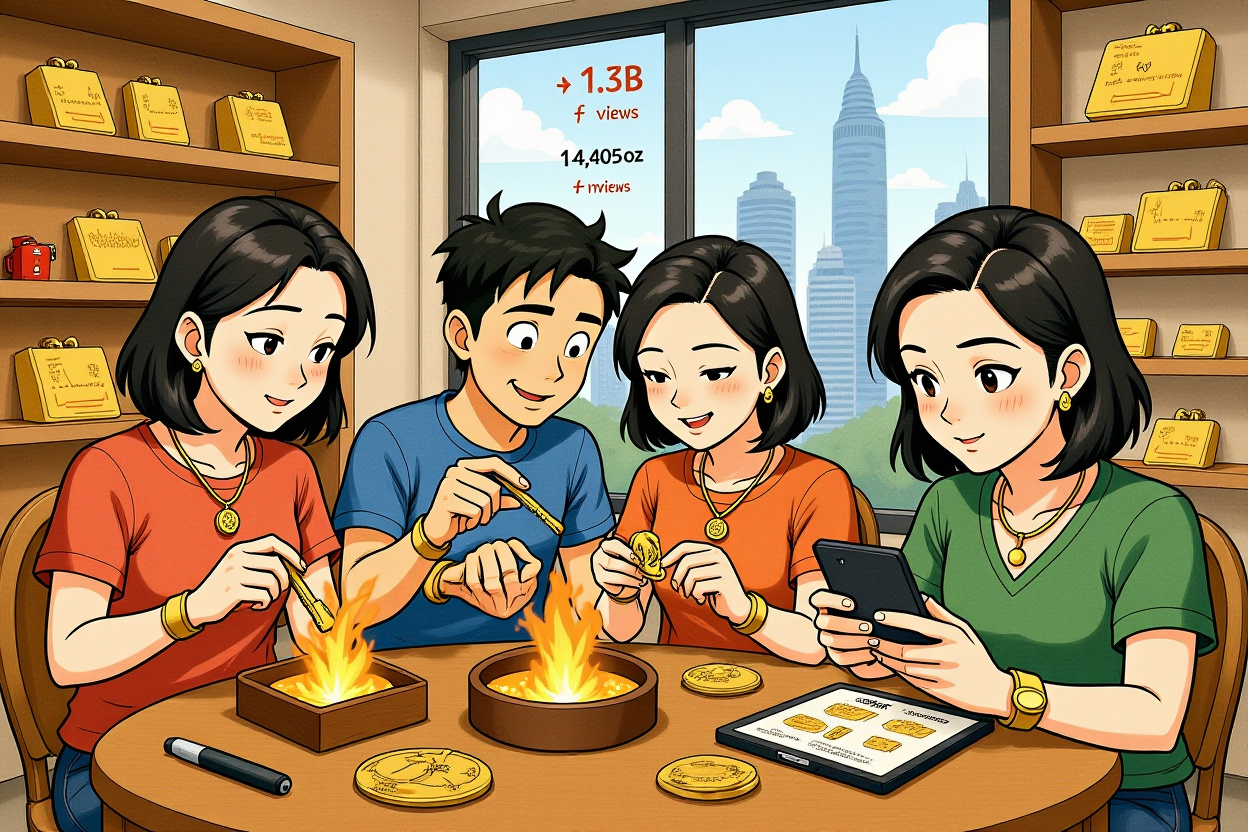
– Gold prices have surged globally, with spot gold exceeding $4,555 per ounce and domestic Chinese jewelry brands nearing 1,400 yuan per gram, driving increased investor and consumer interest.
– The DIY gold crafting craze is booming, especially among young people seeking cost-effective and personalized alternatives to traditional gold jewelry, with social media views surpassing 1.3 billion.
– Experts warn of significant risks in home-based gold crafting, including safety hazards like toxic fumes and financial losses due to operational errors, urging caution and professional consultation.
– This trend reflects broader shifts in Chinese consumer behavior, blending emotional value with financial utility, and has implications for gold markets and related equities.
– Investors should monitor gold price volatility, regulatory updates, and consumer trends to make informed decisions in Chinese equity markets tied to precious metals.
The Unprecedented Surge in Gold Prices
In a dramatic market move, gold prices have skyrocketed, capturing the attention of global investors and consumers alike. On March 27, Eastern Time, spot gold surged past $4,555 per ounce, while on March 28, domestic gold jewelry prices in China approached 1,400 yuan per gram. This rally underscores gold’s enduring appeal as a safe-haven asset amid economic uncertainties, and it has directly fueled the DIY gold crafting craze, where individuals are turning to hands-on methods to create personalized gold items. For sophisticated market participants, understanding these dynamics is crucial for navigating Chinese equity markets linked to precious metals and consumer trends.
Global and Domestic Gold Price Trends
The recent spike in gold prices is driven by multiple factors, including geopolitical tensions, inflationary pressures, and shifts in monetary policy by central banks like the 中国人民银行 (People’s Bank of China). Data from March 28 shows significant increases in prices from major Chinese jewelry brands:
– 老凤祥 (Lao Feng Xiang) reported 1,396 yuan per gram, up 28 yuan from the previous day.
– 老庙黄金 (Lao Miao Gold) quoted 1,397 yuan per gram, a 32 yuan increase.
– 周生生 (Chow Sang Sang) priced at 1,391 yuan per gram, rising 27 yuan.
These hikes reflect broader market sentiment, with gold often seen as a hedge against currency fluctuations and stock market volatility. Investors should track such indicators through resources like the 上海黄金交易所 (Shanghai Gold Exchange) for real-time data.
Impact on Chinese Gold Jewelry Brands and Equities
The surge in gold prices has boosted revenues for companies like 周大福 (Chow Tai Fook) and 六福珠宝 (Luk Fook Holdings), but it also pressures profit margins due to higher input costs. Analysts note that while brand premiums remain high, the DIY gold crafting craze is disrupting traditional retail models, potentially affecting stock performance in the 消费品 (Consumer Staples) sector. For instance, shares of gold-related ETFs and mining firms on the 香港交易所 (Hong Kong Stock Exchange) have shown increased volatility, highlighting the need for careful portfolio adjustments.
The Rise of DIY Gold Crafting: A Modern Consumer Phenomenon
Gold crafting, or “打金” (dǎ jīn), involves melting, molding, shaping, and polishing gold into jewelry such as rings and bracelets. Historically an artisanal trade, it has evolved into a popular hobby, driven by social media and cost-conscious consumers. The DIY gold crafting craze is particularly appealing to younger demographics who value customization and affordability over branded offerings. This trend is not just a fad; it represents a shift in how gold is perceived—combining emotional attachment with financial pragmatism.
What is DIY Gold Crafting?
DIY gold crafting typically includes steps like using crucibles, torches, and molds to transform raw gold or old jewelry into new pieces. On social platforms, tutorials have garnered billions of views, making it accessible to amateurs. According to industry sources, basic crafting costs range from 10 to 40 yuan per gram, compared to higher fees at established jewelers. This affordability is a key driver, but it comes with complexities that novices often underestimate, leading to the risks experts emphasize.
Popularity Among Young Consumers and Market Implications
Young people, especially millennials and Gen Z, are embracing this trend as part of the “新国潮” (New National Trend), which blends tradition with modernity. They view gold not only as an investment but also as a medium for self-expression. From a market perspective, this has spurred growth in ancillary industries, such as tool suppliers and online tutorials, potentially creating investment opportunities in small-cap stocks or startups focused on crafting tools. However, the DIY gold crafting craze also poses challenges for traditional retailers, who must adapt to changing consumer preferences.
Professional Gold Crafting Industry: Evolution and Economic Viability
As the DIY trend grows, the professional gold crafting sector is experiencing a renaissance, with young artisans entering the field. This influx of new talent is revitalizing an age-old industry, offering career opportunities and injecting creativity into traditional techniques. For investors, this signals potential growth in vocational training and artisanal markets, which could benefit companies listed on the 深圳证券交易所 (Shenzhen Stock Exchange) involved in education or luxury goods.
Young Craftsmen and Industry Innovation
Many “00后” (post-2000s generation) individuals are becoming gold craftsmen, with some shops reporting teams where the oldest member is only 28. These young professionals leverage digital skills to market their services and design innovative pieces that appeal to contemporary tastes. For example, a shop owner in 上海市黄浦区豫园街道 (Yuyuan Street, Huangpu District, Shanghai) noted that their team’s creativity helps meet client demand efficiently, showcasing how tradition is merging with technology.
Economic Viability and Wage Structures
Wages in the gold crafting industry are competitive, with average monthly earnings around 10,000 yuan, and skilled craftsmen like engravers earning up to 15,000 yuan. This economic incentive attracts diverse entrants, from graduates to career changers, supporting job creation in urban centers. For institutional investors, this labor trend may indicate stability in the 手工业 (Handicraft Industry) sector, but it’s essential to monitor wage inflation and skill shortages that could impact profitability.
The DIY Gold Crafting Craze: Uncovering Risks and Expert Warnings
While the DIY gold crafting craze offers excitement and potential savings, it is fraught with dangers that experts urgently highlight. From safety hazards to financial losses, amateurs venturing into home-based crafting face significant pitfalls. Understanding these risks is critical for consumers and investors alike, as they can affect market sentiment and regulatory responses in the gold industry.
Safety Hazards in Home Gold Crafting
Gold melting requires temperatures over 1,000 degrees Celsius, posing fire and burn risks in non-professional settings. Wang Chao (王超), Director of the Gold and Jewelry Testing Center at 宁波市质检院 (Ningbo Product Quality Inspection Institute), warns that improper ventilation can lead to toxic fume exposure, especially if impure metals like mercury are present. He advises using protective gear and working in well-ventilated areas, but many tutorials downplay these aspects, increasing accident rates. Investors should note that safety incidents could trigger stricter 监管 (Regulatory) oversight from bodies like the 国家市场监督管理总局 (State Administration for Market Regulation), impacting related stocks.
Financial Losses and Operational Pitfalls
Common errors in DIY gold crafting, such as flawed mold preparation or incorrect welding, can result in gold loss or damage, often exceeding expected costs. For instance, failed attempts may require professional repair, adding expenses rather than saving money. Data from online platforms shows that cheap tool kits priced at 100-200 yuan are widely available, but their quality varies, leading to inconsistent results. This underscores the importance of due diligence for consumers and highlights potential liability issues for tool manufacturers, which could affect their equity valuations.
Regulatory and Market Perspectives: Navigating the Gold Landscape
The gold market’s evolution, driven by price surges and the DIY gold crafting craze, necessitates a closer look at regulatory frameworks and investment strategies. For global professionals, aligning with official guidelines and market data is key to mitigating risks and capitalizing on opportunities in Chinese equities.
Industry Standards and Consumer Protection
Organizations like the 上海黄金饰品行业协会 (Shanghai Gold Jewelry Industry Association) advocate for consumer caution. Secretary-General Wang Huiqun (王惠群) recommends choosing reputable craft shops and clarifying terms before transactions. This emphasis on transparency helps protect consumers and maintains market integrity, which can bolster investor confidence in gold-related sectors. Regulatory announcements from the 中国证券监督管理委员会 (China Securities Regulatory Commission) on commodity trading may also influence market dynamics, warranting continuous monitoring.
Investment Implications for Gold Assets and Equities
The DIY gold crafting craze reflects broader trends in gold consumption, which can impact demand and supply chains. Investors should consider:
– Diversifying into gold ETFs or mining stocks listed on exchanges like the 上海证券交易所 (Shanghai Stock Exchange) to hedge against volatility.
– Analyzing consumer behavior reports for insights into retail trends that could affect companies like 阿里巴巴集团 (Alibaba Group) or 京东 (JD.com) selling crafting tools.
– Consulting expert analyses from firms like 中国国际金融股份有限公司 (China International Capital Corporation Limited) for nuanced market forecasts.
Outbound links to sources such as the 世界黄金协会 (World Gold Council) reports can provide additional context for investment decisions.
Synthesizing Key Insights for Strategic Action
The convergence of soaring gold prices and the DIY gold crafting craze presents both opportunities and challenges for market participants. Gold remains a resilient asset, but the rise of home-based crafting introduces new variables that require careful assessment. Experts emphasize the need for safety and financial prudence, while market data points to evolving consumer patterns that could reshape the gold industry’s landscape.
For institutional investors and corporate executives, the takeaways are clear: monitor gold price indicators closely, stay informed on regulatory developments, and evaluate how consumer trends like DIY crafting might influence equity portfolios. Consider engaging with professional advisors or accessing resources from authoritative bodies to navigate this dynamic environment. By doing so, you can make informed decisions that align with both short-term market movements and long-term investment goals in Chinese equity markets.