



Executive Summary: Key Market Insights
The recent gold price rally has catalyzed significant behavioral shifts among Chinese consumers, with profound implications for investors and the jewelry industry. Here are the critical takeaways:
– Global gold prices surged past $4,555 per ounce, driving domestic Chinese gold jewelry prices to approach 1,400 yuan per gram, marking a historic high for retail consumers.
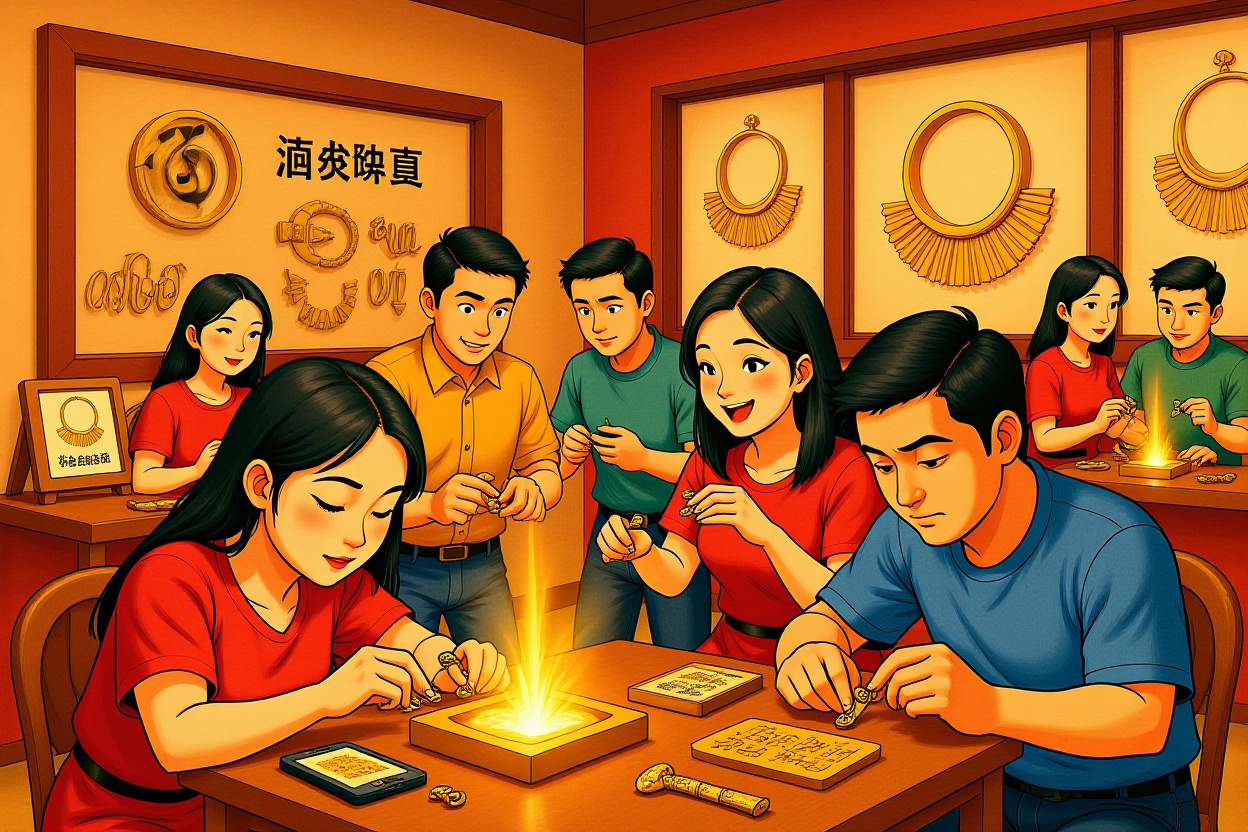
– A revival of traditional goldsmithing, termed ‘打金 (dǎ jīn)’, is gaining traction, especially among millennials and Gen Z seeking personalized, cost-effective alternatives to branded jewelry.
– The ‘home gold smithing’ trend, fueled by social media tutorials, allows individuals to craft jewelry at home but introduces substantial risks, including safety hazards and unexpected financial loss due to operational errors.
– Young professionals, including ’00后 (Post-2000s)’ artisans, are entering the goldsmithing trade, innovating with modern designs and creating new career pathways in a traditional sector.
– Experts from bodies like the宁波市质检院黄金珠宝检测中心 (Ningbo Product Quality Inspection Institute Gold and Jewelry Testing Center) warn that DIY attempts often lead to gold wastage and potential toxicity, advising caution and professional oversight.
The Unprecedented Surge in Gold Prices
On March 27, Eastern Time, gold and silver prices experienced a sharp overnight spike, with spot gold briefly exceeding $4,555 per ounce. This global rally immediately reverberated through China’s domestic market, where gold is not only a financial asset but a deeply ingrained cultural staple. By March 28, major Chinese jewelry brands had adjusted their prices upward, reflecting the intense pressure from international bullion markets and robust local demand.
Domestic Gold Jewelry Prices Approach 1,400 Yuan Per Gram
A comparative price analysis on March 28 revealed significant hikes. 老凤祥 (Lao Feng Xiang) quoted 1,396 yuan per gram, up 28 yuan from the previous day’s 1,368 yuan. 老庙黄金 (Lao Miao Gold) listed at 1,397 yuan per gram, a 32 yuan increase from 1,365 yuan. 周生生 (Chow Sang Sang) priced its足金首饰 (pure gold jewelry) at 1,391 yuan per gram, rising 27 yuan from 1,364 yuan. This collective move toward the 1,400 yuan threshold signals a tightening market where consumer appetite remains strong despite higher costs. The price convergence among top brands underscores competitive pressures and the pass-through effect of global commodity swings on local retail.
Global Context and Market Drivers
The gold price surge is attributed to a confluence of factors: geopolitical tensions, inflationary concerns, and shifts in monetary policy by major central banks, including the美国联邦储备系统 (Federal Reserve System). For Chinese investors, gold serves as a traditional hedge against currency volatility and economic uncertainty, particularly amid fluctuations in the人民币 (Renminbi). This environment has heightened gold’s appeal, not just as an investment but as a tangible store of value, fueling both speculative trading and physical consumption trends like home gold smithing.
The Revival of Goldsmithing: A New Trend Among Chinese Youth
Goldsmithing, an ancient craft involving熔金 (melting gold), 倒模 (casting), 塑型 (shaping), and抛光 (polishing) to create rings, bracelets, and necklaces, is experiencing a remarkable renaissance. On social media platforms,话题 (topics) related to ‘打金 (goldsmithing)’ have garnered over 1.3 billion views, indicating a viral interest. This revival is driven by younger demographics who value customization, emotional connection, and financial prudence over conventional retail purchases.
From Ancient Craft to Modern Hobby
As reported by央视财经《正点财经》栏目 (CCTV Finance’s ‘Zhengdian Finance’ segment) on March 19, professional goldsmiths note that crafting a piece typically takes one to three hours. Basic designs incur a labor cost of 10 to 40 yuan per gram, while intricate styles like非遗花丝 (intangible cultural heritage filigree) or手工錾刻 (hand engraving) can cost hundreds of yuan. Compared to the high brand premiums and工艺费 (craftsmanship fees) at established jewelers, this DIY approach offers significant savings and a personalized touch. Consumers report that refurbishing old heirlooms preserves黄金本身的价值 (the intrinsic value of gold) and情感记忆 (emotional memories), aligning with contemporary aesthetics to form a ‘新国潮 (new national trend)’ that blends art, sentiment, and finance.
Economic and Cultural Drivers
The trend reflects broader economic behaviors: in a period of rising costs, consumers seek value retention through tangible assets.上海黄金饰品行业协会秘书长王惠群 (Shanghai Gold Jewelry Trade Association Secretary-General Wang Huiqun) advises, ‘打黄金涉及加工工艺和环境要求,要选择规模比较大的打金店 (Goldsmithing involves processing techniques and environmental requirements; choose larger workshops with skilled artisans).’ This guidance highlights the importance of quality control in professional settings, a contrast to the risky allure of home gold smithing. The cultural dimension is equally pivotal, as young people reinterpret tradition through a modern lens, fueling a micro-economy around artisanal gold.
Professional Goldsmiths: Young Artisans Shaping the Industry
The goldsmithing boom is not limited to consumers; it is spawning a new generation of craftsmen. Young talents, particularly those born after 2000, are entering the field, infusing it with creativity and technological savvy. This influx is transforming a perceived outdated trade into a vibrant, innovative sector.
The Rise of ’00后 (Post-2000s)’ Goldsmiths
According to the same央视财经 (CCTV Finance) report, a goldsmithing shop owner noted that after recognizing the trend’s growth three years ago, she opened a store that now employs 20 people across two locations, including 10 goldsmiths mostly in their early twenties, with the oldest at 28. These young teams excel in innovation and understanding client needs, often leveraging digital tools for design and marketing. The industry has minimal barriers regarding age or学历 (educational background), welcoming fresh graduates and career changers alike, which democratizes access to skilled trades.
Career Opportunities and Earnings
上海市黄浦区豫园街道某打金店店长周宝林 (Zhou Baolin, Store Manager at a Goldsmithing Shop in Yuyuan Street, Huangpu District, Shanghai) states that average monthly wages for goldsmiths hover around 10,000 yuan, with skilled錾刻师 (engravers) earning up to 15,000 yuan. These figures represent attractive prospects in China’s evolving job market, where traditional crafts are being revalued. The economic viability of this profession supports its sustainability, encouraging more youth to consider goldsmithing as a serious career path, thereby ensuring the craft’s continuation and evolution.
The DIY Goldsmithing Phenomenon: Navigating the Home Gold Smithing Craze
Parallel to professional revival, a riskier trend has emerged: home gold smithing, where individuals attempt to craft jewelry domestically using kits purchased online. This practice, often inspired by social media tutorials, promises savings and creativity but harbors significant pitfalls. The home gold smithing movement is a direct response to high retail prices, yet it requires careful scrutiny.
How Home Gold Smithing Works
On social platforms, tutorials abound, detailing steps from acquiring tools to final polishing. A basic ‘打金套装 (goldsmithing kit)’ on e-commerce sites costs between 100 to 200 yuan, including items like长嘴钳 (long-nose pliers), 火枪 (torch), 硼砂 (borax), and耐火板 (fireproof boards). The process involves melting gold at over 1,000°C, casting into molds, and finishing—a complex sequence that demands precision. However, as one博主 (blogger) shared, even replicating steps exactly can lead to failure, due to variables like mold quality or technique errors.北京一家线下打金店铺的工作人员 (Staff at an offline goldsmithing shop in Beijing) confirm that while DIY attempts are increasing, many end in failure, with customers seeking professional fixes for botched projects.
Safety Hazards and Property Loss
宁波市质检院黄金珠宝检测中心主任王超 (Wang Chao, Director of the Ningbo Product Quality Inspection Institute Gold and Jewelry Testing Center) emphasizes the risks. ‘黄金的熔点是1000多摄氏度,毕竟是高温,家庭操作肯定有风险 (Gold’s melting point exceeds 1,000°C; high temperatures pose definite risks in home settings).’ He recommends ventilation, protective gloves, and long tongs to mitigate dangers. More critically, impurities in gold, such as mercury, can vaporize and cause中毒 (poisoning) in poorly ventilated spaces. Beyond safety, financial loss is a major ‘坑 (pitfall)’ in home gold smithing; operational mistakes like improper mold preparation or焊接 (welding) errors can lead to gold残留 (residue) or损耗 (loss), often exceeding expectations. Recovering this gold requires professional intervention, adding成本 (costs) rather than saving money.
Expert Warnings and Practical Advice
Wang Chao adds, ‘要看金属纯度高不高 (Check the metal’s purity),’ noting that low-quality alloys may release toxic fumes. He advises理性看待 (a rational view) of DIY possibilities, acknowledging that while feasible for some, it often leads to disappointment. The上海市黄金饰品行业协会 (Shanghai Gold Jewelry Trade Association) echoes this, urging consumers to consult professionals before attempting home projects. This expert consensus underscores that home gold smithing is not a simple, risk-free hobby but a technical endeavor requiring skill and caution.
Market Implications and Investment Insights
The convergence of rising gold prices and the goldsmithing trend has broader implications for China’s financial markets and consumer sectors. For investors, understanding these dynamics is crucial for anticipating demand shifts and regulatory responses.
Impact on Gold Demand and Jewelry Industry
The DIY movement could marginally affect traditional jewelry sales, as some consumers bypass retailers. However, overall gold demand may remain robust due to investment inflows and cultural practices. Brands like老凤祥 (Lao Feng Xiang) and周生生 (Chow Sang Sang) might adapt by offering more customization services to compete. From an investment perspective, gold’s price rally supports its role as a safe-haven asset, but the home gold smithing trend introduces new variables, such as potential increases in scrap gold supply from failed DIY attempts, which could influence local refining and recycling markets.
Regulatory and Consumer Protection Perspectives
Authorities like the中国人民银行 (People’s Bank of China) monitor gold markets for stability, while consumer protection agencies may need to address risks from unregulated DIY kits. The国家市场监督管理总局 (State Administration for Market Regulation) could enforce standards on tool safety and labeling. For international investors, these trends highlight the importance of monitoring Chinese consumer behavior, as shifts in gold consumption patterns can signal broader economic sentiments and impact related equities, such as mining stocks or retail珠宝板块 (jewelry sector) listed on exchanges like the上海证券交易所 (Shanghai Stock Exchange).
Synthesizing the Gold Rush: A Path Forward for Stakeholders
The surge in gold prices and the accompanying goldsmithing craze illustrate a complex interplay of finance, culture, and technology in modern China. While home gold smithing offers an enticing avenue for personalization and cost-saving, it is fraught with risks that experts consistently warn against. Key takeaways include the need for consumer education, professional consultation, and heightened awareness of safety protocols. For market participants, this trend underscores gold’s enduring dual identity as both a financial instrument and a cultural artifact, influencing investment strategies and industry innovations.
As this evolution continues, stakeholders—from individual consumers to institutional investors—should prioritize informed decision-making. Consult reputable sources like the世界黄金协会 (World Gold Council) or local trade associations before engaging in gold-related activities. Consider diversifying portfolios with gold-backed assets while appreciating the craft’s cultural value. Ultimately, whether through professional channels or cautious DIY, the golden thread connecting these trends is the timeless allure of gold, now being rewoven by a new generation in China’s dynamic market landscape.