



The Gathering Storm: Global Trade at Crossroads
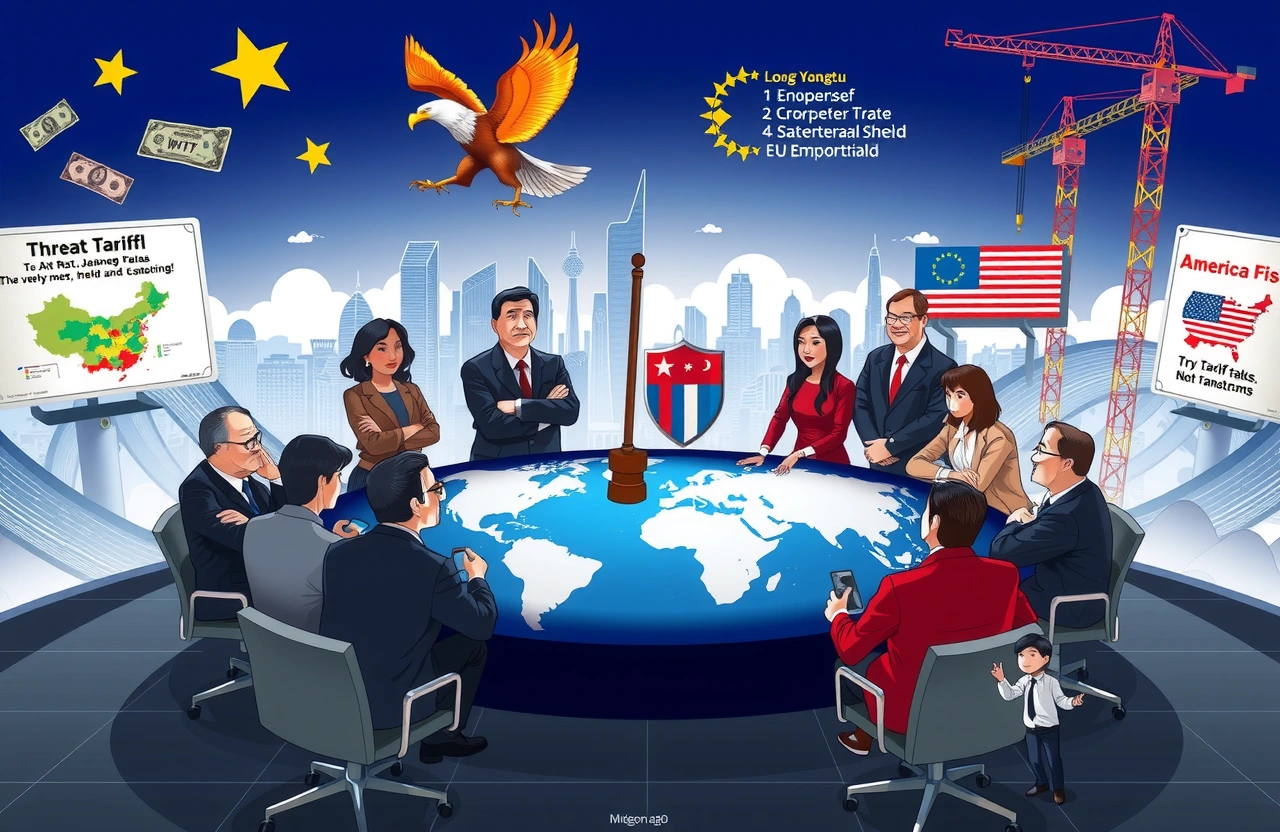
The recent Shenzhen conference illuminated deepening fractures in global trade relations. At the heart of this discussion stood Long Yongtu (龙永图), China’s former WTO accession chief negotiator, delivering a seismic revelation: America’s closest allies now openly resist tariff negotiations conducted under threats. This unprecedented pushback against Washington’s hardline tactics signifies a watershed moment for tariff threats and global trade. With over 70 nations locked in contentious tariff discussions with the U.S., the world trading system faces its gravest challenge since the WTO’s inception.
Against the backdrop of Shenzhen’s skyline, business leaders absorbed Long’s analysis unfolding against escalating trade friction. China’s export-driven economy braces for impact as U.S. tariffs expand beyond bilateral tensions into systemic threats against tariff threats and global trade. The mounting resistance described by Long exposes the limits of unilateral coercion tactics affecting supply chains worldwide.
America’s Tariff Offensive: Methodology and Fallout
The current U.S. administration’s trade warfare blueprint hinges on aggressive reciprocity demands:
Tactical Breakdown
- Targeted tariffs exceed WTO maximum rates against Chinese imports
- Section 232/301 investigations against ally exports
- Secondary sanctions against firms bypassing U.S. restrictions
Long Yongtu (龙永图) emphasized how these tactics transcend bilateral disputes: ‘These tariff threats strike at fundamental WTO equality principles enshrined in Article I MFN treatment. America disdains the foundational tariff threats and global trade architecture.’ The erosion becomes measurable: WTO monitoring shows 44% trade growth covered under restrictive measures since 2025 policy shifts.
Coalition of Resistance: Allies Draw Their Line
Unprecedented united opposition emerges at surprising speed:
European Fortification
Brussels activated Blocking Statute protection for EU companies resisting U.S. secondary sanctions – with European Commission President declaring: ‘The European Union does not negotiate with guns at our head.’ Germany’s economic ministry confirms new bilateral agreements deliberately bypassing dollar transactions.
Pacific Partners Shift
- Japan accelerated CPTPP ratification to counter tariff vulnerability
- South Korea activated WTO dispute DS589 confronting aluminum tariff legality
- ASEAN members consolidated regional supply chains away from U.S. exposures
‘Their refusal,’ Long observed, ‘signals something fundamental changed regarding tariff threats and global trade. None will sacrifice sovereignty for temporary tariff relief.’ Recent Japan External Trade Organization polling shows 92% of executives believe alliance relations deteriorated due to commerce confrontations.
Systemic Tremors: WTO Framework Under Attack
The Geneva-based referee suffers existential injury:
| WTO Function | Current Status | Pre-2025 Status |
|---|---|---|
| Dispute Resolution | Appellate Body Disabled | Full Functionality |
| Tariff Binding Enforcement | 38 Violations Unchallenged | Annual Average 4 Cases |
| Protectionism Monitoring | 17% Member Compliance | 83% Member Compliance |
Long Yongtu (龙永图) crystallized the consequences: ‘Abandoning multilateral tariffs supervision invites entropy. We see bilateral negotiations breeding policy incoherence harmful to tariff threats and global trade predictability.’ Geneva trade analysts report negotiation volume increased 300% outside WTO frameworks since the U.S. strategy shift.
China’s Strategic Adaptation
Beijing navigates the turmoil through calibrated responses:
- Implemented ‘dual circulation’ domestic-consumption stimulus
- Signed RCEP creating tariff-harmonized regional bloc
- Developing Belt and Road infrastructure easing trade diversions
‘China remains committed to open markets,’ Long stressed amidst Shenzhen’s manufacturer-heavy audience. ‘But flexibility becomes necessary when core tariff threats and global trade principles are disregarded.’ Statistics validate the pivot: Ministry of Commerce figures show non-U.S. exports growing 22% year-over-year.
Corporate Countermeasures Across Industries
Global enterprises employ creative adaptations:
Sector-Specific Solutions
Automakers established semiconductor joint ventures within EU borders avoiding tech-transfer export controls. Furniture exporters shifted production to Vietnam, Malaysia and Indonesia – redirecting 46% of China-origin shipments through ASEAN partners.
‘When countries reject tariff negotiations hostility,’ Long underscored, ‘business resilience becomes imperative.’ Consumer goods giants report absorbing 57% tariff impacts through operational pivots while raising prices only minimally.
Avoiding Abyss: Pathways Forward
Constructive alternatives require multilateral engagement:
- Reinvigorating WTO appellate body restoration talks
- Establishing binding ministerial consultations before punitive tariffs
- Creating sectoral tariff harmonization working groups
‘Preserving equitable principles governing tariff threats and global trade demands courageous stewardship,’ Long concluded before Shenzhen’s entrepreneurial audience. Meaningful solutions require America abandoning coercion as starting premise.
Global Trade’s Defining Moment
The resistance Long Yongtu (龙永图) describes marks a fundamental shift. Over seventy nations rejecting unbalanced negotiations signifies collective confidence in principles exceeding temporary interests. This coalition crosses traditional geopolitical boundaries toward shared defense of tariff threats and global trade frameworks.
Silver linings emerge despite tensions. Expanded regional trade agreements show adaptability exists within rule-based paradigms. Corporate resiliency demonstrates innovative compliance with legitimate tariffs while sidestepping weaponized commerce.
Long’s conclusions implicate profound questions: Will escalating tit-for-tat tariffs unravel decades of prosperity? Or will multipolar reinforcement of governance mechanisms protect globalization’s gains? The answers materialize through engaged leadership embracing complexity.
Business communities possess unparalleled influence advocating solution pathways:
- Engage foreign ministries emphasizing stable tariff predictability importance
- Participate in producer alliance WTO dispute funding
- Accelerate automation softening geographic rigidity
Tariff hostilities inevitably impact stakeholders across continents. Yet Long Yongtu’s experience guides hope: When rules stay consistent, civilizations advance together through mutual regard. This conviction, tested throughout history, ensures commerce withstands present storms toward brighter horizons.