



Executive Summary
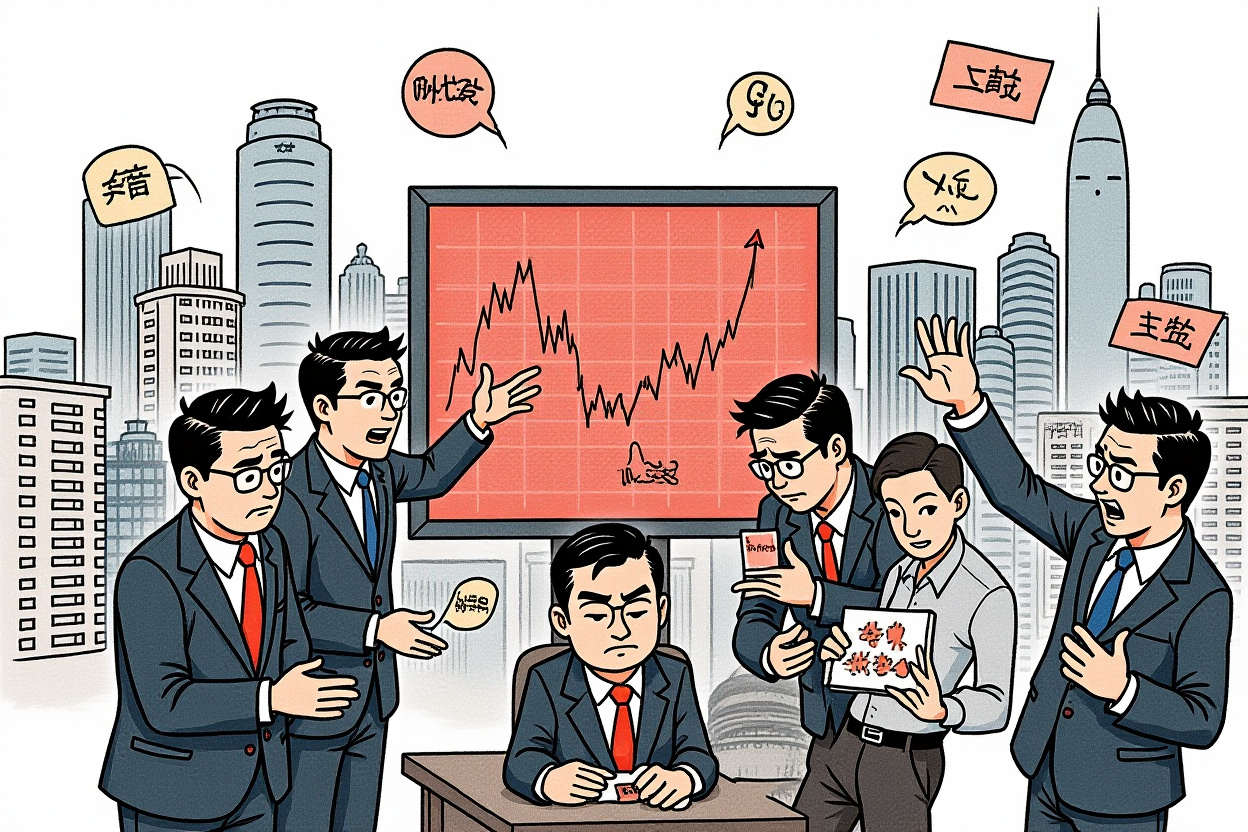
- A sudden global asset sell-off triggered by unexpected economic data and geopolitical tensions has rattled international markets, with Chinese equities experiencing significant volatility.
- Key Chinese indices, including the Shanghai Composite (上证综指) and Shenzhen Component (深证成指), saw sharp declines, highlighting vulnerabilities in technology and consumer sectors.
- Regulatory bodies like the People’s Bank of China (中国人民银行) and China Securities Regulatory Commission (中国证券监督管理委员会) are implementing measures to stabilize markets and restore investor confidence.
- Investors are advised to focus on hedging strategies and long-term opportunities in resilient sectors such as renewable energy and healthcare.
- Historical comparisons suggest that while short-term turbulence is likely, Chinese markets may recover faster due to strong domestic demand and policy support.
Financial markets worldwide were jolted awake by a dramatic overnight global asset sell-off, sending shockwaves through Asian trading sessions and putting Chinese equity investors on high alert. This sudden downturn, reminiscent of past crises, has raised urgent questions about the resilience of China’s financial ecosystem and the effectiveness of its regulatory safeguards. As portfolios from New York to Tokyo reel from the plunge, attention turns to how Beijing will navigate this turbulence and whether Chinese equities can emerge stronger. The global asset sell-off underscores the interconnected nature of modern finance, where localized events can rapidly escalate into worldwide phenomena.
Causes of the Overnight Global Asset Sell-Off
The abrupt global asset sell-off was fueled by a confluence of factors, including weaker-than-expected economic indicators from major economies and escalating geopolitical friction. U.S. inflation data exceeding forecasts, combined with renewed trade tensions, eroded investor confidence, triggering a flight to safety. In Europe, political instability and energy supply concerns exacerbated the downturn, while in Asia, currency fluctuations and capital outflows amplified the sell-off’s intensity. This perfect storm of negative catalysts highlights the fragility of global financial stability in an era of heightened uncertainty.
Economic Data Triggers
Recent releases of key economic metrics played a pivotal role in the global asset sell-off. For instance, U.S. core CPI (Consumer Price Index) rose by 0.4% month-over-month, surpassing expectations and reinforcing fears of persistent inflation. Similarly, China’s industrial production growth slowed to 4.5% year-over-year, missing projections and signaling potential headwinds for export-oriented sectors. These data points, coupled with declining PMI (Purchasing Managers’ Index) readings across multiple regions, prompted investors to reassess risk exposures and liquidate positions in equities and commodities. The global asset sell-off thus reflects a broader recalibration of growth expectations amid tightening monetary policies.
Geopolitical Tensions
Ongoing geopolitical disputes, particularly involving trade and technology, have intensified market anxieties. Recent sanctions and export controls between the U.S. and China have disrupted supply chains, while conflicts in Eastern Europe and the Middle East have elevated energy prices and security concerns. These tensions not only dampen global trade volumes but also inject volatility into currency markets, as seen with the Chinese yuan (人民币) experiencing heightened pressure. The global asset sell-off is, in part, a response to these unresolved geopolitical risks, which threaten to undermine economic cooperation and investor sentiment.
Impact on Chinese Equity Markets
Chinese equities bore the brunt of the global asset sell-off, with major indices recording substantial losses during early trading. The Shanghai Composite (上证综指) fell by 3.2%, while the Shenzhen Component (深证成指) dropped 4.1%, erasing gains from the previous week. Technology stocks, including giants like Tencent Holdings (腾讯控股) and Alibaba Group (阿里巴巴集团), led the decline due to their sensitivity to global risk appetite and regulatory scrutiny. The sell-off also exposed weaknesses in highly leveraged sectors, such as real estate, where developers like China Evergrande (中国恒大) faced renewed liquidity concerns. This downturn underscores the vulnerability of Chinese markets to external shocks, despite robust domestic fundamentals.
Shanghai Composite and Shenzhen Component Reactions
The Shanghai Composite (上证综指) and Shenzhen Component (深证成指) exhibited pronounced volatility, with trading volumes spiking by over 20% compared to averages. Sectoral analysis revealed that consumer discretionary and financial stocks were among the hardest hit, reflecting fears of slowing domestic demand and credit risks. In contrast, defensive sectors like utilities and healthcare showed relative resilience, attracting safe-haven flows. The global asset sell-off has prompted a reassessment of valuation metrics, with price-to-earnings ratios for Chinese equities adjusting downward to align with revised growth outlooks. Investors are closely monitoring technical support levels, such as the 3,200-point mark for the Shanghai Composite, to gauge potential rebound opportunities.
Sector-Specific Vulnerabilities
Certain sectors within Chinese equities demonstrated heightened susceptibility to the global asset sell-off. Technology firms, particularly those with significant overseas revenue exposure, faced double-digit percentage declines amid supply chain disruptions and regulatory hurdles. For example, semiconductor companies like SMIC (中芯国际) saw shares tumble by 6.5% on concerns over export controls. Similarly, consumer goods companies struggled with inventory buildup and weakened export orders, highlighting the sector’s dependence on global economic health. The global asset sell-off has accelerated a shift toward domestically focused industries, such as e-commerce and green energy, which benefit from government stimulus and inward-looking policies.
Regulatory Response from Chinese Authorities
In response to the global asset sell-off, Chinese regulatory authorities have swiftly introduced measures to cushion the impact and restore market stability. The People’s Bank of China (中国人民银行) announced a 50-basis-point cut to the reserve requirement ratio (RRR), injecting approximately 1.2 trillion yuan (人民币) of liquidity into the banking system. Simultaneously, the China Securities Regulatory Commission (中国证券监督管理委员会) eased margin requirements and suspended short-selling on select stocks to curb speculative pressures. These interventions aim to bolster confidence and prevent a downward spiral, reflecting Beijing’s proactive approach to financial risk management. The global asset sell-off has thus catalyzed a coordinated effort to uphold systemic stability and support economic recovery.
People’s Bank of China Measures
The People’s Bank of China (中国人民银行) has deployed a multi-pronged strategy to mitigate the effects of the global asset sell-off. Beyond RRR reductions, the central bank has conducted open market operations to ensure ample yuan (人民币) liquidity and stabilize interbank rates. Governor Pan Gongsheng (潘功胜) emphasized the bank’s commitment to “targeted and flexible” monetary policy, tailored to address sector-specific stresses. Additionally, the PBOC has coordinated with commercial banks to extend credit lines to small and medium-sized enterprises (SMEs), which are particularly vulnerable to funding crunches during market downturns. These actions underscore the central bank’s role as a first responder in times of financial turbulence.
China Securities Regulatory Commission Actions
The China Securities Regulatory Commission (中国证券监督管理委员会) has implemented regulatory adjustments to shield markets from the worst of the global asset sell-off. Key initiatives include accelerating the approval of equity-backed ETFs (exchange-traded funds) to facilitate institutional buying and introducing circuit breakers for extreme volatility. Chairman Yi Huiman (易会满) affirmed the CSRC’s focus on “maintaining fair and orderly markets” while enhancing transparency through real-time disclosures. The commission is also collaborating with international bodies to align regulatory standards and foster cross-border cooperation, recognizing that the global asset sell-off demands a unified response. These efforts aim to rebuild investor trust and promote sustainable market development.
Investor Strategies in Volatile Times
Amid the global asset sell-off, investors are recalibrating strategies to navigate heightened uncertainty and capitalize on dislocations. Diversification across asset classes, including bonds, gold, and stable dividend-paying stocks, has gained prominence as a risk-mitigation tactic. Quantitative funds are leveraging algorithmic models to identify oversold opportunities, while long-term institutional investors are increasing allocations to sectors aligned with China’s strategic priorities, such as semiconductors and renewable energy. The global asset sell-off presents a dual challenge and opportunity, requiring disciplined asset allocation and a focus on fundamentals rather than short-term noise.
Hedging Techniques
Effective hedging is critical in managing exposure during a global asset sell-off. Popular methods among sophisticated investors include:
- Using put options on broad indices like the CSI 300 (沪深300) to protect against further declines.
- Implementing pairs trading, such as going long on defensive sectors while shorting cyclical ones.
- Increasing holdings in gold and other safe-haven assets, which tend to appreciate during market stress.
These strategies help cushion portfolios from extreme volatility and provide liquidity for opportunistic purchases when markets stabilize. The global asset sell-off has underscored the importance of dynamic risk management in preserving capital.
Long-Term Opportunities
Despite the near-term pain, the global asset sell-off has created attractive entry points for patient investors. Sectors poised for growth include:
- Electric vehicles (EVs), supported by government subsidies and rising consumer adoption.
- Healthcare, driven by demographic shifts and policy reforms under Healthy China 2030.
- Infrastructure, benefiting from fiscal stimulus and urbanization initiatives.
Historical data shows that Chinese equities have historically rebounded strongly post-sell-offs, with the CSI 300 delivering an average annual return of 12% following similar events. The global asset sell-off, while disruptive, may ultimately reinforce the case for strategic, long-term investment in China’s evolving economy.
Historical Context and Future Outlook
The current global asset sell-off draws parallels to previous episodes, such as the 2015 Chinese stock market crash and the 2020 COVID-19 sell-off, yet differs in its triggers and scope. Unlike past crises driven primarily by domestic factors, this downturn is rooted in global interconnectedness, with cross-border capital flows amplifying its spread. Looking ahead, recovery will hinge on the resolution of geopolitical tensions, the effectiveness of policy interventions, and the resilience of consumer demand. The global asset sell-off serves as a reminder of the need for robust risk frameworks and international cooperation to safeguard financial stability.
Comparison to Past Market Turmoil
Historical analysis reveals that the global asset sell-off shares characteristics with the 2008 financial crisis in terms of liquidity crunches and the 2018 trade war in its impact on supply chains. However, China’s increased integration into global finance means that external shocks now transmit more rapidly to domestic markets. For instance, during the 2015 crash, the Shanghai Composite (上证综指) fell by over 40%, but recovery was swift due to aggressive stimulus. Similarly, the current sell-off may see a V-shaped rebound if policy measures gain traction and global risk appetite improves. The global asset sell-off is thus a test of China’s economic maturity and policy agility.
Projections for Recovery
Economic forecasts suggest that the global asset sell-off could moderate within quarters, contingent on stabilizing inflation and geopolitical de-escalation. For Chinese equities, analysts project a gradual recovery, with the Shanghai Composite (上证综指) potentially reclaiming pre-sell-off levels by year-end if corporate earnings meet expectations. Key indicators to watch include PMI data, foreign reserve levels, and credit growth, which will signal the health of the underlying economy. The global asset sell-off may accelerate structural shifts, such as digitalization and green transition, positioning China for sustained growth beyond the immediate turmoil.
In summary, the overnight global asset sell-off has exposed both vulnerabilities and opportunities within Chinese equity markets. While short-term volatility is inevitable, strategic investors can leverage this disruption to build resilient portfolios aligned with long-term trends. Regulatory support and economic fundamentals provide a sturdy foundation for recovery, but vigilance and adaptability remain essential. As markets evolve, staying informed through reliable sources and adopting a disciplined investment approach will be crucial for navigating future uncertainties. Take action now by reviewing your asset allocation and consulting with financial advisors to optimize your exposure to Chinese equities in this dynamic environment.