



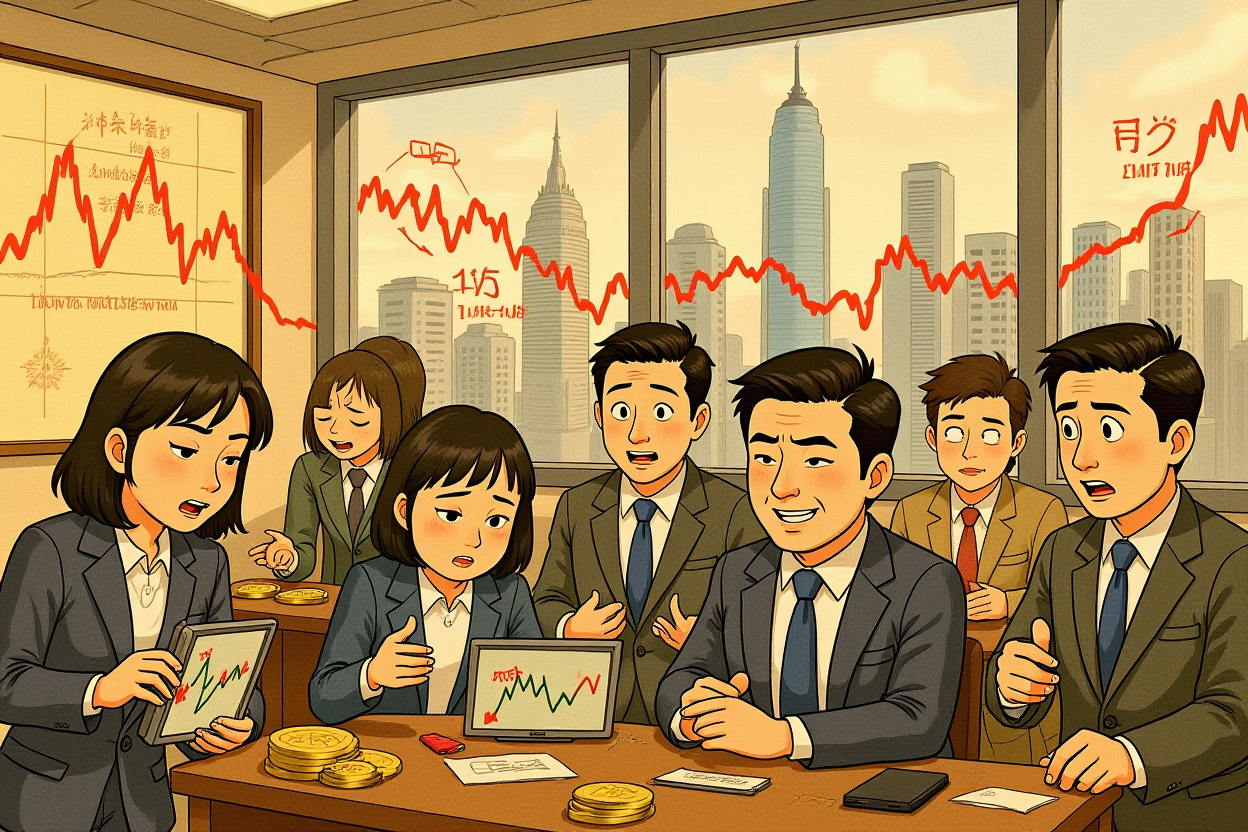
• Recent collective limit-down events in gold and silver on Chinese exchanges have sparked global concern, highlighting intense market volatility and systemic risks. • Macroeconomic factors, including rising global interest rates and a strengthening US dollar, are primary catalysts, exacerbated by domestic Chinese economic policies and speculative trading. • Key actors such as institutional investors, retail speculators, and regulatory bodies like the China Securities Regulatory Commission (CSRC) are instrumental in driving the sell-off. • This analysis provides actionable insights for investors to mitigate risks and capitalize on opportunities in the evolving commodities landscape. • Understanding the dynamics behind the gold and silver sell-off is crucial for informed decision-making in Chinese and global markets.
The sudden and synchronized plunge in gold and silver prices has sent shockwaves through global commodity markets, with Chinese exchanges experiencing collective limit-down falls that have left investors scrambling for answers. Behind the gold and silver sell-off, a complex web of factors is at play, from shifting monetary policies to heightened speculative activity, raising critical questions about market stability. For sophisticated professionals engaged in Chinese equities and commodities, deciphering who is driving this market smash is not merely academic—it is essential for risk management and strategic positioning in an increasingly volatile environment. This article delves into the intricacies of these market movements, examining the key players and forces behind the gold and silver sell-off, and providing actionable insights to navigate the turmoil.
The Anatomy of a Collective Limit-Down in Commodity Markets
Collective limit-down events, where multiple commodity contracts hit their daily maximum allowable price decline simultaneously, serve as stark indicators of market distress, often triggering cascading effects across financial systems. In Chinese markets, these occurrences are closely monitored as they reflect broader economic sentiments and liquidity constraints, particularly in precious metals like gold and silver.
Understanding Limit-Down Mechanisms on Chinese Exchanges
On major Chinese exchanges such as 上海期货交易所 (Shanghai Futures Exchange) and 上海黄金交易所 (Shanghai Gold Exchange), limit-down rules are designed to curb excessive volatility by halting trading when prices fall by predetermined percentages, typically ranging from 6% to 10% for precious metals contracts. These mechanisms aim to prevent panic selling but can also trap sellers and exacerbate liquidity crunches during sharp declines. For instance, recent sessions have seen gold futures contracts repeatedly trigger these limits, with data from Wind资讯 (Wind Information) indicating a surge in trading volumes by over 150% alongside declining open interest—a clear sign of forced liquidations. This dynamic underscores the fragility of market structures when faced with intense selling pressure, making it vital to analyze the forces behind the gold and silver sell-off.
Case Study: The Recent Gold and Silver Plunge
In early 2023, a series of limit-down events in gold and silver futures captivated global attention, with prices tumbling amid a confluence of external and domestic pressures. Analysis reveals that behind the gold and silver sell-off, factors such as hawkish Federal Reserve policies, a rallying US dollar, and subdued demand from key consumers like India and China created a perfect storm. For example, the most active gold contract on the Shanghai Futures Exchange fell by 8% in a single day, activating limit-down and sparking a wave of sell orders across related instruments. This case study highlights how global macroeconomic shifts can intertwine with local market mechanisms to amplify declines, emphasizing the need for investors to stay vigilant.
Macroeconomic Catalysts Driving the Sell-Off
Global economic trends are fundamental drivers of commodity prices, and the current environment presents significant headwinds for precious metals, influencing investor behavior and market outcomes.
Global Interest Rate Dynamics and Currency Fluctuations
As central banks, particularly the Federal Reserve, aggressively raise interest rates to combat inflation, the opportunity cost of holding non-yielding assets like gold increases, leading to massive outflows from gold-backed ETFs. Global holdings have dropped by over 100 tonnes in recent quarters, according to industry reports. Concurrently, a stronger US dollar makes dollar-denominated commodities more expensive for foreign buyers, reducing demand. For Chinese investors, this is compounded by 人民币 (Renminbi) exchange rate dynamics, where a weaker yuan can magnify losses on international positions, further fueling the sell-off. Understanding these interconnections is key to grasping the forces behind the gold and silver sell-off.
China’s Economic Indicators and Policy Shifts
Domestically, China’s uneven economic recovery, as reflected in disappointing industrial production and consumer spending data from 国家统计局 (National Bureau of Statistics), has dampened sentiment toward commodities. The 中国人民银行 (People’s Bank of China) has maintained a cautious monetary stance, refraining from broad stimulus that might support precious metals prices. Additionally, government policies aimed at reducing financial risk have tightened credit conditions, impacting speculative positions in commodities. With Purchasing Managers’ Index (PMI) figures declining, investors have grown wary, contributing to the downward spiral. These factors collectively underscore the multifaceted nature of the market movements behind the gold and silver sell-off.
Identifying the Key Actors Behind the Market Smash
Behind the gold and silver sell-off, various market participants are actively influencing price movements, each with distinct motivations and strategies that shape market dynamics.
Institutional Investors: Hedge Funds and Asset Managers
Large institutional players, including international hedge funds and domestic asset managers, have been net sellers in recent months, driven by macroeconomic assessments and risk models. For instance, funds like Bridgewater Associates reduced their gold exposure by 30% in Q1 2023, citing headwinds from rising rates. In China, asset managers such as 华夏基金 (China Asset Management Co., Ltd.) have rebalanced portfolios away from commodities toward equities, influenced by relative value analyses. Their algorithmic trading models can trigger rapid sell-offs when specific thresholds are breached, amplifying market volatility. As noted by Goldman Sachs analyst, “The volatility in precious metals is a reflection of broader macroeconomic uncertainties,” highlighting the role of institutional decisions in driving the sell-off.
Retail Speculators and the Role of Margin Trading
Retail investors in China, facilitated by online brokerage platforms, have increasingly engaged in margin trading for commodities, leveraging positions to amplify gains but also risks. Data from 中国证券登记结算有限责任公司 (China Securities Depository and Clearing Corporation) shows that margin debt in commodity accounts rose by 25% year-over-year before the recent decline, indicating heightened speculation. When prices fell, margin calls forced many retail traders to liquidate positions abruptly, adding downward pressure. This behavior is a critical component behind the gold and silver sell-off, as it creates feedback loops that can exacerbate market swings. For more insights, refer to regulatory announcements on margin requirements from the 中国证监会 (China Securities Regulatory Commission).
Regulatory Environment and Its Impact
Chinese regulatory bodies play a pivotal role in shaping market behavior, with interventions that can either mitigate or exacerbate volatility in commodity markets.
Interventions by 中国证监会 (China Securities Regulatory Commission)
The CSRC has been closely monitoring commodity markets, expressing concern over excessive speculation and issuing guidelines to enhance risk management. In response to limit-down events, exchanges like 上海期货交易所 (Shanghai Futures Exchange) temporarily adjusted margin requirements for gold and silver contracts to curb leverage. Such measures aim to stabilize markets but can also create uncertainty, influencing trader behavior and liquidity. For example, recent CSRC statements emphasize investor education and market surveillance, which may deter speculative excesses. Understanding these regulatory actions is essential for decoding the forces behind the gold and silver sell-off.
中国人民银行 (People’s Bank of China) Policies on Precious Metals
The PBOC influences gold markets through its reserve management and monetary policies, with its buying pace slowing recently, contributing to softer demand. Policies related to capital controls and foreign exchange also affect how domestic investors access international commodity markets. For instance, adjustments in 人民币 (Renminbi) valuation can impact the attractiveness of gold as a hedge. By analyzing PBOC reports and policy shifts, investors can gain insights into the broader economic context driving the sell-off.
Market Correlations and Spillover Effects
The sell-off in precious metals does not occur in isolation; it has ripple effects across related asset classes and global markets, influencing investment strategies worldwide.
Linkages Between Equity Markets and Commodities
In China, there is a historical correlation between commodity prices and equity performance, particularly in sectors like mining and jewelry. When gold and silver plummet, stocks of companies such as 紫金矿业 (Zijin Mining Group Co., Ltd.) often follow suit, impacting broader indices like 沪深300 (CSI 300). Analysis from 中金公司 (China International Capital Corporation Limited) indicates that during recent events, the materials sector underperformed the market by 5%, illustrating spillover effects. This interdependency means that investors must consider cross-asset exposures when assessing the forces behind the gold and silver sell-off.
International Implications for Gold and Silver Trading
Globally, movements in Chinese markets influence prices on exchanges like COMEX and LBMA, creating arbitrage opportunities and shaping international benchmarks. As Chinese demand wanes due to domestic factors, international prices can experience pressure, affecting global portfolios. For instance, if Chinese investors unwind positions amid regulatory changes, it could lead to discounted prices overseas, attracting bargain hunters. This interconnectedness underscores the importance of a global perspective when analyzing the sell-off, as events behind the gold and silver sell-off in China resonate across borders.
Strategic Responses for Investors
In light of these developments, market participants must adapt their approaches to manage risk and capitalize on opportunities in volatile commodity markets.
Risk Mitigation Techniques in Volatile Markets
Investors should consider employing hedging strategies, such as using options on gold and silver futures to protect against downside risks. Diversification across asset classes and geographies can reduce exposure to single-market shocks, while monitoring liquidity indicators and exchange announcements provides early warnings of potential limit-down scenarios. Tools from providers like Bloomberg or Refinitiv offer real-time data to aid decision-making. Additionally, maintaining a cash buffer can help navigate sudden margin calls, a lesson learned from the recent sell-off behind the gold and silver sell-off.
Long-Term Investment Strategies for Precious Metals
Despite short-term volatility, gold and silver remain foundational assets for portfolio insurance, especially during economic uncertainties. Investors with a long-term horizon might view the current sell-off as a buying opportunity if prices fall below production costs. Consulting with experts from firms like Goldman Sachs or local advisors can provide tailored insights, while considering physical holdings or low-cost ETFs offers stable exposure. By staying informed about macroeconomic trends and regulatory changes, investors can position themselves to benefit from eventual recoveries, turning the turmoil behind the gold and silver sell-off into strategic advantages.
The collective limit-down in gold and silver markets is a multifaceted event driven by macroeconomic trends, institutional actions, and regulatory frameworks. Behind the gold and silver sell-off, key players including hedge funds, retail speculators, and central banks are shaping outcomes, with significant implications for Chinese and global investors. By understanding these dynamics, market participants can better navigate volatility and make informed decisions, turning challenges into opportunities for portfolio growth and risk management.
Moving forward, investors should maintain a vigilant watch on interest rate policies, currency movements, and regulatory updates from bodies like the CSRC and PBOC. Incorporating commodities into a balanced portfolio, with appropriate risk controls, can help mitigate the impact of such sell-offs. Ultimately, staying informed and agile is crucial in today’s interconnected financial landscape. We encourage readers to delve deeper into market data, consult professional advice, and explore resources like exchange websites for real-time insights to tailor strategies to their specific needs and capitalize on evolving market conditions.