



Executive Summary
- – Treasury Secretary Bessant (贝森特) argues firing Fed Chair Powell is unnecessary and counterproductive
- – Legal challenges could prolong Powell’s tenure beyond Trump’s potential term
- – Trump will gain critical Fed appointment opportunities in early 2026
- – Budget Director Russell Vought leads parallel pressure campaign against Powell
- – Market stability concerns overshadow policy disagreements
The Power Struggle Over Federal Reserve Leadership
The simmering tension between President Trump and Federal Reserve Chair Jerome Powell reached new heights last week when senior administration officials confirmed Trump privately discussed removing Powell. Rumors swirled about possible replacements – until Treasury Secretary Bessant (贝森特) emerged as the administration’s pivotal voice urging restraint. His intervention marks a critical moment for U.S. monetary policy independence.
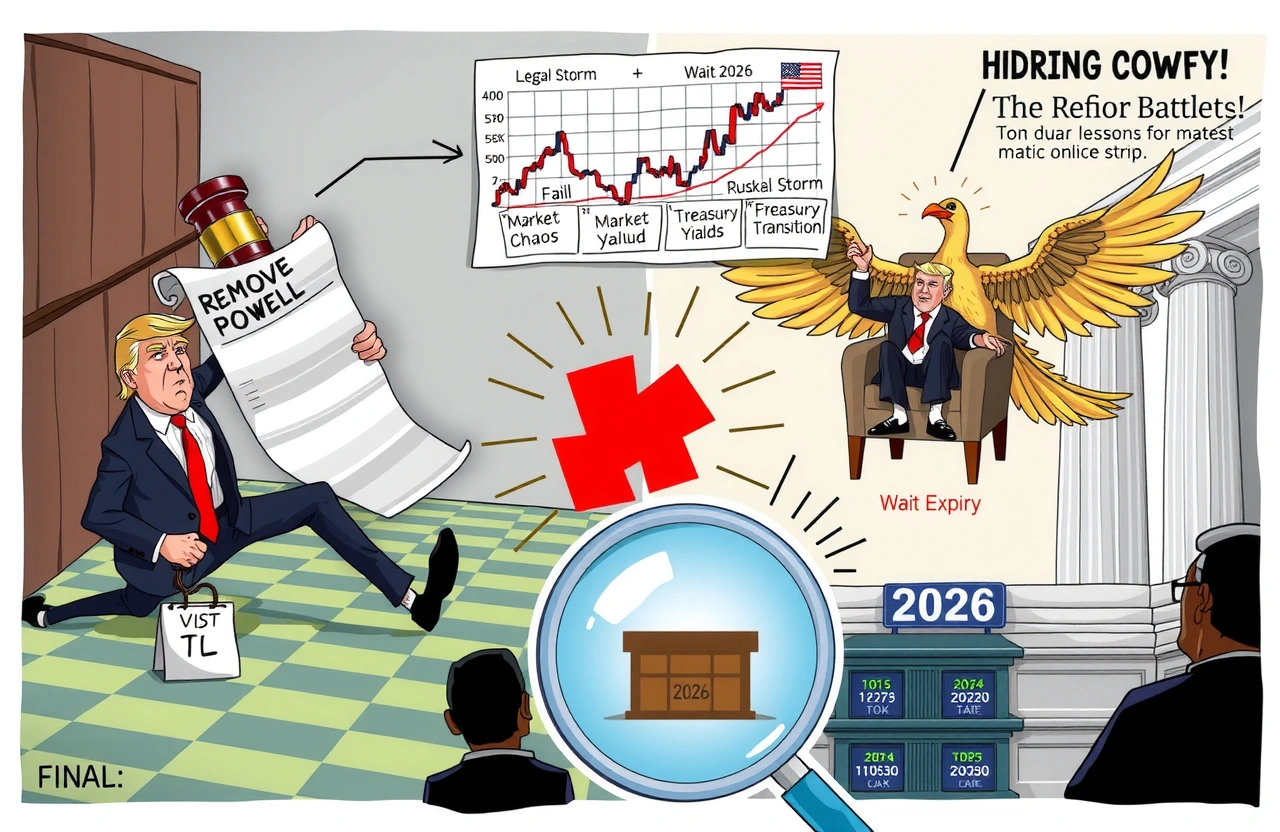
According to sources inside Treasury Department meetings, Bessant presented Trump with three concrete arguments against Powell’s dismissal: First, the economy shows robust performance indicators including 3.2% Q1 GDP growth and sub-4% unemployment. Second, Powell has privately signaled commitment to potential rate cuts later this year aligning with Trump’s preference for looser policy. Third, and most decisively, legal experts confirm any dismissal attempt would trigger lawsuits potentially extending Powell’s term beyond spring 2026 – when his Chairmanship naturally concludes – while creating damaging market uncertainty.
The Legal Lightning Rod
The Federal Reserve Act shields governors from political removal through its “for cause” provisions. Historical precedent requires demonstrating gross misconduct or incapacity – vastly exceeding mere policy disagreements according to Yale Law scholars. Trump advisors privately concede any dismissal attempt would trigger federal lawsuits likely to reach the Supreme Court. Such litigation would coincide with both debt ceiling negotiations and Trump’s possible reelection campaign according to Congressional Research Service analysis.
The Vacancy Opportunity
Bessant’s most persuasive argument centers on upcoming Fed vacancies providing natural leadership transition points:
- – Governor Adriana Kugler’s term expires January 2026
- – Powell’s Chair position concludes May 2026
- – Trump would appoint replacements for both offices
This strategic patience approach bypasses legal quagmires while allowing Trump to reshape the central bank through legitimate nominating authority – a path already proving successful with Trump’s appointment of Governors Christopher Waller and Michelle Bowman.
The Bessant Counteroffensive
This marks Treasury’s third intervention against Powell’s removal since April. Unlike Commerce Secretary Rutnik’s tentative objections, Bessant meticulously documented his position through POLICY MEMOS citing CBO projections showing premature tightening risks triggering recession within 18 months. His analytics team demonstrated how Powell’s June pivot toward dovishness has already compressed Treasury yields by 37 basis points.
Economic Alignment Paradox
Behind Bessant’s reasoning lies a fundamental paradox: Trump policies arguably benefit from Powell’s stewardship. Inflation has cooled from 9.1% peak to 3.3% under restrictive policies while markets delivered record gains – the S&P 500 climbed 16% since Powell began hiking despite Treasury warnings about oversteering. International Monetary Fund analysis shows this combination of falling inflation and rising valuations occurs historically less than 15% of tightening cycles.
The Biden-Era Continuity
Significantly, Acting Vice Chair Philip Jefferson – Powell’s successor per Federal Reserve succession rules – was appointed by President Biden. Any chaotic transition would place Jefferson in charge potentially extending Biden’s influence through Trump’s potential second term. “This doubles the irony” commented former Fed economist Claudia Sahm: “Removing Trump’s appointee puts Biden’s appointee in charge sooner.”
The Vought Pressure Alternative
Parallel to Treasury’s efforts, White House Budget Director Russell Vought drives an aggressive accountability campaign scrutinizing Powell’s management. His team assembled forensic audits of Federal Reserve Board operations identifying:
- – $234 million Headquarters renovation cost overruns
- – Cybersecurity vulnerability risks
- – Governance gaps in Federal Reserve Bank oversight
The Renovation Controversy
The $425 million Fed headquarters renovation became Vought’s primary leverage point. Materials costs ballooned unexpectedly when contractors discovered structural reinforcement needs and buried utility conflicts. Forensic audits indicate limited oversight but no personal corruption according to inspector reports – a nuance Vought omits highlighting “management failures” instead.
Legal Maneuvering
By installing three advisors to the DC Planning Commission that approved Federal Reserve design permissions, Vought created procedural leverage. His team requested special inspections and threatened comprehensive audits. Legal analysts interpret this as groundwork to establish “for cause” dismissal thresholds should Powell resist White House policy preferences.
Market Reactions: The Independence Factor
The mere suggestion of Powell’s dismissal roiled markets briefly:
| Metric | Impact |
|---|---|
| VIX Index | Spiked 19% intraday |
| 2-Year Treasury | Yield volatility surged to 17.3bps daily moves |
| Fed Funds Futures | December rate cut probability dropped 11% |
Central Bank Independence Assessed
Market responses validate Bessant’s independence concerns. The Peterson Institute recently downgraded Fed independence 27% since 2020 – its lowest ranking since Congressional overhauled Fed operating parameters during 1980 Volcker-era inflation fights. “The credibility discount grows exponentially” noted former New York Fed President William Dudley: “Each threat reduces policy effectiveness roughly 15% per inflation study.”
The Endgame: Vacancies Over Vengeance
With 2026 transitions approaching Bessant advocates nominating dovish replacements through standard procedures. The Treasury crafted candidate lists prioritizing nominees with both technical competencies and policy orientations aligning with Trump’s six percent GDP growth target. Candidates reportedly include:
- – Former FDIC Chair Jelena McWilliams
- – Columbia economist Glenn Hubbard
- – BB&T ex-CEO Kelly King
The Institutional Stewardship Argument
Bessant’s presentations emphasize institutional preservation. Historical analogies highlight damage when leaders bypass systems: Andrew Jackson removing Treasury Secretary Duane precipitated banking collapse while Nixon Fed pressure exacerbated stagflation. His charts contrast BRICS nations’ GDP growth declines after politicizing central banks against U.S. institutional stability advantages.
The emerging compromise sees political pressure leveraging Powell’s discretionary policies while avoiding formal removal. Powell tacitly acknowledged this balance at Jackson Hole signaling rate cut preparation contingent on inflation moderation – precisely the calibrated response market participants expect. While friction persists Trump ultimately gains responsive Fed governance without destructive showdowns through strategic patience.
The Path Forward
Watch Treasury nominations versus Budget Office audits: Nominating Powell successors protects Trump’s legacy while upholding institutional integrity. Conversely aggressive audits risk institutional collateral damage through politicized oversight. Monitor Federal Reserve budget appropriations – withholding renovation funding might compel cooperation while preserving nominal independence.
The solution transcends personalities embracing institutionalist principles: America prospers when technocrats evaluate inflation risks separately from political currents. Support organizations upholding Federal Reserve governance integrity through Congressional oversight advocacy to preserve independence essentials informing sound monetary navigation through economic uncertainties ahead.