



Executive Summary
- CCTV’s annual 3.15 Consumer Rights Gala exposed deceptive marketing and lack of scientific basis in youth height-growth services, directly implicating firms like Anlishen (安立身) and Dejirui (德脊瑞).
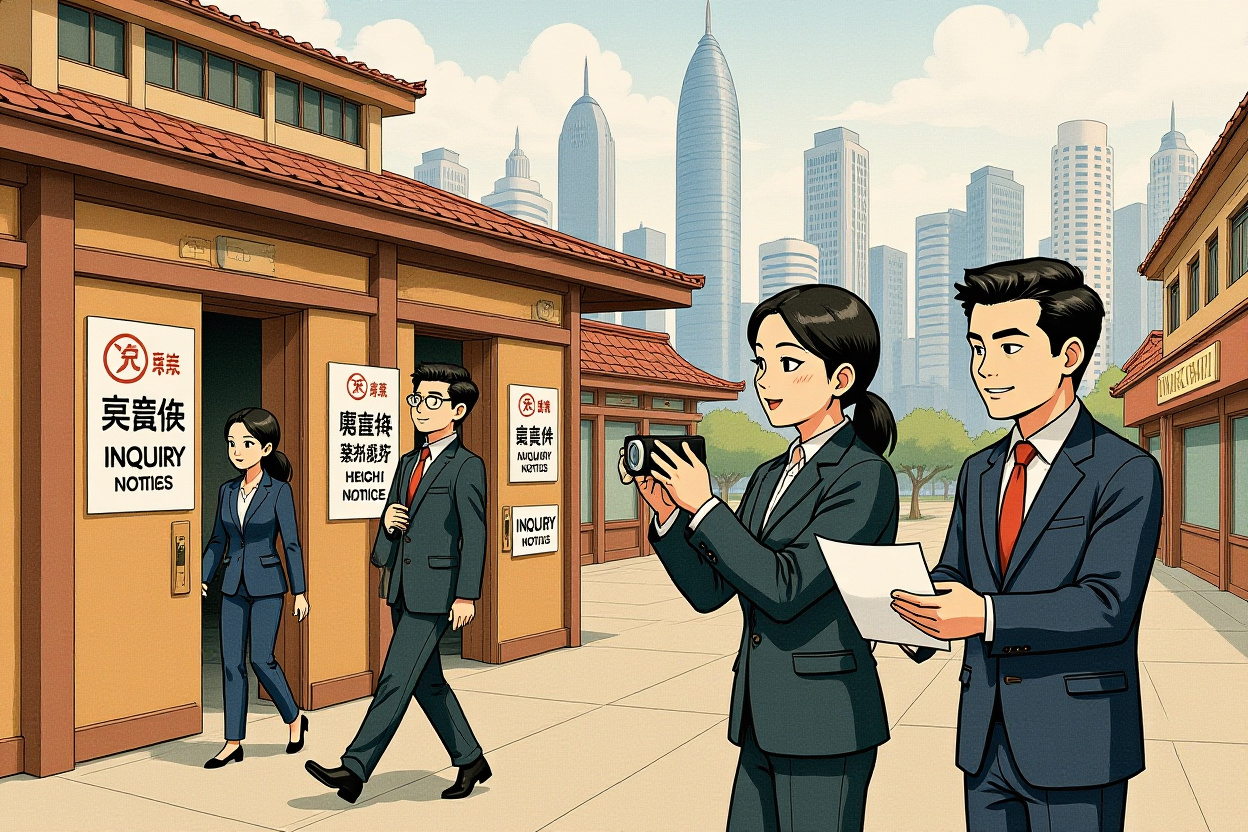
- Immediate on-site investigations revealed shuttered offices, removed signage, and regulatory “inquiry notices” posted at multiple locations, indicating swift enforcement action.
- Despite minimal registered capital (as low as 100,000 RMB for Anlishen and 10,000 RMB for Dejirui), both companies operated extensive nationwide chains, highlighting scalability risks and regulatory gaps in China’s consumer health sector.
- The scandal underscores heightened regulatory risks for businesses targeting parental anxiety, with potential legal penalties and reputational damage that could impact investor sentiment in related equities.
- This episode serves as a critical case study for due diligence, emphasizing the need for investors to scrutinize business models, scientific claims, and compliance records in China’s fast-growing wellness markets.
The CCTV 3.15 Gala Exposé Unleashes a Regulatory Storm
The recent CCTV 3.15 Gala exposé on height-growth services has ignited a firestorm of regulatory scrutiny and public outrage, targeting firms that capitalize on parental fears over children’s stature. This annual television event, produced by China Central Television (CCTV), serves as a powerful watchdog, exposing consumer rights violations and often triggering immediate government action. The 2024 edition focused squarely on the “青少年增高服务” (youth height-growth service) industry, alleging that companies like Anlishen (安立身) and Dejirui (德脊瑞) engaged in false advertising by promising “签约保障、无效退款” (signed guarantee, refund if ineffective) while lacking any credible scientific foundation for their so-called “物理增高” (physical height-increasing) methods.
The program’s allegations suggest these firms were merely riding the wave of natural child growth, deceiving parents with marketing gimmicks. For global investors monitoring Chinese consumer markets, the CCTV 3.15 Gala exposé on height-growth services is a stark reminder of the reputational and regulatory volatility inherent in sectors driven by emotive demand. The immediate fallout provides a real-time lesson in how media scrutiny can precipitate rapid enforcement, affecting corporate operations and, potentially, market valuations.
From Broadcast to Boardroom: The Immediate Aftermath
Within hours of the broadcast, local market regulators sprang into action. In Zhejiang province, where both companies have significant operations, authorities launched coordinated investigations. The Zhejiang Provincial Market Supervision Administration announced it would “严肃处理” (deal seriously with) any violations, signaling a no-tolerance stance. This swift response is characteristic of China’s regulatory environment, where high-profile media exposures often catalyze preemptive strikes by officials to demonstrate efficacy and protect consumer interests.
For institutional investors, the timing and scale of the response underscore the importance of monitoring not just financial metrics but also media and regulatory cycles. The CCTV 3.15 Gala exposé on height-growth services has effectively placed the entire youth wellness niche under a microscope, potentially deterring short-term investment and prompting reevaluation of similar business models. As one market analyst noted, “When CCTV’s 3.15 Gala targets a sector, it’s not just a news story—it’s a market event that can wipe out equity value overnight.”
Site Investigations Reveal a Scene of Closure and Inquiry
On March 16, just one day after the exposé aired, journalists from Securities Times conducted field visits to operational sites of both Anlishen (安立身) and Dejirui (德脊瑞) in Hangzhou. What they found was a tableau of regulatory intervention and business disruption. At the offices of Hangzhou Dejirui Technology Co., Ltd. (杭州德脊瑞科技有限公司), a subsidiary of Dejirui, the premises were empty, with a conspicuous “询问通知书” (inquiry notice) affixed to the door. The notice, issued by the Hangzhou High-tech Zone Market Supervision Administration (杭州高新区市场监督管理局), demanded the company’s presence for questioning on March 23 and required the submission of relevant business materials.
The presence of a special police vehicle nearby hinted at the seriousness of the probe. Similarly, at the headquarters of Hangzhou Anlishen Health Management Co., Ltd. (杭州安立身健康管理有限公司) in Binjiang District, the doors were locked, and property management confirmed that government officials had visited the previous night. While no notice was posted there, the local authority, via its “滨江发布” (Binjiang Release) social media account, confirmed that an investigation had been initiated and a case filed. These visual cues—closed doors, removed signage, and official documents—are tangible evidence of the operational halt following the CCTV 3.15 Gala exposé on height-growth services.
A Deep Dive into the Operational Footprint
Further visits to Anlishen’s branch in Hangzhou’s Shangcheng District revealed even more telling details. Located within the Hangzhou Workers’ Cultural Center, a hub for recreational and educational activities, the outlet’s external branding had been completely dismantled. Only by peering through the glass could one spot the company’s logo inside, suggesting a hasty retreat or enforced closure. The interior appeared sparse and unprofessional, belying the lofty claims of advanced height-growth technology.
This on-the-ground reporting confirms the immediate impact of regulatory scrutiny. For investors, such site closures translate directly into revenue interruption, potential lease liabilities, and brand erosion. The CCTV 3.15 Gala exposé on height-growth services has not just sparked investigations; it has frozen business activities, raising urgent questions about liquidity and continuity for these firms and their stakeholders.
Corporate Profiles: Minimal Capital, Maximal Reach
Despite their nationwide presence, both Anlishen (安立身) and Dejirui (德脊瑞) exhibit corporate structures that raise red flags for seasoned investors. Wenzhou Dejirui Health Management Co., Ltd. (温州德脊瑞健康管理有限公司), the parent entity, was established in June 2018 with a registered capital of just 100,000 RMB (approximately $14,000). Its legal representative is Lu Ou (卢瓯), and ownership is split between Li Honghong (李虹鸿) (80%) and Lu Ou (卢瓯) (20%). Astonishingly, this thinly capitalized firm claimed to operate 75连锁店 (chain stores) across China as of March 2024, offering not just height-growth services but also pain management and posture correction.
Similarly, Hangzhou Anlishen Health Management Co., Ltd. (杭州安立身健康管理有限公司) was incorporated in April 2024 with registered capital of 1 million RMB (about $140,000). Its ownership traces back to Wenzhou-based entities, with ultimate controller Chen Heyun (陈和云). Through subsidiaries and孙公司 (grandchild companies), it boasted over 60 outlets nationwide. The disconnect between modest capital bases and extensive networks highlights a franchise-like model reliant on加盟 (franchising) and rapid expansion, often a strategy to quickly capture market share before regulatory catch-up.
Funding Origins and Geographic Concentration
Notably, both companies have roots in Wenzhou, a city in Zhejiang province renowned for its vibrant private entrepreneurship and sometimes speculative investment culture. This geographic linkage suggests access to informal capital networks and a propensity for agile, high-risk business maneuvers. However, it also may imply lighter oversight initially, as local authorities sometimes foster startup growth. The CCTV 3.15 Gala exposé on height-growth services has now disrupted that calculus, bringing intense scrutiny to this Wenzhou-backed venture.
Investors should note that such structures—low capital, high leverage on franchisees, and regional capital hubs—are common in China’s consumer services sector but carry inherent risks. As seen here, they can amplify fallout when regulatory or reputational issues arise, as liabilities may be diffuse yet systemic. The Dejirui group, for instance, already faced legal trouble in September 2023 when it was sued for unauthorized use of celebrity肖像权 (portrait rights), indicating prior governance lapses.
Market Dynamics: Exploiting Anxiety in a Booming Sector
The business model of Anlishen (安立身) and Dejirui (德脊瑞) taps into a profound societal pressure in China: the desire for taller children, often linked to better career and marriage prospects. This has fueled a burgeoning market for height-growth products and services, estimated by some industry reports to be worth billions of yuan annually. Firms typically market directly to parents, offering customized plans, regular measurements, and promises of significant厘米 (centimeter) gains, all wrapped in pseudo-scientific jargon about bone stimulation and posture alignment.
However, medical experts consistently warn that beyond nutrition, exercise, and genetics, there is no proven “physical” method to enhance height once growth plates close. The CCTV 3.15 Gala exposé on height-growth services highlighted this exact discrepancy, featuring interviews with pediatricians who debunked the claims. For investors, this reveals a critical vulnerability: businesses built on scientifically dubious premises are inherently susceptible to regulatory and media backlash, especially in China where authorities are increasingly cracking down on healthcare fraud.
Regulatory Environment and Consumer Protection Trends
China’s regulatory framework for consumer health services has been tightening, particularly under the broader umbrella of “健康中国 2030” (Healthy China 2030) initiatives. The State Administration for Market Regulation (SAMR) (国家市场监督管理总局) has prioritized cleaning up misleading advertisements and unsubstantiated health claims. The CCTV 3.15 Gala exposé on height-growth services fits neatly into this campaign, acting as a catalyst for enforcement actions that might have been brewing.
Key regulations such as the Advertising Law (广告法) and the Law on the Protection of Consumer Rights and Interests (消费者权益保护法) impose strict penalties for false宣传 (promotion). In severe cases, companies can face fines amounting to multiple times their illicit revenue, revocation of business licenses, and even criminal liability for executives. The ongoing investigations into Anlishen and Dejirui will test these provisions, with outcomes likely to set precedents for the wider industry.
Investment Implications and Risk Assessment
For institutional investors and fund managers focused on Chinese equities, this incident offers several cautionary lessons. First, sectors that prey on insecurities—whether height, beauty, or education—are inherently volatile and subject to sudden regulatory interventions. The CCTV 3.15 Gala exposé on height-growth services exemplifies how a single media event can unravel business models, affecting not just the targeted firms but also peers and suppliers. Investors must factor in such event risks when allocating capital to consumer health or wellness stocks.
Second, due diligence must extend beyond financials to include scientific validity, marketing practices, and regulatory compliance history. The fact that Dejirui had a prior lawsuit for肖像权 (portrait rights) infringement was a visible red flag. Similarly, the rapid expansion despite tiny registered capital should have prompted questions about sustainability and risk management. In China’s market, where growth stories can be compelling, it’s easy to overlook governance flaws until a crisis like the CCTV 3.15 Gala exposé on height-growth services brings them to light.
Broader Market Sentiment and Sector Outlook
The immediate fallout has likely dampened sentiment toward similar “consumer upgrade” themes in health and wellness. Publicly listed companies in related sectors, such as nutritional supplements or children’s healthcare, may face indirect scrutiny as investors reassess regulatory exposures. However, this could also benefit legitimate players with robust research and development, as the crackdown weeds out bad actors and potentially consolidates market share.
Moving forward, investors should monitor announcements from regulatory bodies like the SAMR and the National Health Commission (国家卫生健康委员会) for new guidelines or stricter enforcement trends. The aftermath of the CCTV 3.15 Gala exposé on height-growth services may spur tighter licensing requirements or advertising restrictions, increasing compliance costs but also raising barriers to entry—a double-edged sword for incumbents.
Synthesizing the Lessons and Looking Ahead
The swift and decisive response to the CCTV 3.15 Gala exposé on height-growth services underscores a maturation in China’s consumer protection ecosystem, where media, regulators, and public opinion converge to police market abuses. For Anlishen (安立身) and Dejirui (德脊瑞), the path ahead involves navigating investigations that could result in hefty fines, operational restrictions, or even dissolution. Their closures serve as a warning to other firms in the gray areas of health services.
For the investment community, this episode reinforces the imperative of rigorous, holistic due diligence. In fast-growing markets like China, where innovation and exploitation can blur, distinguishing sustainable businesses from fleeting schemes is paramount. The CCTV 3.15 Gala exposé on height-growth services should prompt portfolio managers to audit holdings for similar vulnerabilities, especially in consumer-facing sectors prone to sensational claims.
As regulatory outcomes unfold, they will provide clearer signals about enforcement rigor and potential investment opportunities in the cleanup. Stakeholders are advised to stay informed through official channels and industry reports, adapting strategies to a landscape where consumer trust and regulatory compliance are becoming non-negotiable assets. In the end, the market’s long-term health depends on transparency and accountability—values that this exposé has vividly championed.