



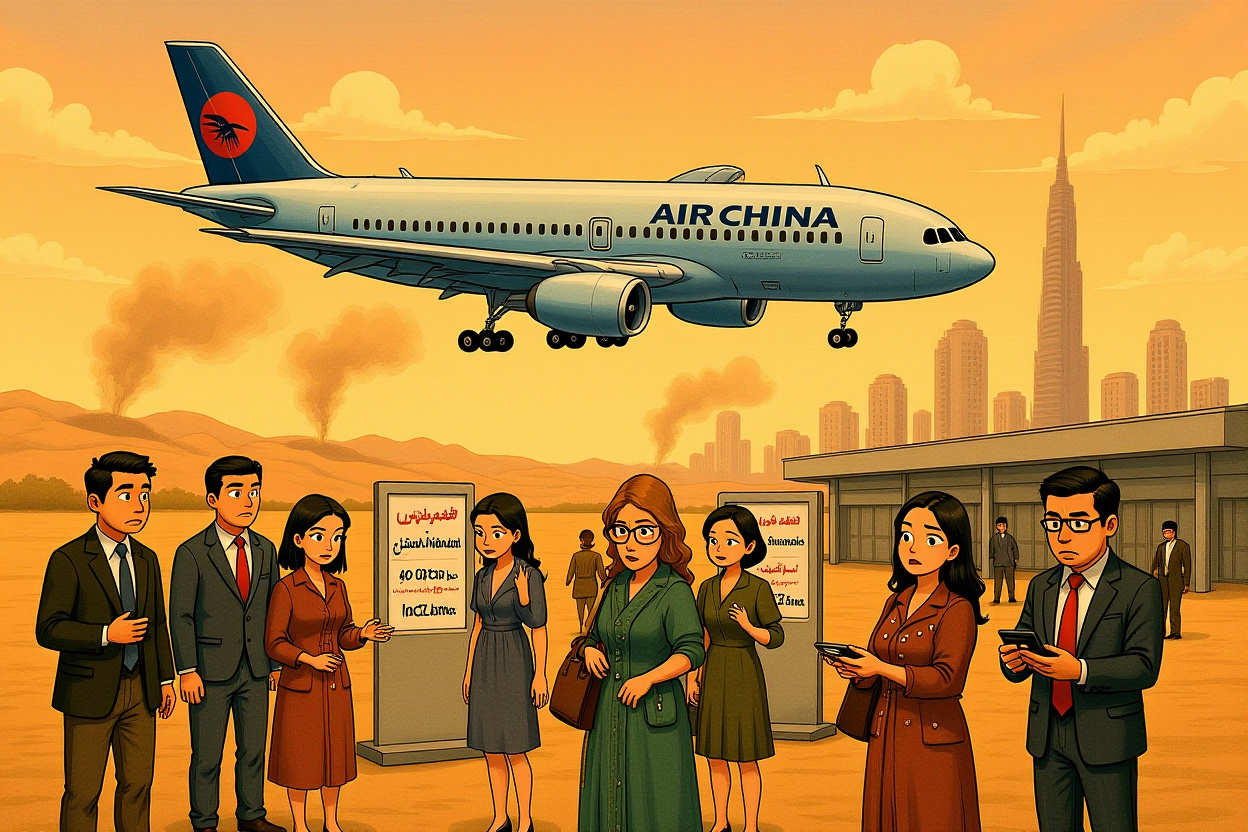
– Explosions reported at Dubai International Airport prompt emergency evacuations and indefinite suspension of all flights to and from the hub.
– Air China 中国国际航空公司 (Air China)’s resumed Beijing-Dubai service, a key route for business travel, is among affected flights, currently circling over Oman with no clear landing time.
– Emirates 阿联酋航空 and Dubai Airport authorities halt operations, advising passengers to avoid the airport, raising immediate safety and security concerns.
– The Dubai International Airport disruption could impact Chinese aviation stocks, investor sentiment, and global travel logistics, with potential ripple effects on equity markets.
– Sophisticated investors should monitor real-time updates from authorities like 中国民用航空局 (Civil Aviation Administration of China) for risk assessment and contingency planning.
In a startling development for global aviation, Dubai International Airport—one of the world’s busiest hubs and a critical node for Asia-Europe travel—was rocked by reported explosions today, leading to an unprecedented shutdown of all flight operations. This Dubai International Airport disruption has immediate repercussions for airlines, passengers, and markets, particularly affecting Chinese carriers like Air China 中国国际航空公司 (Air China) that rely on this route for lucrative business traffic. As emergency protocols are activated and flights are diverted, the incident underscores the fragility of international air travel networks and their susceptibility to sudden safety threats. For investors focused on Chinese equities, especially in the aviation sector, this event serves as a stark reminder of operational risks that can swiftly translate into market volatility. Understanding the full scope of this Dubai International Airport disruption is essential for informed decision-making in high-stakes environments.
The Incident: Unfolding Events at Dubai International Airport
The morning of April 7th saw chaos erupt at Dubai International Airport 迪拜国际机场 (Dubai International Airport), with loud explosions heard within terminal areas, triggering panic among travelers and staff. According to initial reports from 央视新闻 (CCTV News) and other media outlets, authorities swiftly implemented emergency measures, including evacuating portions of the候机楼 (terminal) to underground levels for safety. This rapid response highlights the severity of the threat, though details on the cause—whether related to security breaches, mechanical failures, or other factors—remain under investigation. The Dubai International Airport disruption has since escalated, with airport officials confirming a complete operational pause to assess risks.
Timeline of the Crisis and Immediate Response
The sequence of events began with audible blasts around mid-morning local time, followed by announcements over airport speakers directing evacuations. Within hours, Emirates 阿联酋航空, the flagship carrier, issued a formal statement suspending all inbound and outbound flights indefinitely, advising passengers to stay away from the airport. Dubai International Airport 迪拜国际机场 (Dubai International Airport) later echoed this, citing passenger and crew safety as the priority. Social media footage and eyewitness accounts depicted scenes of confusion, with travelers recounting being rushed to basements as security personnel cordoned off areas. This Dubai International Airport disruption mirrors past aviation emergencies but stands out for its scale in a hub handling over 90 million passengers annually.
Safety Protocols and Passenger Impact
In response to the explosions, airport authorities activated standard emergency protocols, which included:
– Evacuation of terminal sections to designated safe zones, such as underground levels, to minimize exposure to potential hazards.
– Coordination with local law enforcement and emergency services to secure the perimeter and investigate the source of the blasts.
– Communication via airport displays and mobile alerts to keep passengers informed, though many reported delays in updates.
The immediate impact on passengers has been severe, with thousands stranded or rerouted, highlighting vulnerabilities in crisis management. For Chinese travelers, particularly those on business trips, this Dubai International Airport disruption could mean significant logistical headaches and financial losses, emphasizing the need for robust travel insurance and contingency plans.
Impact on Flights and Airlines: A Closer Look
The suspension of operations at Dubai International Airport 迪拜国际机场 (Dubai International Airport) has sent ripples across global aviation networks, affecting numerous carriers and flight schedules. As a major connecting point between Asia, Europe, and Africa, the hub’s closure forces airlines to cancel or divert flights, leading to cascading delays and operational headaches. This Dubai International Airport disruption is particularly impactful for Chinese airlines, which have been gradually restoring international routes post-pandemic to capture growing travel demand. The economic toll includes lost revenue, increased fuel costs from holding patterns, and potential compensation claims from disrupted passengers.
Suspension of Operations: Emirates and Beyond
Case Study: Air China Flight CA101 from BeijingA poignant example of the fallout is Air China 中国国际航空公司 (Air China)’s flight CA101, which resumed service from北京 (Beijing) to迪拜 (Dubai) only recently as part of post-pandemic route expansions. According to第一财经 (First Financial News), this flight was scheduled to land at Dubai International Airport 迪拜国际机场 (Dubai International Airport) approximately an hour before the explosions but has been circling over阿曼 (Oman) airspace indefinitely. Key details include:
– The aircraft, an Airbus A330, carries a mix of business and leisure travelers, many likely involved in cross-border trade or investment activities.
– Fuel constraints and crew duty limits pose operational challenges, with pilots awaiting clearance from air traffic control.
– This incident could dent Air China’s operational metrics, affecting on-time performance and customer satisfaction, potentially weighing on its stock price in the short term.
The Dubai International Airport disruption here underscores how isolated events can disrupt carefully calibrated flight networks, especially for Chinese airlines eyeing growth in Middle Eastern markets.
Broader Implications for Aviation and Travel Sectors
Beyond immediate flight cancellations, this Dubai International Airport disruption raises profound questions about safety, security, and economic resilience in the aviation industry. For stakeholders ranging from airlines to insurers, the incident serves as a stress test for crisis preparedness and risk mitigation strategies. In an era where air travel is rebounding from COVID-19 lows, such disruptions can deter passenger confidence and inflate operational costs, impacting profitability across the board. Moreover, the event highlights geopolitical sensitivities in the Middle East, a region crucial for global logistics and energy flows, adding layers of complexity for international investors.
Safety and Security Concerns in Hub Airports
The reported explosions at Dubai International Airport 迪拜国际机场 (Dubai International Airport), though unconfirmed in origin, prompt a reevaluation of security protocols at major transit points. Authorities have hinted at可能的拦截行动 (possible interception actions) in the skies above, suggesting potential threats that required defensive measures. For Chinese aviation regulators like中国民用航空局 (Civil Aviation Administration of China), this Dubai International Airport disruption may spur reviews of contingency plans for overseas operations, including:
– Enhanced coordination with foreign airports on emergency response.
– Stricter guidelines for Chinese airlines operating in volatile regions.
– Investment in real-time monitoring systems to track global incidents.
Historical precedents, such as past disruptions at香港国际机场 (Hong Kong International Airport) or other hubs, show that safety lapses can lead to prolonged downtimes and reputational damage, affecting airline valuations.
Economic and Operational Fallout for Airlines
The financial impact of the Dubai International Airport disruption is multifaceted, with airlines facing direct and indirect costs. Data from industry analysts estimate that a full-day shutdown at a hub of this scale can result in:
– Revenue losses exceeding $50 million for major carriers like Emirates, with ripple effects on partners.
– Increased expenses from diversions, passenger accommodations, and potential compensation, which could erode quarterly earnings.
– For Chinese airlines, such as中国东方航空 (China Eastern Airlines) or中国南方航空 (China Southern Airlines), which have growing Middle East routes, the disruption might delay recovery efforts and affect investor sentiment.
Quotes from aviation experts, such as those cited in凤凰网 (Phoenix Net) reports, emphasize that while insurance may cover some losses, the operational hassle and brand damage linger. This Dubai International Airport disruption also intersects with broader economic trends, like rising oil prices or supply chain bottlenecks, amplifying uncertainty for market participants.