



Executive Summary:
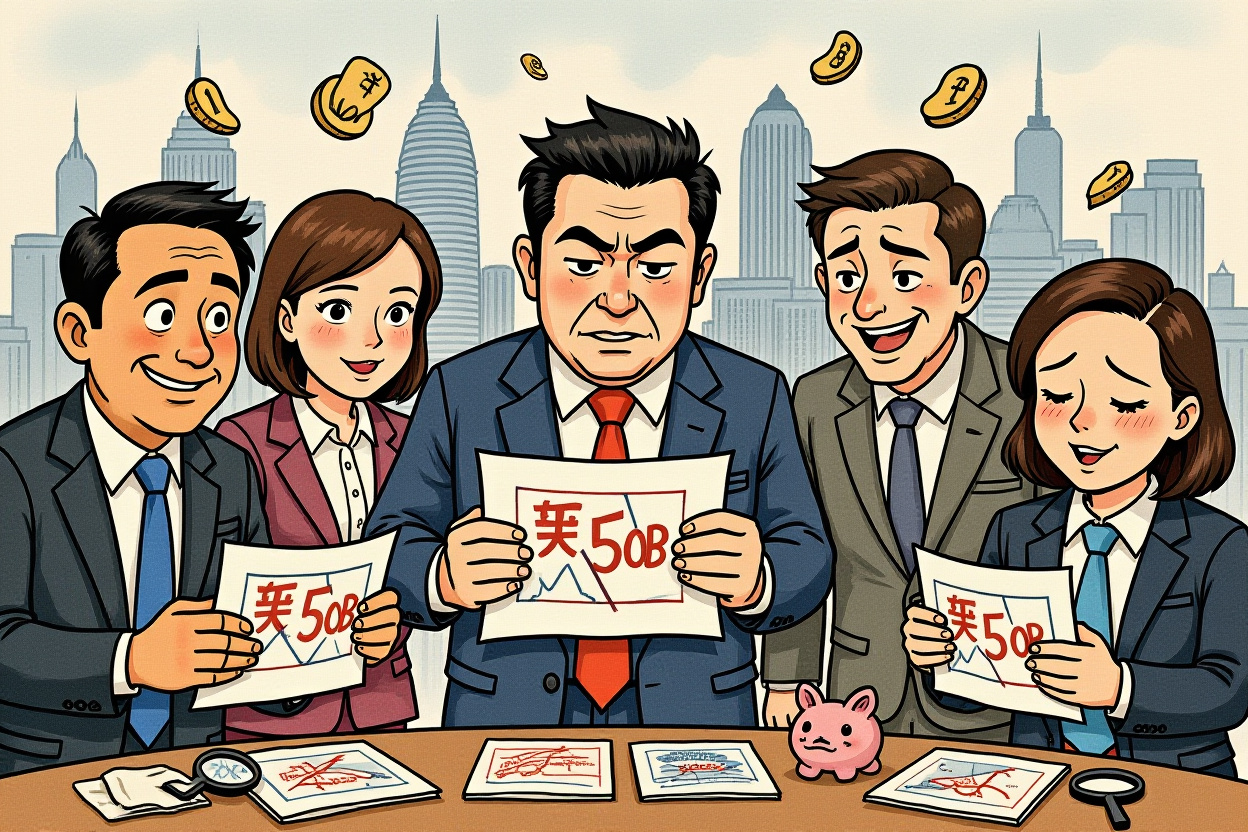
– The detention of Dongxu Group’s controlling shareholder Li Zhaoting (李兆廷) unveils one of China’s largest accounting frauds, involving over $50 billion in fabricated cash and profits.
– Over five years, Dongxu Group and its listed subsidiaries inflated revenues by 478.25 billion yuan and profits by 130 billion yuan to secure billions in bonds and equity financing.
– Regulatory authorities have imposed record penalties, including a 5.89 billion yuan fine and lifetime market ban on Li, with criminal proceedings likely to follow.
– The case underscores the intensifying accounting fraud crackdown by Chinese regulators, aiming to cleanse the market and protect investors.
– Investors must recalibrate risk assessments and enhance due diligence when engaging with Chinese companies, especially those with complex corporate structures and aggressive expansion histories.
In a dramatic pre-Chinese New Year development, Shanghai-listed Jia Linjie (嘉麟杰) announced the detention of its actual controller, Li Zhaoting (李兆廷), sending shockwaves through financial circles. While the official notice remained vague on specifics, the underlying cause is no mystery: it points directly to a colossal accounting fraud scheme that has come to epitomize the darker side of China’s capital market boom. This incident is a stark reminder of the ongoing accounting fraud crackdown that Chinese authorities are vigorously pursuing, targeting not just companies but the individuals and intermediaries that enable such deception. For global investors navigating Chinese equities, the Dongxu Group (东旭集团) saga offers critical lessons on the perils of overstated financials and the regulatory winds shifting towards greater accountability. With at least $50 billion in cash evaporating from balance sheets, the fallout serves as a wake-up call for heightened scrutiny in an era of increasing enforcement.
The Rise and Fall of Li Zhaoting and the Dongxu Empire
From Technical Engineer to Capital Tycoon
Li Zhaoting (李兆廷), a university graduate of the 1980s, began his career as a technician in a state-owned enterprise. His rapid ascent to vice-general manager within a decade hinted at his ambition and acumen. In 1997, he left the safety of state employment to found Dongxu Group, focusing initially on production equipment for CRT glass shells. Through innovation and market capture, he dominated this niche with a 50% market share within seven years. Anticipating industry shifts, Li pivoted to liquid crystal glass substrates, a move that broke foreign monopolies and laid the groundwork for his future empire. This phase of his career was marked by genuine industrial success, earning him accolades and a reputation as a savvy businessman. However, the transition from manufacturer to financier would soon test the limits of ethical governance.
Building a Financial Conglomerate Through Acquisitions
The real expansion began in 2010 when Dongxu Group acquired state-owned宝石集团 (Gemstone Group), gaining control of its listed vehicle,宝石A (Gemstone A), later renamed Dongxu Guangdian (东旭光电). This marked Li’s first foray into the public markets. By 2016, he had assembled a trio of listed companies—Dongxu Guangdian, Dongxu Lantian (东旭蓝天, formerly宝安地产), and Jia Linjie—forming the core of the Dongxu系 (Dongxu System). Not content with industrial assets, Li extended his reach into finance, taking stakes in西藏融资租赁 (Tibet Financial Leasing),衡水银行 (Hengshui Bank), and金鹰基金 (Golden Eagle Fund). This web of entities facilitated a relentless raise-merge-raise cycle, amassing over 270 billion yuan in acquisition costs and catapulting Li to the status of Shijiazhuang’s richest person in 2017 with a net worth of 28 billion yuan. The strategy mirrored that of other Chinese tycoons, leveraging capital markets for rapid scale but often at the cost of financial integrity, setting the stage for the impending accounting fraud crackdown.
Anatomy of a $50 Billion Accounting Fraud
Fabricating Fundamentals for Fundraising
The fraud’s roots trace back to 2015 when Dongxu Group sought to issue bonds. To meet the modest requirement that three years’ distributable profits cover one year’s interest, the group, which was actually亏损 (loss-making), resorted to虚增收入和利润 (inflating revenues and profits). Over five years, from 2015 to 2019, Dongxu Group虚增收入 (fabricated revenues) of 478.25 billion yuan and虚增利润 (fabricated profits) of 130 billion yuan. Even more startling, it虚增货币资金 (inflated cash holdings) by 448 billion yuan, creating the illusion of a cash-rich conglomerate. This accounting fraud crackdown target was not isolated; listed subsidiary Dongxu Guangdian similarly inflated 167.6 billion yuan in revenues and 56.27 billion yuan in profits to qualify for定向增发 (private placements). The deception was systemic, involving multiple layers of the corporate structure to portray robust health where none existed, a tactic that would eventually unravel under regulatory scrutiny.
The Cash Evaporation and Debt Mountain
With falsified financials, Li successfully raised 110.65 billion yuan through bond issuances and equity placements. However, once funds were secured, the mirage dissipated. By 2019, Dongxu Group’s audited report revealed a staggering reality: revenues of 340 billion yuan but a归母净利润 (net profit attributable to shareholders) of -311 billion yuan. The purported 500 billion yuan in cash had vanished, leaving only 70 billion yuan on the books against a 1.5 trillion yuan debt pile. This dramatic exposure triggered regulatory scrutiny and unveiled how listed companies had become personal ATMs for the controlling shareholder, with 170 billion yuan in outstanding loans from Dongxu Guangdian and Dongxu Lantian never repaid. The money flowed into opaque investments, personal expenditures, and servicing previous debts, leaving investors holding the bag. For a detailed breakdown of the financial discrepancies, refer to the CSRC’s investigation report available on their official website.
Regulatory Crackdown and Legal Repercussions
CSRC’s Sweeping Enforcement Action
In 2025, the中国证监会 (China Securities Regulatory Commission, CSRC) concluded its investigation into Dongxu Group’s fraud, delivering one of the most punitive settlements in recent memory. A total of 43 responsible entities and 19 key individuals were sanctioned, with collective fines reaching 17 billion yuan. Li Zhaoting personally faced a 5.89 billion yuan penalty and a终身市场禁入 (lifetime ban from the securities market). The CSRC’s statement emphasized that clues to possible criminal offenses have been transferred to judicial authorities in accordance with procedures, signaling impending criminal charges. This action is part of a broader accounting fraud crackdown that has seen regulators adopt a more aggressive stance post-2020, aiming to deter future misconduct through severe consequences. The enforcement highlights a shift towards holistic accountability, as noted in recent CSRC announcements on market integrity.
Criminal Liability and Historical Precedents
The scale of Dongxu’s fraud surpasses previous high-profile cases. It虚增收入 (fabricated revenues) more than康美药业 (Kangmei Pharmaceutical) and虚增利润 (fabricated profits) more than康得新 (Kangdexin Composite Materials). Both companies’ controllers received prison sentences exceeding ten years for their roles in similar schemes. Li Zhaoting’s fate is likely to follow this pattern, with prosecutors preparing charges that could include证券欺诈 (securities fraud) and挪用资金 (embezzlement). This accounting fraud crackdown is part of a broader regulatory push to hold the entire chain accountable—from shareholders and executives to intermediaries like auditors and banks. For instance, in the Kangmei case, the auditor正中珠江 (Zhengzhong Zhujiang) was also fined and banned, highlighting the comprehensive approach. Investors can track such cases on legal databases for insights into enforcement trends, reinforcing the need for vigilance in a tightening regulatory environment.
Impact on Investors and the Broader Market
Shareholder Devastation and Compensation Battles
The collapse has been catastrophic for investors. Dongxu Guangdian and Dongxu Lantian have both been退市 (delisted), wiping out equity value. The sole remaining listed entity, Jia Linjie, sees its shares frozen and future uncertain. Individual and institutional investors face monumental losses, with class-action lawsuits emerging. However, securing compensation is fraught with challenges, as the companies’ assets are depleted, and recovery from insolvent entities is complex. This underscores the critical need for robust due diligence in the face of such accounting fraud crackdown revelations. Lessons from past cases show that while regulators may impose fines, direct restitution to shareholders is often limited, making preventive analysis paramount. The Dongxu case serves as a grim reminder that financial statement fraud can erase wealth overnight, urging investors to demand transparency.
Lessons for Due Diligence in Chinese Equities
For global fund managers and institutional investors, the Dongxu case highlights several red flags:
– Aggressive M&A fueled by continuous fundraising without clear synergies.
– Discrepancies between reported cash levels and actual debt, often revealed through meticulous analysis of cash flow statements.
– High rates of股权质押 (share pledges) by controlling shareholders, as seen with Li’s 99% pledge ratio, indicating liquidity pressures.
– Complex关联交易 (related-party transactions) between listed and unlisted entities that may obscure true financial health.
Tools like天眼查 (Tianyancha) for corporate verification and engagement with independent auditors are essential. Moreover, the regulatory environment is evolving; the CSRC’s heightened focus on financial statement authenticity means that historical leniency is giving way to strict enforcement, making thorough analysis non-negotiable. As analyst Wang Li (王丽) notes, The Dongxu saga is a wake-up call for investors to look beyond glossy reports and question the sustainability of growth narratives. Incorporating these insights can mitigate risks in the wake of the ongoing accounting fraud crackdown.
The Bigger Picture: China’s Intensifying Accounting Fraud Crackdown
Comparing Scandals: Kangmei, Kangdexin, and Now Dongxu
The Dongxu fraud is not an outlier but part of a pattern.康美药业 (Kangmei Pharmaceutical) was found to have inflated cash by 30 billion yuan, leading to its controller马兴田 (Ma Xingtian) receiving a 12-year sentence.康得新 (Kangdexin Composite Materials) fabricated 11.9 billion yuan in profits, resulting in a 15-year term for its founder钟玉 (Zhong Yu). The Dongxu case, with its 50 billion yuan cash fabrication, sets a new benchmark for audacity. These cases collectively signal a regulatory determination to root out systemic fraud, reinforcing the accounting fraud crackdown as a central pillar of market reform. For context, the total market capitalization affected by these frauds exceeds 100 billion yuan, underscoring the economic stakes involved. This trend reflects China’s commitment to aligning its capital markets with global standards, though the path is fraught with challenges.
Regulatory Trends and Future Implications
Chinese authorities are deploying a multi-pronged approach to combat financial fraud:
– Enhancing the新证券法 (New Securities Law) with stricter disclosure requirements and higher penalties for misconduct.
– Promoting technologies like blockchain for immutable financial reporting and real-time auditing.
– Increasing coordination between the CSRC, the公安部 (Ministry of Public Security), and the最高人民法院 (Supreme People’s Court) to ensure criminal prosecution aligns with administrative sanctions.
For international investors, this accounting fraud crackdown presents both risks and opportunities. While short-term volatility may arise from fraud exposures, the long-term benefit is a cleaner, more transparent market that attracts sustainable capital. Investors should monitor regulatory announcements from the CSRC and engage with platforms like the上海证券交易所 (Shanghai Stock Exchange) for listing rule updates. As China’s capital markets continue to integrate globally, adherence to international standards becomes crucial for investor confidence. The Dongxu case exemplifies how regulatory rigor can reshape market dynamics, urging participants to stay informed and adaptable.
The unraveling of the Dongxu Group fraud saga serves as a cautionary tale of how unchecked ambition and financial engineering can lead to monumental collapse. Li Zhaoting’s journey from celebrated entrepreneur to detained suspect underscores the perils of prioritizing growth over governance. For the market, this accounting fraud crackdown is a necessary cleansing, but it also demands greater vigilance from all participants. Investors must move beyond superficial financial metrics and delve into corporate governance, cash flow authenticity, and regulatory compliance. As China’s capital markets continue to integrate globally, the onus is on sophisticated players to advocate for and practice rigorous due diligence. Stay informed by subscribing to regulatory updates and engaging with expert analysis to navigate the evolving landscape of Chinese equities with confidence. Consider consulting with legal and financial advisors specializing in Chinese markets to mitigate risks and capitalize on emerging opportunities in this era of heightened scrutiny.