



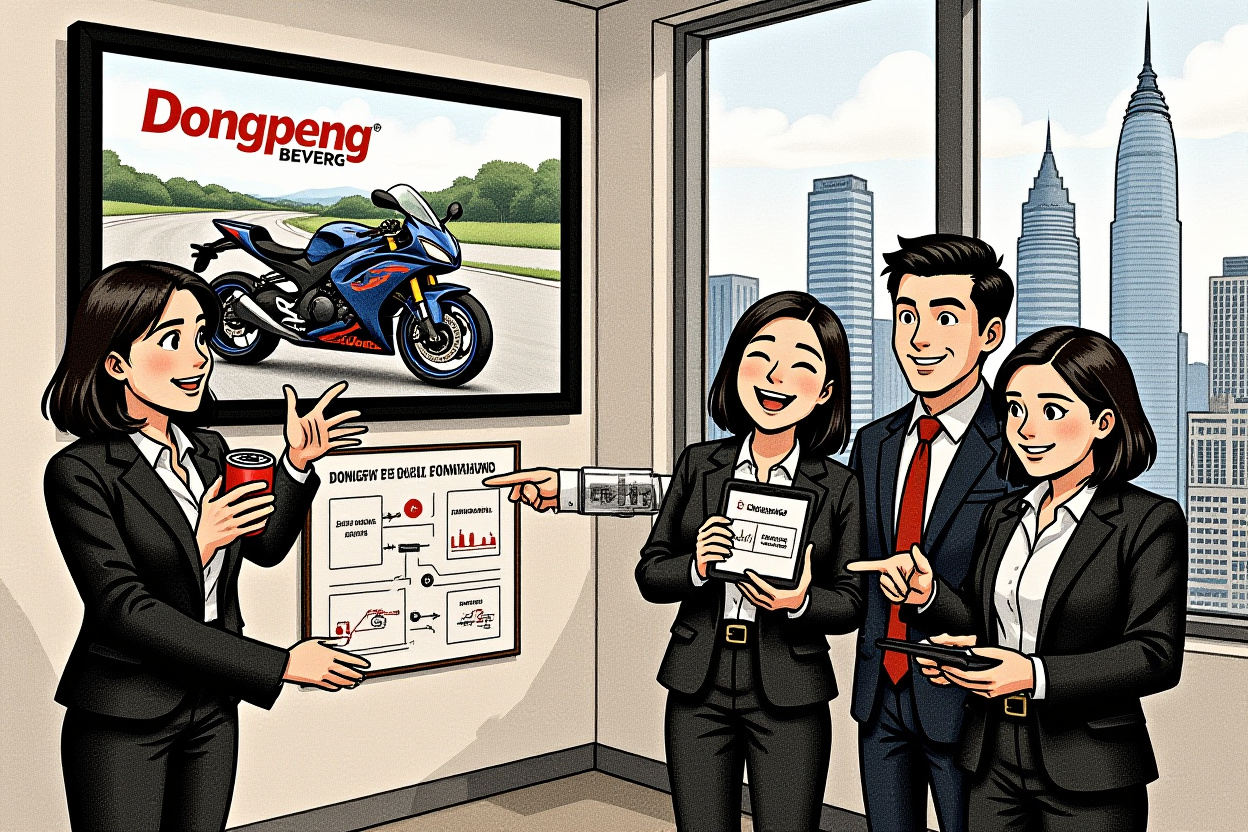
– Dongpeng Beverage’s sponsorship of Zhang Xue’s motorcycle team at the World Superbike Championship resulted in massive, unforeseen brand exposure, challenging notions of luck versus strategy in marketing. – The decision was driven by a clear brand framework focusing on national pride, hardcore appeal, and positive energy, with costs deliberately kept confidential despite viral rumors of a mere 50,000 yuan deal. – Company executives, including Director and Co-President Jiang Weiwei (蒋薇薇), emphasize that the success stemmed from systematic audience engagement and ‘listening’ to digital sentiment, not just serendipity. – The case study highlights the growing importance of niche sports and real-time marketing in China’s fast-moving consumer goods (FMCG) sector, with implications for brand valuation and equity market perceptions. – While the viral boost may not immediately translate to sales spikes, it reinforces brand equity and sets a precedent for future strategic sponsorships in competitive landscapes.
The Viral Genesis: From Social Media Echo to Corporate Action
In late 2025, a single comment on a Douyin video ignited one of the most talked-about marketing campaigns in recent Chinese corporate history. Zhang Xue (张雪), a motorcycle racer and entrepreneur from Hunan, posted a call for sponsors for his racing team. When a user tagged Dongpeng Special Drink (东鹏特饮) in the comments, it garnered thousands of likes, capturing the attention of the brand’s user operations lead, Hu Huapeng (胡华鹏). This digital nudge set in motion a series of events that would culminate in a global branding coup. For Dongpeng Beverage Group (东鹏饮料集团), a listed company with annual revenues exceeding 20 billion yuan, this was not just a spontaneous reaction but a test of its strategic sponsorship agility. The focus phrase, strategic sponsorship, was about to be put into action in an unprecedented way.
The 10-Minute Decision: Agility in Brand Partnerships
Hu Huapeng presented the opportunity to Dongpeng Beverage Group Director and Co-President Jiang Weiwei (蒋薇薇) among several other projects. Notably, the entire discussion lasted less than ten minutes. Jiang Weiwei, recalling a prior awareness of Zhang Xue from his viral videos at age 19, gave the green light to explore a partnership. This speed underscores a modern corporate ethos: in an era where digital trends flash and fade, the ability to quickly assess and act on aligned opportunities is paramount. The internal process reflected a balance between intuitive brand fit and preliminary rational checks, setting the stage for a deeper evaluation.
Deconstructing the Strategic Sponsorship Rationale
Beyond the viral spark, Dongpeng’s move was grounded in a deliberate brand strategy. Jiang Weiwei outlined three core pillars for Dongpeng’s brand image: it must be nationalistic, hardcore, and exude positive energy. Zhang Xue and his motorcycle endeavor ticked all these boxes. His story of rising from a small town to compete on the world stage resonated with national pride; motorcycle racing is inherently adrenaline-fueled and hardcore; and his personal narrative, including later support for his hometown’s struggling brown sugar industry, projected positivity. This framework transformed a seemingly niche opportunity into a strategically coherent brand investment.
The Business Calculus: Audience, Prestige, and Cost-Efficiency
Jiang Weiwei acknowledged several rational factors. First, the motorcycle enthusiast demographic aligns with Dongpeng’s target market—predominantly young, male, and seeking performance boosts. Second, the World Superbike Championship (WSBK) represents the pinnacle of motorcycle racing, offering a prestige platform akin to a ‘World Cup’ for the sport. Third, and crucially, the proposed sponsorship fee was deemed ‘reasonable’ within the company’s marketing budget. While Jiang Weiwei firmly declined to disclose figures, citing commercial confidentiality, she dismissed the viral rumor of a 50,000 yuan sponsorship as unrealistic, noting that other logos on Zhang Xue’s bike, like Pirelli, would command significantly more. This strategic sponsorship was evaluated not as a gamble but as a calculated entry into a high-potential, vertical audience.
The Unforeseen Triumph: A Weekend That Captured a Nation
The culmination arrived in March 2026 at the WSBK round in Portugal. Zhang Xue’s machine, adorned with the Dongpeng logo, secured back-to-back race victories, decisively beating established European and Japanese brands. The image of the Chinese characters 东鹏特饮 crossing the finish line first was broadcast globally, triggering an avalanche of domestic media coverage and social media frenzy. For a brand accustomed to competitive battles in the crowded energy drink aisle, this was visibility on an entirely different scale. The victory was so dominant that netizens joked the four-second lead in the first race was ‘left for Dongpeng to place its advertisement.’
The Three ‘Unexpected’ Elements of Success
In an exclusive interview, Jiang Weiwei crystallized the surprise into three elements. First, the sheer competitive success was unexpected; Zhang Xue’s own three-year plan had aimed merely for a podium finish in year one. Second, the breadth of impact from a relatively niche motorsport event stunned observers, spilling into mainstream discourse. Third, the disproportionate attention garnered by Dongpeng’s modestly sized logo was a marketing anomaly. The brand benefited from a unique positioning: among the various sponsors on the bike, most were industry-specific brands with English logos (e.g., tire manufacturers), leaving Dongpeng’s Chinese script as the most recognizable and relatable emblem for the domestic audience. This perfect storm turned a strategic sponsorship into a cultural moment.
Navigating Myths and Realities in the Aftermath
As the story went viral, narratives expanded and sometimes distorted. The notion of a 50,000-yuan sponsorship yielding 50 million yuan in equivalent exposure became a popular meme. Jiang Weiwei addressed this directly, framing it as a ‘well-wishing’ exaggeration from netizens rather than a factual ROI calculation. More substantively, she denied rumors of performance-based clauses in the contract, stating the agreement had no ‘achievement betting’ terms. The partnership, finalized in December 2025 and officially announced in January 2026, was straightforward: sponsorship in exchange for logo placement and agreed promotional content. The fact that Zhang Xue personally posted a collaboration video beyond contractual obligations signaled mutual respect and brand affinity, enhancing the partnership’s authenticity.
Systematic Success: Why Luck Wasn’t the Only Factor
While acknowledging the role of fortuitous timing, Jiang Weiwei argued that the outcome was underpinned by systemic corporate capabilities. ‘Any kind of偶然性 (accidental)背后,’ she stated, ‘is inseparable from our years of producing content related to vehicles, understanding our user base, and our willingness to ‘listen’ to suggestions.’ She posed a compelling rhetorical question: If success were purely down to luck, why did netizens specifically tag Dongpeng instead of other iconic national brands like Wahaha (娃哈哈), Nongfu Spring (农夫山泉), or Xiaomi (小米)? This public sentiment, she contends, was an organic validation of Dongpeng’s established brand equity and its resonance with a specific, engaged community. Thus, the strategic sponsorship was effective because it amplified existing brand strengths rather than creating them from scratch.
Beyond the Hype: Sales Implications and Future Strategic Directions
For investors and market analysts, a critical question is whether viral marketing translates into tangible financial results. The energy drink sector is a classic Fast-Moving Consumer Goods (FMCG) arena where over 90% of sales occur through offline channels, according to industry data. Immediate consumption is driven by distribution depth and shelf presence, not just brand awareness. Jiang Weiwei presented a measured perspective: the sponsorship is not viewed as a direct sales lever expecting immediate volume spikes. Instead, it’s seen as a brand equity investment that contributes to long-term consumer loyalty and top-of-mind recall. ‘Marketing itself must be related to our underlying comprehensive strength,’ she explained. ‘Is my distribution network extensive enough? Is my product good enough? Are other marketing aspects in place?’ This holistic view prevents short-termism and aligns with sustainable brand building.
The Road Ahead: Renegotiation and Evolving Brand Investments
The initial contract with Zhang Xue’s team is for a single racing season in 2026. His skyrocketing profile inevitably means increased commercial value and likely higher sponsorship costs from competitors going forward. Jiang Weiwei acknowledged this commercial reality, stating that increased investment would be ‘natural and justified’ if the partnership continues, with the expectation of more prominent branding rights. This forward-looking stance demonstrates how a successful strategic sponsorship can evolve from a tactical experiment into a core component of brand strategy. For Dongpeng, maintaining this relationship may require recalibrating budgets, but it also offers a proven platform to deepen engagement with a passionate consumer segment and reinforce its ‘hardcore’ brand identity in the eyes of both consumers and equity market participants.
Key Takeaways for Investors and Marketers in Chinese Equities
The Dongpeng-Zhang Xue episode offers several profound lessons for stakeholders in China’s dynamic market. First, it underscores the growing importance of digital sentiment and agility; brands that can rapidly identify and act on grassroots trends may unlock disproportionate value. Second, it highlights the power of niche, passion-driven communities—such as motorsports fans—as brand amplifiers, often delivering more authentic engagement than broad-based advertising. Third, it reinforces that in China’s consumer landscape, narratives of national pride and individual endeavor wield significant emotional capital, which can be harnessed through astute brand partnerships. For investors analyzing companies like Dongpeng Beverage (Stock Code: 605499), this case illustrates the potential for marketing innovation to drive intangible asset value, a factor increasingly scrutinized in equity valuations. Moving forward, the ability to execute such integrated, resonant campaigns could become a key differentiator in the competitive FMCG sector, influencing both market share and investor confidence. As brands navigate this landscape, the imperative is clear: build systemic capabilities that allow strategic sponsorship and marketing initiatives to flourish not as isolated bets, but as cohesive elements of a robust, consumer-centric growth strategy.