



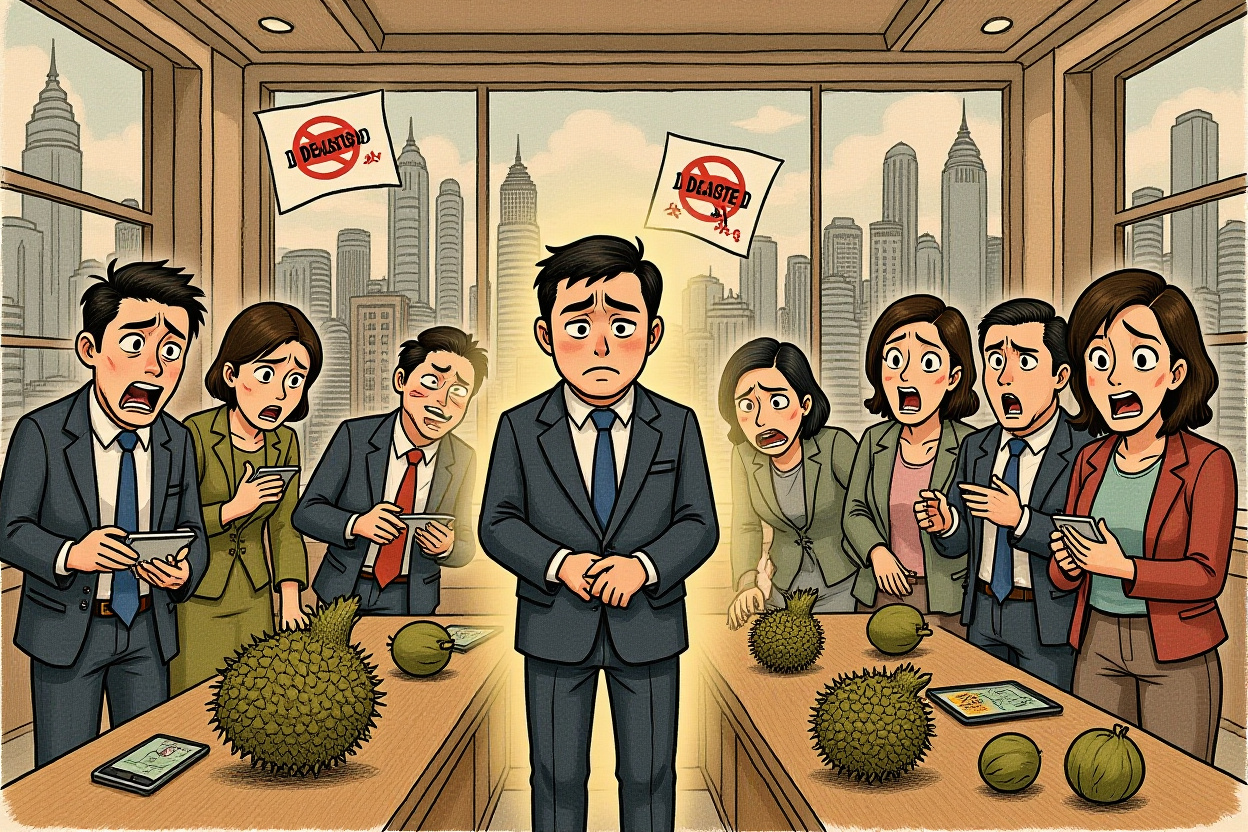
– Hongjiu Fruit & Fruit (洪九果品), celebrated as China’s ‘Fruit First Stock’, will be delisted from the Hong Kong Stock Exchange (HKEX) on December 30 after failing to disclose financial reports for over a year.
– Founder and Chairman Deng Hongjiu (邓洪九), known as the ‘Fruit King’, along with several top executives, were arrested in 2024 on charges including loan fraud and forging tax invoices, crippling corporate operations.
– The company’s market capitalization has evaporated by over 95%, plummeting from a peak of approximately HK$67 billion (US$8.6 billion) to just HK$28 billion before trading was suspended.
– Audit firm KPMG raised red flags over suspicious prepayments totaling billions to new suppliers, leading to its resignation and exposing severe governance failures.
– This case serves as a stark warning for investors about the risks in China’s consumer sectors, highlighting the critical importance of rigorous due diligence and regulatory compliance.
The curtain is set to fall on one of China’s most high-profile market debacles, as Hongjiu Fruit & Fruit, once hailed as the ‘Fruit First Stock’, faces compulsory delisting from the Hong Kong Stock Exchange. Effective December 30, 2025, the Hong Kong Exchanges and Clearing Limited (HKEX) will cancel the listing status of this former industry leader, marking a precipitous end to a company that symbolized the rapid growth of China’s fruit distribution sector. This development follows a prolonged trading suspension, failed financial disclosures, and the shocking arrest of its founder, Deng Hongjiu (邓洪九), along with key management figures. The saga of the ‘Fruit First Stock’ underscores the volatile intersection of ambitious entrepreneurship, lax corporate controls, and tightening regulatory scrutiny in Chinese equity markets, offering crucial lessons for global investors navigating this dynamic landscape.
The Dramatic Downfall of the ‘Fruit First Stock’
The journey of Hongjiu Fruit from market darling to delisting candidate is a tale of rapid ascent and even swifter collapse. Listed in September 2022, the company quickly captured investor imagination as China’s largest fruit distributor by revenue, specializing in premium imports like durian and dragon fruit. Its initial public offering (IPO) was met with enthusiasm, propelling its market capitalization to a staggering HK$67 billion (approximately RMB 603 billion) at its peak. However, the veneer of success began to crack less than two years later, leading to the inevitable delisting of the ‘Fruit First Stock’.
From IPO Star to Trading Suspension
Hongjiu Fruit’s troubles became public in March 2024 when it failed to publish its 2023 annual report, triggering an immediate trading suspension by HKEX. According to regulatory filings, the company cited an ongoing internal investigation into financial irregularities as the cause for the delay. This was not a minor oversight; it represented a fundamental breach of listing rules that require timely and transparent disclosure to protect shareholders. The suspension left investors stranded, unable to exit their positions as the company’s value continued to erode behind the scenes. The ‘Fruit First Stock’ label, once a badge of honor, quickly became a symbol of unmet promises and operational dysfunction.
Financial Reporting Failures and Audit Red Flags
The core of Hongjiu Fruit’s downfall lies in its financial management, specifically concerning massive prepayments to suppliers. In its audit for the 2023 fiscal year, KPMG identified alarming transactions: the company had prepaid approximately RMB 4.47 billion to suppliers, with RMB 3.42 billion paid in the fourth quarter alone to entities that were mostly new with no historical transaction records. Further due diligence revealed that some of these suppliers had registered capital lower than the prepayment amounts, and public records from Tianyancha showed zero social security contributors for several, raising questions about their legitimacy. KPMG recommended an independent investigation, but before it could proceed, the audit firm resigned in April 2024, citing an inability to obtain sufficient appropriate audit evidence. This resignation left Hongjiu Fruit without an auditor, making it impossible to produce audited financial statements and sealing the fate of the ‘Fruit First Stock’.
Legal Quagmire: Arrests and Operational Paralysis
The Crackdown on Founder Deng Hongjiu and Top ManagementThe most significant blow was the arrest of founder and Chairman Deng Hongjiu (邓洪九), a legendary figure in China’s fruit industry with 36 years of experience who built the company from scratch starting in 1987. Alongside him, directors Peng He, Jiang Zongying, Yang Junwen, and Tan Bo, as well as supervisory board chairman Yu Lixia, were subjected to various criminal coercive measures. While some restrictions were later eased, Deng Hongjiu and Peng He remained under arrest as of May 2024. Deng, who had amassed a fortune of RMB 8.5 billion in 2022 according to the Hurun Rich List, saw his empire crumble under legal scrutiny. The arrest of the ‘Fruit King’ not only stripped the company of its visionary leader but also shattered investor confidence in the ‘Fruit First Stock’ narrative, revealing deep-seated issues beneath the surface.
Corporate Governance Collapse
Market and Investor ImpactThe delisting of Hongjiu Fruit represents a catastrophic loss for shareholders and sends ripples through the broader market, particularly for investors focused on Chinese consumer and agricultural stocks. The evaporation of over 95% of market value from its peak is a stark reminder of the risks inherent in high-growth sectors where operational transparency may be lacking.
Catastrophic Erosion of Shareholder Value
At its zenith, Hongjiu Fruit’s market capitalization surpassed HK$67 billion, but by the time trading was suspended in March 2024, the stock price had collapsed to HK$1.74 per share, with a total market cap of merely HK$27.95 billion. This represents a loss of more than HK$64 billion in value, devastating retail and institutional investors alike. Many who bought into the ‘Fruit First Stock’ IPO, lured by the company’s dominant market position and the growth story of China’s fruit consumption, found themselves trapped in a liquidity void with little hope of recovery. The case underscores the importance of monitoring not just top-line growth but also cash flow patterns and related-party transactions, especially in industries like fruit distribution with complex supply chains.
Broader Implications for Chinese Equities
The Hongjiu Fruit saga occurs against a backdrop of increasing regulatory rigor in China’s capital markets. The HKEX’s decision to enforce delisting after a prolonged suspension signals a lower tolerance for companies that flout disclosure rules, even in high-profile sectors. For international investors, this incident reinforces the need to scrutinize governance structures and audit quality when evaluating Chinese listings. The ‘Fruit First Stock’ debacle may prompt more rigorous due diligence on supplier networks and prepayment practices, particularly for firms in the consumer staples sector where such arrangements are common. Moreover, it could lead to a reassessment of valuation metrics for similar companies, potentially tightening funding conditions for the entire industry.
Regulatory Response and Compliance Lessons
The forced delisting of Hongjiu Fruit by HKEX illustrates the evolving regulatory landscape in Hong Kong and mainland China, where authorities are stepping up efforts to maintain market integrity and protect investors. This case offers several key lessons for companies seeking to list or maintain listings on international exchanges.
HKEX Listing Rules and Enforcement
HKEX’s announcement on December 24, 2025, to cancel Hongjiu Fruit’s listing followed a strict timeline: the company failed to resume trading by September 19, 2024, leading to an initial delisting decision on October 3. Although Hongjiu Fruit applied for a review on October 13, the HKEX Listing Review Committee upheld the decision, demonstrating the exchange’s commitment to its rules. Under HKEX regulations, companies must publish financial results within specified periods and maintain sufficient operations and assets. Hongjiu Fruit’s inability to disclose reports for over a year, compounded by audit issues and legal troubles, left the exchange with no recourse but delisting. This action serves as a clear warning to other listed entities about the consequences of non-compliance, especially for the ‘Fruit First Stock’ and peers in volatile industries.
Strengthening Oversight in China’s Consumer Sectors
In mainland China, regulatory bodies like the China Securities Regulatory Commission (CSRC) and the State Administration for Market Regulation (SAMR) are likely to increase scrutiny on distribution-heavy businesses following this case. The suspicious prepayments at Hongjiu Fruit suggest potential gaps in anti-fraud controls and financial oversight, which regulators may address through enhanced reporting requirements or stricter audits. For companies in the fruit and agricultural sectors, this could mean more rigorous documentation of supplier relationships and transaction justifications. Investors should watch for regulatory updates that might affect sector valuations, as tighter controls could impact profitability and growth projections for firms reliant on extensive supply networks.
Path Forward: Restructuring or Ruin?
With delisting imminent, the future of Hongjiu Fruit hangs in the balance. The company has initiated legal restructuring processes, but the path to recovery is fraught with challenges, from legal liabilities to operational restart. The outcome will be closely watched as a bellwether for distressed Chinese firms facing similar crises.
Ongoing Legal and Restructuring Efforts
In May 2024, Hongjiu Fruit applied to the People’s Court for restructuring and pre-restructuring, a mechanism under Chinese law that allows distressed companies to negotiate with creditors under court supervision while attempting to continue operations. However, success is uncertain given the scale of liabilities, the ongoing criminal investigations, and the lack of a functional management team. The restructuring process will need to address billions in prepayments, potential creditor claims, and the legal status of arrested executives. Even if the company survives as a private entity, the ‘Fruit First Stock’ era is definitively over, and any revival would likely involve a complete overhaul of business practices and ownership structure.
Assessing the Viability of a Comeback
Analysts remain skeptical about Hongjiu Fruit’s ability to rebound. The brand has been severely tarnished, and the loss of listing status cuts off access to public equity markets for fundraising. Potential scenarios include asset sales, acquisition by a competitor, or liquidation. For investors, the key takeaway is to avoid similar pitfalls by prioritizing companies with transparent governance, reputable auditors, and conservative financial practices. The rise and fall of the ‘Fruit First Stock’ should serve as a case study in risk management, emphasizing that rapid growth must be underpinned by robust internal controls to sustain long-term value.
The delisting of Hongjiu Fruit marks a cautionary chapter in China’s capital market development, illustrating how governance lapses and legal issues can unravel even the most promising growth stories. From its peak as the ‘Fruit First Stock’ to its ignominious exit from HKEX, the company’s journey highlights the critical importance of financial transparency, ethical leadership, and regulatory adherence. For global investors, this episode underscores the need for enhanced due diligence, particularly in sectors prone to opaque supply chains and aggressive expansion. As Chinese markets continue to evolve, stakeholders must remain vigilant, leveraging lessons from failures like Hongjiu Fruit to build more resilient investment portfolios. Moving forward, monitor regulatory announcements and corporate governance reforms that may shape the next generation of Chinese listings, ensuring that the promise of growth is matched by the integrity of operations.