



Executive Summary
Key takeaways from the recent turmoil in China’s baijiu industry:
- Wuliangye Yibin Co., Ltd. experienced a 65% year-on-year decline in net profits, reflecting severe operational and market challenges.
- Yanghe Co., Ltd. reported net losses, indicating broader sector distress beyond individual company issues.
- Shifting consumer preferences, particularly among younger demographics, are eroding demand for premium baijiu products.
- Regulatory changes and economic slowdowns are exacerbating profitability pressures across the liquor industry.
- Investors must reassess the ‘baijiu faith’—the long-held belief in the sector’s resilience—and adjust portfolio strategies accordingly.
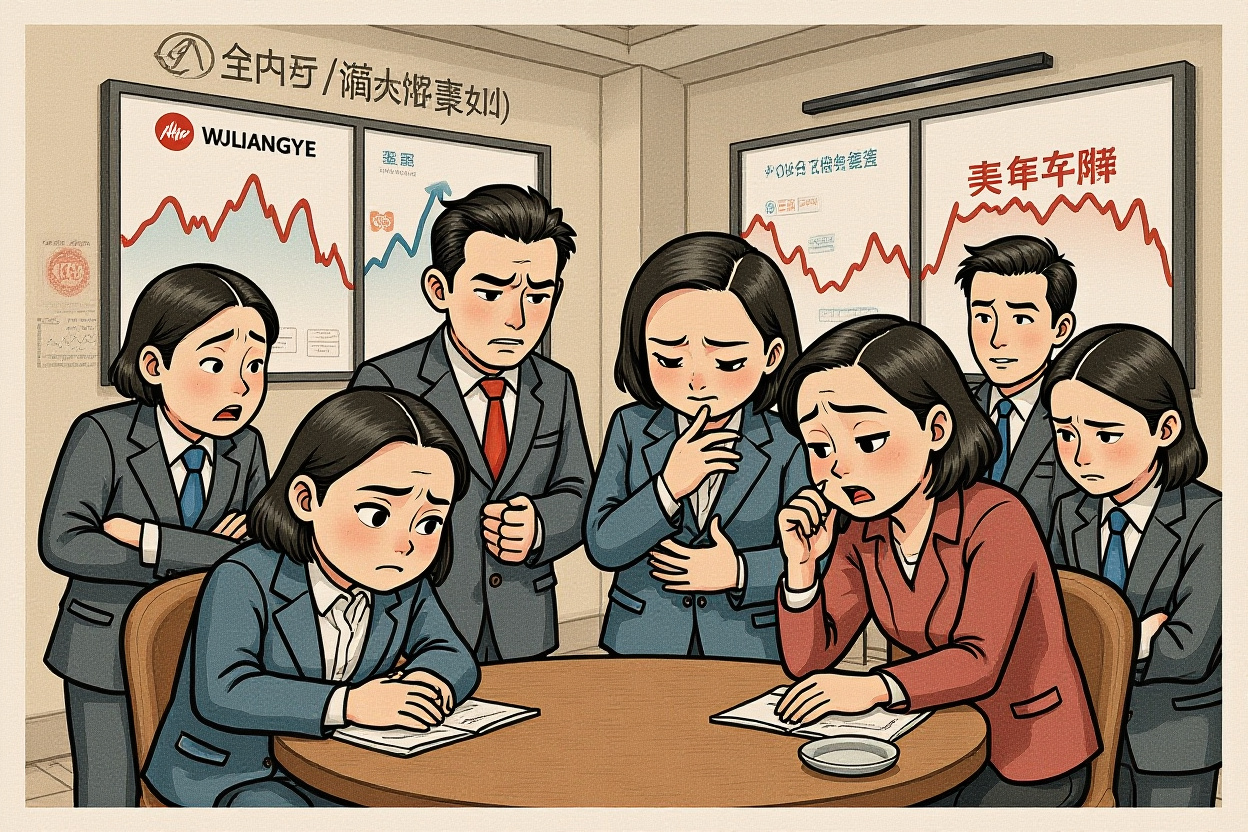
The once-unshakeable confidence in China’s baijiu sector, often termed ‘baijiu faith,’ is confronting its most severe crisis in modern memory. Recent financial disclosures from industry titans like Wuliangye and Yanghe have reverberated through global markets, with profit collapses and losses challenging foundational investment theses. This dramatic downturn forces a critical reevaluation of what was previously considered a bedrock of Chinese equity stability, signaling potential paradigm shifts for institutional portfolios worldwide.
The Historical Pillars of Baijiu Faith
For decades, the baijiu faith represented more than mere investment strategy—it embodied cultural and economic certainty in Chinese markets. Premium baijiu brands like Wuliangye and Yanghe served as proxies for corporate gift-giving, luxury consumption, and economic vitality, creating seemingly perpetual demand cycles.
Cultural Embeddedness and Economic Significance
Baijiu’s deep roots in Chinese business culture provided insulation during previous economic fluctuations. The spirit’s role in formal banquets, government functions, and relationship-building (guanxi) created inelastic demand characteristics that investors prized. Historical data shows baijiu stocks outperforming broader indices during multiple market cycles, reinforcing the sector’s reputation as a defensive play.
Past Performance and Investor Psychology
Between 2010 and 2020, the CSI Liquor Index delivered compound annual returns exceeding 20%, dwarfing many other sectors. This track record cultivated what analysts now recognize as excessive confidence in the baijiu faith, with allocation percentages reaching historic highs in institutional portfolios. The current collapse therefore represents not merely financial underperformance but a psychological reckoning for market participants.
Financial Storm: Wuliangye and Yanghe Case Studies
The simultaneous deterioration at two industry leaders underscores systemic rather than isolated challenges. Wuliangye’s profit plunge and Yanghe’s descent into losses reveal vulnerabilities that transcend company-specific issues.
Wuliangye’s Profitability Crisis
Wuliangye Yibin Co., Ltd. reported net income of approximately 2.1 billion yuan for the latest quarter, representing a 65% decline year-over-year. Key contributing factors include:
- Inventory buildup exceeding 30% above seasonal norms
- Average selling price reductions of 15-20% across core product lines
- Distribution channel conflicts leading to margin compression
- Increased marketing expenditures failing to stimulate volume growth
The severity of Wuliangye’s decline suggests fundamental demand destruction rather than temporary cyclical weakness.
Yanghe’s Descent into Loss Territory
Yanghe Co., Ltd. reported a net loss of approximately 480 million yuan, its first negative quarter in over a decade. Critical observations include:
- Revenue contraction of 28% year-over-year
- Gross margin erosion from 75% to 58%
- Impairment charges on aged inventory totaling 320 million yuan
- Operating cash flow turning negative for two consecutive quarters
Yanghe’s situation illustrates how even established players with strong brand equity cannot escape the sector’s downdraft, further challenging the baijiu faith.
Drivers Behind the Baijiu Faith Collapse
Multiple converging factors are dismantling the long-standing baijiu faith among investors. These structural shifts suggest the current downturn may represent a permanent recalibration rather than a temporary correction.
Generational Preferences and Consumption Patterns
Younger Chinese consumers are demonstrating markedly different alcohol consumption habits than previous generations. Market research indicates:
- Only 12% of consumers aged 21-30 regularly consume baijiu, compared to 45% of those aged 45-60
- Wine, craft beer, and low-alcohol alternatives are gaining share at baijiu’s expense
- Health consciousness is reducing overall spirit consumption, particularly during business entertainment
This demographic transition threatens the core consumption base that sustained the baijiu faith for decades.
Regulatory and Macroeconomic Headwinds
Government policies and economic conditions have created additional pressure on the sector:
- Anti-extravagance campaigns have reduced official banquet spending by an estimated 40% since 2020
- COVID-19 restrictions disrupted traditional distribution and consumption patterns
- Economic slowdown has constrained discretionary spending across income segments
- Increased scrutiny of corporate entertainment expenses has altered gifting behaviors
These factors collectively undermine the economic rationale behind the baijiu faith, forcing investors to confront new realities.
Market Reactions and Evolving Investor Sentiment
The collapse of baijiu faith is triggering significant portfolio adjustments and sentiment shifts across global investment communities. The sector’s previous status as a must-hold component of China allocations is being fundamentally questioned.
Equity Performance and Valuation Compression
Baijiu stocks have dramatically underperformed broader Chinese indices over the past year:
- The CSI Liquor Index declined 42% versus the CSI 300’s 18% drop
- Forward P/E multiples compressed from 35x to 18x industry-wide
- Trading volumes increased 150% during earnings disclosures, indicating forced selling
- Short interest reached record levels across major baijiu counters
This performance divergence signals that the baijiu faith is being systematically dismantled in real-time market pricing.
Institutional Response and Allocation Shifts
Major fund managers are publicly discussing reduced baijiu exposure:
- Several Hong Kong-based hedge funds have completely exited baijiu positions
- Mainland mutual funds have decreased average baijiu weighting from 8% to 3% of A-share portfolios
- Foreign institutions have accelerated selling, with net outflows exceeding $2 billion quarterly
- Analyst downgrades outnumber upgrades by 4:1 across the sector
This institutional repositioning reflects a fundamental reassessment of the baijiu faith’s validity in contemporary markets.
Future Trajectory and Strategic Implications
The dismantling of baijiu faith necessitates forward-looking strategies for both companies and investors. While the sector will likely persist in some form, its investment characteristics appear permanently altered.
Potential Recovery Pathways
Baijiu companies are exploring multiple adaptation strategies:
- Product innovation targeting younger consumers with lower-alcohol variants
- Digital transformation of distribution channels to reduce reliance on traditional networks
- International expansion to diversify geographic revenue sources
- Cost restructuring to improve operational efficiency amid volume declines
However, these initiatives face significant execution challenges and may not fully restore previous profitability levels.
Investment Strategy Recommendations
For global investors navigating the post-baijiu faith landscape:
- Reduce blanket sector allocations in favor of selective stock-picking based on adaptation capabilities
- Rebalance China exposure toward consumer sectors with stronger growth trajectories, such as electric vehicles or healthcare
- Implement tighter risk management around liquor holdings, including smaller position sizes and stricter stop-loss levels
- Monitor consumer sentiment indicators for early signals of demand stabilization or further deterioration
The collapse of baijiu faith represents both risk and opportunity—requiring nuanced analysis rather than broad abandonment.
Synthesis and Forward Guidance
The dramatic profit declines at Wuliangye and losses at Yanghe signify more than temporary operational challenges—they mark a potential inflection point in Chinese consumer markets and investment philosophies. The baijiu faith that guided allocation decisions for generations appears fundamentally compromised by structural shifts in demographics, regulations, and consumption patterns. While the sector will likely undergo adaptation and partial recovery, its previous status as a perennial outperformer seems irrevocably altered. Investors must now approach Chinese liquor stocks with renewed skepticism, rigorous fundamental analysis, and appropriate position sizing that reflects the elevated uncertainty. The collapse of baijiu faith serves as a powerful reminder that even the most entrenched market narratives can unravel when underlying economic realities shift decisively.