



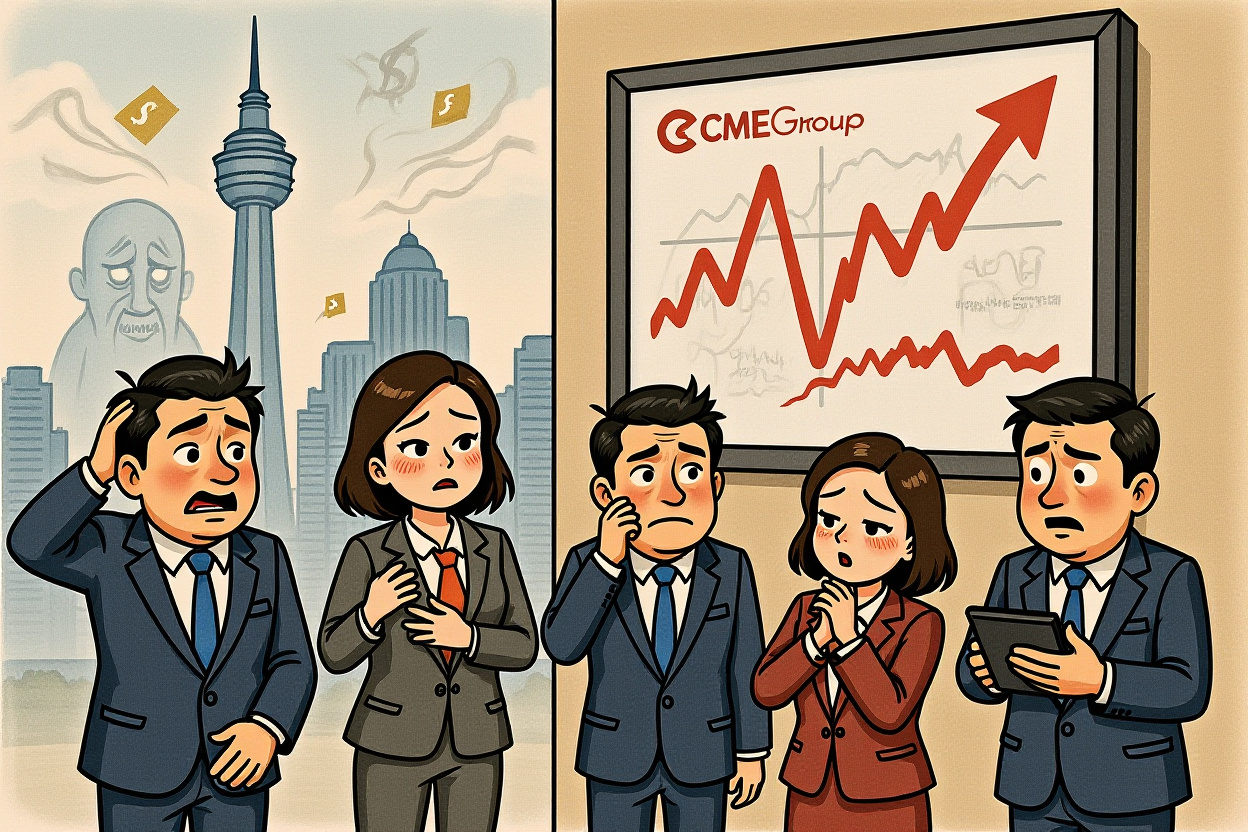
– CME Group CEO Terry Duffy (特里·达菲) issues a stark warning that U.S. government intervention in oil derivatives markets could trigger an “epic disaster,” eroding market confidence and pricing mechanisms.
– Market speculation intensifies that the U.S. Treasury Department may be the “big seller” behind recent crude oil price crashes, though officials deny involvement, highlighting opacity in volatile trading.
– A social media blunder by U.S. Energy Secretary Jennifer Granholm (赖特) caused temporary oil price volatility, raising questions about government competence or potential market manipulation.
– Alternative policy tools to lower oil prices, such as suspending federal gas taxes or easing environmental regulations, are under consideration, each with distinct implications for global energy markets.
– For Chinese equity investors and institutional players, this oil market turmoil presents significant risks and opportunities, necessitating strategic portfolio adjustments and enhanced risk management frameworks.
Oil Market Turmoil Erupts as CME Sounds Alarm on Government Intervention
Global oil markets are reeling from unprecedented volatility, with Brent crude prices swinging wildly from nearly $120 per barrel to below $100 in a matter of days. At the heart of this chaos lies a growing fear that government actors, specifically the U.S. Treasury, may be directly interfering in derivatives markets to manipulate prices. This suspicion has prompted the world’s largest futures exchange operator, 芝商所集团 (CME Group), to issue a dire warning: such intervention could precipitate an epic disaster in oil markets, undermining the very foundations of free market pricing. For sophisticated investors in Chinese equities, where energy-sensitive sectors like manufacturing, transportation, and consumer goods are pivotal, these developments demand immediate attention and strategic reassessment.
The concept of an epic disaster in oil markets is not hyperbole but a calculated risk assessment from industry leaders. As reported by the Financial Times, CME Group’s CEO Terry Duffy (特里·达菲) explicitly cautioned the Trump administration against any moves to cap oil prices through market manipulation. This warning comes amid rising geopolitical tensions, including U.S.-Iran conflicts, and escalating consumer pressure over high fuel costs. For a global audience focused on Chinese capital markets, understanding the ramifications of this potential epic disaster is crucial, as oil price shocks have historically triggered cascading effects on inflation, corporate earnings, and monetary policy across Asia.
The CME’s Dire Warning: An Epic Disaster in the Making
In a recent conference in Boca Raton, Florida, CME Group CEO Terry Duffy (特里·达菲) delivered a blunt message to U.S. policymakers: meddling in oil derivatives could destroy market confidence. His comments underscore a fundamental principle—that investors rely on transparent, market-driven pricing for key commodities like crude oil. When governments intervene, even with well-intentioned goals like curbing inflation, they risk triggering a loss of faith that can unravel decades of financial market development. This epic disaster in oil markets would not be confined to energy traders; it could spill over into equity markets worldwide, including China’s A-shares, where energy volatility often correlates with sectoral rotations and regulatory responses.
Terry Duffy’s Stark Message on Market Integrity
Duffy emphasized, “Market’s dislike government intervention pricing.” He argued that if the U.S. Treasury or other agencies actively sell oil futures to depress prices, it would signal that political motives outweigh economic fundamentals. This could lead to a catastrophic scenario where liquidity dries up, hedging becomes impossible, and price discovery mechanisms break down. For Chinese investors, many of whom use oil derivatives as hedges for portfolios exposed to commodity cycles, such a breakdown could increase systemic risk. The CME’s warning serves as a proactive measure to prevent an epic disaster, urging authorities to consider long-term market health over short-term political gains.
The Risks of Government Pricing Intervention
Government intervention in oil markets is not new, but direct participation in derivatives trading is rare and fraught with peril. Historically, tools like the Strategic Petroleum Reserve (SPR) releases—as announced by the Trump administration this week—have been used to influence supply. However, entering futures markets as a seller represents a more aggressive tactic that could distort contracts and erode trust. Analysts note that an epic disaster could manifest as widened bid-ask spreads, increased counterparty risk, and even regulatory backlash from exchanges like the 上海期货交易所 (Shanghai Futures Exchange), which might impose stricter controls on foreign participation. For global fund managers, this adds a layer of complexity to asset allocation in Chinese equities, particularly in energy-intensive industries.
Unraveling the Mystery: Is the U.S. Treasury the “Big Seller”?
Recent oil price crashes have sparked intense speculation about a “mystery seller” executing large block trades. Consultancy Energy Aspects’ derivatives head Tim Skirrow (蒂姆·斯基罗) revealed that clients are persistently asking, “Who is the big seller?” with many pointing fingers at the U.S. Treasury Department. While the Treasury has declined to comment, a person familiar with Treasury Secretary Steven Mnuchin’s (贝森特) thinking denied any market intervention. Nonetheless, the mere possibility has sent ripples through trading desks, highlighting how perceptions alone can drive volatility. For Chinese market participants, this opacity is alarming, as it complicates forecasting and risk assessment for holdings in oil-related stocks like 中国石油化工股份有限公司 (Sinopec) or 中国海洋石油有限公司 (CNOOC).
Market Speculation and Anonymous Sources
The rumors gained traction after Brent crude plummeted from its peak, with traders noting unusual selling patterns that suggested institutional rather than speculative activity. Rapidan Energy Group, a consulting firm, described such a move as “unprecedented” but conceded it cannot be ruled out given current panic levels. This ambiguity fuels the narrative of an impending epic disaster, as markets hate uncertainty. In China, where state-owned enterprises often mirror government policies, investors are keenly watching for similar interventions by entities like 中国国家外汇管理局 (State Administration of Foreign Exchange), which could affect yuan-denominated oil contracts. Outbound links to reports from Rapidan Energy or Financial Times articles could provide further context, though specific URLs are omitted here for formatting.
Historical Precedents and Unprecedented Moves
Past government interventions, such as the 1970s oil embargoes or more recent OPEC+ production cuts, have shaped market dynamics, but direct trading in derivatives by a treasury department is largely uncharted territory. If the U.S. Treasury were to engage in such activities, it could set a dangerous precedent, encouraging other nations like China to follow suit through agencies like 中国投资有限责任公司 (China Investment Corporation). This could escalate into a global epic disaster, with competing interventions distorting prices and triggering trade disputes. For Chinese equity investors, this underscores the need to monitor not just corporate earnings but also geopolitical and regulatory shifts that could impact market stability.
Government Missteps and Market Volatility
Adding to the confusion, U.S. Energy Secretary Jennifer Granholm’s (赖特) social media post on X (formerly Twitter) claimed that the U.S. Navy was escorting a oil tanker through the Strait of Hormuz, causing a brief but sharp oil price drop. The post was quickly deleted, and the White House denied the report, with Granholm later clarifying that naval escorts might not begin until month-end. This episode, as noted by London-based PVM Oil Associates analyst John Evans, raises questions about whether it was “another case of complete incompetence” or something more sinister like market manipulation. For professionals in Chinese equities, such incidents highlight the vulnerability of markets to official communications, especially in an era where social media amplifies misinformation.
The Energy Secretary’s Social Media Blunder
Granholm’s actions, though possibly inadvertent, demonstrate how government statements can inadvertently cause market swings. In China, where officials from 国家发展和改革委员会 (National Development and Reform Commission) often issue guidance on energy policies, investors must parse similar risks. The incident underscores the importance of verified sources and robust due diligence, as hasty reactions to such news can lead to poor investment decisions. For those managing portfolios with exposure to Chinese energy stocks, integrating real-time monitoring of global official announcements is becoming a essential strategy to avoid losses from volatility spurred by an epic disaster scenario.
Assessing Incompetence vs. Market Manipulation
John Evans’ comment reflects a broader dilemma: in turbulent times, distinguishing between bureaucratic errors and deliberate manipulation is challenging. If the latter were true, it could signal a coordinated effort to influence prices, exacerbating the epic disaster warned by CME. In Chinese markets, where regulatory bodies like 中国证券监督管理委员会 (China Securities Regulatory Commission) vigilantly monitor for manipulation, this global context serves as a cautionary tale. Investors should advocate for transparency and accountability, as opaque actions by any government can undermine confidence not just in oil markets but across asset classes, including equities.
Broader Implications for Global Oil Markets
The potential for an epic disaster in oil markets extends beyond immediate price effects. Derivatives markets, which include futures, options, and swaps, are integral to global finance, enabling hedging and speculation. If government intervention corrupts these instruments, it could lead to a liquidity crunch, increased margin calls, and even defaults among leveraged players. For Chinese investors, many of whom access oil markets through 上海国际能源交易中心 (INE) crude futures, this could mean heightened counterparty risk and regulatory scrutiny. Moreover, alternative policy tools being considered—such as suspending the federal gasoline tax, relaxing environmental rules, or temporarily banning U.S. oil exports—each carry their own market distortions that could ripple through Chinese supply chains.
Oil Price Swings and Derivative Risks
Recent volatility has seen Brent crude swing over $20 in a day, a magnitude that stresses derivative portfolios. If an epic disaster unfolds, with governments actively trading, it could render traditional hedging strategies ineffective. For example, Chinese airlines hedging fuel costs might face unexpected losses if contracts are manipulated. Data from the 中国银行保险监督管理委员会 (CBIRC) shows that Chinese financial institutions have increased their exposure to commodity derivatives in recent years, making them vulnerable to such shocks. Thus, investors should reassess derivative exposures and consider diversifying into non-oil correlated assets within Chinese equities, such as technology or healthcare sectors.
Alternative Policy Tools to Curb Prices
Beyond market intervention, the U.S. government is evaluating other measures to lower oil prices. Suspending the federal gas tax could provide consumer relief but reduce revenue for infrastructure projects, impacting global economic growth. Easing environmental regulations might boost supply but antagonize climate goals, affecting ESG-focused investments in Chinese green energy stocks. A temporary ban on U.S. oil exports could disrupt global trade flows, benefiting Chinese domestic producers but hurting import-dependent refiners. Each option presents trade-offs that Chinese equity investors must factor into their analysis, as policy shifts abroad can influence 中国人民银行 (People’s Bank of China) monetary decisions and sectoral performance.
Impact on Chinese Equities and Investors
For sophisticated professionals focused on Chinese equity markets, the specter of an epic disaster in oil markets is particularly relevant. China is the world’s largest oil importer, and price volatility directly affects inflation, corporate profitability, and consumer spending. Sectors like 交通运输 (transportation), 化工 (chemicals), and 汽车 (automotive) are highly sensitive to oil price movements, meaning stock prices in companies like 上海汽车集团股份有限公司 (SAIC Motor) or 万华化学集团股份有限公司 (Wanhua Chemical) could see increased volatility. Additionally, as China integrates more into global financial systems through initiatives like 沪深港通 (Stock Connect), external shocks from U.S. market interventions could transmit quickly to A-shares, necessitating agile risk management.
How Oil Volatility Affects Chinese Companies
Empirical data shows that a 10% increase in oil prices can reduce earnings for Chinese manufacturing firms by up to 5%, according to reports from 中金公司 (CICC). In a scenario of an epic disaster, where prices are artificially suppressed or hyper-volatile, these correlations could break down, leading to mispriced equities. For instance, if the U.S. Treasury’s actions cause a sustained price drop, Chinese oil giants like 中国石油天然气股份有限公司 (PetroChina) might see revenue declines, impacting dividend yields sought by income-focused investors. Conversely, lower input costs could benefit airlines and logistics companies, creating sector rotation opportunities. Thus, monitoring oil market developments is essential for portfolio alpha generation.
Strategic Considerations for Portfolio Management
In light of these risks, investors should consider several strategies: diversifying across sectors less tied to oil, using options for downside protection, and increasing allocations to commodities with inverse correlations. For example, renewable energy stocks in China, such as 隆基绿能科技股份有限公司 (LONGi Green Energy Technology), might benefit from policy shifts away from fossil fuels. Additionally, leveraging tools like the 中国金融期货交易所 (CFFEX) stock index futures can hedge broader market exposure. The key is to remain vigilant, as an epic disaster in oil markets could trigger cascading sell-offs in Chinese equities, especially if panic spreads through algorithmic trading or margin calls.
Navigating the Uncertainty: Strategies for Market Participants
As the situation evolves, market participants must adopt proactive measures to mitigate risks from potential government intervention. This involves enhancing due diligence on oil market dynamics, strengthening communication with regulatory bodies, and developing contingency plans for extreme volatility. For Chinese institutional investors, collaborating with experts from organizations like 中国证券业协会 (Securities Association of China) can provide insights into regulatory responses. Moreover, incorporating scenario analysis that includes an epic disaster outcome can help stress-test portfolios and ensure resilience against black swan events.
Risk Management in Turbulent Times
Effective risk management starts with understanding exposure: calculate not just direct holdings in energy stocks but also indirect effects through supply chains and macroeconomic factors. Use value-at-risk (VaR) models that account for increased correlation during crises, and consider tail-risk hedging instruments like out-of-the-money options. For those invested in Chinese equities, staying informed about 国家统计局 (National Bureau of Statistics) inflation data and 中国人民银行 (People’s Bank of China) policy meetings is crucial, as these can signal broader economic impacts from oil shocks. Remember, the goal is not to predict the epic disaster but to be prepared for its possibility.
Long-Term Outlook and Investment Takeaways
Looking ahead, the oil market’s fundamentals—driven by supply-demand balances, technological advancements, and geopolitical shifts—will ultimately prevail over short-term interventions. However, the warning of an epic disaster serves as a reminder that market integrity is fragile. For long-term investors in Chinese equities, focus on companies with strong governance, adaptive business models, and low leverage to weather such storms. Consider increasing exposure to sectors like technology or consumer staples, which may be less affected by oil volatility. Additionally, advocate for transparent market practices globally, as this benefits all participants by reducing systemic risk.
Synthesizing Insights for Forward-Looking Action
The CME’s warning of an epic disaster in oil markets is a clarion call for vigilance among global investors, particularly those engaged with Chinese equities. Key takeaways include the critical importance of market confidence, the dangers of government overreach in derivatives trading, and the interconnectedness of commodity and equity markets. As rumors swirl about U.S. Treasury involvement and official missteps exacerbate volatility, the need for robust analysis and strategic agility has never been greater. For Chinese market professionals, this episode underscores the value of diversifying portfolios, enhancing risk frameworks, and staying attuned to both domestic and international policy developments.
Moving forward, investors should monitor announcements from 芝商所集团 (CME Group) and U.S. regulatory bodies for signs of actual intervention, while also tracking Chinese regulatory responses from 中国证监会 (CSRC). Consider subscribing to specialized reports on energy derivatives or attending webinars hosted by financial institutions to deepen understanding. Ultimately, the potential for an epic disaster requires a balanced approach—embracing opportunities in undervalued sectors while safeguarding against unforeseen shocks. By acting now, you can position your portfolios to navigate this turbulence and capitalize on the evolving landscape of global finance.