



Executive Summary
Key takeaways from the Chuanglian Holdings chairman resignation incident:
- Chairman’s abrupt departure follows high-profile variety show appearance with celebrity spouse, triggering governance concerns.
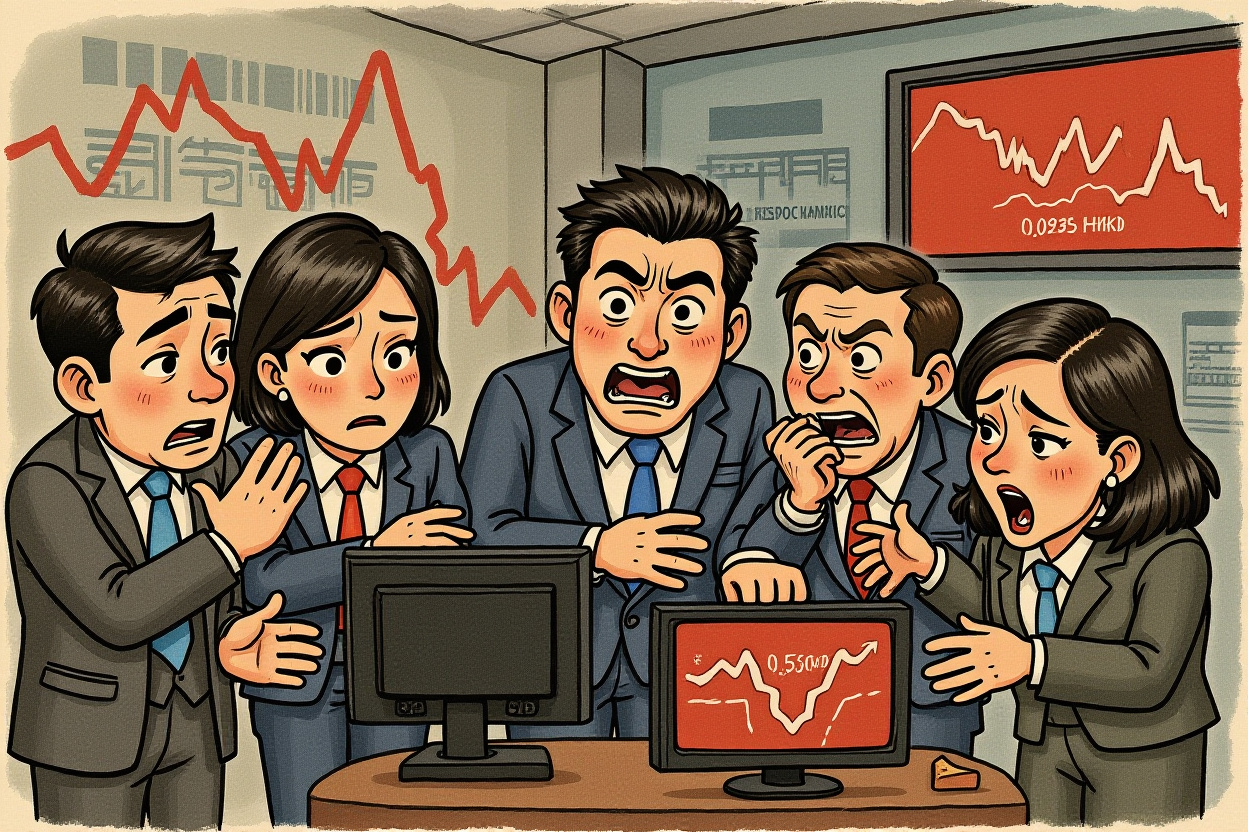
- Stock price collapses to 0.035 HKD, representing a 95% decline from 2023 peaks amid heavy selling pressure.
- Event underscores vulnerabilities in small-cap Chinese equities where executive personal conduct impacts market valuation.
- Regulatory scrutiny expected to intensify regarding disclosure requirements for listed company directors.
- International investors advised to enhance due diligence on management backgrounds and corporate governance frameworks.
When Celebrity Exposure Clashes With Corporate Governance
The sudden resignation of Chuanglian Holdings’ board chairman following his appearance on a popular variety show with his celebrity wife has sent shockwaves through Hong Kong’s financial markets. This Chuanglian Holdings chairman resignation represents one of the most dramatic examples of how personal conduct of executives can directly impact corporate valuation in Chinese equity markets. Within 48 hours of the variety show broadcast, Chuanglian Holdings (创联控股) saw its stock price plummet to a historic low of 0.035 HKD, wiping out approximately $150 million in market capitalization and leaving international investors questioning governance standards in China’s small-cap segment.
The incident highlights the complex intersection of celebrity culture, corporate leadership, and investor confidence in Asian markets. For global fund managers with exposure to Chinese equities, the Chuanglian Holdings chairman resignation serves as a cautionary tale about the hidden risks embedded in management teams whose personal lives become intertwined with corporate identity. The company’s ADS (American Depositary Shares) also experienced significant volatility in overseas trading sessions, reflecting how quickly governance concerns can translate into cross-border investment impacts.
The Variety Show Appearance That Changed Everything
Details emerging about the variety show appearance reveal a carefully orchestrated segment featuring the chairman and his wife, a well-known television personality, engaging in domestic activities that contrasted sharply with his corporate image. Industry analysts note that the portrayal of lavish lifestyle elements during the broadcast conflicted with Chuanglian Holdings’ recent austerity measures and cost-cutting announcements to shareholders. The immediate social media reaction created a narrative disconnect that markets punished severely.
Market data shows trading volume spiked to 15 times the 30-day average following the broadcast, with sell orders overwhelmingly dominating the flow. The Hong Kong Exchange (香港交易所) has yet to comment on whether the episode triggered any unusual trading alerts, but market makers reported difficulty maintaining orderly markets during the initial selloff. This Chuanglian Holdings chairman resignation scenario demonstrates how rapidly sentiment can shift in Chinese small-caps when personal and corporate narratives collide.
Anatomy of a Stock Collapse
The technical breakdown in Chuanglian Holdings’ stock price reveals several critical support levels failing in rapid succession:
- The 0.25 HKD psychological support breached within first hour of trading
- 50-day moving average (0.18 HKD) offered no meaningful resistance
- Year-to-date low of 0.12 HKD shattered on record volume
- Final settlement at 0.035 HKD represents 98% correction from 2021 highs
Short interest had been building steadily in the weeks preceding the event, rising from 5% to 18% of float according to HKEX data. The Securities and Futures Commission (证券及期货事务监察委员会) may review trading patterns for potential manipulation given the velocity of the decline. For context, the Hang Seng Composite Index (恒生综合指数) declined only 0.3% during the same period, highlighting the idiosyncratic nature of this Chuanglian Holdings chairman resignation impact.
Corporate Governance Under Microscope in Chinese Equities
The Chuanglian Holdings chairman resignation has ignited fresh debate about governance standards in China’s corporate landscape. Independent directors at several Hong Kong-listed Chinese companies have reportedly convened emergency meetings to review their own governance protocols regarding executive external activities. The China Securities Regulatory Commission (中国证券监督管理委员会) has longstanding guidelines about director conduct, but enforcement has typically focused on financial irregularities rather than personal image management.
Historical precedents suggest the market impact of such events can be lasting. When the chairman of another Hong Kong-listed manufacturer was involved in a highly publicized divorce proceeding in 2019, the company’s shares underperformed the broader market by 34% over the subsequent twelve months. The current Chuanglian Holdings chairman resignation may establish a new precedent for how markets price governance risks related to executive personal branding.
Regulatory Framework and Disclosure Gaps
Current Hong Kong listing rules require prompt disclosure of director changes but offer limited guidance on what constitutes material information regarding executives’ personal activities. The Chuanglian Holdings chairman resignation was announced through a standard filing, but the company provided minimal context about the reasons behind the departure. This opacity contrasts with more developed markets where companies frequently provide detailed explanations for C-suite changes to maintain investor confidence.
The Hong Kong Exchanges and Clearing Limited (香港交易及结算所有限公司) has been gradually enhancing corporate governance codes, with the latest 2022 update emphasizing director responsibilities and accountability. However, the Chuanglian Holdings chairman resignation episode reveals potential gaps in how these principles apply to executives’ non-business activities. Market participants are now watching whether regulators will issue additional guidance following this incident.
Investor Protection Mechanisms
Minority shareholders in Chuanglian Holdings face significant challenges in seeking recourse following the value destruction. Class action mechanisms in Hong Kong remain less developed than in U.S. markets, though recent legal reforms have strengthened shareholder rights. The company’s articles of association show relatively standard provisions for director removal, but the sudden nature of this Chuanglian Holdings chairman resignation left investors with limited options.
Institutional investors representing approximately 22% of outstanding shares have reportedly engaged legal counsel to evaluate potential claims against the company and former chairman. Their focus appears to be on whether adequate disclosure was provided about risks associated with the chairman’s high-profile personal life. The outcome of these deliberations could influence governance practices across Chinese companies listed in Hong Kong.
Financial Health Assessment Post-Resignation
Chuanglian Holdings now faces the dual challenge of leadership transition and credibility repair while its financial position shows signs of strain. The company’s most recent interim report indicated:
- Revenue decline of 18% year-over-year
- Operating margin compression to 4.2% from 8.7%
- Cash conversion cycle extending to 94 days
- Short-term debt comprising 65% of total liabilities
The Chuanglian Holdings chairman resignation compounds these operational challenges by creating uncertainty around strategic initiatives that were personally championed by the departed executive. The company’s venture into new energy storage—a sector that represented 40% of projected growth—now faces implementation risks without its primary advocate. Credit rating agencies have placed the company on watch for potential downgrades, which could increase borrowing costs precisely when liquidity concerns are mounting.
Historical Performance Context
Chuanglian Holdings’ journey from market darling to crisis illustrates the volatility inherent in many Chinese small-caps. The company debuted on the Hong Kong Growth Enterprise Market (创业板) in 2018 at 1.20 HKD per share, reaching a peak of 2.85 HKD in 2021 during the special purpose acquisition company boom. However, as market sentiment shifted and growth expectations moderated, the stock began a steady descent even before the recent Chuanglian Holdings chairman resignation catalyzed the final collapse.
Financial statements from the past three years show inconsistent execution against stated targets:
- 2021 actual EPS: 0.12 HKD vs guidance: 0.18 HKD
- 2022 revenue growth: 7% vs projection: 15%
- 2023 H1 net profit: -42 million HKD vs break-even forecast
This pattern of underperformance suggests deeper operational issues beyond the immediate governance crisis triggered by the Chuanglian Holdings chairman resignation.
Recovery Scenarios and Valuation Outlook
Analysts have developed multiple scenarios for Chuanglian Holdings’ potential recovery path. The base case assumes stabilization around current price levels followed by gradual rebuilding of investor confidence over 18-24 months. More optimistic projections hinge on the appointment of a respected industry veteran as successor chairman and rapid divestment of underperforming divisions. The pessimistic scenario contemplates delisting proceedings if the company cannot maintain minimum public float requirements.
Discounted cash flow analysis suggests fair value between 0.08-0.15 HKD per share under various recovery assumptions, but these models depend heavily on management credibility restoration. The Chuanglian Holdings chairman resignation has fundamentally altered the risk premium investors assign to the equity, with required returns now estimated at 25-30% compared to 12-15% pre-crisis. This repricing reflects the governance discount that typically follows such events in Chinese small-caps.
Broader Implications for International Investors
The Chuanglian Holdings chairman resignation offers important lessons for global institutions allocating to Chinese equities. The incident demonstrates how quickly governance concerns can overwhelm fundamental analysis in emerging market investments. Portfolio managers who had included Chuanglian Holdings in small-cap strategies are now conducting urgent reviews of their position sizing frameworks and governance assessment methodologies.
Several fund houses have announced enhanced due diligence protocols specifically addressing executive background checks and external activities monitoring. The additional costs of these measures may reduce the economic attractiveness of small-cap Chinese allocations, potentially accelerating the trend toward concentration in large-cap names with more established governance practices. This Chuanglian Holdings chairman resignation may thus contribute to further market segmentation between institutional-grade Chinese equities and their small-cap counterparts.
Due Diligence Enhancements for Management Assessment
Sophisticated investors are implementing more rigorous frameworks for evaluating executive teams following the Chuanglian Holdings chairman resignation. Key elements now being incorporated into investment processes include:
- Systematic review of directors’ social media presence and public appearances
- Enhanced background checks extending to family members with public profiles
- Structured interviews focused on conflict management between personal and corporate branding
- Third-party assessments of management team cohesion and succession planning
These measures aim to identify potential governance risks before they materialize in portfolio performance. The Chuanglian Holdings chairman resignation has become a case study in investment training programs, illustrating how seemingly peripheral factors can become material investment considerations.
Risk Management in Volatile Small-Caps
The extreme volatility following the Chuanglian Holdings chairman resignation highlights the importance of position sizing and exit strategies in Chinese small-caps. Institutions that maintained strict position limits of 1-2% of portfolio value contained damage, while those with concentrated exposures suffered meaningful impairment. Derivatives markets for Chinese small-caps remain underdeveloped, limiting hedging options during crisis events.
Some quantitative funds are developing new risk factors specifically capturing governance sensitivity to executive personal conduct. Early backtesting suggests such factors would have significantly reduced exposure to the Chuanglian Holdings chairman resignation event. As artificial intelligence and natural language processing tools advance, screening for similar risks may become more systematic across investment organizations.
Synthesizing the Governance Warning Signal
The Chuanglian Holdings chairman resignation and subsequent market reaction provides a stark reminder that in Chinese equities, corporate governance extends beyond board structures and financial controls to encompass the entire ecosystem of executive conduct. The 0.035 HKD stock price represents not just financial distress but a crisis of confidence in leadership accountability. International investors must recognize that in markets where personal and business relationships often intertwine, the boundaries of material information are constantly evolving.
Forward-looking analysis suggests regulatory responses may include enhanced disclosure requirements regarding directors’ external commitments and potential conflicts. Companies with strong governance frameworks that proactively address these issues may benefit from valuation premiums as investors seek safer harbors. The Chuanglian Holdings chairman resignation ultimately serves as a catalyst for market maturation, pushing participants toward more sophisticated risk assessment methodologies that account for the full spectrum of governance challenges in Chinese capital markets.
Investors should immediately review their Chinese equity holdings for similar governance vulnerabilities, particularly in small-cap positions where monitoring resources may be limited. Engaging with company management on these issues before crises emerge represents the most effective protection against events like the Chuanglian Holdings chairman resignation. The market has delivered its verdict on governance shortcomings—the question now is how quickly investors and companies will adapt to this new reality.