



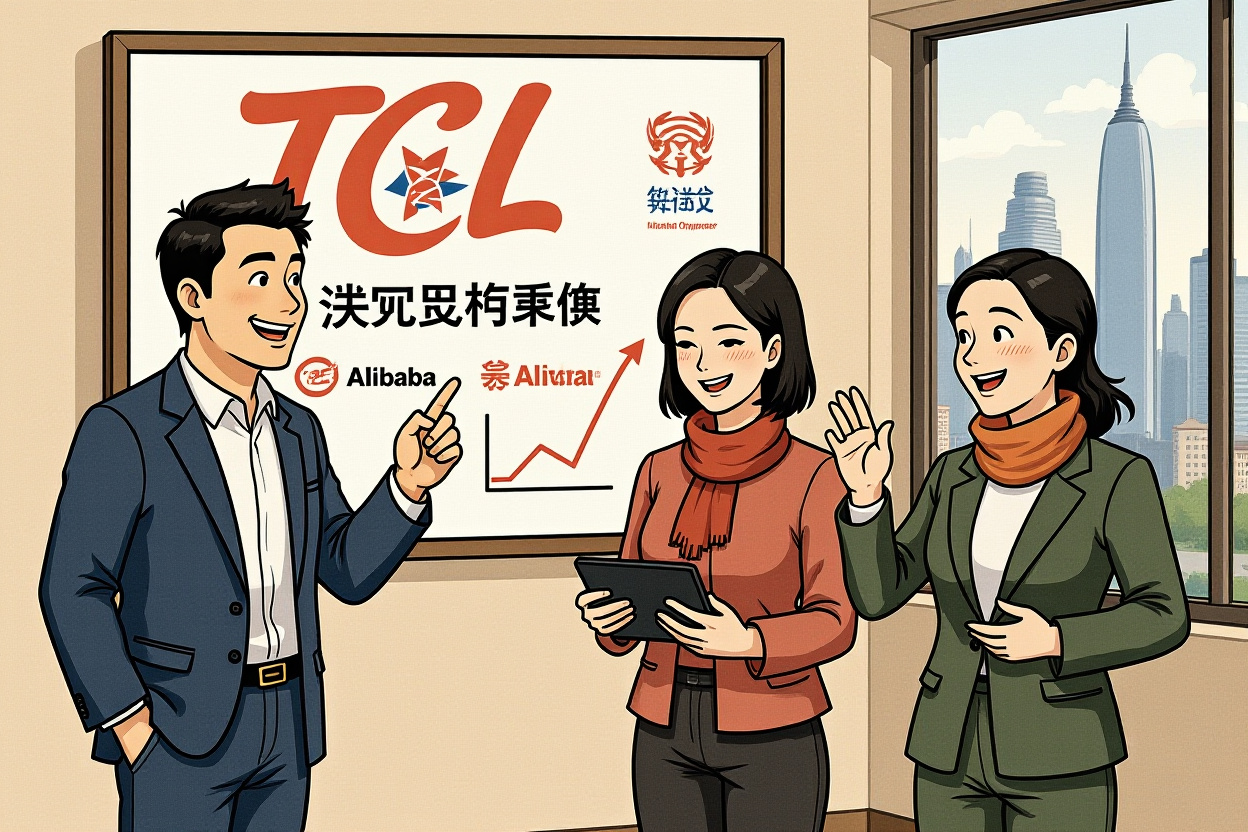
– The Milan-Cortina Winter Olympics mark a historic high with three Chinese TOP sponsors—TCL (TCL集团), Alibaba (阿里巴巴集团), and Mengniu (蒙牛集团)—surpassing previous records and reflecting China’s growing commercial influence on the global stage.
– Sponsorship strategies extend beyond traditional advertising to immersive experiences like pop-up stores and AI-driven installations, leveraging the Olympic platform for enhanced brand visibility and customer engagement.
– The evolution of the TOP program highlights significant sponsor turnover, with Japanese and other legacy exits making way for Chinese entrants, indicative of broader shifts in global economic power and industry focus towards technology.
– Technological innovations from sponsors, such as AI-enhanced broadcasts via Alibaba Cloud (阿里云) and advanced display panels from TCL, are transforming viewer experiences and showcasing cutting-edge capabilities in real-time sports coverage.
– Market implications include increased international recognition for Chinese brands, potential for expanded market share in Europe and beyond, and actionable insights for investors monitoring consumer trends and geopolitical commercial dynamics.
As the Milan-Cortina Winter Olympics unfold, the streets of Milan are transformed into a vibrant tapestry of commercial ambition, where giant advertisements and bustling pop-up stores signal more than just athletic competition—they herald a pivotal moment in global sports marketing. This event has welcomed a record number of Chinese TOP sponsors, underscoring a seismic shift in how commercial power is projected on the world’s premier sporting stage. For international investors and business professionals, this trend offers critical insights into the evolving landscape of Chinese equity markets and brand globalization, where sponsorship deals are not merely promotional but strategic maneuvers in a high-stakes economic arena. The unprecedented presence of Chinese TOP sponsors at these Olympics highlights their growing prowess in leveraging mega-events for market expansion and technological showcase, making it a focal point for analyzing future investment opportunities in consumer and tech sectors.
The Commercial Arena: From Milan Streets to Olympic Villages
Walking through Milan, the omnipresence of Olympic-themed advertisements is unmistakable, with brands competing fiercely for prime visibility in a city constrained by architectural norms. This commercial fervor extends from outdoor billboards to immersive brand experiences, creating a dynamic backdrop for the games.
Outdoor Advertising and Brand Presence
In Milan’s historic center, where building heights are limited to preserve the iconic Duomo di Milano, securing large-scale outdoor ad space is a challenge, yet Olympic sponsors have adeptly navigated this. TCL (TCL集团) dominates with the city’s largest outdoor billboard, featuring滑雪 imagery alongside promotions for its appliances, while competitors like Samsung (三星) and Corona (科罗娜) under AB InBev (百威英博) display similarly expansive ads. Public transport hubs, including bus stops and tram bodies, are adorned with logos from VISA (VISA), Allianz (安联), and others, all bearing the Olympic rings—a privilege reserved for TOP sponsors. This saturation turns Milan into a冬奥主题 canvas, where every glance reinforces sponsor identities and their global reach.
The TOP program, or The Olympic Partner program, comprises 12 elite sponsors for this cycle, including three Chinese TOP sponsors—TCL, Alibaba, and Mengniu—alongside four American, two Swiss, and others from Germany, Belgium, and South Korea. Beyond these, the Olympics feature tiers like Premium Partners, Partners, and local Sponsors, but TOP sponsors贡献 the most substantial financial support and enjoy exclusive marketing rights. According to International Olympic Committee (国际奥委会) data, TOP contributions account for over 30% of IOC revenue, with sponsors paying upwards of $300 million per cycle for these privileges. This financial heft underscores why brands vie for TOP status, as it enables deep integration into the Olympic fabric, from广告 to direct service provision.
In-Village Experiences and Services
Within the Olympic Village, sponsors create tailored spaces that blend product showcasing with athlete engagement. TCL has set up a living room area equipped with its latest TVs, refrigerators, and smart glasses, using a QD-Mini LED television to broadcast events with enhanced clarity for冰雪运动细节. Alibaba’s booth features an AI-powered robotic arm that interacts with visitors, dispensing pins for exchange—a popular Olympic tradition. Other services include Procter & Gamble’s (宝洁) daily care kits and Samsung’s定制版折叠屏手机 gifts to athletes. These initiatives go beyond mere advertising; they provide tangible value, fostering brand loyalty and positive associations among a global audience. For instance, TCL supplies hundreds of high-definition screens to the International Broadcast Centre (IBC), while Alibaba’s AI assistants aid various National Olympic Committees with赛务 queries, demonstrating how Chinese TOP sponsors are integral to operational success.A Historic Milestone: Record Number of Chinese TOP Sponsors
This Winter Olympics witnesses the highest-ever participation of Chinese athletes in a海外冬奥会, mirrored by an equally remarkable commercial presence. The surge in Chinese TOP sponsors marks a significant evolution from the early days of Olympic sponsorship, reflecting broader economic trends and strategic brand ambitions.
The Evolution of Chinese Sponsorship
Since Lenovo (联想) became the first Chinese TOP sponsor during the Beijing 2008 cycle, the roster has gradually expanded. Alibaba joined in 2017, followed by Mengniu in 2019, and TCL entered after the Paris Olympics, replacing Panasonic (松下) in the home appliances category. With three representatives, China now ranks second only to the United States in TOP sponsorship count, a testament to its rising corporate clout. Compared to legacy sponsors like Coca-Cola (可口可乐), which has been involved since 1928, or Omega (OMEGA) since 1932, these Chinese TOP sponsors are relative newcomers, yet their rapid ascent signals a shifting commercial order. The Olympic stage, long dominated by Western and Japanese brands, is increasingly becoming a platform for Chinese enterprises to assert global influence, with赞助商阵列变化 mirroring geopolitical economic shifts.
This milestone is not merely symbolic; it carries practical implications for market dynamics. Chinese TOP sponsors leverage the Olympics to accelerate international expansion, as seen with TCL’s growing share in European TV markets and Alibaba’s cloud业务出海. For investors, this trend highlights sectors where Chinese brands are gaining traction, such as consumer electronics and digital services, offering clues for equity positioning in emerging markets. The record number of Chinese TOP sponsors also underscores the strategic importance of sports marketing in brand-building, suggesting that similar moves by other Chinese companies could follow, potentially boosting related stocks in the Shanghai and Shenzhen exchanges.
The Dynamics of Olympic Sponsorship: New Entrants and Exits
The TOP program is in a state of flux, with several high-profile exits and new additions reshaping the sponsorship landscape. This turnover reflects underlying market forces, including financial pressures and strategic pivots, offering a lens into global corporate health and industry trends.
Sponsor Turnover and Market Forces
After the 2024 Paris Olympics, the TOP roster experienced significant churn: three Japanese sponsors—Panasonic, Toyota (丰田), and Bridgestone (普利司通)—along with French tech firm Intel (英特尔) exited the program. Panasonic, a founding TOP member with 37 years of sponsorship, cited “评估赞助策略以适应经营环境” (evaluating sponsorship strategies to adapt to business conditions) amid declining净利润, while Toyota faced similar financial headwinds. These departures, which left no Japanese companies in the TOP group, raised concerns about the program’s stability. However, recent additions like AB InBev and TCL have replenished the ranks, with most current sponsors locked in through 2028 or 2032. For instance, Mengniu, Coca-Cola, and others have agreements extending to 2032, ensuring continuity for upcoming Games. This ebb and flow of Chinese TOP sponsors and others highlights how sponsorship decisions are tightly linked to corporate performance and global economic cycles, providing investors with indicators of sectoral strength or weakness.
Industry and Technological Shifts
The changing sponsor mix also signals industry evolution, as legacy sectors like traditional automotive and家电 make way for tech-driven entrants. Exits from燃油车 and CPU manufacturers coincide with increased focus on AI, cloud computing, and advanced display technologies—areas where Chinese TOP sponsors excel. Alibaba’s云技术 and TCL’s SQD MiniLED panels are prime examples, deployed extensively in Olympic broadcasts and venues. At the International Broadcast Centre in Milan,奥林匹克广播服务公司 (OBS) staff noted that AI and cloud solutions from Alibaba Cloud enable features like 360-degree replays and motion trajectory analysis, enhancing viewer engagement. Meanwhile, TCL’s耐低温 panels power connectivity screens in arenas, allowing athletes to interact with loved ones. This technological infusion not only elevates the Olympic experience but also showcases the innovative capabilities of Chinese firms, positioning them as leaders in next-generation tech markets. For institutional investors, this shift suggests growth opportunities in Chinese tech equities, particularly those involved in AI and consumer electronics, as global demand for these solutions rises.
Technological Innovations Enhancing the Olympic Experience
Sponsorship at the Milan Olympics transcends mere logo placement, with Chinese TOP sponsors and others integrating cutting-edge technologies that redefine how audiences consume sports. These innovations offer a glimpse into future commercial applications and market trends.
AI and Cloud Computing in Broadcast
Alibaba Cloud’s partnership with OBS has revolutionized冬奥会转播, employing AI to generate real-time visual effects and enhance slow-motion analyses. For example, during figure skating events, AI algorithms slice and display运动轨迹, providing deeper insights for commentators and fans. This technology is deployed across multiple venues, reducing latency and improving content delivery globally. Such advancements underscore Alibaba’s push to expand its cloud业务出海, leveraging the Olympic platform to demonstrate reliability and scalability to potential international clients. For investors, this highlights the growing competitiveness of Chinese cloud providers in a market dominated by AWS and Azure, suggesting potential upside in Alibaba’s stock as it captures more overseas contracts.Advanced Display Technologies
TCL’s display innovations are equally impactful, with its QD-Mini LED TVs offering superior brightness and color accuracy for冰雪运动 broadcasts. In the Olympic Village and IBC, these screens handle extreme低温 conditions while maintaining clarity, a testament to engineering prowess. TCL’s strategy involves using the Olympics to showcase product superiority, aiming to gain market share in Europe where it already ranks third in TV sales. The company’s意大利国家经理 reported that TCL’s TV市场份额 in Italy grew approximately 50% year-over-year to around 12%, largely at the expense of Japanese and Korean brands like松下 and LG. This aggressive expansion, fueled by sponsorship visibility, signals a broader trend of Chinese consumer electronics brands displacing established players, offering investment themes in sectors undergoing market share redistribution.
Strategic Implications for Global Markets
The record presence of Chinese TOP sponsors at the Milan Olympics carries profound implications for international business, from brand perception to investment strategies. Understanding these nuances can guide corporate executives and fund managers in navigating Asian equity markets.
Brand Expansion and Market Penetration
Chinese TOP sponsors are using the Olympics as a springboard for global growth. TCL’s focus on Europe, for instance, involves tailored strategies for fragmented markets like Italy, where南北经济发展差异 and channel competition create price洼地. By leveraging sports marketing, TCL boosts brand认知度 and negotiates better渠道商合作, potentially increasing its白电业务 sales. Similarly, Alibaba’s AI and cloud demonstrations aim to attract overseas clients, aligning with its broader国际化 goals. For investors, this suggests that Chinese brands with strong Olympic ties may see accelerated revenue growth in foreign markets, warranting closer analysis of their international segments in financial reports. The success of these Chinese TOP sponsors could also inspire other Chinese enterprises to pursue similar sponsorships, driving up valuations in related industries.Investment Insights and Future Trends
The sponsorship dynamics offer actionable insights for portfolio management. The exit of Japanese sponsors points to challenges in traditional industries, while the entry of Chinese TOP sponsors highlights resilience in tech and consumer goods. Monitoring sponsor agreements—such as those lasting until 2032 for Mengniu and Coca-Cola—can provide early signals of long-term corporate commitments and market confidence. Additionally, the integration of AI and cloud technologies in real-world applications like Olympic broadcasts underscores the maturation of these sectors in China, suggesting potential investment opportunities in ETFs or stocks focused on Chinese tech innovation. As the Olympic cycle progresses, tracking the performance of Chinese TOP sponsors in post-Games sales and market share data will be crucial for assessing the ROI of such high-profile sponsorships.The Milan Winter Olympics have showcased a transformative chapter in global sports commerce, where Chinese TOP sponsors have emerged as pivotal players, driving technological innovation and market expansion. Their record number not only reflects China’s economic ascent but also signals a rebalancing of commercial influence in international arenas. For investors and business leaders, this trend underscores the importance of monitoring sponsorship strategies as indicators of brand health and sectoral shifts. As the Games conclude, the legacy of these sponsorships will likely reverberate through quarterly earnings and market analyses, offering ongoing opportunities for informed decision-making. To stay ahead in the dynamic landscape of Chinese equities, consider delving deeper into the annual reports of these赞助商 and tracking their global market penetration—your next investment insight might just be sparked by an Olympic advertisement.