



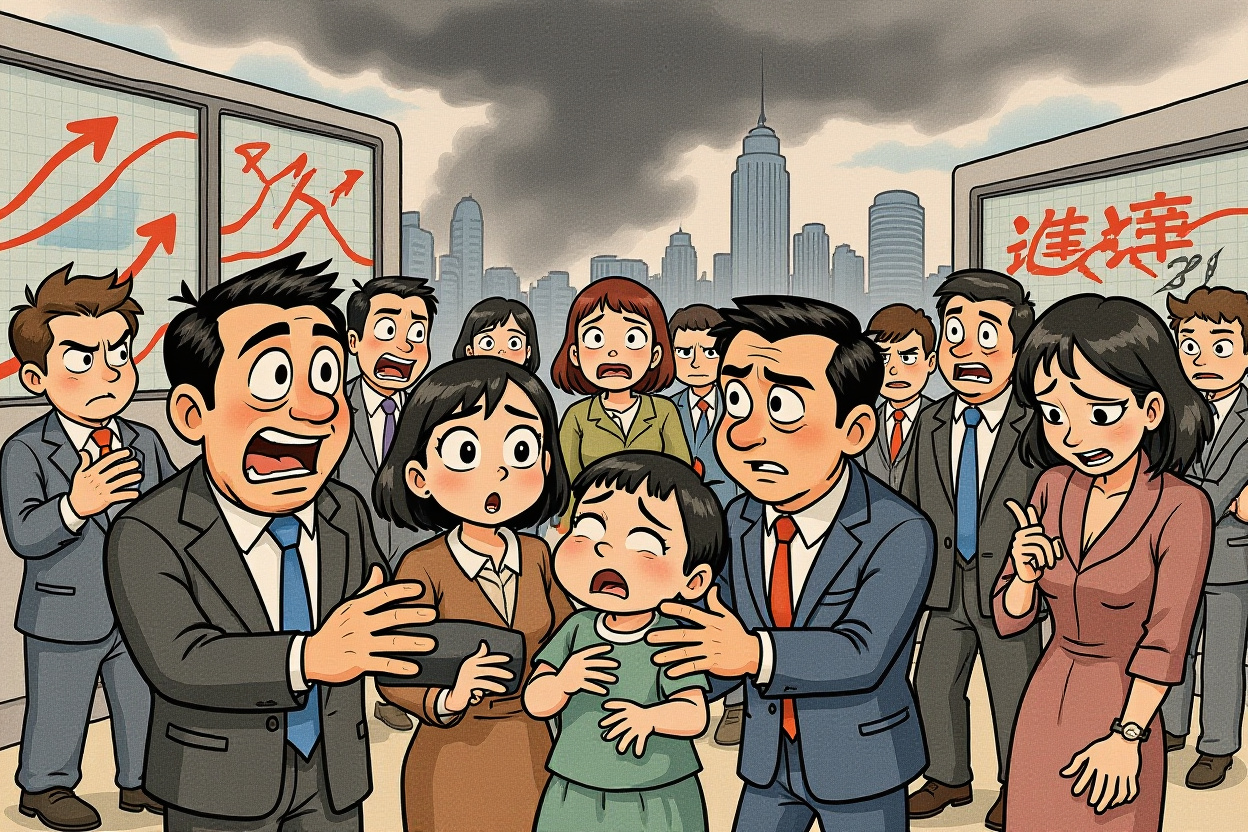
The Opening Shock of 2026
The dawn of 2026 has been marked by a seismic event in China’s capital markets, as a specialized public fund’s unprecedented 31.5% single-day net asset value (NAV) crash has ignited a fierce public fund valuation storm. This crisis centers on the SDIC Essence Silver Futures LOF (161226) (国投瑞银白银期货LOF), a product that tracks silver futures, and has exposed deep-seated issues of liquidity, transparency, and investor protection within the public offering fund (公募基金) sector. The sudden devaluation, following a trading suspension and a controversial valuation adjustment, has left thousands of investors nursing heavy losses and questioning the very rules governing such products. As complaints flood in and regulators watch closely, this incident represents a critical stress test for China’s rapidly evolving financial landscape.
Key Takeaways:
– The SDIC Essence Silver Futures LOF experienced a net value drop of 31.5% on February 2, 2026, after a suspension and adjustment citing international price discrepancies.
– Investor outrage has surged, with hundreds of formal complaints highlighting failures in risk disclosure, liquidity access, and procedural transparency.
– SDIC Essence Fund Management Co., Ltd. (国投瑞银基金管理有限公司) has established a task force to address grievances, but concrete solutions on compensation and liquidity support remain absent.
– This public fund valuation storm exposes systemic risks in commodity-linked exchange-traded products and could prompt tighter regulatory scrutiny.
– The outcome will set a precedent for how China’s fund industry handles valuation crises and protects retail investors in volatile markets.
The Genesis of the Storm: A Silver Surge and Sudden Crash
The roots of this crisis lie in a spectacular, yet ultimately unstable, rally in silver prices. The SDIC Essence Silver Futures LOF, as China’s only publicly offered fund tracking silver futures, became the focal point for speculative capital chasing the metal’s decade-best performance.
Unprecedented Gains and Investor Frenzy
From October 2025 to late January 2026, the fund’s net asset value skyrocketed from approximately 1.26 yuan to 5.25 yuan, a gain exceeding 300%. This meteoric rise, driven by a bullish international silver market, swelled the fund’s size from around 4.3 billion yuan to well over 10 billion yuan. A wave of retail and institutional investors, drawn by the seemingly unstoppable momentum, piled into the product, often through the fund’s listed open-end (LOF) structure that allows for secondary market trading. This period of euphoria, however, masked the inherent volatility of the underlying asset and the structural vulnerabilities of a fund navigating disparate pricing regimes between domestic and international markets.
The Fateful Halt and Drastic Valuation Adjustment
The turning point arrived with brutal swiftness. On Friday, January 30, 2026, the fund’s manager announced an unexpected one-day trading suspension on the secondary market. Investors were locked in, unable to buy or sell units, just as international silver prices began a precipitous decline of over 25%. The rationale provided later was operational, but the timing exacerbated panic. When trading resumed on February 2, the fund opened at its 10% daily down limit. The real shock came after the market close.
SDIC Essence issued an announcement stating that, due to the constraints of domestic futures exchange price limits (涨跌停板制度), the fund’s domestic settlement price no longer accurately reflected the value of its underlying international silver futures holdings. Invoking its fund contract and relevant regulatory guidance, the company performed a special valuation adjustment. The result was catastrophic for holders: the A-share class unit NAV was slashed from 3.2838 yuan to 2.2494 yuan, a single-day collapse of 31.5%. This move, while framed as a合规操作 (compliant operation), effectively backdated massive losses to investors who had submitted redemption orders before the adjustment was known, plunging them into an unforeseen public fund valuation storm.
Investor Fury Erupts: Complaints and Core Grievances
The aftermath of the valuation adjustment has been a firestorm of anger and frustration from the fund’s investor base. The sense of betrayal is palpable, as individuals who believed they were participating in a regulated, transparent market vehicle found themselves caught in a technical nightmare.
The Avalanche of Formal Complaints
Platforms like Phoenix.com’s complaint channel (凤凰投诉) have been inundated with over a hundred formal grievances related to this incident by early February 2026. The complaints crystallize around several key themes: the lack of prior warning for the trading suspension, the perceived unfairness of the ex-post facto valuation cut, and the utter liquidity freeze on the secondary market where sell orders worth billions of yuan were queued behind continuous跌停 (limit-down) boards for five straight sessions. One typical investor complaint reads, “It cannot be that the price was still rising on Thursday, and then on Friday there was a suspension without allowing us to sell. This is typical fraud and a destruction of market rules.”
SDIC Essence’s Initial Response: Acknowledgment Without Action
Under intense pressure, SDIC Essence broke its silence on February 6 with a formal公告 (announcement). The company stated it would uphold principles of legality, openness, and fairness, actively respond to investor demands, and strive to mitigate the impact of the valuation adjustment. It announced the formation of a专项工作小组 (special task force) and pledged to facilitate resolution through channels like mediation and arbitration. Superficially, this was a positive step towards crisis management. However, a closer reading reveals a significant gap. The announcement functioned more as a procedural roadmap than a substantive remedy, carefully avoiding any commitment to financial compensation, liquidity injections, or acknowledgment of potential liability for inadequate prior risk disclosure. This has only fueled the perception that the response is a stalling tactic rather than a genuine solution to the public fund valuation storm.
Unanswered Questions at the Heart of the Crisis
The SDIC Essence announcement, while a necessary first step, has left the most critical investor concerns unaddressed. The resolution of this public fund valuation storm hinges on clear answers to these unresolved issues, which strike at the core of trust in China’s fund management industry.
The Crux of Timing and Investor Fairness
The most acute grievance involves the timing of the valuation adjustment. Investors who submitted redemption requests before the 3:00 p.m. cutoff on February 2 did so based on the last known NAV. They were wholly unaware that a 31.5% downward revision was imminent after the market close. The rules permitted the fund to settle these redemptions at the new, lower price, imposing massive, unexpected losses. The central question remains: Will SDIC Essence offer any form of compensation or adjustment to this group? Furthermore, could the valuation adjustment have been implemented with a forward-looking effective date to prevent this unfair outcome? The company’s silence on this point is deafening and continues to be a primary source of outrage.
Liquidity Paralysis and Systemic Risk
Beyond the NAV cut, the secondary market trading halt and subsequent string of limit-down days have created a separate crisis of liquidity. With sell orders封单超百亿 (exceeding ten billion yuan in value) stuck in the queue, investors are effectively trapped in a depreciating asset with no exit. This exposes a critical flaw in the LOF structure for volatile underlying assets: when the primary fund’s valuation mechanism breaks down, the secondary market can seize up entirely. How will SDIC Essence, or potentially regulators like the China Securities Regulatory Commission (CSRC) (中国证监会), intervene to restore orderly trading and provide an exit mechanism for desperate investors? The absence of a plan here highlights a dangerous gap in market infrastructure.
Risk Disclosure and Fiduciary Responsibility
While SDIC Essence did issue multiple risk warnings during the fund’s rise, investors argue these were generic and failed to adequately specify the extreme scenario of a discretionary, large-scale valuation adjustment triggered by international-domestic price gaps. The prospectuses and daily disclosures for commodity-linked LOFs may not sufficiently educate retail investors on these complex, tail-risk mechanics. This incident forces a reckoning on the fiduciary duty of fund managers. Did SDIC Essence meet its obligation to fully inform clients of all material risks? This public fund valuation storm suggests a deficiency that regulators will need to examine, potentially leading to stricter requirements for stress-test scenarios and explicit warnings in fund documentation.
Broader Implications: A Wake-Up Call for China’s Fund Industry
The SDIC Essence silver fund debacle is not an isolated incident but a symptom of broader challenges as China’s capital markets integrate with global commodities and derivatives markets. This public fund valuation storm serves as a stark warning with far-reaching consequences.
Exposing Vulnerabilities in Innovative Product Design
The popularity of niche, theme-based public funds—especially those tracking volatile commodities like silver, oil, or carbon credits—has surged in recent years. This case reveals the inherent dangers when such products, designed for sophisticated markets, are accessed by a broad retail audience through familiar structures like LOFs. The mismatch between daily price limits on Chinese futures exchanges and the 24-hour volatility of international markets creates a valuation time bomb. Other funds with similar structures, potentially including other commodity LOFs or quasi-hedge funds (QHFII products), may now face intense scrutiny from both investors and regulators. Fund managers must reassess their risk models, liquidity provisions, and investor communication strategies for all products with complex or offshore underlying assets.
The Regulatory Imperative in the Aftermath
This crisis presents a direct challenge to China’s financial regulators, primarily the CSRC and the Asset Management Association of China (AMAC) (中国证券投资基金业协会). While existing rules provided the framework for the valuation adjustment, the outcry demonstrates that the rules may be insufficient to ensure fair outcomes. Regulators are now compelled to consider several reforms. These could include mandating clearer, more prominent risk disclosures for valuation adjustment triggers, establishing guidelines for the timing and communication of such adjustments to protect transacting investors, and reviewing the suspension mechanisms for exchange-traded funds to prevent liquidity black holes. The final resolution of this case will set a critical precedent for regulatory tolerance and could accelerate the formulation of more detailed guidelines for the management of public funds with international underlying assets, a key aspect of China’s financial market opening.
Synthesizing the Storm and Paths Forward
The SDIC Essence silver fund crisis of early 2026 is a multifaceted disaster that has shaken confidence in a segment of China’s public fund industry. It is a story of spectacular gains erased by technical adjustments, of investor trust broken by opaque processes, and of a system struggling to reconcile domestic market controls with global price discovery. The public fund valuation storm has laid bare the uncomfortable reality that innovation in financial products can outpace the robustness of investor safeguards and market mechanisms.
The path to resolving this specific crisis and preventing future ones is now clear. For SDIC Essence, mere process announcements are inadequate. The company must move swiftly to engage with the special task force’s findings and propose concrete, financial solutions to address the legitimate losses of investors caught by the timing of the valuation change. This may involve ex-gratia payments, facilitated repurchase schemes, or other forms of compensation. For the broader industry and its regulators, this is a moment for rigorous self-examination. Enhancing stress testing, mandating real-world scenario disclosures, and clarifying the rules of engagement for valuation during extreme market events are no longer optional—they are essential to maintaining market integrity.
For global investors and fund managers watching China, this episode is a crucial case study in the unique risks and regulatory evolution of the world’s second-largest equity market. It underscores the imperative of deep due diligence, not just on a fund’s stated strategy, but on the fine print of its contract, the historical behavior of its manager during stress, and the nuances of China’s specific market rules. The call to action is unambiguous: stakeholders must advocate for and support reforms that bolster transparency, fairness, and resilience, ensuring that the growth of China’s public fund industry is built on a foundation that can weather the next inevitable storm.