



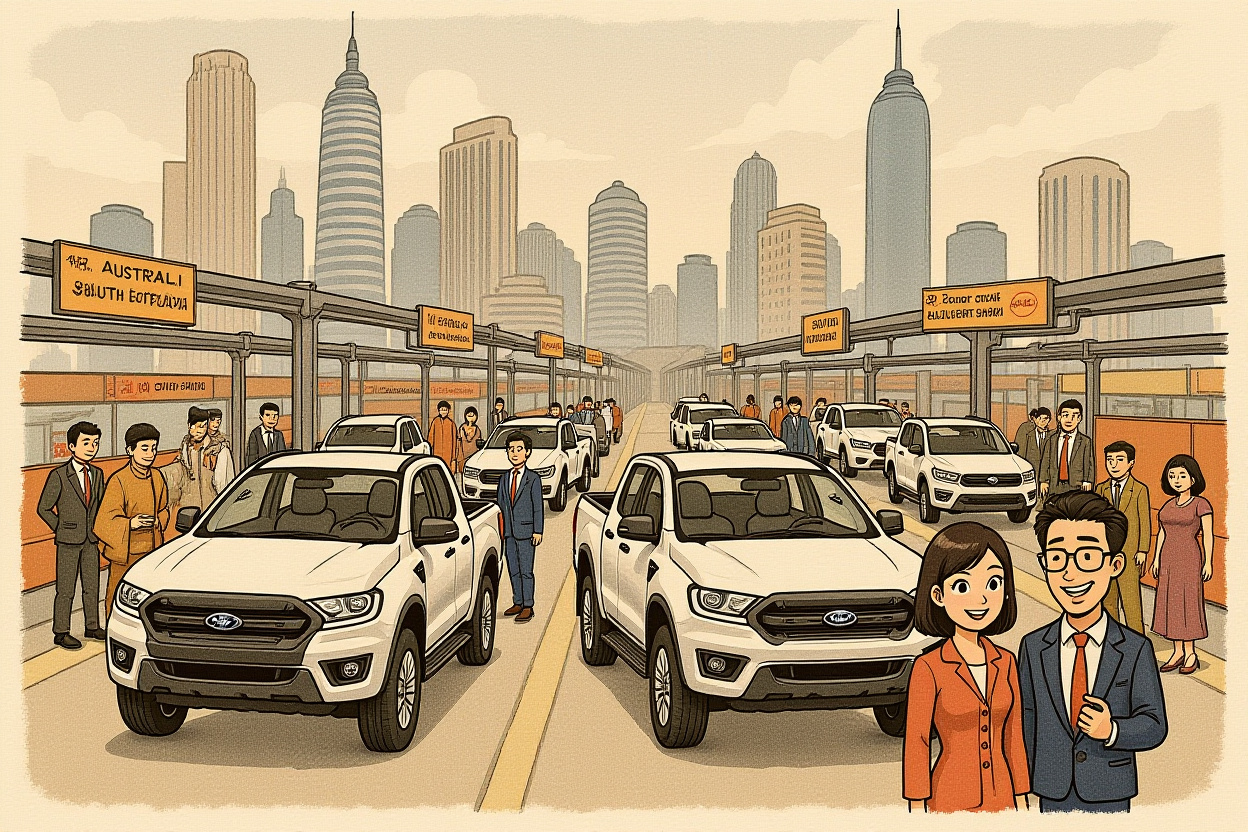
– Chinese pickup truck exports surged 30% year-over-year in early 2025, with over 50% of total sales now destined for overseas markets, highlighting a strategic shift in global automotive trade. – Key growth regions include Australia, South Africa, Latin America, and Southeast Asia, where Chinese brands are capturing market share through localized adaptations and competitive pricing. – New energy technologies, including hybrid and electric powertrains, are becoming a critical differentiator, with export shares rising from zero to over 15% in just two years. – Manufacturing flexibility and capacity expansion, such as dual-shift operations and flexible production lines, are enabling Chinese automakers to meet booming global demand. – Expert analysis points to Chinese intelligent manufacturing as a core driver, enhancing product quality and enabling international cross-segment competition that is reshaping the global pickup truck industry. The global automotive landscape is witnessing a seismic shift as Chinese pickup trucks accelerate their overseas expansion, transforming from niche workhorses into mainstream lifestyle vehicles. With exports now accounting for more than half of total sales, Chinese intelligent manufacturing is not just keeping pace but setting new benchmarks in innovation, quality, and market adaptability. This surge is fueled by a combination of robust production capabilities, tailored design enhancements, and a forward-looking embrace of new energy technologies, positioning Chinese brands as formidable players in international markets. For investors and industry watchers, understanding this trend is crucial to capitalizing on the evolving dynamics of the Chinese equity markets and the broader automotive sector.
From Workhorse to Lifestyle Companion: The Evolution of Chinese Pickups
Chinese pickup trucks have undergone a remarkable transformation, shedding their image as mere utilitarian tools to become versatile partners for both work and leisure. This evolution is central to their global appeal, driven by Chinese intelligent manufacturing that emphasizes durability, functionality, and consumer-centric design. As exports climb, these vehicles are increasingly seen as reliable assets in diverse environments, from urban settings to rugged terrains.
Global Market Penetration and Data Insights
Recent data underscores the rapid internationalization of Chinese pickup trucks. In the first two months of 2025, exports reached 50,000 units, a 30% increase year-over-year, with the export share of total industry sales remaining at elevated levels. By the end of 2025, overseas shipments are projected to hit 300,000 units, representing over 50% of total sales. This growth is not confined to a single region but spans continents, reflecting strategic market entry and sustained demand. Key statistics include: – South Africa: According to the South African Automotive Business Council (Naamsa), sales of pickups and minibuses grew by 11.9% in February 2025, with Chinese brands expected to capture nearly 17% of the market by year-end, making them the fastest-growing segment. – Australia: Dealers like Dinesh (迪内什), representing brands such as SAIC Maxus, report a 58.7% year-over-year sales increase in February 2025, attributed to enhanced brand visibility and product reliability. – Latin America: In Peru, pickups are indispensable across sectors like mining, agriculture, and tourism, with Chinese models gaining traction due to their adaptability to challenging landscapes like the Andes Mountains and coastal deserts.
Case Studies: Australia and South Africa
In Australia, Chinese pickup trucks are gaining popularity through targeted marketing and network expansion. Dealers highlight factors like fuel efficiency, towing capacity, and after-sales service as competitive edges. Similarly, in South Africa, Chinese brands are leveraging affordability and customization options to appeal to both commercial and personal users. As noted by industry observers, this shift from price-based to value-based competition is a hallmark of Chinese intelligent manufacturing, enabling deeper market penetration. For instance, SAIC Maxus has seen order backlogs extending to mid-2025, prompting production adjustments to meet demand.
Sustained Export Momentum: Scaling Production to Meet Global Demand
The relentless growth in export orders is pushing Chinese manufacturers to optimize their production and logistics frameworks. With Chinese intelligent manufacturing at the core, companies are adopting agile strategies to ensure supply chain resilience and market responsiveness. This section delves into the operational adaptations fueling this export surge.
Logistics and Infrastructure Adaptations
Ports and shipping hubs are scaling up to handle increased volumes. For example, at Yangzhou Yuanyang International Container Terminal Co., Ltd., staff member Liu Geng (刘赓) reported that pickup truck shipments totaled approximately 6,000 TEUs (twenty-foot equivalent units) in early 2025, equating to around 18,000 vehicles and a 16% year-over-year growth. This logistical efficiency is critical for maintaining delivery timelines and reducing costs, enhancing the competitiveness of Chinese pickup trucks in global markets. Outbound links to port authorities or shipping data repositories can provide real-time updates on trade flows.
Manufacturing Flexibility and Capacity Expansion
Factories are ramping up output through technological upgrades and shift expansions. In Wuxi, Jiangsu, one production facility reports that over 90% of its pickup trucks are earmarked for export, with destinations now including nearly 20 new countries added in the first quarter of 2025 alone. Zhao Aimin (赵爱民), Deputy General Manager of SAIC Maxus, emphasized that regions like Africa, Southeast Asia, and Europe have seen breakthroughs, necessitating two-shift operations to clear order backlogs. Additionally, flexible production lines allow for the manufacture of over a thousand configurations, supporting both whole-vehicle and completely knocked-down (CKD) parts exports, the latter of which have doubled in volume.
Tailored for Success: Localized Design and Performance Enhancements
Chinese automakers are excelling in customizing their pickup trucks to meet region-specific needs, a strategy underpinned by Chinese intelligent manufacturing that prioritizes R&D and consumer feedback. This localization goes beyond superficial changes, addressing fundamental performance and regulatory requirements.
Adapting to Diverse Geographies: Peru and Brazil Examples
In Peru, where terrain varies from high-altitude mines to desert coasts, Chinese brands have modified vehicles for improved climbing ability and off-road durability. Enhancements include reinforced suspensions and optimized engine tuning. For Brazil, adjustments focus on road safety and emissions compliance: – Suspension stiffness has been increased to handle rough roads, while electronic stability programs are upgraded for better control on wet or slippery surfaces. – Fuel tank designs now incorporate barrier layers to reduce vapor evaporation, aligning with local emissions standards and fuel characteristics. These modifications demonstrate how Chinese intelligent manufacturing integrates engineering precision with market intelligence, ensuring products resonate with local consumers.
Involving Local Talent in Research and Development
To deepen localization, Chinese companies are establishing R&D centers overseas and hiring local engineers and designers. This approach ensures that vehicles are not only adapted to physical conditions but also to cultural preferences and usage patterns. For instance, feedback from Latin American teams has led to interior comfort improvements and payload capacity adjustments, enhancing overall user experience. This collaborative model fosters innovation and strengthens brand loyalty, key components of long-term market success.
New Energy Leadership: Driving the Future with Chinese Intelligent Manufacturing
The adoption of new energy technologies is propelling Chinese pickup trucks into a new era of global competitiveness. With expertise in pure electric, hybrid, and range-extender systems, Chinese intelligent manufacturing is setting the pace for industry-wide electrification, offering greener alternatives without compromising performance.
Technological Advancements and Market Reception
In markets like Mexico, new energy pickups are gaining rapid acceptance. Elias, a Mexico City resident, recently purchased a hybrid Chinese pickup, citing lower fuel costs and reduced environmental impact compared to traditional models. Industry data shows that the export share of new energy pickups has jumped from zero to over 15% within two years, driven by proprietary platforms capable of mixed production for various powertrains. Companies highlight features like extended range, smart connectivity, and lower maintenance as selling points, appealing to eco-conscious consumers worldwide.
Expert Insights on Competitive Edge and Global Impact
Cui Dongshu (崔东树), Secretary General of the China Passenger Car Association, attributes this success to broader manufacturing advancements. He notes, ‘The overall improvement in Chinese manufacturing, particularly in component quality, has elevated vehicle capabilities, leading to export growth and supercharged expansion in new energy pickups. Chinese intelligent manufacturing, with its category and new energy advantages, enables international cross-segment competition, effectively leading the global upgrade of pickup trucks.’ This perspective underscores how Chinese brands are not just participants but trendsetters, reshaping industry standards through innovation. The rise of Chinese pickup trucks on the global stage is a testament to the power of intelligent manufacturing, strategic localization, and technological foresight. With exports surpassing 50% of sales and new energy models gaining traction, Chinese automakers are redefining competitiveness in an industry long dominated by established players. For investors, this trend signals robust growth opportunities in Chinese equities, particularly in automotive and supply chain sectors. Moving forward, monitoring regulatory developments, trade policies, and consumer adoption rates will be key to navigating this dynamic landscape. We encourage readers to delve deeper into market reports and consider the long-term implications of Chinese intelligent manufacturing on global automotive investments.