



Executive Summary
– Chinese gaming stocks experienced significant “Deep V” volatility, with sharp intraday swings driven by market sentiment and regulatory uncertainty.
– Unverified tax-related rumors circulated, prompting swift public responses from major companies like Tencent Holdings (腾讯控股) and NetEase (网易) to reassure investors.
– The volatility highlights underlying concerns about China’s evolving regulatory landscape for the technology and entertainment sectors, including potential tax policy adjustments.
– Historical data suggests such episodes may create buying opportunities for long-term investors, but caution is advised due to ongoing macroeconomic and policy risks.
– Investors should monitor official announcements from bodies like the State Administration of Taxation (国家税务总局) and diversify portfolios to mitigate sector-specific shocks.
The Sudden Tremor in China’s Gaming Sector
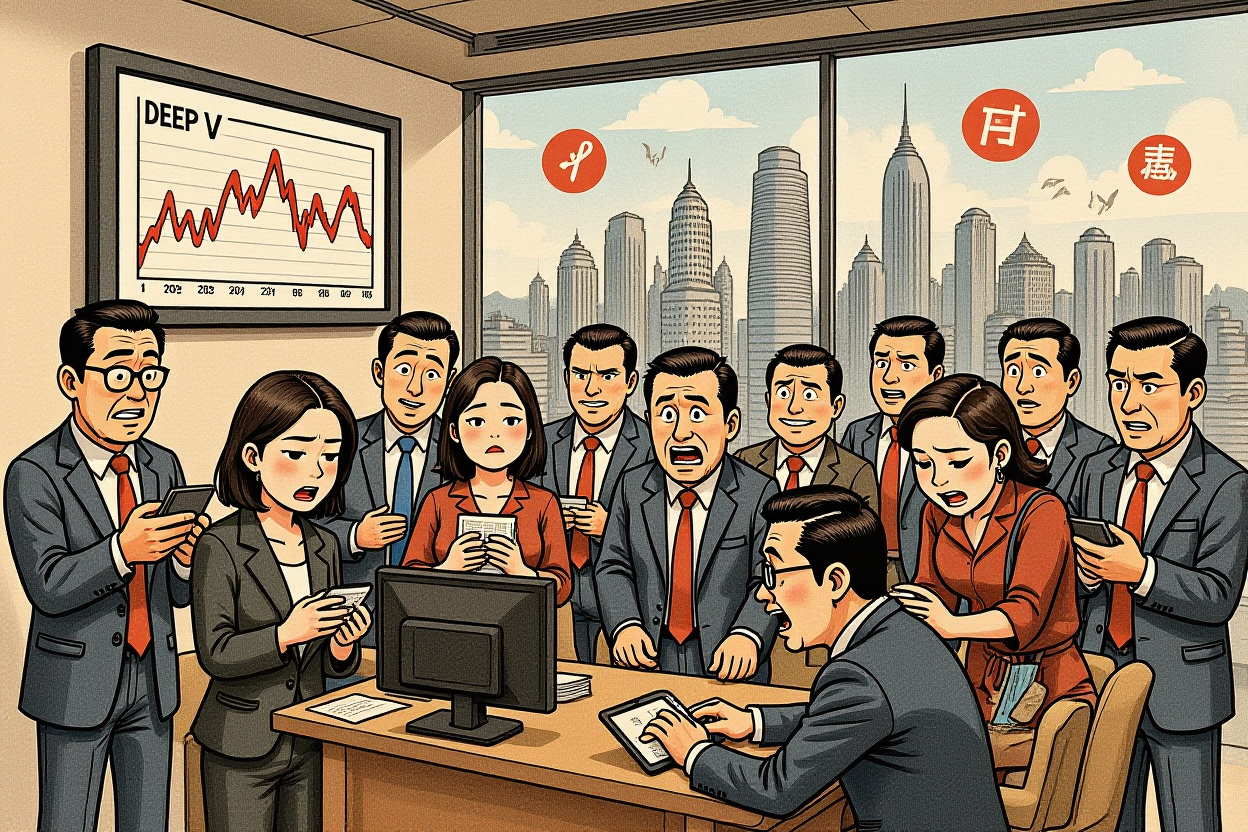
A wave of intense volatility, colloquially termed a “Deep V” pattern for its sharp intraday decline and recovery, recently swept through China’s listed gaming companies, catching global investors off guard. This Gaming Stocks’ ‘Deep V’ Volatility episode, marked by rapid price swings, has been exacerbated by swirling rumors about potential tax audits and increased levies on the industry. For institutional players with significant exposure to Chinese equities, understanding the drivers behind this turbulence is crucial for risk assessment and strategic repositioning. The sector, once a darling of growth investors, now faces a confluence of regulatory scrutiny and market psychology tests.
Decoding the ‘Deep V’ Market Pattern
The “Deep V”形容深V型震荡 refers to a technical chart pattern where a stock or index experiences a precipitous drop during a trading session, only to rebound sharply and close near or above its opening level, forming a V-shaped trajectory. In recent sessions, prominent gaming stocks such as Tencent Holdings (腾讯控股) and NetEase (网易) displayed this exact behavior, with intraday losses exceeding 5% before paring back most declines. Analysts attribute this to a mix of algorithmic trading, stop-loss triggers, and reactive retail sentiment. Historical data from the Shenzhen Stock Exchange (深圳证券交易所) shows similar patterns often precede periods of consolidation, making real-time analysis vital.
Immediate Catalysts and Market Sentiment</h3
The initial sell-off was triggered by unverified social media posts and financial blog reports suggesting that Chinese tax authorities might launch a comprehensive review of tax compliance within the online gaming industry. Specifically, rumors pointed to potential back taxes or increased corporate income tax rates for high-profit gaming firms. While no official confirmation emerged, the mere speculation was enough to spook a market already nervous about China's broader regulatory clampdowns on tech sectors over the past two years. The resulting Gaming Stocks' 'Deep V' Volatility underscores the sensitivity of investor confidence to policy whispers in China's equity markets.
Anatomy of the Tax Rumors: Sources and Substance
The tax rumors that fueled the sell-off appear to have originated from informal online financial communities, later amplified by some brokerage research notes. The core allegation suggested that the State Administration of Taxation (国家税务总局) was planning a targeted campaign focusing on transfer pricing and value-added tax (VAT) deductions for gaming companies with substantial overseas revenue. Given past actions in other sectors like entertainment and real estate, such rumors carried a veneer of plausibility, leading to a risk-off reaction.
Regulatory Precedents and Sector Vulnerability</h3
China's tax authority has previously conducted high-profile audits in sectors deemed to have aggressive tax planning, such as the film industry where actress Fan Bingbing (范冰冰) faced penalties. The gaming industry, with its high margins, intellectual property licensing, and complex in-game revenue streams, could be viewed as a potential target for increased fiscal scrutiny. Moreover, the government's push for "common prosperity" and fiscal revenue stability adds to the perceived risk. An analyst from China International Capital Corporation Limited (中金公司) noted, "While unconfirmed, these rumors tap into deeper anxieties about the state's approach to regulating lucrative digital economies."
Potential Financial Impact on Companies</h3
A hypothetical across-the-board increase in effective tax rates could materially impact net profits. For instance, if the corporate income tax rate for gaming firms were raised from the standard 25% to a higher bracket, earnings projections would need downward revisions. Using back-of-the-envelope calculations, a 5-percentage-point increase could reduce net income for a major player like Tencent by billions of yuan annually, affecting dividend policies and capital expenditure plans. This financial uncertainty is a key driver of the Gaming Stocks' 'Deep V' Volatility observed.
Corporate Responses: Stabilizing the Ship</h2
In a bid to calm markets, several leading gaming companies issued statements addressing the rumors directly. Their responses varied in tone but shared a common goal: to provide clarity and prevent a downward spiral. This proactive communication is critical in managing the Gaming Stocks' 'Deep V' Volatility and restoring investor trust.
Official Statements and Denials</h3
Tencent Holdings (腾讯控股), through its investor relations channel, stated that it "complies with all tax regulations and has not received any notification of special audits," urging investors to rely on official information. Similarly, NetEase (网易) released a brief announcement denying the rumors as "unfounded" and reaffirming its commitment to lawful operations. These denials, while helpful, did not fully alleviate concerns, as markets awaited word from regulatory bodies themselves. The absence of an immediate comment from the State Administration of Taxation (国家税务总局) left room for lingering doubt.
Market Reaction to Corporate Assurance</h3
The immediate impact of these statements was a partial recovery in stock prices, contributing to the "V" shape of the trading day. However, trading volumes remained elevated, indicating continued investor unease. Data from the Hong Kong Stock Exchange (香港交易所), where many Chinese gaming stocks are dually listed, showed a spike in put option activity, suggesting hedging against further downside. This dichotomy between corporate reassurance and market behavior highlights the complex dynamics at play during episodes of Gaming Stocks' 'Deep V' Volatility.
Regulatory Environment and Policy Outlook</h2
To contextualize the rumors, one must examine China's evolving regulatory framework for the gaming industry. Beyond tax policy, the sector has faced content approvals, playtime limits for minors, and anti-monopoly scrutiny. Understanding these layers is essential for forecasting future stability or disruption.
Recent Regulatory History and Its Impact</h3
In 2021, a freeze on new game approvals by the National Press and Publication Administration (国家新闻出版署) caused significant stock declines. While approvals resumed, the episode left a lasting imprint on investor psychology. The current tax rumors, therefore, resonate against a backdrop of perceived regulatory unpredictability. Officials like People's Bank of China Governor Pan Gongsheng (潘功胜) have emphasized fiscal discipline, but specific sectoral measures remain uncertain.
Expert Insights on Future Tax Policy</h3
Financial tax experts suggest that any broad-based tax hike on gaming is unlikely in the near term, given the government's focus on stabilizing growth and supporting strategic industries. However, targeted audits on specific companies for compliance issues are always possible. A partner at PwC China noted, "The rumors likely overstate the immediate risk, but they serve as a reminder for firms to ensure robust tax governance." Investors should watch for signals from upcoming policy documents, such as the State Council's annual work report.
Investment Implications and Strategic Guidance</h2
For global fund managers and institutional investors, the recent volatility presents both risks and opportunities. Navigating this environment requires a balanced approach, blending tactical adjustments with long-term sector fundamentals.
Short-term Risk Management Tactics</h3
– Monitor official channels: Regularly check announcements from the State Administration of Taxation (国家税务总局) and company filings for any updates.
– Diversify exposure: Consider reducing concentration in pure-play gaming stocks by adding exposure to broader tech or consumer discretionary ETFs.
– Use technical analysis: Identify support and resistance levels that often define the bounds of Gaming Stocks' 'Deep V' Volatility for potential entry or exit points.
– Engage with management: Participate in investor calls to gauge corporate confidence and operational resilience.
Long-term Sector Fundamentals</h3
Despite regulatory headwinds, China's gaming industry retains strong growth drivers, including a vast user base, innovation in mobile and cloud gaming, and expanding overseas revenue. Companies with robust intellectual property, like miHoYo (米哈游), creator of Genshin Impact (原神), demonstrate global competitiveness. Valuation metrics, such as price-to-earnings ratios, have compressed, potentially offering value for patient investors. However, a sustained recovery hinges on policy clarity and macroeconomic stability.
Synthesizing the Market Narrative</h2
The episode of Gaming Stocks' 'Deep V' Volatility, fueled by tax rumors, underscores the heightened sensitivity of Chinese equities to regulatory speculation. While corporate responses have provided temporary relief, the underlying anxiety about policy direction persists. Key takeaways include the importance of verifying information through official sources, the need for investors to factor in regulatory risk premiums, and the potential for market overreactions to create tactical opportunities. Looking ahead, the sector's trajectory will depend on tangible policy actions, global economic conditions, and companies' ability to adapt to evolving norms.
A hypothetical across-the-board increase in effective tax rates could materially impact net profits. For instance, if the corporate income tax rate for gaming firms were raised from the standard 25% to a higher bracket, earnings projections would need downward revisions. Using back-of-the-envelope calculations, a 5-percentage-point increase could reduce net income for a major player like Tencent by billions of yuan annually, affecting dividend policies and capital expenditure plans. This financial uncertainty is a key driver of the Gaming Stocks' 'Deep V' Volatility observed.
Corporate Responses: Stabilizing the Ship</h2
In a bid to calm markets, several leading gaming companies issued statements addressing the rumors directly. Their responses varied in tone but shared a common goal: to provide clarity and prevent a downward spiral. This proactive communication is critical in managing the Gaming Stocks' 'Deep V' Volatility and restoring investor trust.
Official Statements and Denials</h3
Tencent Holdings (腾讯控股), through its investor relations channel, stated that it "complies with all tax regulations and has not received any notification of special audits," urging investors to rely on official information. Similarly, NetEase (网易) released a brief announcement denying the rumors as "unfounded" and reaffirming its commitment to lawful operations. These denials, while helpful, did not fully alleviate concerns, as markets awaited word from regulatory bodies themselves. The absence of an immediate comment from the State Administration of Taxation (国家税务总局) left room for lingering doubt.
Market Reaction to Corporate Assurance</h3
The immediate impact of these statements was a partial recovery in stock prices, contributing to the "V" shape of the trading day. However, trading volumes remained elevated, indicating continued investor unease. Data from the Hong Kong Stock Exchange (香港交易所), where many Chinese gaming stocks are dually listed, showed a spike in put option activity, suggesting hedging against further downside. This dichotomy between corporate reassurance and market behavior highlights the complex dynamics at play during episodes of Gaming Stocks' 'Deep V' Volatility.
Regulatory Environment and Policy Outlook</h2
To contextualize the rumors, one must examine China's evolving regulatory framework for the gaming industry. Beyond tax policy, the sector has faced content approvals, playtime limits for minors, and anti-monopoly scrutiny. Understanding these layers is essential for forecasting future stability or disruption.
Recent Regulatory History and Its Impact</h3
In 2021, a freeze on new game approvals by the National Press and Publication Administration (国家新闻出版署) caused significant stock declines. While approvals resumed, the episode left a lasting imprint on investor psychology. The current tax rumors, therefore, resonate against a backdrop of perceived regulatory unpredictability. Officials like People's Bank of China Governor Pan Gongsheng (潘功胜) have emphasized fiscal discipline, but specific sectoral measures remain uncertain.
Expert Insights on Future Tax Policy</h3
Financial tax experts suggest that any broad-based tax hike on gaming is unlikely in the near term, given the government's focus on stabilizing growth and supporting strategic industries. However, targeted audits on specific companies for compliance issues are always possible. A partner at PwC China noted, "The rumors likely overstate the immediate risk, but they serve as a reminder for firms to ensure robust tax governance." Investors should watch for signals from upcoming policy documents, such as the State Council's annual work report.
Investment Implications and Strategic Guidance</h2
For global fund managers and institutional investors, the recent volatility presents both risks and opportunities. Navigating this environment requires a balanced approach, blending tactical adjustments with long-term sector fundamentals.
Short-term Risk Management Tactics</h3
– Monitor official channels: Regularly check announcements from the State Administration of Taxation (国家税务总局) and company filings for any updates.
– Diversify exposure: Consider reducing concentration in pure-play gaming stocks by adding exposure to broader tech or consumer discretionary ETFs.
– Use technical analysis: Identify support and resistance levels that often define the bounds of Gaming Stocks' 'Deep V' Volatility for potential entry or exit points.
– Engage with management: Participate in investor calls to gauge corporate confidence and operational resilience.
Long-term Sector Fundamentals</h3
Despite regulatory headwinds, China's gaming industry retains strong growth drivers, including a vast user base, innovation in mobile and cloud gaming, and expanding overseas revenue. Companies with robust intellectual property, like miHoYo (米哈游), creator of Genshin Impact (原神), demonstrate global competitiveness. Valuation metrics, such as price-to-earnings ratios, have compressed, potentially offering value for patient investors. However, a sustained recovery hinges on policy clarity and macroeconomic stability.
Synthesizing the Market Narrative</h2
The episode of Gaming Stocks' 'Deep V' Volatility, fueled by tax rumors, underscores the heightened sensitivity of Chinese equities to regulatory speculation. While corporate responses have provided temporary relief, the underlying anxiety about policy direction persists. Key takeaways include the importance of verifying information through official sources, the need for investors to factor in regulatory risk premiums, and the potential for market overreactions to create tactical opportunities. Looking ahead, the sector's trajectory will depend on tangible policy actions, global economic conditions, and companies' ability to adapt to evolving norms.
Tencent Holdings (腾讯控股), through its investor relations channel, stated that it "complies with all tax regulations and has not received any notification of special audits," urging investors to rely on official information. Similarly, NetEase (网易) released a brief announcement denying the rumors as "unfounded" and reaffirming its commitment to lawful operations. These denials, while helpful, did not fully alleviate concerns, as markets awaited word from regulatory bodies themselves. The absence of an immediate comment from the State Administration of Taxation (国家税务总局) left room for lingering doubt.
Market Reaction to Corporate Assurance</h3
The immediate impact of these statements was a partial recovery in stock prices, contributing to the "V" shape of the trading day. However, trading volumes remained elevated, indicating continued investor unease. Data from the Hong Kong Stock Exchange (香港交易所), where many Chinese gaming stocks are dually listed, showed a spike in put option activity, suggesting hedging against further downside. This dichotomy between corporate reassurance and market behavior highlights the complex dynamics at play during episodes of Gaming Stocks' 'Deep V' Volatility.
Regulatory Environment and Policy Outlook</h2
To contextualize the rumors, one must examine China's evolving regulatory framework for the gaming industry. Beyond tax policy, the sector has faced content approvals, playtime limits for minors, and anti-monopoly scrutiny. Understanding these layers is essential for forecasting future stability or disruption.
Recent Regulatory History and Its Impact</h3
In 2021, a freeze on new game approvals by the National Press and Publication Administration (国家新闻出版署) caused significant stock declines. While approvals resumed, the episode left a lasting imprint on investor psychology. The current tax rumors, therefore, resonate against a backdrop of perceived regulatory unpredictability. Officials like People's Bank of China Governor Pan Gongsheng (潘功胜) have emphasized fiscal discipline, but specific sectoral measures remain uncertain.
Expert Insights on Future Tax Policy</h3
Financial tax experts suggest that any broad-based tax hike on gaming is unlikely in the near term, given the government's focus on stabilizing growth and supporting strategic industries. However, targeted audits on specific companies for compliance issues are always possible. A partner at PwC China noted, "The rumors likely overstate the immediate risk, but they serve as a reminder for firms to ensure robust tax governance." Investors should watch for signals from upcoming policy documents, such as the State Council's annual work report.
Investment Implications and Strategic Guidance</h2
For global fund managers and institutional investors, the recent volatility presents both risks and opportunities. Navigating this environment requires a balanced approach, blending tactical adjustments with long-term sector fundamentals.
Short-term Risk Management Tactics</h3
– Monitor official channels: Regularly check announcements from the State Administration of Taxation (国家税务总局) and company filings for any updates.
– Diversify exposure: Consider reducing concentration in pure-play gaming stocks by adding exposure to broader tech or consumer discretionary ETFs.
– Use technical analysis: Identify support and resistance levels that often define the bounds of Gaming Stocks' 'Deep V' Volatility for potential entry or exit points.
– Engage with management: Participate in investor calls to gauge corporate confidence and operational resilience.
Long-term Sector Fundamentals</h3
Despite regulatory headwinds, China's gaming industry retains strong growth drivers, including a vast user base, innovation in mobile and cloud gaming, and expanding overseas revenue. Companies with robust intellectual property, like miHoYo (米哈游), creator of Genshin Impact (原神), demonstrate global competitiveness. Valuation metrics, such as price-to-earnings ratios, have compressed, potentially offering value for patient investors. However, a sustained recovery hinges on policy clarity and macroeconomic stability.
Synthesizing the Market Narrative</h2
The episode of Gaming Stocks' 'Deep V' Volatility, fueled by tax rumors, underscores the heightened sensitivity of Chinese equities to regulatory speculation. While corporate responses have provided temporary relief, the underlying anxiety about policy direction persists. Key takeaways include the importance of verifying information through official sources, the need for investors to factor in regulatory risk premiums, and the potential for market overreactions to create tactical opportunities. Looking ahead, the sector's trajectory will depend on tangible policy actions, global economic conditions, and companies' ability to adapt to evolving norms.
To contextualize the rumors, one must examine China's evolving regulatory framework for the gaming industry. Beyond tax policy, the sector has faced content approvals, playtime limits for minors, and anti-monopoly scrutiny. Understanding these layers is essential for forecasting future stability or disruption.
Recent Regulatory History and Its Impact</h3
In 2021, a freeze on new game approvals by the National Press and Publication Administration (国家新闻出版署) caused significant stock declines. While approvals resumed, the episode left a lasting imprint on investor psychology. The current tax rumors, therefore, resonate against a backdrop of perceived regulatory unpredictability. Officials like People's Bank of China Governor Pan Gongsheng (潘功胜) have emphasized fiscal discipline, but specific sectoral measures remain uncertain.
Expert Insights on Future Tax Policy</h3
Financial tax experts suggest that any broad-based tax hike on gaming is unlikely in the near term, given the government's focus on stabilizing growth and supporting strategic industries. However, targeted audits on specific companies for compliance issues are always possible. A partner at PwC China noted, "The rumors likely overstate the immediate risk, but they serve as a reminder for firms to ensure robust tax governance." Investors should watch for signals from upcoming policy documents, such as the State Council's annual work report.
Investment Implications and Strategic Guidance</h2
For global fund managers and institutional investors, the recent volatility presents both risks and opportunities. Navigating this environment requires a balanced approach, blending tactical adjustments with long-term sector fundamentals.
Short-term Risk Management Tactics</h3
– Monitor official channels: Regularly check announcements from the State Administration of Taxation (国家税务总局) and company filings for any updates.
– Diversify exposure: Consider reducing concentration in pure-play gaming stocks by adding exposure to broader tech or consumer discretionary ETFs.
– Use technical analysis: Identify support and resistance levels that often define the bounds of Gaming Stocks' 'Deep V' Volatility for potential entry or exit points.
– Engage with management: Participate in investor calls to gauge corporate confidence and operational resilience.
Long-term Sector Fundamentals</h3
Despite regulatory headwinds, China's gaming industry retains strong growth drivers, including a vast user base, innovation in mobile and cloud gaming, and expanding overseas revenue. Companies with robust intellectual property, like miHoYo (米哈游), creator of Genshin Impact (原神), demonstrate global competitiveness. Valuation metrics, such as price-to-earnings ratios, have compressed, potentially offering value for patient investors. However, a sustained recovery hinges on policy clarity and macroeconomic stability.
Synthesizing the Market Narrative</h2
The episode of Gaming Stocks' 'Deep V' Volatility, fueled by tax rumors, underscores the heightened sensitivity of Chinese equities to regulatory speculation. While corporate responses have provided temporary relief, the underlying anxiety about policy direction persists. Key takeaways include the importance of verifying information through official sources, the need for investors to factor in regulatory risk premiums, and the potential for market overreactions to create tactical opportunities. Looking ahead, the sector's trajectory will depend on tangible policy actions, global economic conditions, and companies' ability to adapt to evolving norms.
Financial tax experts suggest that any broad-based tax hike on gaming is unlikely in the near term, given the government's focus on stabilizing growth and supporting strategic industries. However, targeted audits on specific companies for compliance issues are always possible. A partner at PwC China noted, "The rumors likely overstate the immediate risk, but they serve as a reminder for firms to ensure robust tax governance." Investors should watch for signals from upcoming policy documents, such as the State Council's annual work report.
Investment Implications and Strategic Guidance</h2
For global fund managers and institutional investors, the recent volatility presents both risks and opportunities. Navigating this environment requires a balanced approach, blending tactical adjustments with long-term sector fundamentals.
Short-term Risk Management Tactics</h3
– Monitor official channels: Regularly check announcements from the State Administration of Taxation (国家税务总局) and company filings for any updates.
– Diversify exposure: Consider reducing concentration in pure-play gaming stocks by adding exposure to broader tech or consumer discretionary ETFs.
– Use technical analysis: Identify support and resistance levels that often define the bounds of Gaming Stocks' 'Deep V' Volatility for potential entry or exit points.
– Engage with management: Participate in investor calls to gauge corporate confidence and operational resilience.
Long-term Sector Fundamentals</h3
Despite regulatory headwinds, China's gaming industry retains strong growth drivers, including a vast user base, innovation in mobile and cloud gaming, and expanding overseas revenue. Companies with robust intellectual property, like miHoYo (米哈游), creator of Genshin Impact (原神), demonstrate global competitiveness. Valuation metrics, such as price-to-earnings ratios, have compressed, potentially offering value for patient investors. However, a sustained recovery hinges on policy clarity and macroeconomic stability.
Synthesizing the Market Narrative</h2
The episode of Gaming Stocks' 'Deep V' Volatility, fueled by tax rumors, underscores the heightened sensitivity of Chinese equities to regulatory speculation. While corporate responses have provided temporary relief, the underlying anxiety about policy direction persists. Key takeaways include the importance of verifying information through official sources, the need for investors to factor in regulatory risk premiums, and the potential for market overreactions to create tactical opportunities. Looking ahead, the sector's trajectory will depend on tangible policy actions, global economic conditions, and companies' ability to adapt to evolving norms.
– Monitor official channels: Regularly check announcements from the State Administration of Taxation (国家税务总局) and company filings for any updates.
– Diversify exposure: Consider reducing concentration in pure-play gaming stocks by adding exposure to broader tech or consumer discretionary ETFs.
– Use technical analysis: Identify support and resistance levels that often define the bounds of Gaming Stocks' 'Deep V' Volatility for potential entry or exit points.
– Engage with management: Participate in investor calls to gauge corporate confidence and operational resilience.
Long-term Sector Fundamentals</h3
Despite regulatory headwinds, China's gaming industry retains strong growth drivers, including a vast user base, innovation in mobile and cloud gaming, and expanding overseas revenue. Companies with robust intellectual property, like miHoYo (米哈游), creator of Genshin Impact (原神), demonstrate global competitiveness. Valuation metrics, such as price-to-earnings ratios, have compressed, potentially offering value for patient investors. However, a sustained recovery hinges on policy clarity and macroeconomic stability.
Synthesizing the Market Narrative</h2
The episode of Gaming Stocks' 'Deep V' Volatility, fueled by tax rumors, underscores the heightened sensitivity of Chinese equities to regulatory speculation. While corporate responses have provided temporary relief, the underlying anxiety about policy direction persists. Key takeaways include the importance of verifying information through official sources, the need for investors to factor in regulatory risk premiums, and the potential for market overreactions to create tactical opportunities. Looking ahead, the sector's trajectory will depend on tangible policy actions, global economic conditions, and companies' ability to adapt to evolving norms.
The episode of Gaming Stocks' 'Deep V' Volatility, fueled by tax rumors, underscores the heightened sensitivity of Chinese equities to regulatory speculation. While corporate responses have provided temporary relief, the underlying anxiety about policy direction persists. Key takeaways include the importance of verifying information through official sources, the need for investors to factor in regulatory risk premiums, and the potential for market overreactions to create tactical opportunities. Looking ahead, the sector's trajectory will depend on tangible policy actions, global economic conditions, and companies' ability to adapt to evolving norms.
For sophisticated investors, the next step is to conduct thorough due diligence, incorporating scenario analysis that includes various tax policy outcomes. Engage with trusted research providers for ongoing updates, and consider strategic allocations that balance growth potential with risk mitigation. In a market where rumors can trigger dramatic swings, staying informed and agile is the best defense against uncertainty and a pathway to capitalizing on the inherent opportunities within China's dynamic gaming landscape.