



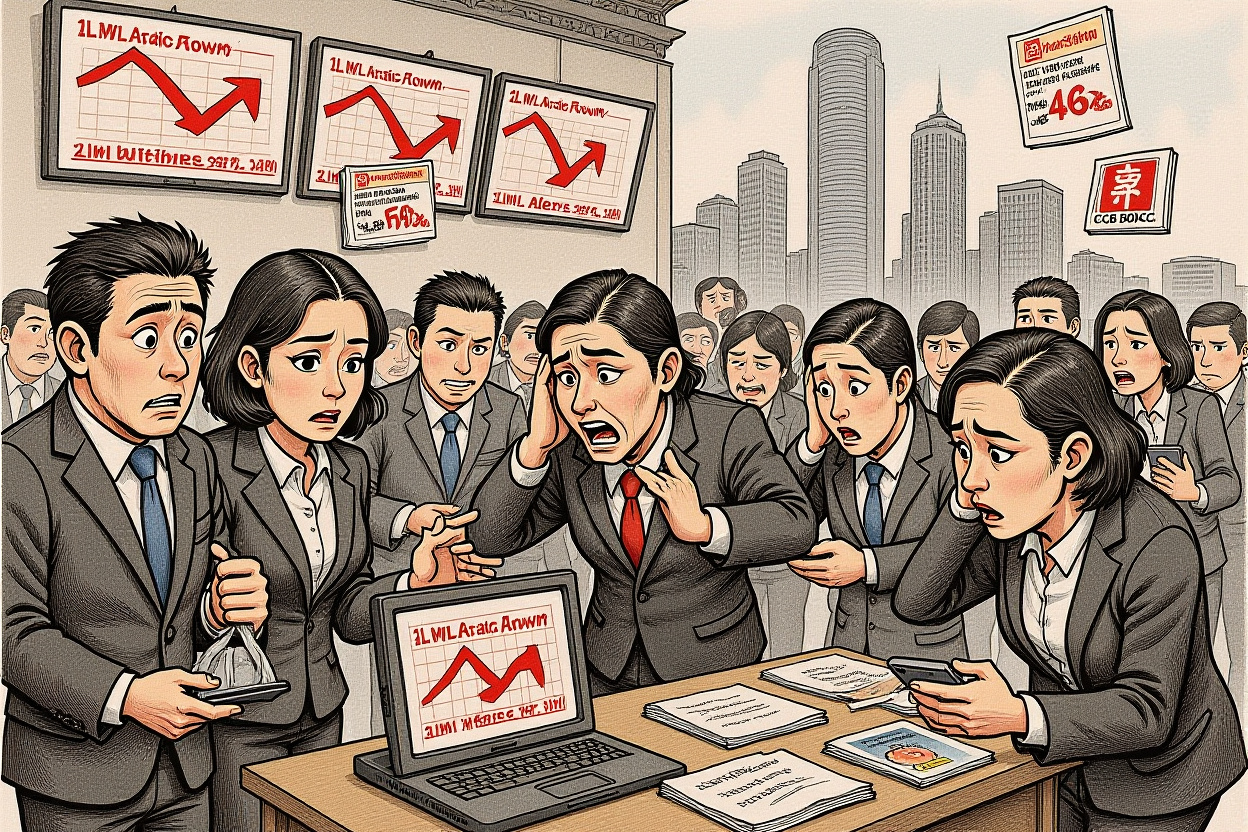
Executive Summary: Key Market Implications
– Over ten futures contracts on major Chinese exchanges, including crude oil and iron ore, experienced limit-down moves, triggering automatic trading halts and raising systemic risk concerns.
– Multiple state-owned and commercial banks, such as Industrial and Commercial Bank of China (ICBC, 中国工商银行) and China Construction Bank (CCB, 中国建设银行), have disseminated urgent risk warnings to institutional clients, advising caution on leveraged positions and margin calls.
– The sell-off is attributed to a confluence of factors: speculative unwinding, tightening regulatory scrutiny from the 中国证券监督管理委员会 (China Securities Regulatory Commission, CSRC), and softening global demand for key commodities.
– International investors with exposure to Chinese derivatives must reassess portfolio risk, enhance hedging strategies, and monitor real-time data from the 上海期货交易所 (Shanghai Futures Exchange, SHFE) and 大连商品交易所 (Dalian Commodity Exchange, DCE).
– This event underscores the critical need for robust risk management frameworks as China’s financial markets become increasingly integrated with global capital flows.
A Sudden Market Convulsion Rocks Chinese Exchanges
In a stark reminder of the inherent volatility in commodity derivatives, trading floors across China were gripped by panic as more than ten futures varieties plummeted to their daily downward limits. This episode of futures limit down and bank risk warnings sent shockwaves through the 中国金融期货交易所 (China Financial Futures Exchange, CFFEX) and prompted immediate analytical reassessments by fund managers worldwide. The swiftness of the decline, concentrated within a single morning session, highlights how leveraged positions can amplify market moves, turning corrective dips into cascading liquidations. For global investors, this serves as a critical case study in the dynamics of China’s rapidly maturing, yet sometimes turbulent, capital markets.
Anatomy of the Sell-Off: Key Contracts Affected
The breadth of the decline was notable, spanning both industrial and agricultural segments. Data from the 郑州商品交易所 (Zhengzhou Commodity Exchange, ZCE) and SHFE revealed limit-down hits in contracts including:
– 铁矿石 (Iron Ore) Futures: Down 8% at the Dalian exchange, reflecting worries over steel demand and inventory glut.
– 原油 (Crude Oil) Futures: Shanghai International Energy Exchange (INE) contracts fell 7%, mirroring global price pressures but exacerbated by local speculative flows.
– 铜 (Copper) and 铝 (Aluminum) Futures: Non-ferrous metals saw sharp declines on concerns over slowing construction and manufacturing PMI data.
– 大豆 (Soybean) and 玉米 (Corn) Futures: Agricultural products were not spared, with prices dampened by favorable harvest reports and trade flow adjustments.
This simultaneous stress across disparate commodities suggests a macro-driven event rather than sector-specific news, pointing to broader investor sentiment shifts and risk-off behavior.
Banking Sector’s Swift Response to Escalating Risks
Almost in tandem with the market moves, several major Chinese financial institutions activated their risk communication protocols. These urgent risk warnings from banks were not merely advisory; they carried operational directives for client portfolios. For instance, 中国银行 (Bank of China, BOC) issued notices to derivative trading clients highlighting potential margin shortfalls and advising position reductions. Similarly, 交通银行 (Bank of Communications) emphasized increased volatility in its wealth management products linked to commodity performance. This coordinated response underscores the banking sector’s frontline role in market stability and its regulatory mandate to contain systemic risk.
Decoding the Urgent Risk Warnings from Banks
The content of these warnings reveals deep-seated concerns about liquidity and counterparty risk. Key messages included:
– Margin Call Alerts: Banks explicitly warned clients of imminent margin calls due to declining collateral values of futures positions, urging them to inject funds or face forced liquidation.
– Volatility Projections: Internal models at institutions like 中国农业银行 (Agricultural Bank of China, ABC) projected sustained high volatility across commodity curves, advising against new speculative entries.
– Regulatory Compliance Reminders: The warnings referenced stricter enforcement of 中国银行业监督管理委员会 (China Banking Regulatory Commission, CBRC) guidelines on derivatives exposure, signaling heightened supervisory scrutiny.
These urgent risk warnings from banks serve as a canonical example of preemptive risk management in China’s state-influenced financial system, where institutions often act as conduits for policy signals.
Regulatory Landscape and Market Governance Interventions
The 中国证券监督管理委员会 (China Securities Regulatory Commission, CSRC) and the 国家金融监督管理总局 (National Financial Regulatory Administration, NFRA) are closely monitoring the situation. Historical precedents, such as the 2015 stock market crash, have led to more sophisticated circuit-breaker mechanisms and position limit rules. In this instance, regulators are likely to assess whether the sell-off was driven by fundamental factors or manipulative practices like “洗钱” (money laundering) or “市场操纵” (market manipulation). The CSRC’s recent emphasis on “稳市场” (stabilizing markets) suggests that if volatility persists, targeted interventions such as adjusted margin requirements or temporary trading suspensions could be enacted.
Historical Context and Regulatory Evolution
China’s futures markets have undergone significant transformation since the early 2000s, with deregulation followed by re-regulation to curb excesses. The 2016 commodity boom and bust cycle, for example, led to the introduction of stricter position limits and higher transaction fees. Today, regulators balance fostering innovation—such as the launch of 碳排放权 (carbon emission rights) futures—with maintaining stability. The current episode of futures limit down and bank risk warnings may accelerate reforms, including enhanced reporting for over-the-counter (OTC) derivatives and greater coordination between the 中国人民银行 (People’s Bank of China, PBOC) and exchanges.
Impact on Global Investors and Portfolio Strategy Adjustments
For international institutional investors, the convergence of futures limit down and bank risk warnings in China necessitates immediate portfolio reviews. China’s commodity futures markets are now deeply intertwined with global pricing benchmarks; a dislocation in Shanghai can affect London Metal Exchange (LME) or Chicago Mercantile Exchange (CME) contracts. Key considerations include:
– Correlation Risks: Assess how Chinese futures volatility impacts correlated assets, such as Australian mining stocks or emerging market bonds.
– Hedging Effectiveness: Re-evaluate the efficacy of existing hedges, considering instruments like 人民币 (Renminbi, RMB) currency swaps or options on the 沪深300指数 (CSI 300 Index).
– Liquidity Planning: Ensure sufficient cash reserves or credit lines to meet potential margin calls on cross-border derivative positions.
Expert fund managers, such as those at China International Capital Corporation Limited (中金公司), advise a tactical shift towards defensive sectors and increased allocation to cash-equivalents in the short term.
Data-Driven Insights and Market Sentiment Indicators
Quantitative analysis reveals alarming trends. Open interest data from SHFE showed a 15% drop in some contracts, indicating massive position unwinding. Meanwhile, the 中国期货市场监控中心 (China Futures Market Monitoring Center) reported a spike in forced liquidations. Surveys of market sentiment by 上海证券报 (Shanghai Securities News) point to pervasive caution among domestic brokers. As one seasoned trader noted, “When banks start issuing urgent risk warnings, it’s time to pay attention—they often see the leverage cracks before they become chasms.” This sentiment is echoed by analysts at Goldman Sachs Gao Hua Securities (高盛高华证券), who predict continued pressure on industrial commodities amid China’s property sector adjustments.
Forward-Looking Strategies for Navigating Market Uncertainty
In light of these developments, sophisticated investors should adopt a multi-pronged approach. First, diversify exposure away from single-commodity bets into broader baskets or index-based products. Second, engage actively with bank relationship managers to understand the nuances behind their urgent risk warnings. Third, leverage technology for real-time monitoring; platforms like Wind Information (万得信息) provide critical data feeds on futures positions and margin levels. Finally, stay abreast of regulatory pronouncements from the 国务院金融稳定发展委员会 (Financial Stability and Development Committee of the State Council), which sets the tone for macro-prudential policy.
Call to Action: Proactive Steps for Institutional Players
The immediate takeaways are clear. Conduct a thorough stress test of all China-linked derivative exposures, incorporating scenarios of further limit-down moves. Strengthen communication channels with Chinese banking counterparts to receive early warnings. Most importantly, view this episode not merely as a market anomaly but as a learning opportunity to refine risk models for China’s unique market structure. As the landscape evolves, those who heed the urgent risk warnings from banks and adapt swiftly will be better positioned to capitalize on eventual recoveries and new opportunities in China’s vast commodity ecosystem.