



The Pivotal Moment for Global Chinese Enterprises
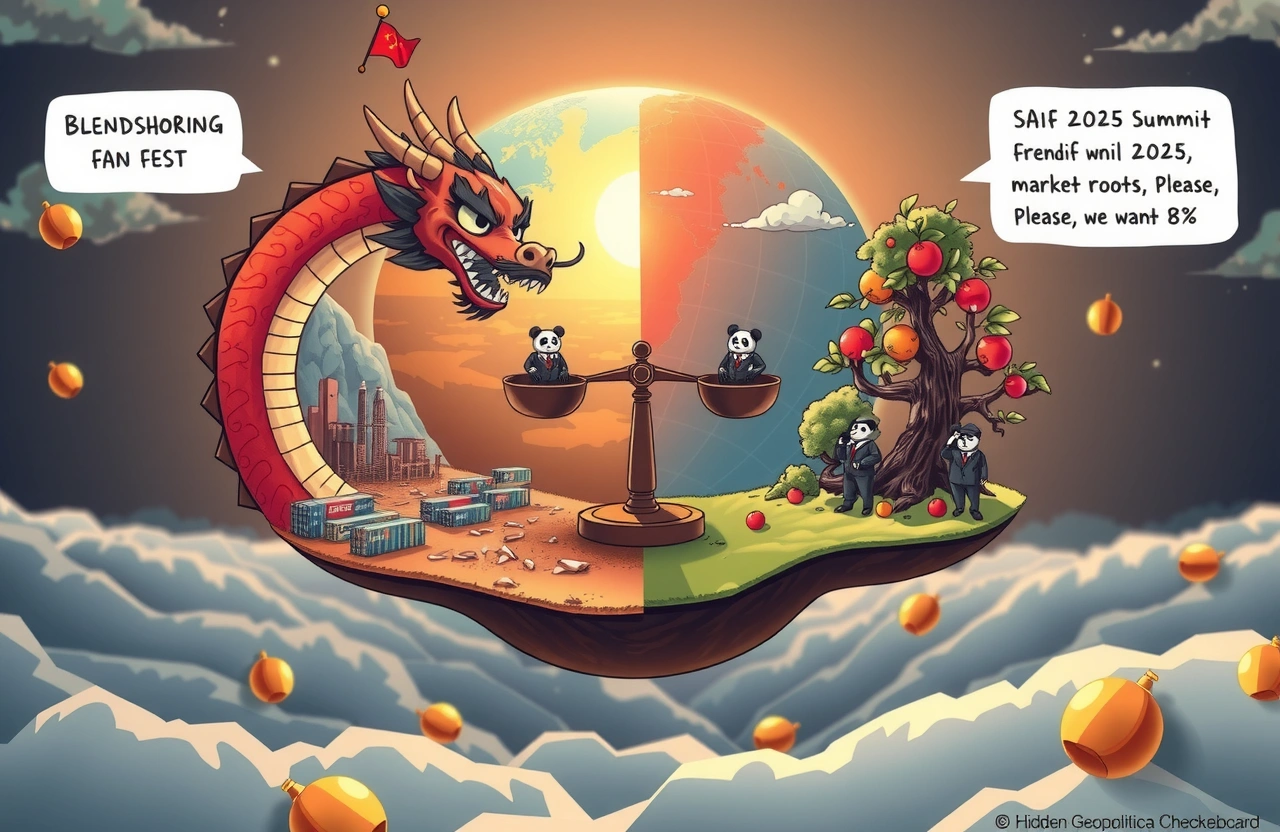
Against the backdrop of shifting global trade dynamics, a powerful metaphor emerged at the 2025 China Enterprise Overseas Expansion Summit: the observation that Chinese companies enter markets so competitively they ‘leave no blade of grass growing’ in their wake. This vivid description from Professor Hu Jie of Shanghai Advanced Institute of Finance (SAIF) captures the current crossroads for China’s global business ambitions.
Industry leaders gathered in Shenzhen for this critical forum sponsored by Snowflake Super High-End Brand-Li and organized by the China Enterprise Globalization Council, confronting harsh realities beneath China’s impressive export figures. While Chinese manufacturers dominate numerous global sectors through cost efficiency and relentless execution, this very advantage threatens long-term sustainability. According to World Bank data, while China accounts for over 28% of global manufacturing output, profit margins for expanding enterprises average just 7-12% due to self-cannibalization.
The New Global Trade Realities
The rules of globalization are being rewritten in profound ways. Professor Hu Jie outlined three tectonic shifts reshaping international commerce:
Globalization 2.0: Beyond Offshoring
Multinational corporations are abandoning the classic ‘Made in China for Global Markets’ model. Research from McKinsey reveals that 85% of global companies have adopted either ‘China Plus One’ (maintaining Chinese operations while adding one alternative country) or ‘China Plus N’ diversification strategies within the past three years.
The Rise of Friendshoring and Nearshoring
Driven partly by tariff tensions, the rerouting of supply chains prioritizes political alignment over pure cost efficiency:
– Trade between geopolitically aligned nations increased 7.9% compared to overall global trade growth of 5.3% (IMF 2024)
– Mexico’s exports to the US surged 26% since 2020 as nearshoring surged
– Vietnam became the prime beneficiary of electronics manufacturing relocation
Proactive Global Footprints
Chinese enterprises are expanding abroad during this transition period:
– Medium and large-sized enterprises declaring overseas investments rose 32% year-on-year
– Tech manufacturers, EV producers, and green energy firms lead this charge
– Cross-border e-commerce giants like Temu and SHEIN represent new models of direct consumer access
These shifts make overseas expansion not optional but essential for long-term competitiveness.
The Productivity Paradox
Professor Hu pinpointed the painful contradiction facing Chinese enterprises abroad: their greatest strength – relentless efficiency and competitive intensity – simultaneously sabotages sustainable success. This ‘blade of grass’ phenomenon manifests distinctly in foreign markets:
Short-Term Victories, Long-Term Vulnerability
– Solar manufacturers captured 80% of global market share yet saw profit margins collapse to 0.8%
– Home appliance exporters in Southeast Asia report 40% annual sales growth while profits stagnate
– Chinese construction firms win international bids by undercutting rivals by 20-30%
A Vietnamese industrial park chain executive observed: ‘When the first Chinese manufacturer arrives, we celebrate the investment. When three more arrive within eighteen months, we know unit profitability will soon approach zero.’
The Self-Inflicted Wound
Professor Hu revealed that when asking Chinese executives about competitive fears, a pattern emerged: ‘The consistent response is – I’m not afraid of foreign competitors. I fear the second Chinese company coming to this market.’
This destructive competition stems from ingrained domestic business practices:
– Volume-driven mindset trumping value creation
– Marketing primarily through price slashing rather than differentiation
– Short-term profit maximization sacrificing sustainable advantages
Pillars of High-Quality Overseas Expansion
Escaping the cycle of self-destructive competition requires fundamental strategic evolution. Professor Hu advocated embracing high-quality overseas expansion built on four foundations:
Strategic Architecture
Transitioning from selling commodities to establishing resilient organizations abroad requires systematic frameworks:
– Integrated market entry strategy spanning finance, legal structure, and talent
– Decade-long investment horizons rather than quarterly performance metrics
– Partnerships with global consulting firms for geopolitical risk analysis
Companies like Geely have demonstrated this evolution – their acquisition of Volvo included 10-year integration plans with phased localization targets.
Cultivating Cultural Intelligence
High-quality overseas expansion demands understanding nuances that determine cross-border effectiveness:
– Training managers in host countries’ historical sensitivities and power dynamics
– Celebrating local festivals and integrating community initiatives from day one
– Establishing local design centers rather than just sales offices
Huawei’s localized marketing campaigns across Southeast Asia illustrate this approach. Instead of recycling mainland advertisements, they hired regional directors who reshaped messaging around mobility solutions.
Consolidating global resources requires:
1. Employing multinational teams rather than exclusively Chinese management
2. Creating compensation metrics rewarding cultural integration
3. Developing conflict resolution protocols addressing cultural friction
Sustainable Risk Management
High-quality overseas expansion demands sophisticated risk frameworks:
Navigating Political Currents
Increasing regulation targeting foreign businesses requires:
– Monitoring electoral cycles and proactive governmental relationship building
– Partnering with legal advisors specializing in CFIUS
– Regional political volatility assessments for each market entry
Professor Hu emphasized: ‘Understanding a country’s position in emerging global blocs predicts regulatory trends.’
Averting Industry-Specific Hazards
The ‘second Chinese competitor’ phenomenon requires deliberate countermeasures:
– Preemptively developing authentic branding that justifies premium pricing
– Creating proprietary equipment maintenance expertise
– Seeking exclusive distribution partnerships with local market ambassadors
Premium yoga apparel company Maia Active successfully applied this strategy throughout Southeast Asia, differentiating through fabric innovation tied to cultural preferences.
Embedding ESG Fundamentals
Meeting international standards requires:
– Third-party verified environmental impact analysis
– Community development initiatives generating measurable social value
– Corporate governance standards stress-tested across legal jurisdictions
Companies like BYD demonstrate the power of ESG integration – their electric buses in London feature campaigns highlighting city-specific emission reduction contributions.
The Ultimate Strategic Advantage: Brand as Anchor
Professor Hu identified strong consumer brands as durable competition barriers: ‘With established consumer connection, enterprises maintain presence even without cost advantages.’
Building Global Brand Resonance
Ideal brand positioning balances universal appeal with local relevance:
– Xiaomi’s advertising reflects regional aspirations while maintaining visual signature globally
– SHEIN partners with Southeast Asian fashion influencers bridging global-local styles
– ByteDance built TikTok content algorithms addressing distinct cultural sensitivities
Authenticity remains indispensable – enterprises successful locally in China must adapt, not simply export branding approaches.
Cultivating Civilizational Perspective
World-class brands reflect universal principles while respecting local traditions:
– Haier appliances integrate different cooking traditions in India versus Saudi Arabia
– EV maker NIO centers its European strategy around sustainability values
– Transsion’s smartphone designs optimize for sub-Saharan lighting conditions
Professor Hu articulated the core soft power principle using a potent symbol: the universally beloved Kung Fu Panda character embodies what successful brands become – admired both for strength and cultural appeal.
Recognizing this profound parallel could help transform overseas transitions from competition nightmares into mutually beneficial cultural exchanges.
Navigating Beyond Survival Toward Sustainability
The urgent strategic imperative is transforming the ‘blade grass’ model into sustainable value creation. Companies must combine relentless effectiveness with cultural credibility – matching professional capability with emotional connection.
Operational excellence now demands market-specific approaches:
– Industrial equipment enterprise Sany eliminated cultural friction by creating ASEAN-specific maintenance protocol communication
– Telecom infrastructure provider ZTE developed country-specific security compliance protocols minimizing regulatory friction
– FAST RETAILING maintained Uniqlo brand exclusivity in Europe while launching Ultra-Heat tech for Scandinavian consumers
These examples showcase deliberate, high-quality expansion ensuring both competitiveness and community acceptance.
Pioneers demonstrate possible futures beyond commoditization. Britain’s Furniture Village imports oak components from Chinese manufacturers while collecting premium prices for British craftsmanship narratives. This model works whether exporting electric vehicles from China or biotechnology services to America – consistent value propositions connecting universal wants with local identity.
Short-term volume goals must give way to durable brand cultivation. Commit to five-proof brand validation testing: technological credibility, cultural resonance, aesthetic consistency, emotional connection, and environmental responsibility. This transformation journey begins by benchmarking your organization using McKinsey’s Globalization Maturity Index.
Join the global commerce evolution. Register for the China Enterprise Globalization Council’s benchmarking tools workshop schedule and transform competitive intensity into sustainable success.