



Executive Summary
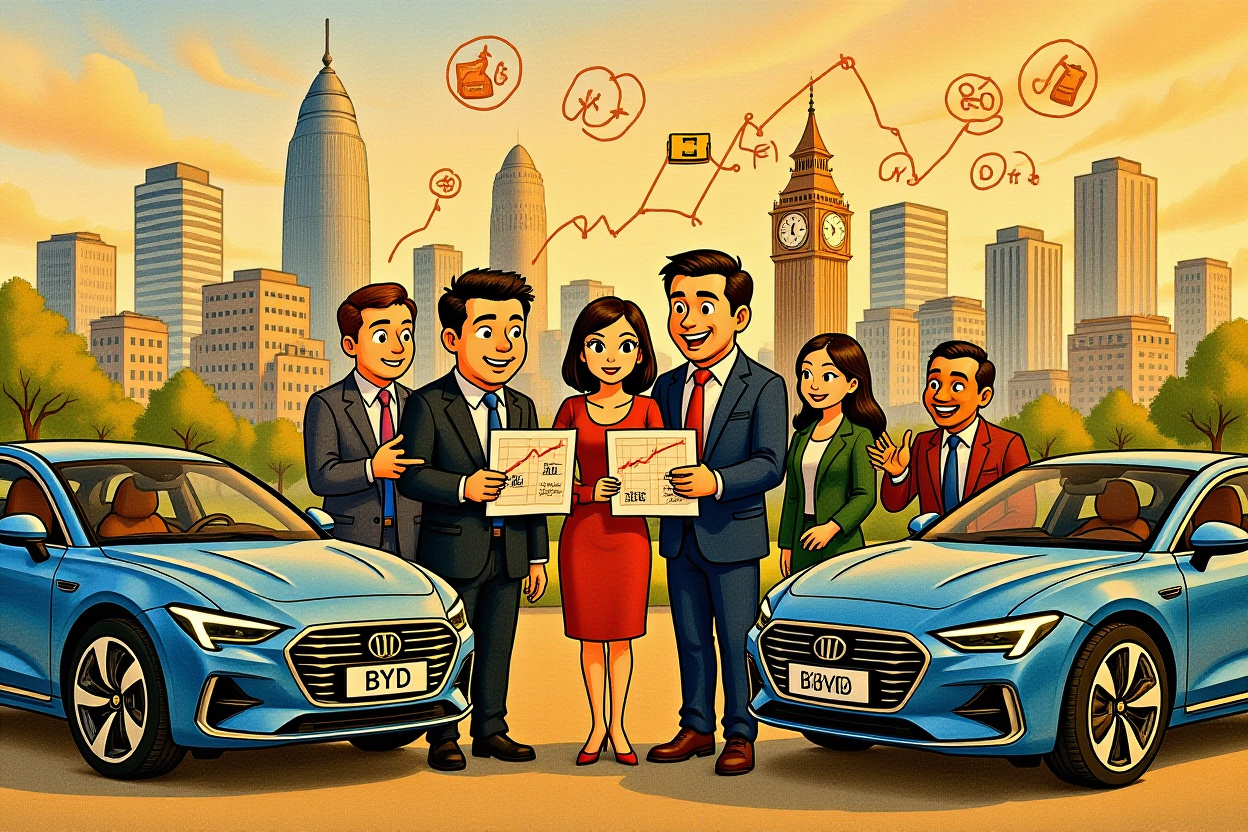
The European automotive market is witnessing a historic shift as Chinese carmakers secure an unprecedented foothold. This article delves into the strategies, challenges, and future outlook of this remarkable penetration.
- Chinese brands achieved a record 12.8% share in Europe’s electric vehicle market and over 13% in hybrids by late 2025, with one in ten new cars sold in key markets like the UK, Spain, and Norway now originating from China.
- The success is driven by a formidable supply chain advantage, technological leadership in batteries and smart features, and strategic localization efforts that mitigate high tariff impacts.
- Significant hurdles remain, including 45% anti-subsidy duties, evolving regulations like the 2027 battery ‘digital passport,’ and the need to build robust service networks and brand loyalty in a competitive landscape.
- This Chinese carmakers’ European breakthrough represents not just a sales milestone but a fundamental reordering of global automotive power dynamics, offering critical insights for investors and industry stakeholders.
A New Automotive Era Dawns on European Roads
By 2025, the sight of Chinese-branded electric vehicles gliding through European capitals has transitioned from novelty to norm. Defying substantial trade barriers and entrenched competition, Chinese automakers have not merely entered the European market; they have achieved a selling spree that is reshaping the industry’s competitive landscape. This Chinese carmakers’ European breakthrough is a testament to strategic execution and evolving global supply chains. For institutional investors and corporate executives, understanding this shift is no longer optional—it is essential for navigating the future of mobility investments and partnerships.
The significance of this success cannot be overstated. Europe, the venerable birthplace of the automotive industry, has long been dominated by local giants. Penetrating this market signals a qualitative leap for Chinese brands, moving beyond volume exports to establishing recognized quality and innovation on the world’s most demanding stage. This article will analyze the data behind the surge, the strategic playbook enabling it, the formidable challenges ahead, and the implications for the global automotive sector.
The European Market: A New Frontier for Chinese Carmakers
Europe represents the ultimate proving ground in the global automotive rivalry. As noted in Roland Berger’s (罗兰贝格) China Automotive Industry Globalization Report 2025, the final competition for automotive supremacy is a direct contest between China, the United States, and Europe. For Chinese carmakers, success in Europe is a prerequisite for true global stature, offering access to the world’s third-largest car market, a booming demand for new energy vehicles (NEVs), and a coveted ‘quality passport’ that dispels perceptions of being merely low-cost alternatives.
Record-Breaking Market Share Gains
Data from research firm Dataforce paints a compelling picture. In November 2025, Chinese brands captured 12.8% of Europe’s battery-electric vehicle (BEV) market, a historic high. Their performance in the hybrid segment was even more impressive, exceeding a 13% share. The United Kingdom has emerged as a standout success story. According to the Society of Motor Manufacturers and Traders (SMMT), Chinese car brands sold 187,800 units in the UK during the first eleven months of 2025, doubling the volume from the same period in 2024.
Analyst Matthias Schmidt, who tracks the European EV market, projects that Chinese manufacturers led by SAIC’s MG, BYD (比亚迪), and Chery (奇瑞) could surpass 200,000 units in the UK for the full year, solidifying a 10% market share. This translates to one in every ten new cars sold in the UK bearing a Chinese brand badge. This penetration is not isolated. Schmidt notes similar ratios in Spain and Norway, with the average across Western Europe reaching approximately 6%.
Beyond EVs: Dominance Across Powertrains and Premium Price Points
The growth is broad-based. Data from the European Automobile Manufacturers’ Association (ACEA) shows that from January to November 2025, registrations for SAIC MG reached 274,000, a 26.1% year-on-year increase. BYD’s registrations skyrocketed by 276% to 160,000 units, even outperforming Tesla in core markets like Germany and Italy. Geely (吉利) Group CFO Dai Yong (戴永) revealed that the group’s European sales grew 61.8% year-on-year in the first three quarters alone.
Critically, Chinese carmakers are achieving this without competing solely on rock-bottom prices. Consider the Geely Galaxy E5 (sold internationally as the Geely International EX5). Launched in London in October 2025, this all-electric SUV carries a price tag of £31,990 to £36,990 (approximately RMB 303,000 to 351,000), which is roughly three times its starting price in China. This acceptance at premium price points underscores a significant evolution in brand perception and value proposition, marking a true Chinese carmakers’ European breakthrough.
The Anatomy of Success: Strategic Advantages Driving Growth
The remarkable incursion into Europe is not a stroke of luck but the result of calculated strategy and formidable industrial strengths. Chinese automakers have leveraged a unique confluence of advantages to crack a mature and demanding market.
Unmatched Supply Chain and Cost Efficiency
The cornerstone of this success is China’s deeply integrated and mature New Energy Vehicle supply chain. From battery cells to power electronics and advanced components, the ecosystem ensures stable supply and a cost structure that global rivals struggle to match. European manufacturers, by contrast, grapple with high production costs and battery capacity constraints, hindering their ability to mass-produce affordable EVs. This gap has created a strategic window for Chinese brands. Even with the addition of a 45% countervailing duty, many Chinese models retain a visible price-performance advantage.
Moreover, Chinese companies are not exporting in isolation; they are orchestrating a ‘cluster-style’出海 (overseas expansion). This involves moving the entire industrial chain abroad. For instance:
- Contemporary Amperex Technology Co. Limited (CATL, 宁德时代) is building a massive battery plant in Hungary.
- NIO (蔚来) is deploying its battery swap and charging infrastructure across Europe.
- Companies like Joynext (卓驭科技) are investing in local computing infrastructure for smart mobility.
This integrated approach reduces logistics costs, mitigates supply chain risks, and enhances responsiveness to local market needs.
Technological Innovation and Smart Features as Key Differentiators
Chinese carmakers have established leadership in core EV technologies. BYD’s Blade Battery and CATL’s high-energy-density battery solutions deliver superior range and safety, directly addressing key consumer concerns in Europe. Beyond the powertrain, Chinese brands are competing fiercely on digital and intelligent features. Heavy investment in research and development by companies like XPeng (小鹏) and Leapmotor (零跑) has resulted in advanced smart cockpits, voice-assisted systems, and sophisticated driver-assistance systems that appeal to tech-savvy European buyers seeking a connected driving experience. This blend of hardware prowess and software innovation is central to the ongoing Chinese carmakers’ European breakthrough.
Navigating Challenges: Trade Barriers and Compliance Hurdles
The path to sustainable growth in Europe is fraught with significant obstacles. Chinese automakers must navigate a complex web of trade policies, regulatory standards, and intense local competition.
The Impact of Tariffs and Anti-Subsidy Measures
The European Union’s 45% anti-subsidy tariff on Chinese-made EVs remains a formidable cost barrier. In response, Chinese firms have demonstrated tactical flexibility by ramping up exports of plug-in hybrid electric vehicles (PHEVs), which are not currently subject to the same additional duties, thus opening an alternative growth channel. The larger strategic response is accelerated localization of production. Chery’s utilization of a former Nissan plant in Barcelona and BYD’s new factory in Hungary, slated for 2026 operation, are prime examples. Local manufacturing not only circumvents tariff walls but also shortens supply lines and allows for better customization to regional preferences.
Adapting to European Standards and Intensifying Competition
Beyond tariffs, regulatory adaptation presents a costly and complex challenge. The upcoming EU Battery Regulation, including the 2027 mandate for a battery ‘digital passport’ detailing carbon footprint and material provenance, requires massive compliance efforts. Strict data security and autonomous driving certification rules may force Chinese companies to reconfigure vehicle software and hardware, incurring significant engineering and homologation expenses.
Furthermore, the service and brand equity gap is a critical短板 (shortcoming). Compared to established European marques, Chinese brands often have sparser aftersales service networks, leading to potential issues with repair wait times and parts availability. This can hinder the transition from a one-time sale to building long-term customer loyalty. Simultaneously, European giants like Volkswagen Group and Stellantis are accelerating their own electrification plans, backed by substantial EU support for a local battery supply chain, promising to heighten competition in the coming years.
The Road Ahead: Sustaining Growth and Building Brand Equity
For Chinese carmakers, the initial volume breakthrough must now be cemented into lasting market presence and profitability. The next phase requires a multifaceted strategy focused on deep localization, brand building, and operational excellence.
Localization Strategies for Long-Term Presence
True integration into the European market demands moving beyond assembly to establishing full-fledged R&D, design, and management centers on the continent. This enables the development of vehicles tailored specifically for European tastes, road conditions, and regulatory environments. Investments in local talent and partnerships with European tech firms and suppliers will be crucial. For example, deepening collaborations with European battery recyclers or software companies can enhance sustainability credentials and technological fit.
Enhancing Service Networks and Customer Experience
To compete with century-old brands, Chinese automakers must rapidly scale their customer touchpoints. This involves:
- Expanding physical service and sales dealerships across major and secondary cities.
- Investing in digital service platforms for seamless scheduling, remote diagnostics, and over-the-air updates.
- Building certified training programs for local technicians to ensure high-quality maintenance.
- Developing competitive financing and leasing options to make vehicles accessible.
Building a strong brand narrative around innovation, quality, and sustainability will be equally important to shift perception from being a value choice to an aspirational one.
Synthesizing the Market Shift and Future Implications
The data and trends analyzed confirm a structural change in the European automotive sector. The Chinese carmakers’ European breakthrough is a multidimensional achievement, powered by systemic supply chain strengths, technological leaps, and agile market strategies. They have successfully disrupted a traditional order, proving that competitive EVs can originate outside the traditional automotive heartlands. For investors, this signals robust growth potential in leading Chinese OEMs and their supply chain partners, but also heightened volatility as trade policies evolve. Corporate executives in rival companies must now factor in Chinese competition as a permanent and innovative force in their strategic planning.
The journey from ‘volume accumulation’ to ‘qualitative leap’ is underway. While challenges related to trade policy, compliance, and brand building are substantial, the strategic groundwork laid by Chinese firms—through local production, cluster出海, and continuous innovation—positions them for sustained influence. The call to action for market participants is clear: closely monitor the localization moves and product cadence of key players like BYD, Geely, and SAIC; assess investment opportunities not just in automakers but in the enabling ecosystem of batteries and smart tech; and prepare for a more diverse, dynamic, and competitive European automotive market where the Chinese carmakers’ European breakthrough is just the beginning of a larger global realignment.