



Executive Summary
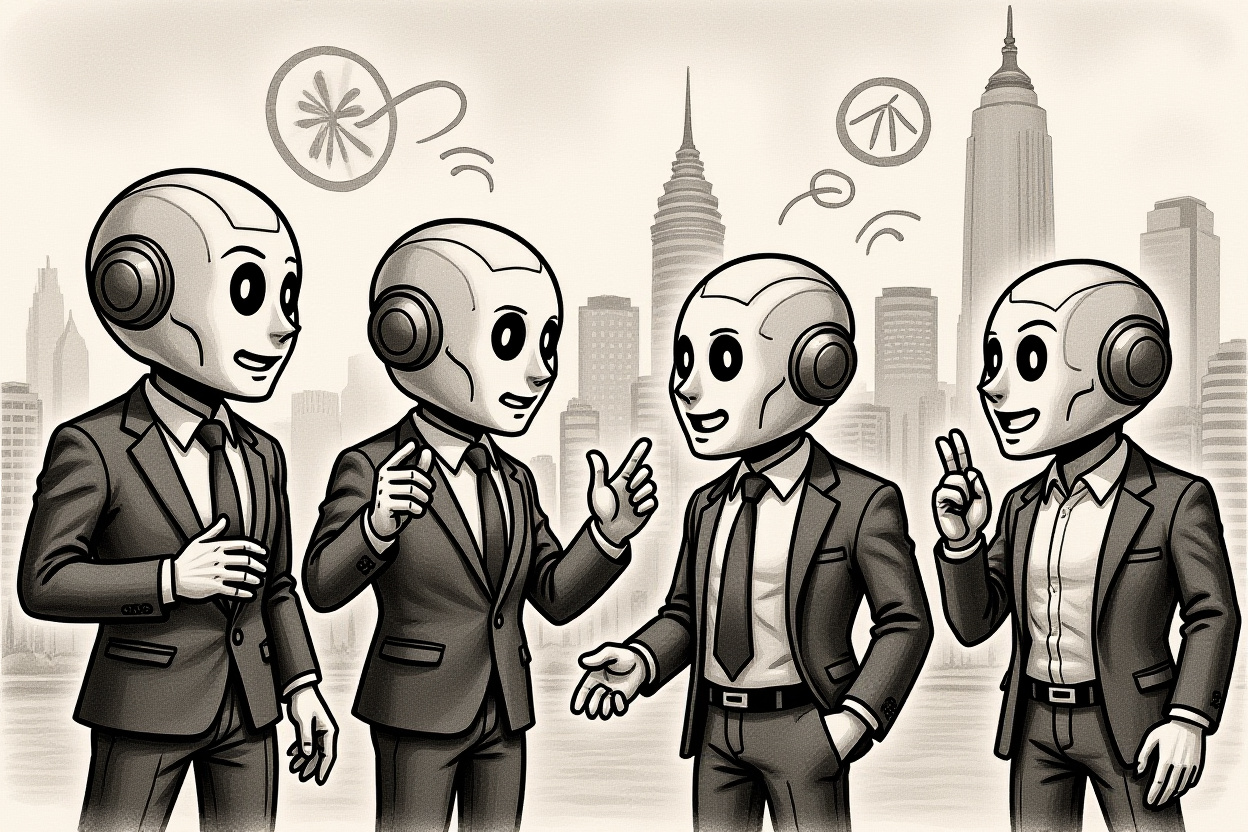
– The 2026 CCTV Spring Festival Gala featured four leading Chinese embodied AI companies—Magic Atom (魔法原子), Galaxy General (银河通用), Unitree Tech (宇树科技), and Songyan Power (松延动力)—marking a pivotal moment for the industry’s public validation and commercial push.
– Beyond stage performances, the real challenge for humanoid robots lies in conquering industrial, commercial, and ultimately home environments where reliability, cost-effectiveness, and adaptability are paramount.
– IDC projects China’s embodied intelligent robot user spending to reach $770 billion by 2030, with a compound annual growth rate (CAGR) of 94%, signaling explosive growth but intense competition in a gold-rush sector.
– The Gala acts as a critical “ultimate proving ground for embodied AI,” separating conceptual hype from viable technology ready for real-world applications and scalable business models.
– Investors and industry stakeholders must look beyond theatrical displays to assess companies based on tangible orders, client retention, and revenue scalability as the market enters a consolidation phase post-2026.
The Spring Festival Gala: A National Stage for Technological Ambition
For decades, the CCTV Spring Festival Gala has served as more than just a cultural touchstone; it is a curated showcase of China’s technological aspirations and innovation milestones. From 5G demonstrations to AI integrations, the Gala offers a unique platform where cutting-edge tech meets mass audiences, providing both visibility and legitimacy. In 2026, this tradition evolved dramatically with embodied AI—robots equipped with physical intelligence—taking center stage, transforming the event into the ultimate proving ground for embodied AI. This shift underscores a broader narrative: China is not only competing in the global robotics race but is actively steering it toward commercialization and public acceptance.
The Gala’s role extends beyond mere exposure. It functions as a high-stakes testing environment where technologies must perform flawlessly under intense scrutiny, bridging the gap between laboratory prototypes and consumer-ready products. For embodied AI firms, securing a spot on this stage is akin to receiving a national endorsement, which can catalyze investment, partnerships, and market confidence. As the curtains rose in 2026, the spotlight illuminated not just robots, but the very future of automation in China.
Historical Context: From Niche to Mainstream
Previous editions of the Spring Festival Gala have highlighted incremental tech advances, such as virtual reality (VR) experiences or drone light shows. However, the 2026 showcase represents a qualitative leap, focusing on embodied AI systems that interact physically with the world. This mirrors China’s strategic priorities outlined in initiatives like “Made in China 2025” and the 14th Five-Year Plan, which emphasize robotics and artificial intelligence as pillars of economic transformation. By featuring multiple companies simultaneously, the Gala signaled industry maturity and readiness for broader adoption, moving from isolated demos to coordinated performances that hint at real-world applications.
The 2026 Showcase: Embodied AI Takes Center Stage
The 2026 Spring Festival Gala became a definitive moment for China’s embodied AI sector, with four domestic firms presenting their humanoid robots in diverse acts. This collective appearance—dubbed a “group army” deployment by industry watchers—highlighted both collaboration and competition, as each company vied for attention with distinct capabilities. The lineup included Magic Atom (魔法原子), Galaxy General (银河通用), Unitree Tech (宇树科技), and Songyan Power (松延动力), each assigned specific roles that revealed their strategic positioning. Notably, the official titles conferred by CCTV varied subtly: Unitree Tech was the “Spring Festival Gala Robot Partner,” Songyan Power the “Spring Festival Gala Humanoid Robot Partner,” Magic Atom the “Spring Festival Gala Intelligent Robot Strategic Partner,” and Galaxy General the “Spring Festival Gala Designated Embodied Large Model Robot.” These nuanced distinctions reflect divergent technical pathways, from general-purpose robotics to AI model integration, underscoring the industry’s multifaceted evolution.
Unitree Tech: From Viral Sensation to Industry Bellwether
Unitree Tech (宇树科技) emerged as a standout, building on its 2025 Gala debut that catapulted it to fame. In 2026, it collaborated with the Henan Tagou Martial Arts School to present a martial arts performance titled “武 BOT,” showcasing robots’ agility, coordination, and precision. According to data from Phoenix Net Finance’s “Company Research Institute” (凤凰网财经《公司研究院》), Unitree’s robots have since appeared in over 12 major events, including concerts and ceremonies, and participated in seven dedicated robot competitions. This trajectory illustrates how the Gala can amplify a company’s profile, driving both consumer interest and B2B opportunities. However, sustaining momentum requires translating stage success into reliable, revenue-generating products—a challenge that defines the ultimate proving ground for embodied AI.
Other Key Players: Diverse Approaches to Embodied Intelligence
Songyan Power (松延动力) partnered with comedians Cai Ming (蔡明) and Wang Tianfang (王天放) in a skit called “Grandma’s Favorite,” emphasizing social interaction and entertainment value. Magic Atom (魔法原子) supported a song titled “Intelligent Creation of the Future,” highlighting its focus on creative and collaborative tasks. Galaxy General (银河通用) joined actors Shen Teng (沈腾) and Ma Li (马丽) in a micro-film, “My Most Unforgettable Tonight,” showcasing narrative integration and emotional resonance. These varied roles demonstrate how embodied AI is branching into multiple domains, from service and entertainment to education and healthcare. Yet, the common thread is the need to prove viability beyond scripted performances, making the Gala a crucial, but preliminary, step in a longer journey.
Beyond the Spotlight: The Real-World Challenges for Embodied AI
When the Gala’s lights dim, the embodied AI industry faces its true test: transitioning from controlled stages to unstructured environments. As one industry insider bluntly noted, “Robots can’t dance on stage forever.” The ultimate proving ground for embodied AI is not a television set but the gritty realities of factories, commercial spaces, and homes. This shift involves overcoming three sequential hurdles, each more complex than the last, that will determine which companies survive and thrive.
First Hurdle: Industrial Applications—The Reliability Imperative
Second Hurdle: Commercial Scenarios—Mastering ComplexityBeyond factories, embodied AI must navigate dynamic commercial environments such as supermarkets, warehouses, hotels, and hospitals. These spaces involve unpredictable human interactions, obstacle avoidance, and multi-task management. A robot that performs a preset routine on stage may struggle with a sudden customer query or a cluttered aisle. This demands advanced perception systems, natural language processing, and adaptive decision-making—core components of embodied intelligence. The ultimate proving ground for embodied AI in commerce is not just movement, but cognitive engagement and safety assurance.
– Statistical evidence: A report by Goldman Sachs estimates that service robots in commercial sectors could address labor shortages costing China over $500 billion annually by 2030, driven by aging demographics and rising wages.
– Real-world case: Alibaba Group’s (阿里巴巴集团) logistics arm, Cainiao, has experimented with robots for warehouse sorting, but full-scale adoption hinges on cost reductions and error-rate improvements.
Third Hurdle: Home Integration—The Final Frontier
The most ambitious, yet distant, goal for embodied AI is entry into household settings. Homes are highly unstructured: floors are uneven, objects are scattered, pets and children create chaos, and lighting varies. Robots here must be exceptionally safe, intelligent, user-friendly, and affordable—a tall order that current technology only partially meets. While industrial and commercial applications offer nearer-term revenue, the consumer market represents the “blue ocean” with massive scale potential. However, it requires breakthroughs in cost-efficiency, energy consumption, and emotional AI to gain mainstream acceptance.
– Expert insight: Dr. Robin Li (李彦宏), CEO of Baidu (百度), has emphasized that AI must become “invisible” and intuitive for home adoption, focusing on assistive roles rather than novelty.
– Market projection: IDC’s forecast of $770 billion in user spending by 2030 includes significant growth in consumer segments, but this hinges on price points falling below $10,000 per unit and reliability exceeding 99.9%.
Market Dynamics and Investment Landscape
The embodied AI sector is at an inflection point, moving from capital-fueled hype to performance-driven scrutiny. The Spring Festival Gala’s spotlight has accelerated this transition, forcing companies to demonstrate not just technological flair but commercial acumen. IDC’s projection of 94% CAGR until 2030 paints a picture of a gold-rush market, but investors must discern between speculative ventures and sustainable businesses. The ultimate proving ground for embodied AI is increasingly defined by metrics like order volume, client diversity, and recurring revenue, rather than stage appearances or funding rounds.
IDC Projections and Growth Trajectory
The Shift from Hype to Substance: 2026 as a WatershedThe True Test Begins After the Curtain FallsThe 2026 Spring Festival Gala has undeniably elevated embodied AI into the public consciousness, but the industry’s real journey is just commencing. The ultimate proving ground for embodied AI extends far beyond television screens, into factories, stores, and living rooms where performance is measured in efficiency, safety, and cost savings. For investors and corporate executives, the key takeaway is to look past the glamour of stage shows and assess fundamental metrics: technological robustness, market fit, and financial health.
As China marches toward its 2030 robotics goals, the companies that thrive will be those that leverage the Gala’s exposure to forge tangible partnerships and iterate based on real-world feedback. The call to action is clear: monitor quarterly earnings reports, patent filings, and pilot project announcements from firms like Unitree Tech and Magic Atom. Engage with industry conferences such as the World Robot Conference in Beijing for hands-on demonstrations. And most importantly, recognize that in the high-stakes arena of embodied AI, the final exam is not on a stage, but in the relentless, unscripted world of commerce and daily life.