



Executive Summary: Key Takeaways on China’s Used Car Export Boom
The rapid expansion of China’s used car exports presents both lucrative opportunities and significant challenges for market participants. Here are the critical insights:
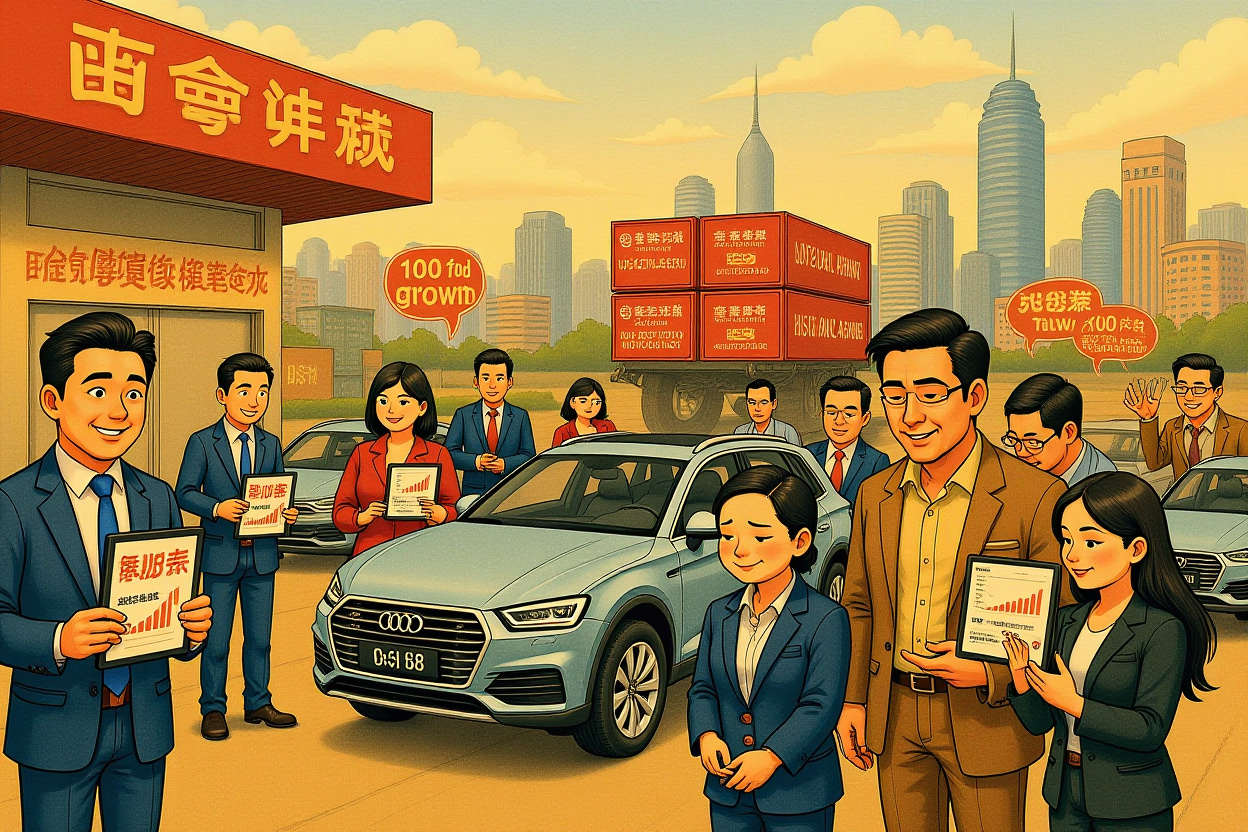
- China’s used car exports surged from 4,300 units in 2020 to over 436,000 in 2024, a 100-fold increase, driven by global demand for affordable vehicles in regions like Southeast Asia, the Middle East, and Africa.
- The industry has matured into a full supply chain, but profits are often squeezed by high costs, logistical risks, and regulatory changes, particularly the crackdown on ‘zero-kilometer used cars.’
- Players range from small dealers and service platforms to major companies like Guazi and Shenzhou Car Rental, each facing unique hurdles in sourcing, compliance, and overseas sales.
- New policies in 2025, including a 180-day registration rule and manufacturer售后授权 (after-sales authorization), are pushing the market toward合规 (compliance),淘汰 (eliminating) gray market practices.
- For investors, focusing on entities with robust车源整合能力 (vehicle sourcing integration),海外网络 (overseas networks), and risk management is key to capitalizing on sustainable growth in China’s used car exports.
The Unprecedented Surge in China’s Used Car Exports
In early 2026, social media platforms across China buzzed with identical purchase offers: ‘High prices paid for 3-5 year old used cars with under 50,000 kilometers,专用于出口 (specifically for export).’ This trend underscores a transformative shift in the automotive sector, where China’s used car exports have evolved from a minor trade to a global powerhouse. The numbers tell a compelling story—according to the中国汽车流通协会 (China Automobile Dealers Association), exports jumped from a mere 4,300 units in 2020 to 436,000 in 2024, marking a staggering 100-fold growth in just four years. This explosion has turned短车龄、低里程 (short-age, low-mileage) vehicles into hot commodities, reflecting both domestic market pressures and burgeoning international appetite.
Data-Driven Growth and Global Expansion
The 46.5% year-on-year increase in 2024 highlights the acceleration of China’s used car exports. The market now spans over 160 countries and regions, including东南亚 (Southeast Asia),中东 (Middle East),欧洲 (Europe), and拉丁美洲 (Latin America). This geographic diversity is fueled by demand for cost-effective transportation, especially in emerging economies where new car prices remain prohibitive. For instance, in Russia and African nations, models like the哈弗H6 (Haval H6) and大众高尔夫 (Volkswagen Golf) command premiums, sometimes selling for thousands of dollars more than in China. The成熟产业闭环 (mature industrial closed-loop)—from sourcing and refurbishment to logistics and售后保障 (after-sales support)—has enabled this rapid scale, but it also introduces complexities that not all players can navigate successfully.
Market Drivers: Why the World Wants China’s Used Cars
Several factors propel this demand. Overseas buyers, particularly in regions with infrastructural gaps, seek durable and affordable vehicles like SUVs and越野车 (off-road vehicles). The domestic Chinese market, meanwhile, faces intense price wars and rapid新车降价 (new car price reductions), making used car trading risky and pushing dealers to explore export avenues. As one天津 (Tianjin)-based dealer noted, ‘出口导向的收车价 (export-oriented purchase prices) can be thousands to tens of thousands of yuan higher than domestic rates.’ This price differential has created a gold rush mentality, but as we’ll see, the reality of profiting from China’s used car exports is far more nuanced.
Who’s Cashing In on the Export Gold Rush?
The boom in China’s used car exports has attracted a diverse array of participants, from individual hustlers to corporate giants, all vying for a slice of the跨境 (cross-border) pie. However, the entry barriers and operational scales vary significantly, shaping who truly benefits from this热潮 (hot trend).
Small Dealers and Service Platforms: The Frontline Players
Many traditional二手车商 (used car dealers), struggling with domestic volatility, have pivoted to export-oriented sourcing. As one河北 (Hebei)从业者 (practitioner) shared, ‘We now focus on collecting vehicles that match overseas订单 (orders), acting as intermediaries for larger exporters.’ This轻量化经营模式 (lightweight business model) minimizes inventory risk but limits profits to service fees. For newcomers, platforms like东阳国际汽车城 (Dongyang International Auto City) and绥芬河汽车出口基地 (Suifenhe Auto Export Base) offer资质代办 (qualification agency),物流清关 (logistics and customs clearance), and买家对接 (buyer matching) services, lowering the门槛 (threshold). Yet, these players often grapple with海外销售渠道 (overseas sales channels) stability, as foreign buyers prefer dealing with规模化、规范化 (large-scale, standardized) entities due to concerns over车况透明 (vehicle condition transparency) and售后保障 (after-sales guarantees).
Major Corporations Enter the Fray
Larger companies have leveraged their resources to dominate segments of China’s used car exports.神州租车 (Shenzhou Car Rental), for example, entered the market in 2024, establishing 29 domestic storage centers, 5 port warehouses, and 6 overseas offices to streamline exports. Similarly,瓜子二手车 (Guazi Used Car) has been involved since 2019, using its digital platform to facilitate transactions. These players benefit from economies of scale, but they too face the inherent challenges of the trade, such as compliance with evolving regulations and managing international logistics. Their involvement signals the maturation of China’s used car exports, yet it also intensifies competition for smaller actors.
The Reality Behind the High Profit Margins: Why Many Lose Money
Social media abounds with tales of massive gains—like buying a truck for 30,000-50,000 yuan and selling it abroad for over 100,000 yuan—but these stories often mask the harsh truths of China’s used car exports. Upon closer inspection, the盈利空间 (profit margins) are tightly constrained by costs and risks that can swiftly turn dreams into losses.
Cost Breakdown and Hidden Expenses
A typical profit calculation for a single vehicle reveals the squeeze: after收购价 (acquisition costs), add approximately 10,000 yuan for整备翻新 (refurbishment and repairs), plus国际物流成本 (international logistics fees),清关费 (customs clearance charges),当地销售分成 (local sales commissions), and税费 (taxes). As an experienced exporter explained, ‘Net profit often ranges from a few thousand to 20,000-30,000 yuan, but that assumes no hiccups.’ The非标属性 (non-standard nature) of used cars—each with unique车况、配置、里程数 (condition, configuration, mileage)—requires labor-intensive inspections and matching, preventing cost-efficient standardization. This makes China’s used car exports a人力密集型 (labor-intensive) endeavor, where scalability is limited.
Risks from Logistics to Currency Fluctuations
The journey is fraught with perils that can erase profits. Common issues include货物退运 (cargo returns) due to failing foreign海关标准 (customs standards),港口滞留 (port delays), or船期延误 (shipping schedule disruptions). Moreover,海外客户违约 (overseas client defaults)—where buyers abandon deposits—can leave exporters with unsold inventory. Currency risk adds another layer; if transactions are settled in local currencies like俄罗斯卢布 (Russian Ruble) or非洲法郎 (African Francs), exchange rate swings during payment cycles can turn gains into losses. As markets like Russia and Africa become saturated, especially for低端车型 (low-end models), price wars further压缩利润 (compress profits), leading some into a ‘越卖越亏 (lose more by selling more)’ spiral. Thus, while China’s used car exports offer opportunities, they demand rigorous risk management.
Regulatory Crackdown: The End of the ‘Zero-Kilometer Used Car’ Era
Beneath the surface of the export boom, a gray market practice once fueled significant growth: the export of ‘零公里二手车 (zero-kilometer used cars),’ essentially new vehicles masquerading as used to exploit政策红利 (policy benefits). This loophole, covering everything from燃油车 (fuel vehicles) to新能源汽车 (new energy vehicles), provided a competitive edge abroad but posed brand risks due to lack of售后保障 (after-sales support). In November 2025, a joint notice from the商务部 (Ministry of Commerce),工业和信息化部 (Ministry of Industry and Information Technology),公安部 (Ministry of Public Security), and海关总署 (General Administration of Customs) titled《关于进一步加强二手车出口管理工作的通知》(‘Notice on Further Strengthening the Management of Used Car Exports’) aimed to curb this practice, reshaping the landscape of China’s used car exports.
The Gray Market’s Rise and Impact
As one insider revealed, ‘零公里二手车 was the core增量 (incremental growth) driver in 2024.’ By bypassing standard channels, exporters could offer新车品质 (new car quality) at二手车价格 (used car prices), appealing to overseas buyers. However, this undermined brand integrity and created an uneven playing field. The new regulations impose two key restrictions: a ‘180天红线 (180-day red line),’ requiring vehicles to be registered for at least 180 days before export, and ‘车企售后许可授权 (automaker after-sales authorization),’ mandating manufacturer approval for售后保障. These rules, accessible via official channels like the Ministry of Commerce website [Link to policy document], make it nearly impossible to continue the gray market trade profitably.
Compliance as a New Competitive Edge
For many small车商 (dealers) reliant on this practice, the crackdown spells trouble. ‘囤购新车 (hoarding new cars) for export now carries high storage costs and price depreciation risks,’ noted an exporter. This淘汰 (elimination) of non-compliant players, however, opens doors for those focused on legitimate二手车业务 (used car business). As one从业者 (practitioner) observed, ‘The policy forces a shift toward合规比拼 (compliance competition), where companies with strong车源整合能力 (vehicle sourcing integration) and海外服务网络 (overseas service networks) will thrive.’ This evolution underscores that sustainable success in China’s used car exports hinges on adhering to regulatory frameworks and building trust through quality assurance.
Navigating the Future: Strategies for Success in a Maturing Market
As China’s used car exports transition from a wild-west rush to a structured industry, stakeholders must adapt to capitalize on lasting opportunities. The key lies in balancing innovation with risk mitigation, leveraging data, and fostering international partnerships.
Opportunities in Quality and Compliance
The post-regulatory landscape favors players who prioritize优质车源 (high-quality vehicle sources) and透明车况报告 (transparent condition reports). Investing in technology for vehicle assessment and digital platforms for cross-border交易匹配 (transaction matching) can enhance efficiency. For example, partnerships with海外展示中心 (overseas display centers) and local distributors in high-demand regions can build stable sales channels. Additionally, focusing on新能源汽车 (new energy vehicles) and hybrid models—where China leads in production—could tap into growing global interest in sustainable transport, further diversifying China’s used car exports.
Actionable Insights for Investors and Businesses
For institutional investors and corporate executives eyeing this sector, due diligence is paramount. Consider these steps:
- Evaluate companies with proven track records in二手车出口资质 (used car export qualifications) and logistics networks, such as those highlighted in industry reports from the China Automobile Dealers Association [Link to association data].
- Monitor regulatory updates from authorities like the海关总署 (General Administration of Customs) to anticipate shifts in compliance requirements.
- Diversify exposure across different vehicle types and geographic markets to mitigate risks from saturation or economic downturns in specific regions.
- Engage with platforms that offer end-to-end services, reducing operational hurdles for newcomers while ensuring adherence to standards.
China’s used car exports represent a dynamic segment of the global automotive trade, but as the stories of高价收车 (high-price purchases) and血本无归 (total losses) show, it requires savvy navigation. By embracing合规 (compliance), leveraging scale, and focusing on value-added services, players can turn this百倍增长 (hundred-fold growth) into sustainable profit. As the market evolves, staying informed through reliable sources and adapting strategies will be crucial for those looking to drive success in this exciting frontier.