



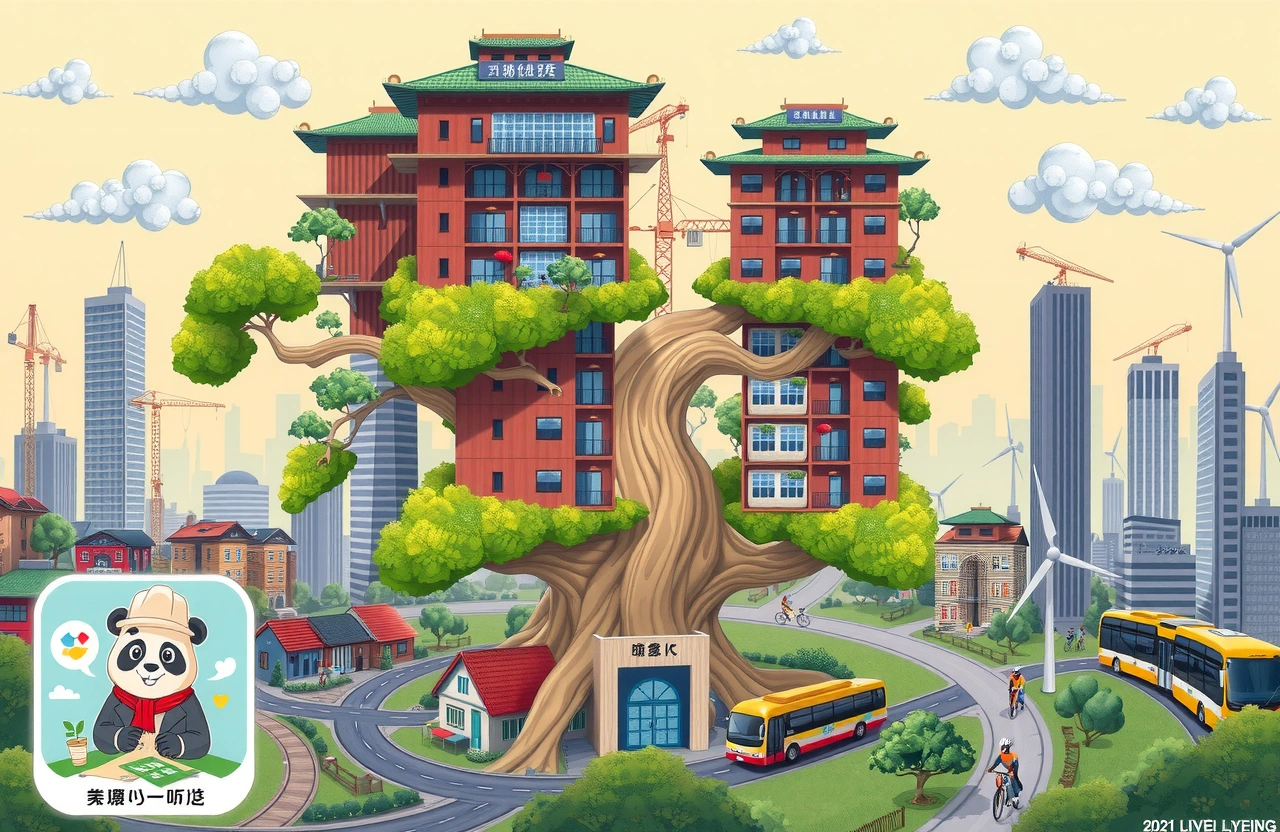
– Central Urban Work Conference outlines unified planning approach integrating population, industry and transportation
– New real estate model shifts from speculative development to sustainable urban ecosystems
– Urban village renovation and dilapidated housing upgrades prioritized alongside service industry enhancement
– Comprehensive strategy emphasizes public services and livelihood security
The Urban Transformation Imperative
China stands at a pivotal moment in its urbanization journey, with nearly 65% of its 1.4 billion population now residing in cities. The recent Central Urban Work Conference signals a fundamental rethinking of urban development paradigms. Rather than continuing the expansion-first approach of previous decades, policymakers seek to engineer a transition toward higher-quality urban ecosystems where residents’ daily needs are seamlessly integrated into neighborhood design.
Integrated Development Framework
The conference advocates synchronizing four critical dimensions: population flows, industrial clusters, urban infrastructure, and transportation networks. This holistic approach counters the legacy of fragmented planning that created isolated residential compounds requiring long commutes. Several pilot cities including Chengdu and Hangzhou demonstrate integrated districts where essential services exist within 15-minute walkable communities.
Constructing the New Real Estate Paradigm
The mandated “new model for real estate development” represents the most consequential shift, moving away from pure property speculation toward community-centered development. At its core, this transformation involves three structural changes:
– Land supply diversification: Transitioning from exclusively government auctions to mixed-use land parcels
– Financing mechanism overhaul: Reducing developer leverage through pre-sale limitations
– Housing mix requirements: Mandating affordable housing components in all new developments
The recent State Council guidelines signal reduced dependence on land sale revenues, projected to decrease from 2024’s 37% of local government funding to approximately 25% by 2028.
Implementation Mechanisms
Concrete instruments supporting this transition include Municipal Development Trusts for pooled funding and Strategic Land Reserves managed by city planning bureaus. The Shanghai Municipal Commission’s pilot program integrates property development rights transfer between thriving and renewal zones.
Urban Regeneration Priorities
Conference directives specifically target transforming substandard urban housing, with delegated quotas requiring provinces to renovate 35% of registered dilapidated units annually through 2028. Guangzhou’s ongoing Huangpu District revitalization exemplifies this approach – replacing unsafe structures with modern communities featuring childcare facilities and elder-care centers onsite.
Social Impact Considerations
Service Infrastructure ReinforcementComplementing physical transformation, the conference emphasizes service infrastructure expansion. Policy mandates require increasing neighborhood-level service facilities in all Tier 1-3 cities by 20% before end-2027. This includes standardized allocation of:
– Healthcare clinics within 1km coverage radius
– After-school tutoring facilities
– Community-run senior activity centers
Shanghai’s 15-Minute Community Life Circle initiative demonstrates this seamless integration, reducing average daily transit time by 43 minutes according to municipal surveys.
Livelihood Safeguarding Mechanisms
The conference directives establish explicit social protection protocols, particularly addressing affordable housing pathways:
– Expanded public rental housing eligibility covering urban migrants
– Differentiated property taxation favoring primary residences
– Municipal rent stabilization ordinances
The Shenzhen Housing Authority now combines housing benefits with income support thresholds, creating integrated support packages. This prevents abrupt benefit cliffs affecting vulnerable populations.
Path Forward Implementation
Successful realization requires coordinated multi-stakeholder engagement:
Municipal Governments
Local authorities must reconcile their traditional reliance on land sale revenues with newer financing models like municipal infrastructure bonds. Shanghai’s Metropolitan Development Bond Framework establishes precedents for market-sustainable alternative funding.
Industry Transformation
Real estate enterprises face inevitable recalibration toward asset management and community services. China Vanke’s strategic reorientation toward long-term property management mirrors innovative adaptation patterns.
This transformative blueprint exemplifies China’s shifting urbanization priorities – valuing community cohesion alongside economic indexes. Municipal leaders now bear responsibility for integrating physical upgrades with social infrastructure across neighborhood ecosystems nationwide.
The strategy ultimately prioritizes people-centric urbanization where urban accessibility supports holistic quality of life. With unified implementation metrics emerging quarterly, stakeholders should track pilot programs broadening livability innovations city by city.