



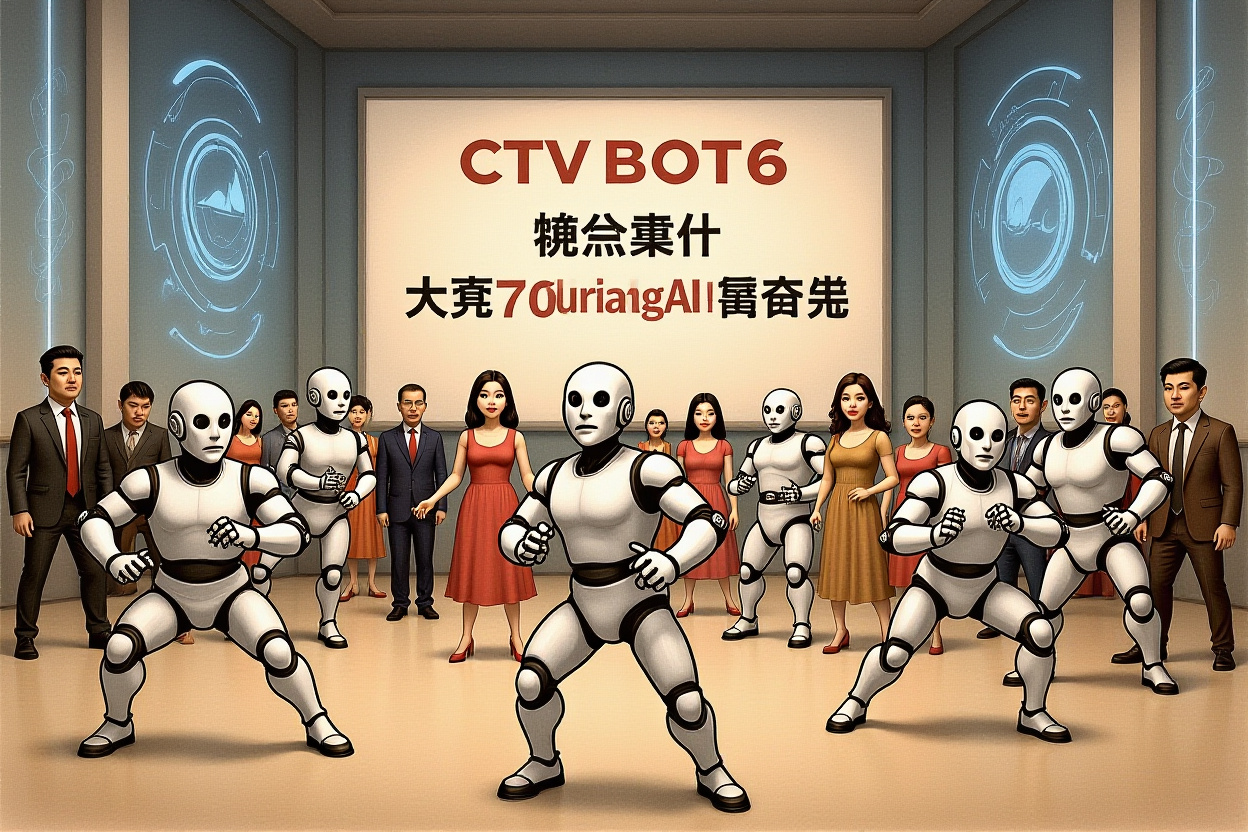
– The 2026 CCTV Spring Festival Gala served as a national showcase for China’s leading embodied AI companies, including 宇树科技 (Unitree Robotics), 魔法原子 (Magic Atom), 银河通用 (Galaxy Universal), and 松延动力 (Songyan Power), highlighting their technological prowess on a global stage.
– Beyond media exposure, the event underscores the industry’s pivotal transition from laboratory demonstrations and theatrical performances to overcoming real-world commercialization barriers in industrial, commercial, and domestic settings.
– Key challenges include ensuring reliability in structured industrial environments, adaptability in dynamic commercial spaces like retail and healthcare, and achieving safety and affordability for mass adoption in unstructured home scenarios.
– With IDC predicting the Chinese embodied AI robot market to reach $770 billion in user spending by 2030, growing at a 94% CAGR, the post-Gala period represents a critical inflection point for sustainable growth, investment focus, and competitive differentiation.
– Success in this nascent industry will hinge on moving beyond capital-intensive hype and stage shows to delivering practical, cost-effective solutions that generate recurring revenue and customer loyalty, with 2026 marking the start of a market-driven consolidation phase.
For decades, the CCTV Spring Festival Gala has been more than just a cultural institution; it is a powerful barometer for China’s technological ambitions and market trends. As the curtains rose on the 2026 edition, the spotlight shifted decisively to embodied AI, with humanoid robots taking center stage in a display that captivated billions worldwide. This event has unequivocally positioned the Spring Festival Gala as the ultimate testbed for embodied AI, offering a unique platform where innovation meets mass validation. For sophisticated investors and industry professionals tracking Chinese equities, the Gala’s role extends beyond entertainment—it serves as a critical litmus test for commercial viability, regulatory acceptance, and global competitiveness in one of the fastest-growing tech sectors. The performances by leading domestic firms signal a strategic push towards real-world application, making this a pivotal moment for assessing investment opportunities and risks in China’s tech-driven markets.
The Spring Festival Gala: The Ultimate Testbed for Embodied AI
The 2026 CCTV Spring Festival Gala transformed from a traditional variety show into a high-stakes technological arena, where embodied AI robots were not merely props but key performers. This shift reflects a broader national strategy to showcase homegrown innovation and accelerate the commercialization of advanced robotics. By serving as the ultimate testbed for embodied AI, the Gala provides an unparalleled stage for public demonstration, investor scrutiny, and industry benchmarking.
A Collective Debut for China’s Embodied AI Vanguard
Unlike previous years where technological displays were fragmented, the 2026 Gala marked the first time that multiple domestic embodied AI companies presented as a cohesive “group army.” The participation of 宇树科技 (Unitree Robotics), 魔法原子 (Magic Atom), 银河通用 (Galaxy Universal), and 松延动力 (Songyan Power) underscored the sector’s maturity and readiness for prime time. 宇树科技 (Unitree Robotics), in particular, built on its 2025 breakout performance by collaborating with the Henan Tagou Martial Arts School for a martial arts routine titled “武 BOT,” blending traditional culture with cutting-edge robotics. 松延动力 (Songyan Power) appeared earlier in a skit with veterans Cai Ming (蔡明) and Wang Tianfang (王天放), while 魔法原子 (Magic Atom) supported a song performance, and 银河通用 (Galaxy Universal) featured in a micro-film with Shen Teng (沈腾) and Ma Li (马丽). This collective showcase was designed to normalize human-robot interaction and demonstrate scalability, key factors for market adoption.
Strategic Nuances in Official Titles and Market Positioning
A telling detail from the Gala was the variation in official partner titles assigned to each company, revealing distinct technical pathways and strategic focuses. 宇树科技 (Unitree Robotics) was termed the “Spring Festival Gala Robot Partner,” 松延动力 (Songyan Power) the “Spring Festival Gala Humanoid Robot Partner,” 魔法原子 (Magic Atom) the “Spring Festival Gala Intelligent Robot Strategic Partner,” and 银河通用 (Galaxy Universal) the “Spring Festival Gala Designated Embodied Large Model Robot.” These subtle differences highlight how firms are carving out niches—from general-purpose robots to AI-driven models—a diversification that mitigates risk and caters to specific market segments. For investors, this differentiation is crucial for evaluating competitive advantages and potential revenue streams in a crowded landscape.
Beyond the Spotlight: The Commercial Imperatives of Embodied AI
While the Gala offers immense visibility, the real value lies in its role as a catalyst for commercial traction. The event acts as a springboard for embodied AI firms to secure partnerships, attract funding, and validate technologies with enterprise clients. However, the transition from stage to sustainable business model is fraught with challenges that define the sector’s future trajectory.
Market Projections and the IDC Growth Forecast
According to IDC data, China’s embodied AI robot market is poised for explosive growth, with user spending projected to hit $770 billion by 2030, driven by a compound annual growth rate (CAGR) of 94%. This forecast underscores the golden opportunity for early movers but also raises the stakes for performance delivery. The Gala’s role in this context is twofold: first, to educate the public and reduce skepticism about robots in daily life, and second, to provide tangible proof points for investors and supply chain partners. As noted in analysis from sources like 小饭桌, the Gala represents a billion-yuan bet on market readiness, with firms investing heavily in flawless performances to gain a competitive edge. This aligns with the broader narrative of the Spring Festival Gala as the ultimate testbed for embodied AI, where success can unlock downstream opportunities in manufacturing, logistics, and beyond.
The Three Critical Barriers to Post-Gala Success
Industry insiders often remark that robots cannot dance on stages forever—a poignant reminder that commercialization is the true measure of success. Based on insights from 凤凰网财经《公司研究院》 (Phoenix Net Finance Corporate Research Institute), embodied AI companies must navigate three sequential barriers after the Gala’s applause fades:
– Industrial Integration: Factories represent the most immediate and lucrative market, with applications in sorting, assembly, and material handling. However, industrial environments demand extreme reliability, low fault rates, and 24/7 operation. A robot that stumbles on stage might be forgiven, but a minute of downtime on a production line translates directly to financial loss. Many prototypes fail under the harsh conditions of real-world factories, highlighting the gap between demonstration and deployment.
– Commercial Adaptation: Settings like supermarkets, warehouses, hospitals, and hotels introduce dynamic variables such as human traffic, obstacle avoidance, and interactive queries. Here, robots must exhibit advanced perception, decision-making, and adaptability. Performing a scripted routine at the Gala does not guarantee the ability to handle a sudden customer inquiry or a cluttered aisle, testing the robustness of the entire embodied AI system.
– Domestic Penetration: The home environment is the most complex and long-term goal, characterized by unstructured spaces, variable lighting, and diverse user interactions. Safety, affordability, and user-friendliness are paramount. While this market offers the largest addressable audience, it requires significant advancements in AI, mechanics, and cost reduction before mass adoption becomes feasible.
From Performance to Practicality: The Real-World Testing Grounds
The Spring Festival Gala as the ultimate testbed for embodied AI is just the beginning; the subsequent phases involve rigorous validation in actual use cases. This shift from spectacle to substance will determine which firms thrive in the coming years, as capital and customer patience grow increasingly scarce.
Industrial Applications: Where Reliability Is Non-Negotiable
In manufacturing hubs across China, companies are piloting embodied AI robots for tasks that are repetitive, dangerous, or labor-intensive. For instance, 宇树科技 (Unitree Robotics) has expanded its post-Gala initiatives into automotive assembly lines, while 松延动力 (Songyan Power) focuses on electronics manufacturing. The key metrics here are mean time between failures (MTBF), cost per operation, and integration ease with existing systems. Firms that leverage Gala exposure to secure pilot projects with major manufacturers like Foxconn or SAIC Motor can build credibility and scale rapidly. However, as highlighted in reports from 字母AI, many robots still struggle with precision in variable temperatures or complex manipulations, indicating that technological refinement is ongoing.
Commercial and Domestic Scenarios: The Complexity Conundrum
Beyond factories, embodied AI faces a steeper climb in commercial and residential settings. In retail, robots must navigate crowded spaces, recognize products, and assist customers—a challenge that requires sophisticated computer vision and natural language processing. 魔法原子 (Magic Atom) has explored deployments in smart warehouses, while 银河通用 (Galaxy Universal) targets hospitality with concierge robots. For homes, the hurdles include safety certifications, privacy concerns, and price points that appeal to consumers. The Gala performances, such as those with celebrity interactions, help normalize these concepts, but real adoption hinges on solving practical pain points like elderly care or household chores. Data from trials in cities like Shenzhen and Shanghai show promising engagement but also reveal high maintenance costs and user learning curves.
2026: The Inflection Point for China’s Embodied AI Industry
The 2026 Spring Festival Gala has catalyzed a paradigm shift in the embodied AI sector, moving the competition from fundraising and flashy unveilings to tangible business outcomes. This year is widely seen as a dividing line that will separate market leaders from laggards, based on execution rather than hype.
The Shift from Capital Hype to Revenue Realities
Prior to 2026, the embodied AI landscape was characterized by venture capital influxes and speculative valuations, with firms often prioritizing media coverage over product maturity. Post-Gala, the focus has sharpened on order books, customer retention, and profitability. For example, 宇树科技 (Unitree Robotics) reported a surge in enterprise inquiries following its Gala appearance, but sustaining that interest requires delivering on service-level agreements. Investors are now scrutinizing metrics like recurring revenue, deployment scalability, and gross margins, as evidenced in financial analyses from institutions like 中国国际金融股份有限公司 (China International Capital Corporation Limited). This maturation is healthy for the industry but imposes pressure on firms to accelerate R&D and forge strategic alliances.
Regulatory and Global Competitive Considerations
As embodied AI gains prominence, regulatory frameworks from bodies like 工业和信息化部 (Ministry of Industry and Information Technology) and 国家标准化管理委员会 (Standardization Administration of China) are evolving to address safety, ethics, and data security. The Gala’s state endorsement provides implicit regulatory support, but companies must navigate compliance in export markets and international standards. Moreover, with global players like Tesla and Boston Dynamics advancing their own robotics initiatives, Chinese firms must leverage the Gala’s showcase to assert technological leadership and capture export opportunities in Southeast Asia and Europe. The ultimate testbed for embodied AI thus extends beyond domestic validation to global competitiveness, where innovation speed and cost efficiency will be decisive.
Navigating the Future: Strategies for Stakeholders in Embodied AI
The journey from the Spring Festival Gala stage to widespread adoption is fraught with challenges, but it also presents unprecedented opportunities for investors, corporations, and policymakers. By understanding the key drivers and pitfalls, stakeholders can make informed decisions in this dynamic sector.
Investment Implications and Sector Outlook
For institutional investors and fund managers, the embodied AI space offers high growth potential but requires selective exposure. Key investment themes include:
– Focus on firms with proven industrial deployments or partnerships, as these indicate reliability and near-term revenue potential.
– Monitor technological differentiators, such as proprietary AI algorithms, actuator efficiency, or energy consumption, which can provide sustainable competitive edges.
– Consider the broader supply chain, including components like sensors, chips, and software platforms, which may offer more stable returns than pure-play robot manufacturers.
Given the IDC projections, early entry into leaders like 宇树科技 (Unitree Robotics) or niche innovators could yield significant returns, but diversification is advised due to the sector’s volatility. Resources like the 上海证券交易所 (Shanghai Stock Exchange) and 深圳证券交易所 (Shenzhen Stock Exchange) listings provide transparency, while reports from 高盛 (Goldman Sachs) and 摩根士丹利 (Morgan Stanley) offer global perspectives on valuation benchmarks.
Call to Action for Industry Participants
The 2026 Spring Festival Gala has set the stage, but the real work begins now. For embodied AI companies, the priority must be transitioning from dazzling performances to solving concrete business problems—whether in manufacturing logistics or customer service. Collaborations with research institutions, such as 清华大学 (Tsinghua University) or 中国科学院 (Chinese Academy of Sciences), can accelerate innovation, while engagements with multinational corporations can open global channels. For investors, due diligence should extend beyond Gala appearances to assess long-term viability through pilot results and management execution. And for policymakers, fostering a supportive ecosystem through incentives and standards will be crucial to maintaining China’s edge in this strategic industry. As the dust settles on the Gala, the embodied AI sector stands at a crossroads: one path leads to transformative integration into the global economy, while the other risks stagnation in the realm of spectacle. The choice hinges on embracing the Gala not as an endpoint, but as the ultimate testbed for embodied AI that propels meaningful progress.