



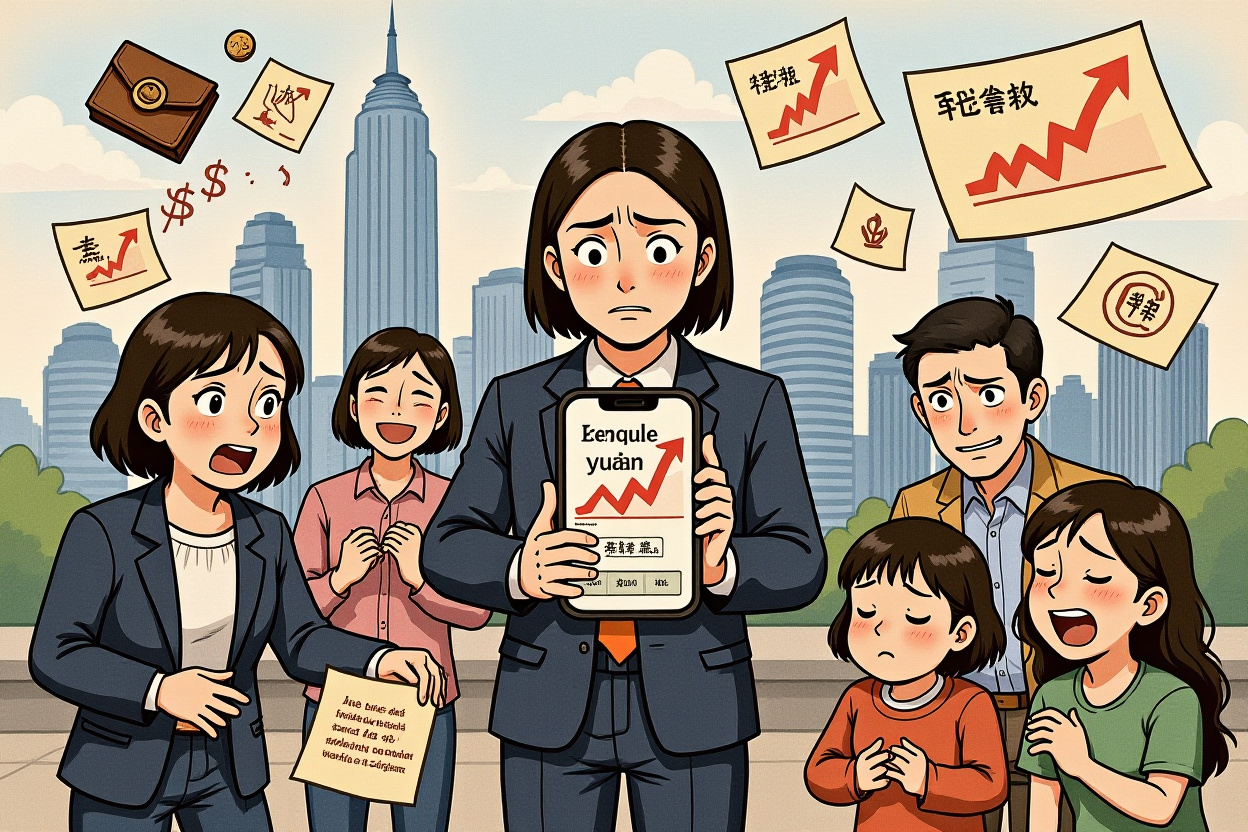
– The case of Ms. Chen illustrates how mini-loans from platforms like Fenqile (分期乐平台) can double debt through hidden fees and APRs nearing 36%, despite regulatory caps.
– Regulatory efforts, such as the 2025 guidelines from the People’s Bank of China (中国人民银行) and National Financial Regulatory Administration, aim to curb costs, but enforcement loopholes persist.
– Mini-loans often target students and young adults, perpetuating risks from the campus loan era, with aggressive collection and privacy breaches exacerbating financial stress.
– Consumers face opaque terms and high complaint volumes, highlighting the need for vigilance and legal recourse in China’s evolving consumer credit landscape.
– For investors and policymakers, understanding mini-loan dynamics is crucial for assessing risks in fintech and supporting sustainable financial inclusion.
As Chinese consumers increasingly turn to digital credit for quick cash, ‘mini-loans’ promise easy access with low monthly payments. However, beneath this convenient facade lies a debt trap where borrowing 13,000 yuan can balloon to 26,000 in repayments, draining the financial futures of young people. This investigation into platforms like Fenqile (分期乐平台) reveals how opaque fees, extended loan terms, and aggressive marketing exploit regulatory gaps, turning these mini-loans into a significant risk. With new guidelines from the People’s Bank of China (中国人民银行) and the National Financial Regulatory Administration, the industry faces heightened scrutiny, but the path to reform is complex. For institutional investors and financial professionals, understanding the mechanics and perils of mini-loans is essential for navigating China’s volatile consumer finance sector.
The Allure and Trap of Mini-Loans in China’s Consumer Market
Mini-loans, often marketed as small, manageable credit products, have gained popularity among young Chinese seeking to fund expenses like holidays or family gifts. Platforms such as Fenqile (分期乐平台) lure users with promises of high limits and low daily interest, but the reality is far more costly. The focus on mini-loans highlights a broader issue in China’s fintech expansion, where accessibility often masks predatory practices.
Case Study: Ms. Chen’s Debt Spiral with Mini-Loans
A recent viral case involves Ms. Chen, who borrowed 13,674 yuan from Fenqile (分期乐平台) between 2020 and 2021, only to face a total repayment of 26,859 yuan—nearly double the principal. Her loans, including one for 400 yuan split over 36 months, carried APRs between 32.08% and 35.90%, pushing her into a cycle of debt and psychological distress. This example underscores how mini-loans can snowball through extended terms and hidden costs, a common trap for inexperienced borrowers.
Opaque Fees and the Snowballing Debt Phenomenon
The mini-loan model thrives on non-transparent fee structures, where additional charges like membership fees, guarantee fees, and credit assessment fees inflate the true cost of borrowing. On complaint platforms such as Hei Mao (黑猫投诉), over 160,000 grievances target Fenqile (分期乐平台) for undisclosed expenses that push effective APRs to the legal limit of 36%. These practices erode trust and highlight systemic issues in China’s consumer lending space.
Regulatory Gaps and Platform Tactics in Mini-Loans
Despite 2025 guidelines capping comprehensive financing costs at 24% annually, lenders exploit loopholes by stretching repayment periods or bundling fees. For instance, Fenqile (分期乐平台) advertises rates as low as 8% but adds ancillary charges, making mini-loans deceptively expensive. Regulatory bodies like the National Financial Regulatory Administration are stepping up oversight, but real-time enforcement remains a challenge, allowing mini-loans to continue draining young wallets.
The Lingering Shadow of Campus Loans in Mini-Loan Operations
Mini-loans often trace their origins to the controversial campus loan era, where platforms targeted students with easy credit. Fenqile (分期乐平台), operated by Lexin Group (乐信集团), was founded in 2013 by Xiao Wenjie (肖文杰) and initially grew by lending to university students. Although regulatory crackdowns in 2016 forced a rebranding, evidence suggests that mini-loans still reach student populations, with over 922 complaints on Hei Mao (黑猫投诉) citing campus-related promotions and harassment.
Privacy Concerns and Data Exploitation in Mini-Loan Practices
When users agree to mini-loan terms, they often unknowingly consent to extensive data collection, including personal ID, bank details, and location information. Platforms like Fenqile (分期乐平台) share this data with third parties such as payment partners and credit enhancers, raising privacy risks. Reports from Economic Reference News (经济参考报) detail how this data can be misused in aggressive collection campaigns, exacerbating the mini-loan debt trap through social pressure and intimidation.
Regulatory Landscape and Future Outlook for Mini-Loans
China’s regulatory environment is evolving to address the abuses in mini-loans. The joint directive from the People’s Bank of China (中国人民银行) and National Financial Regulatory Administration in December 2025 mandates a phased reduction of costs to within four times the one-year LPR by 2027. This move aims to rein in mini-loans by imposing stricter caps and dynamic credit management, but compliance hurdles persist as lenders adapt their models.
Recent Guidelines and Enforcement Challenges in Curbing Mini-Loans
The 2025 guidelines explicitly prohibit new loans with comprehensive costs exceeding 24%, yet platforms continue to issue mini-loans near the 36% threshold through fee manipulation. Local financial authorities are tasked with corrective actions, but as seen with Fenqile (分期乐平台), delayed implementation allows mini-loans to flourish. For international investors, this regulatory ambiguity presents both risks and opportunities in China’s fintech sector, requiring careful due diligence.
Consumer Protection and Legal Recourse for Mini-Loan Borrowers
Affected borrowers have avenues for recourse, including filing complaints with consumer associations or seeking legal advice. Cases reported in China Consumer (中国消费者) show that users can challenge unauthorized fees, but the process is often daunting. For those trapped by mini-loans, steps like documenting all communications and consulting financial advisors are crucial to mitigating damage and navigating repayment plans.
Steps for Affected Borrowers to Escape Mini-Loan Traps
– Review loan agreements carefully to identify hidden fees and calculate the true APR of mini-loans.
– File complaints on platforms like Hei Mao (黑猫投诉) or with local financial regulators to report violations.
– Seek legal assistance to negotiate settlements or dispute unfair charges, as seen in Ms. Chen’s case.
– Consider debt consolidation options to manage multiple mini-loans and avoid further credit damage.
– Educate oneself on financial literacy to recognize predatory lending tactics and make informed borrowing decisions.
Synthesizing Insights on China’s Mini-Loan Crisis
The mini-loan phenomenon in China reveals a critical tension between financial inclusion and consumer protection. While these products offer short-term liquidity, their opaque costs and aggressive practices are emptying the pockets of young people, with cases like Ms. Chen’s underscoring the human toll. Regulatory efforts are progressing, but until enforcement tightens and transparency improves, mini-loans will remain a high-risk segment. For global investors and executives, monitoring these developments is key to assessing the stability of China’s consumer credit market.
Moving forward, stakeholders must advocate for clearer disclosures and robust oversight to prevent mini-loans from undermining financial health. Borrowers should prioritize financial education and cautious borrowing, while regulators need to accelerate implementation of cost caps. By addressing these challenges, China can foster a safer credit environment where mini-loans serve as tools for empowerment rather than debt traps.