



Executive Summary
Key takeaways from this investigation into China’s mini-loan sector:
– Fenqile (分期乐), a prominent mini-loan platform, frequently charges effective annualized rates nearing 36%, far exceeding China’s regulatory cap of 24%, through non-transparent fees and extended repayment terms.
– Case studies, such as a borrower repaying 26,859 yuan on a 13,674 yuan loan, highlight how debt snowballs, causing severe financial and psychological distress, exacerbated by aggressive debt collection tactics.
– Despite regulatory tightening, including the 2025 guidance from the People’s Bank of China (中国人民银行) and National Financial Regulatory Administration (国家金融监管总局), platforms innovate fee structures to maintain profitability, raising compliance risks.
– Fenqile’s roots in controversial campus lending persist, with ongoing reports of targeting students and violating data privacy, underscoring systemic issues in China’s consumer finance market.
– Investors in fintech stocks like Lexin Fintech Holdings Ltd. (乐信集团) must scrutinize these practices as regulatory scrutiny intensifies, impacting market stability and consumer trust.
The Alarming Reality of Mini-Loans in China
As festive seasons pressure Chinese youth for extra cash—from red envelopes to family trips—platforms like Fenqile (分期乐) dangle tempting mini-loans with promises of low interest and instant access. Yet, behind this facade lies a disturbing trend: these mini-loans are systematically hollowing out young borrowers with exorbitant costs and predatory practices. The recent viral case of Ms. Chen, who borrowed 13,674 yuan only to owe 26,859 yuan, has thrust Fenqile into the spotlight, revealing how mini-loans exploit regulatory gaps and consumer vulnerabilities. This article delves into the mechanics of these loans, their impact on China’s equity markets, and the urgent need for reform in a sector that balances fintech innovation with ethical lending.
The Snowballing Debt Crisis: A Case Study in Mini-Loan Exploitation
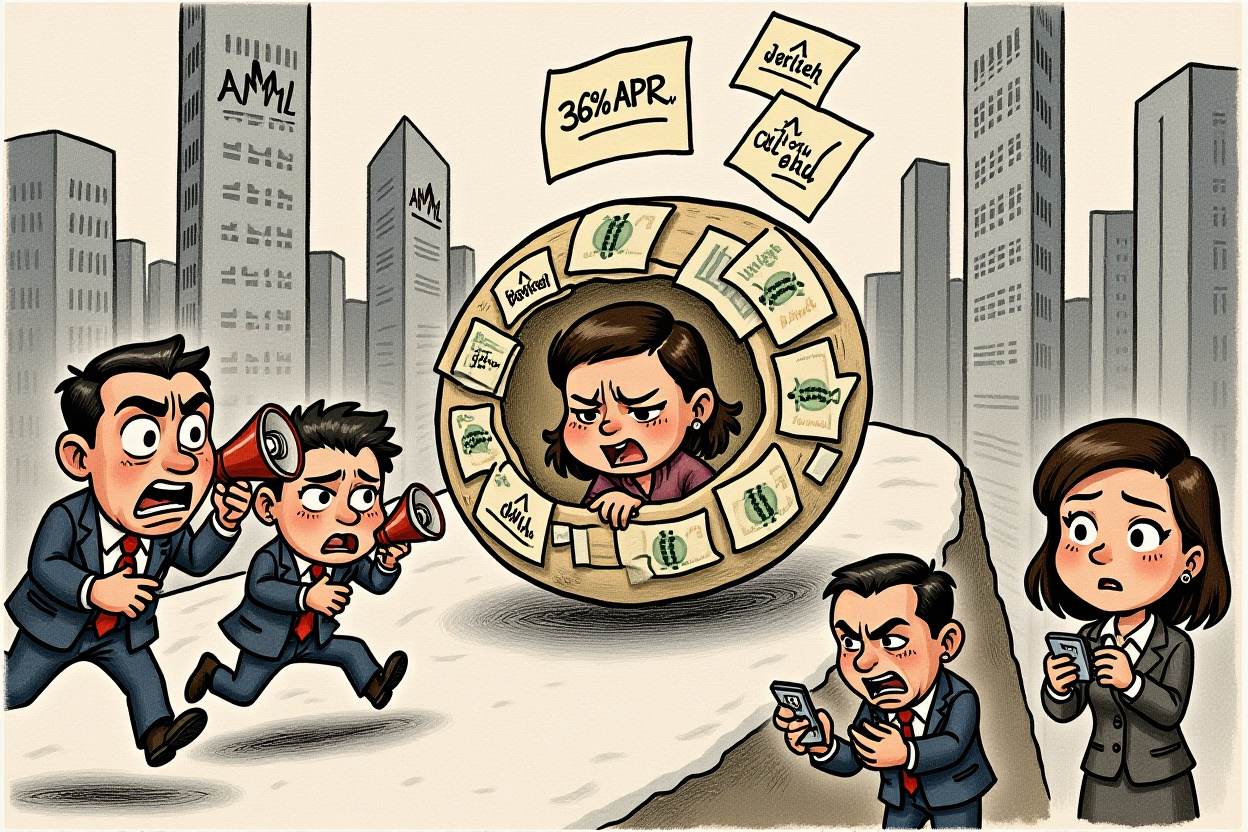
The story of Ms. Chen encapsulates the perils of mini-loans. During her university years, she turned to Fenqile for small purchases, even splitting a 400-yuan expense into 36 installments. Between 2020 and 2021, she took five loans totaling 13,674 yuan, with annualized interest rates ranging from 32.08% to 35.90%. Lured by promotional claims of “low interest” and “monthly payments as low as 18.23 yuan,” she soon found herself trapped. By 2022, she defaulted, and over 1,000 days of delinquency later, her debt had nearly doubled, compounded by harassing debt collectors who contacted her family and friends, leading to depression and financial ruin.
Breakdown of Loans and Effective Costs
Ms. Chen’s loan portfolio illustrates how mini-loans escalate costs:
– 6,800 yuan loan over 36 months: With a 35.9% APR, the total repayment balloons significantly beyond principal.
– 400 yuan loan over 36 months: A trivial amount stretched into a long-term debt burden, showcasing the platform’s strategy of minimizing perceived monthly payments while maximizing interest.
– Overall, her cumulative repayment of 26,859 yuan on 13,674 yuan borrowed translates to an effective cost exceeding 100% of the principal, highlighting the mini-loan model’s reliance on extended terms to mask high rates.
Psychological and Social Impact of Debt Collection
Fenqile’s debt collection methods have drawn widespread criticism. Complaints on platforms like Black Cat (黑猫投诉) cite tactics such as:
– Harassing borrowers’ social circles, including family and colleagues, violating privacy and causing mental health issues.
– Using intimidation and threats, as reported in over 20,000 complaints, which undermine consumer trust and contravene China’s evolving debt collection regulations.
This aggressive approach not only exacerbates borrower distress but also poses reputational risks for Fenqile and its parent company, Lexin Fintech Holdings Ltd. (乐信集团), potentially affecting investor confidence in Chinese fintech stocks.
Opaque Fee Structures and Regulatory Evasion in Mini-Loans
Fenqile’s mini-loans are marketed with appealing slogans like “annual interest as low as 8%” and “borrow 20,000 yuan with daily costs from 2.2 yuan.” However, users quickly encounter hidden charges that push effective APRs toward 36%. This opacity is a hallmark of the mini-loan industry, where platforms leverage complex fee arrangements to circumvent regulatory limits. In December 2025, Chinese authorities issued the “Guidance on Comprehensive Financing Cost Management for Small Loan Companies,” capping new loans at 24% and aiming to align costs with four times the one-year LPR by 2027. Yet, Fenqile’s practices suggest ongoing challenges in enforcement.
Hidden Fees and Consumer Complaints
Data from Black Cat shows over 160,000 complaints against Fenqile, focusing on undisclosed fees:
– Membership fees, guarantee charges, and credit assessment costs added without clear disclosure, as seen in cases where borrowers paid extra hundreds or thousands of yuan beyond stated interest.
– For example, a borrower from Zhejiang reported actual repayments 1,782 yuan higher than contract terms for a 10,300 yuan loan, due to embedded fees.
– Another complaint highlighted a 1,102.14 yuan guarantee fee charged without consent on a 49,880 yuan loan, buried in lengthy electronic agreements.
These practices violate China’s consumer protection laws, which mandate transparent pricing. The China Consumers Association (中国消费者) has documented similar issues, urging greater scrutiny of mini-loan platforms.
Regulatory Framework and Compliance Gaps
The 2025 regulatory guidance aims to curb high-cost lending, but mini-loan providers like Fenqile adapt by:
– Extending loan terms to reduce apparent monthly payments while accruing more interest over time, a tactic that skirts direct rate caps.
– Partnering with licensed institutions, such as Shanghai Bank (上海银行), to legitimize operations, yet retaining control over fee structures that inflate costs.
– Facing potential penalties from local financial authorities for loans exceeding 24%, but slow enforcement allows continued profitability.
Investors should monitor these dynamics, as regulatory crackdowns could impact the valuation of firms like Lexin, traded on Nasdaq under LX. For more on regulatory updates, refer to the National Financial Regulatory Administration announcements.
Fenqile’s Controversial Roots: From Campus Lending to Fintech Giant
Fenqile’s operator, Jishan Fenqile Network Small Loan Co., Ltd. (吉安市分期乐网络小额贷款有限公司), is backed by Lexin Fintech Holdings Ltd., founded by Xiao Wenjie (肖文杰) in 2013. The platform’s origins trace to campus lending, where it provided loans to university students, fueling rapid growth. After a 2016 regulatory crackdown on “campus loans,” Lexin rebranded as a fintech firm and listed in the U.S. in 2017. However, mini-loans today still reflect this legacy, with ongoing reports of targeting young, inexperienced borrowers.
Historical Context and Ethical Concerns
Lexin’s early expansion relied on student debt, a model criticized for exploiting vulnerable demographics. Despite distancing itself, Fenqile faces:
– Over 922 complaints on Black Cat related to “campus loans,” including promotions within universities and loans to students without adequate income verification.
– Allegations of violating China’s bans on student lending, which could trigger regulatory action and reputational damage.
This history complicates Fenqile’s narrative as a innovative fintech player, reminding investors of the sector’s ethical risks.
Ongoing Issues with Youth Targeting
Mini-loans continue to attract young adults through digital marketing and low thresholds. Fenqile’s app collects extensive personal data—from ID cards to facial recognition—sharing it with third parties like credit enhancers and banks, as noted in its privacy policy. This data exploitation, coupled with aggressive lending, creates a cycle of dependency, where borrowers sacrifice privacy for access to credit. The Economic Reference News (经济参考报) has investigated these practices, warning of broader consumer rights violations.
Data Privacy and Consumer Protection in the Mini-Loan Ecosystem
Beyond high costs, mini-loan platforms like Fenqile raise alarms over data security and consumer autonomy. Upon agreeing to terms, users surrender sensitive information, which is then shared with partners for credit assessment and debt collection. This ecosystem, while enabling quick loans, often leaves borrowers vulnerable to misuse and harassment, highlighting gaps in China’s data protection laws, such as the Personal Information Protection Law.
Extensive Data Collection Practices
Fenqile’s privacy policy permits sharing user data with:
– Third-party merchants and payment processors, increasing exposure to data breaches.
– Credit bureaus and regulatory bodies, but without clear consent mechanisms, risking unauthorized profiling.
– Debt collectors, who use this information for aggressive tactics, as seen in Ms. Chen’s case.
This lack of transparency undermines trust and could lead to legal challenges, affecting Fenqile’s operational sustainability.
Legal Recourse and Market Implications
Consumers have filed lawsuits and complaints, citing violations of China’s Advertising Law and consumer rights regulations. For instance, the Southern Daily (南方日报) reported on legal interpretations where lawyers argue that hidden fees constitute fraudulent practices. As regulators like the State Administration for Market Supervision ramp up oversight, mini-loan providers may face fines or operational restrictions, influencing sector-wide profitability. Investors should consider these litigation risks when evaluating Chinese fintech equities.
Investment Implications and Future Outlook for Mini-Loans
The mini-loan industry, epitomized by Fenqile, sits at a crossroads: balancing growth with compliance in a tightening regulatory environment. For institutional investors and fund managers, understanding these dynamics is crucial for navigating China’s equity markets. Lexin’s stock performance, for example, may hinge on its ability to adapt to new rules while maintaining revenue from mini-loans, which contribute significantly to its portfolio.
Impact on Lexin Fintech Holdings and Sector Trends
Lexin, as a Nasdaq-listed entity, faces scrutiny from global investors concerned with ESG factors. Key points include:
– Revenue dependence on high-interest mini-loans: Any regulatory cap enforcement could squeeze margins, leading to earnings volatility.
– Competitive landscape: Rivals like Ant Group’s offerings may gain share if Fenqile’s practices draw sanctions, reshaping China’s consumer finance sector.
– Investor guidance: Monitoring quarterly reports for disclosures on loan quality and compliance costs is essential, as highlighted in recent analyst notes.
Regulatory Directions and Strategic Adaptations
Chinese authorities are likely to enhance supervision, focusing on:
– Stricter enforcement of the 24% cap, potentially through real-time monitoring systems.
– Encouraging consolidation in the small-loan sector to improve standards, as seen in earlier reforms.
– Promoting financial literacy among young borrowers to reduce reliance on predatory mini-loans.
For investors, this signals a shift toward more sustainable lending models, favoring firms with transparent practices. Engaging with regulatory developments via sources like the People’s Bank of China can inform asset allocation decisions.
Synthesizing the Mini-Loan Challenge: A Call for Action
The mini-loan phenomenon, as illustrated by Fenqile’s operations, reveals systemic issues in China’s fintech space: exorbitant hidden costs, regulatory evasion, and consumer harm. Ms. Chen’s ordeal is not an isolated case but a symptom of a broader trend where mini-loans exploit financial vulnerabilities. For market participants, the takeaways are clear: enhanced due diligence on lending practices, advocacy for stronger consumer protections, and alignment with regulatory trends are imperative. As China refines its financial ecosystem, investors must prioritize ethical considerations to foster long-term stability. The future of mini-loans hinges on a balanced approach—innovating access to credit while safeguarding borrowers from the cycles of debt that currently define this sector.