



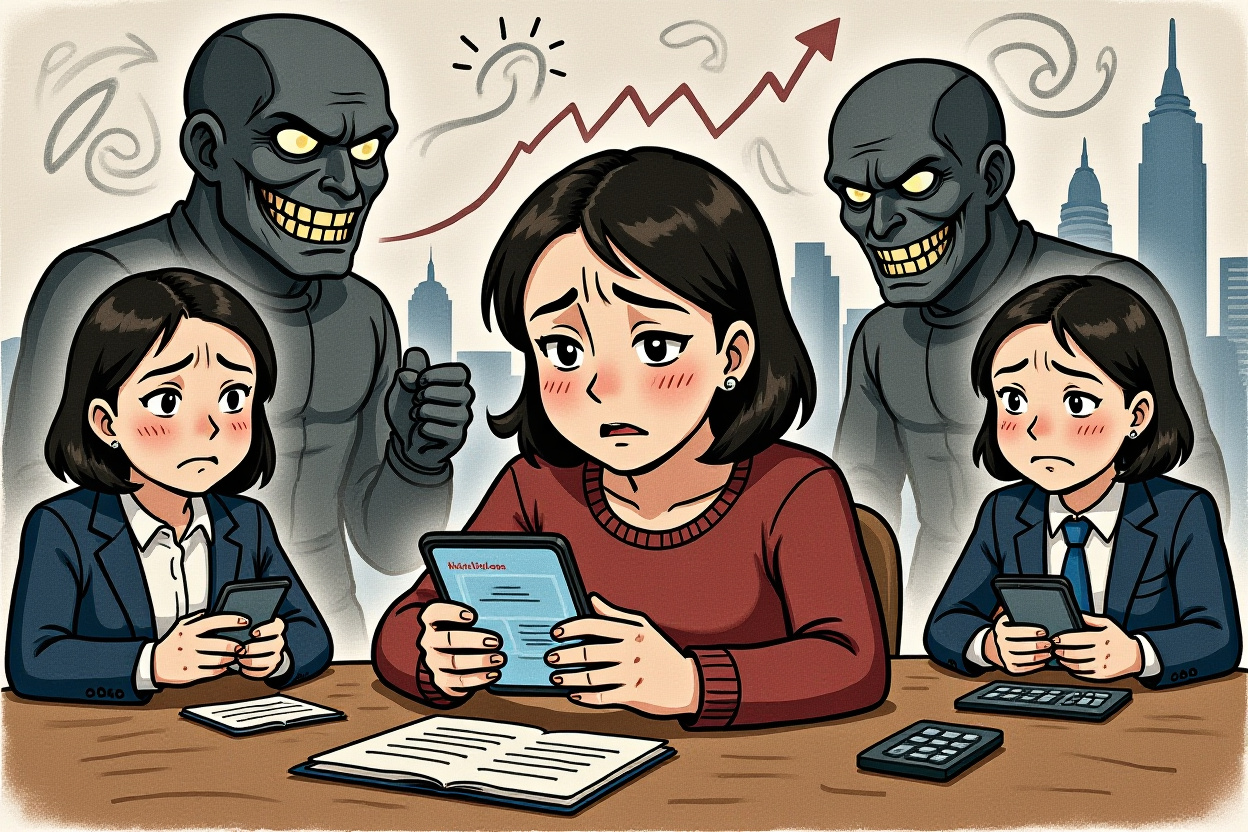
– Mini-loan platforms like Fenqile (分期乐) lure young borrowers with low monthly payments but impose hidden fees and high interest rates, often doubling the principal owed.
– Despite regulatory caps on lending costs at 24%, enforcement gaps allow platforms to evade rules through opaque fee structures and extended repayment terms.
– The business model has roots in controversial campus lending, with ongoing issues of data privacy violations and aggressive debt collection practices.
– Consumers face mental health crises due to harassment, underscoring the urgent need for stricter oversight and enhanced financial literacy.
As Chinese New Year approaches, young consumers across China are bombarded with enticing credit offers from digital lenders, promising quick cash for holidays and expenses. Yet, behind the facade of financial convenience lies a dangerous trap that is systematically draining young people of their financial stability and mental well-being. The rise of mini-loans, characterized by small amounts and extended repayments, has created a debt spiral for many, with cases like borrowing 13,000 yuan only to repay 26,000 yuan becoming alarmingly common. This phenomenon highlights the predatory practices within China’s fintech sector, where regulatory oversight struggles to keep pace with innovation, leaving vulnerable borrowers exposed to exploitation.
The Allure and Trap of Mini-Loans Draining Young People
Mini-loan platforms have mastered the art of attraction, offering seemingly manageable loans that mask exorbitant long-term costs. These services, often branded as financial technology solutions, target young adults with limited credit history, using psychological tactics to encourage borrowing for everyday expenses.
Case Study: Chen’s Debt Spiral
Take the case of Ms. Chen, a university student who fell into the mini-loan trap years ago. She borrowed a total of 13,674 yuan from Fenqile (分期乐) between 2020 and 2021, spread across five loans with repayment periods up to 36 months. The advertised monthly payments were as low as 18.23 yuan, but the annual interest rates ranged from 32.08% to 35.90%, pushing her total repayment to 26,859 yuan—nearly double the principal. After stopping payments in August 2022, she faced over 1,000 days of delinquency and intense collection harassment, which impacted her mental health and personal relationships. This example illustrates how mini-loans draining young people operate: by extending terms to minimize monthly burdens while maximizing total interest, creating a snowball effect of debt.
How Mini-Loans Work: Low Monthly Payments, High Total Cost
Platforms like Fenqile (分期乐) promote loans with “low annual rates starting at 8%” and “daily interest as low as 2.2 yuan per 10,000 yuan,” but the reality is far more costly. The business model relies on:
– Extending repayment periods to 24 or 36 months, making small amounts like 400 yuan stretch over years.
– Adding hidden fees such as membership charges, guarantee fees, and credit assessment costs, which are often buried in lengthy electronic agreements.
– Pushing the comprehensive annualized cost to the legal limit of 36%, exploiting regulatory gray areas. On consumer complaint platforms like Black Cat (黑猫投诉), over 160,000 grievances highlight these practices, with users reporting opaque pricing and unexpected charges that inflate repayments.
Regulatory Landscape and Compliance Issues
Chinese authorities have introduced measures to curb excessive lending costs, but enforcement remains a challenge. The mini-loans draining young people often operate in a regulatory gap, where rules are clear but compliance is inconsistent.
China’s New Rules on Lending Costs
In December 2025, the People’s Bank of China (中国人民银行) and the National Financial Regulatory Administration (国家金融监管总局) jointly issued the “Guidelines for the Management of Comprehensive Financing Costs of Small Loan Companies,” which prohibit new loans with annualized costs exceeding 24%. By the end of 2027, all new loans must be capped at four times the one-year Loan Prime Rate (LPR). From 2026, local financial authorities are mandated to correct violations, halt new lending, and incorporate dynamic credit reporting for non-compliant entities. However, these regulations face implementation hurdles, as platforms adapt by disguising costs through ancillary fees.
Gaps in Enforcement and Platform Evasion
Despite the rules, mini-loan platforms continue to skirt limits. For instance, Fenqile (分期乐) has been accused of charging guarantee fees and other extras without clear disclosure, as reported in cases from Zhejiang and Sichuan provinces. The China Consumer Association (中国消费者协会) has documented multiple complaints where actual repayments exceeded contracted amounts by thousands of yuan, indicating systemic opacity. This evasion underscores the need for tighter monitoring and real-time audits to protect borrowers from the mini-loans draining young people.
The Business Model: From Campus to Consumer
The origins of mini-loans are deeply tied to campus lending, a controversial practice that fueled rapid growth for companies like Lexin Fintech Holdings Ltd. (乐信集团), the parent of Fenqile (分期乐). Founded by Xiao Wenjie (肖文杰) in 2013, Lexin leveraged student loans to expand before pivoting to broader consumer credit after regulatory crackdowns in 2016.
Historical Roots in Campus Lending
Lexin’s early success was built on providing loans to university students, a strategy that allowed it to scale quickly but drew scrutiny for targeting financially inexperienced youth. After bans on campus lending, the company rebranded as a fintech firm and listed on NASDAQ in 2017. However, residual practices persist, with over 922 complaints on Black Cat (黑猫投诉) referencing “campus loans” and reports of promoters soliciting students on university grounds. This history reveals how mini-loans draining young people evolved from a niche market into a mainstream threat.
Current Practices and Consumer Complaints
Today, Fenqile (分期乐) operates through a network of partners like Shanghai Bank (上海银行) to disburse loans, but complaints allege aggressive marketing and unethical collection. Key issues include:
– Misleading advertisements that emphasize low rates while hiding complex fee structures.
– Violent collection tactics, with over 20,000 complaints describing harassment of borrowers’ contacts, including family and colleagues.
– Lack of transparency in loan agreements, where critical terms are obscured. These practices contribute to the cycle of debt that defines mini-loans draining young people, eroding trust in digital finance.
Privacy and Data Security Concerns
Beyond financial harm, mini-loan platforms engage in extensive data collection, raising alarms about privacy and security. The mini-loans draining young people often come with invasive terms that compromise personal information.
Extensive Data Collection
Upon using apps like Fenqile (分期乐), users must consent to the collection of dozens of data points, including ID photos, bank details, income information, facial recognition data, and location history. As investigated by Economic Reference News (经济参考报), this data haul creates significant risks if mishandled or leaked, exposing borrowers to identity theft and fraud.
Third-Party Sharing and Risks
Privacy policies allow sharing with third parties such as merchants, payment processors, banks, and credit enhancers, often without explicit user awareness. This ecosystem enables cross-platform profiling and potential misuse, turning borrowers’ data into a commodity. For young consumers already struggling with debt, such vulnerabilities add another layer of exploitation to the mini-loans draining young people.
The Human Cost: Mental Health and Social Impact
The consequences of mini-loans extend beyond balance sheets, severely affecting borrowers’ psychological and social lives. The mini-loans draining young people are not just financial products but sources of profound distress.
Harassment and Depression
Ms. Chen’s experience with collection harassment—where her friends and family were notified of her debt—is common. Many borrowers report depression, anxiety, and social isolation due to relentless pressure from collectors. This toll highlights the ethical failures in an industry that prioritizes recovery over consumer welfare, perpetuating the cycle of mini-loans draining young people.
Broader Societal Implications
The proliferation of high-cost credit among youth can lead to long-term financial insecurity, reduced consumer spending, and increased reliance on social safety nets. It also undermines financial inclusion goals by trapping vulnerable groups in debt rather than empowering them. Addressing these issues requires a holistic approach that considers the societal ripple effects of mini-loans draining young people.
Moving Forward: Solutions and Call to Action
To combat the crisis of mini-loans draining young people, stakeholders must collaborate on regulatory, educational, and industry reforms. The path forward involves tightening oversight while empowering consumers.
Regulatory Recommendations
Authorities should enhance real-time monitoring of lending platforms, mandate clearer fee disclosures, and impose stricter penalties for violations. Initiatives could include:
– Implementing centralized auditing systems to track comprehensive borrowing costs across all loans.
– Expanding financial education programs in schools and communities to warn about the risks of mini-loans.
– Encouraging alternative credit products from regulated institutions at lower rates. By closing enforcement gaps, regulators can curb the mini-loans draining young people.
Advice for Consumers
Young borrowers should exercise caution: always read loan agreements thoroughly, compare offers from multiple sources, and seek advice from financial counselors before committing. Utilizing tools like credit reports from the People’s Bank of China (中国人民银行) can help assess affordability. Remember, if an offer seems too good to be true—like low monthly payments on extended terms—it likely is, as seen in the mini-loans draining young people.
The mini-loan phenomenon in China serves as a cautionary tale for global markets, where fintech innovation must balance accessibility with consumer protection. As cases like Ms. Chen’s demonstrate, the hidden costs of these loans can devastate lives, underscoring the urgency for stronger safeguards. Investors and policymakers alike should monitor this space closely, advocating for transparency and fairness. For consumers, vigilance and education are key to avoiding the trap. Together, we can shift the narrative from exploitation to empowerment, ensuring that financial technology serves rather than drains the next generation.