



Executive Summary: Key Takeaways on China’s Mini-Loan Crisis
– Mini-loans from platforms like 分期乐 (Fenqile) are ensnaring young borrowers with effective annual percentage rates (APRs) nearing 36%, often doubling the principal through opaque fee structures and extended tenures.– Despite regulatory caps from 中国人民银行 (People’s Bank of China) and 国家金融监管总局 (National Financial Regulatory Administration), lenders exploit loopholes using hidden charges, pushing compliance to the brink and raising enforcement challenges.– Aggressive data collection and violent collection practices, including harassment of borrowers’ social circles, violate consumer privacy and rights, spotlighting critical gaps in China’s consumer protection framework.– The persistence of “campus loan” tactics, despite bans, underscores ongoing risks in the fintech sector, with potential reputational and financial fallout for investors and market stability.– Stakeholders must prioritize transparency and accountability, as regulatory scrutiny intensifies, urging investors to reassess the sustainability of mini-loan business models in China’s evolving financial landscape.
The Hidden Cost of Mini-Loans: A Debt Trap Unmasked
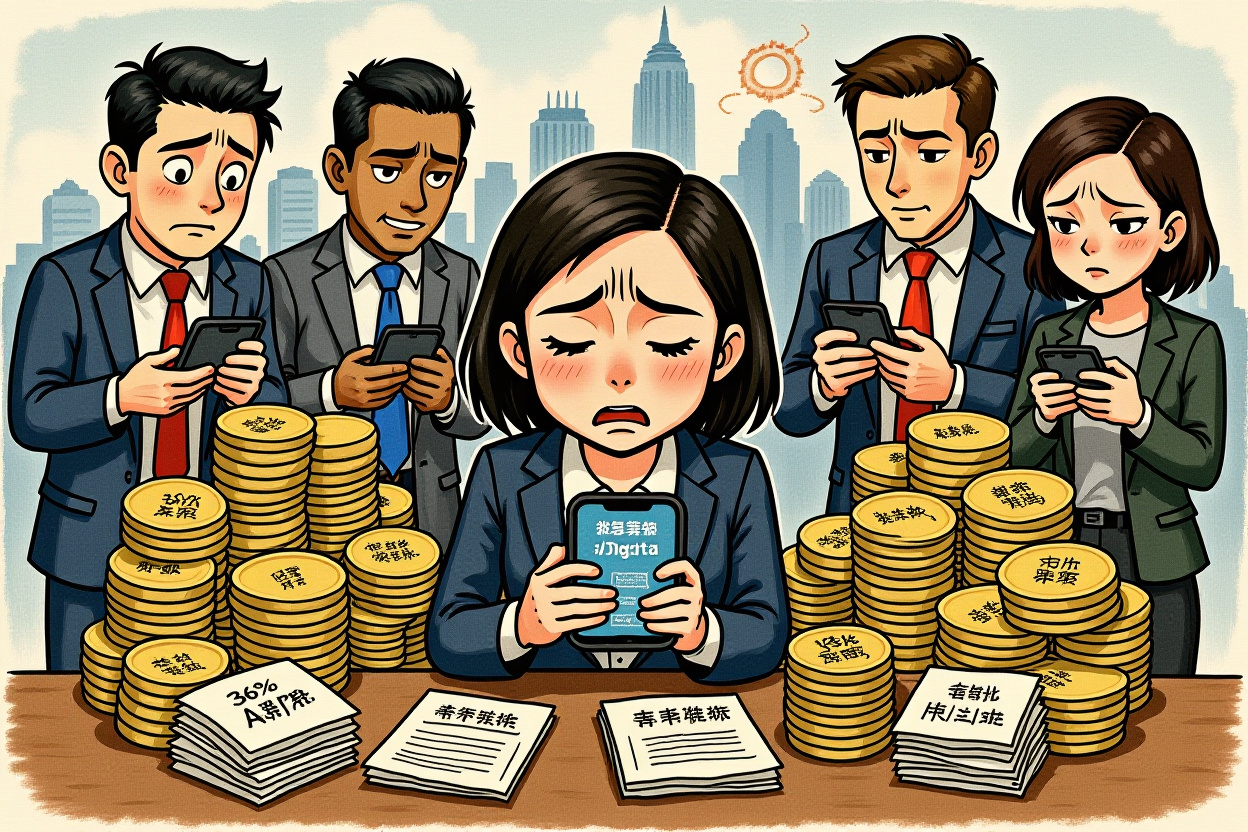
As Chinese consumers navigate rising living costs and seasonal pressures like the Lunar New Year, mini-loans have emerged as a seductive lifeline, promising quick cash with seemingly manageable payments. However, beneath the veneer of financial convenience lies a predatory system where borrowing 13,000 yuan can balloon into a 26,000 yuan repayment burden. This mini-loan crisis is not just a consumer issue but a pivotal concern for investors and regulators alike, reflecting deeper flaws in China’s fintech ecosystem. The case of 陈女士 (Ms. Chen), who borrowed 13,674 yuan only to face a 26,859 yuan debt, exemplifies how these mini-loans drain young people financially and psychologically. With platforms like 分期乐 (Fenqile) leveraging aggressive marketing and opaque terms, the mini-loan phenomenon demands urgent scrutiny to safeguard market integrity and consumer trust.
The Chen Case Study: From 13,000 to 26,000 in Debt
陈女士 (Ms. Chen), a university student at the time, fell into the mini-loan trap through 分期乐 (Fenqile), lured by promises of low monthly installments. Between 2020 and 2021, she took out five loans totaling 13,674 yuan, including a 400 yuan expense stretched over 36 months. The stated annual interest rates ranged from 32.08% to 35.90%, but hidden fees pushed the effective cost higher. After stopping payments in August 2022, her debt snowballed due to penalties and compounding interest, leading to over 1,000 days of delinquency. Aggressive collection tactics, such as contacting her family and friends, exacerbated her distress, highlighting the human toll of these mini-loans. This case underscores how mini-loans exploit vulnerable borrowers through extended tenures that mask true costs, turning small debts into overwhelming obligations.
Regulatory Red Flags and Compliance Gaps
In response to such abuses, 中国人民银行 (People’s Bank of China) and 国家金融监管总局 (National Financial Regulatory Administration) issued the “小额贷款公司综合融资成本管理工作指引” (Guidelines for Comprehensive Financing Cost Management of Small Loan Companies) on December 19, 2025. These rules cap new loan APRs at 24% and aim to align costs with four times the one-year Loan Prime Rate (LPR) by 2027. However, mini-loan platforms often circumvent these caps through ancillary charges like membership fees, guarantee fees, and credit assessment fees, effectively pushing APRs toward 36%. Enforcement remains inconsistent, with local financial authorities struggling to monitor non-compliance, allowing mini-loans to thrive in regulatory gray areas. This gap between policy and practice poses significant risks for market stability and investor confidence in China’s fintech sector.
Deconstructing the Mini-Loan Business Model
The allure of mini-loans lies in their accessibility and perceived affordability, but their business model is built on complex fee structures and psychological targeting. Platforms like 分期乐 (Fenqile) advertise “年利率低至8%” (annual interest rates as low as 8%) and “最高可借20万元” (borrow up to 200,000 yuan), yet the reality involves layered costs that escalate debts rapidly. By dissecting this model, we uncover how mini-loans prioritize profit over consumer welfare, with implications for financial inclusion and ethical lending practices.
Opaque Fee Structures and Hidden Costs
Mini-loans often entice borrowers with low stated interest rates, but additional fees are buried in lengthy electronic agreements. For instance, users of 分期乐 (Fenqile) report unexpected charges for “会员费” (membership fees), “担保费” (guarantee fees), and “信用评估费” (credit assessment fees), which can add hundreds or thousands of yuan to the total repayment. Data from 黑猫投诉平台 (Black Cat Complaint Platform) reveals over 160,000 complaints against 分期乐 (Fenqile), with many citing APRs接近36% (approaching 36%). A case from浙江省杭州市 (Hangzhou, Zhejiang Province) involved a borrower who paid 1,782 yuan more than the contract stipulated due to undisclosed fees, illustrating how mini-loans manipulate transparency to maximize revenue. Such practices not only violate consumer trust but also challenge regulatory efforts to curb excessive financing costs in China’s lending market.
The Psychology of Mini-Loans: Targeting Vulnerable Borrowers
Mini-loans specifically target young, financially inexperienced demographics, including students and low-income earners, by emphasizing minimal monthly payments. For example, 分期乐 (Fenqile) promotes “月供最低仅18.23元” (monthly payments as low as 18.23 yuan), making debt appear manageable while ignoring long-term costs. This strategy preys on behavioral biases, such as present bias, where borrowers prioritize immediate relief over future consequences. Additionally, platforms leverage data analytics to personalize offers, as seen in 分期乐 (Fenqile)’s privacy policy, which shares sensitive information with third parties like “增信机构” (credit enhancement agencies) and “资金清算银行” (fund clearing banks). By exploiting psychological vulnerabilities and data, mini-loans create a cycle of dependency, draining young people’s resources and hindering financial health.
Regulatory Landscape and Enforcement Challenges
China’s regulatory framework for consumer lending has evolved rapidly, but mini-loans continue to test its limits. The 2025 guidelines represent a step toward curbing abusive practices, yet implementation hurdles persist. Understanding this landscape is crucial for investors assessing the risks and opportunities in China’s fintech sector, where mini-loans play a contentious role amid tightening oversight.
Recent Guidelines from the PBOC and NFRA
The joint directive from 中国人民银行 (People’s Bank of China) and 国家金融监管总局 (National Financial Regulatory Administration) mandates that by 2026, loans exceeding 24% APRs must be corrected, with new issuance halted and纳入征信动态管理 (incorporated into dynamic credit reporting). This aims to protect borrowers from usurious rates, but mini-loan platforms adapt by extending tenures—such as 36-month terms for small amounts—to keep monthly payments low while accruing interest over time. For instance, 分期乐 (Fenqile)’s “400元分36期” (400 yuan over 36 installments) strategy exemplifies how lenders stretch debts to bypass effective rate caps. Regulatory bodies face the challenge of monitoring such tactics, especially with the proliferation of online platforms that operate across jurisdictions, complicating enforcement in China’s decentralized financial system.
The Gap Between Policy and Practice
Despite regulatory intentions, mini-loans thrive due to enforcement gaps and innovative circumvention. 地方金融管理机构 (Local financial management agencies) often lack resources to audit all small loan companies, allowing platforms like 分期乐 (Fenqile) to continue charging high effective rates through fee bundling. Moreover, the reliance on self-regulation and industry standards, as referenced in reports from《经济参考报》 (Economic Reference News), has proven inadequate. For example, 分期乐 (Fenqile)’s privacy policy允许共享用户信息 (allows sharing of user information) with multiple third parties, raising data security concerns that regulators have yet to address comprehensively. This disconnect highlights the need for stricter oversight and real-time monitoring to ensure mini-loans align with consumer protection goals, rather than draining young borrowers’ finances through legal loopholes.
Broader Implications for China’s Financial Market
The mini-loan crisis extends beyond individual debtors, impacting investor sentiment, fintech innovation, and overall market stability. As these products gain scrutiny, their business models face sustainability questions, with potential ripple effects across China’s equity markets and global investment flows. For institutional investors and corporate executives, understanding these implications is key to navigating risks in Chinese equities.
Risks for Fintech Investors and the Sector
Mini-loans, often bundled under the “金融科技” (fintech) label, pose reputational and financial risks for investors. Companies like 乐信集团 (Lexin Fintech Holdings), the parent of 分期乐 (Fenqile), are listed on NASDAQ and rely on mini-loan revenue streams. However, regulatory crackdowns could lead to fines, operational restrictions, or declining user trust, affecting stock performance. For instance, 乐信集团 (Lexin Fintech Holdings) has faced volatility amid reports of “暴力催收” (violent collection practices) and “校园贷” (campus loan) ties, as highlighted in《南方日报》 (Southern Daily) investigations. Investors must weigh the high margins of mini-loans against escalating compliance costs and potential backlash, as China’s authorities prioritize social stability over unchecked fintech growth. This environment necessitates due diligence on lending practices and governance standards within mini-loan portfolios.
Consumer Protection and Market Stability Concerns
Widespread mini-loan abuses threaten consumer confidence and financial inclusion, undermining China’s efforts to foster a healthy credit culture. Cases like 四川省凉山彝族自治州的沙某 (Mr. Sha from Liangshan Yi Autonomous Prefecture, Sichuan Province), who incurred hidden担保费 (guarantee fees) without clear disclosure, erode trust in digital finance. Such incidents can trigger broader market instability if debt defaults spike, especially among young borrowers who form a growing consumer base. Regulatory responses, such as enhanced disclosure requirements and stricter licensing for小贷公司 (small loan companies), are essential to mitigate systemic risks. By addressing mini-loan pitfalls, China can promote sustainable lending practices that support economic growth without draining the financial resilience of its youth.
The Path Forward: Solutions and Recommendations
Addressing the mini-loan crisis requires coordinated action from regulators, platforms, and consumers. Proactive measures can enhance transparency, protect borrowers, and ensure the long-term viability of China’s fintech sector. For investors and market participants, these steps offer a roadmap to engage with mini-loans responsibly while capitalizing on opportunities in regulated lending.
Strengthening Transparency and Accountability
To curb mini-loan abuses, regulators should mandate standardized disclosure of all costs, including fees and effective APRs, in bold, accessible formats. Platforms like 分期乐 (Fenqile) must reform their practices by eliminating hidden charges and providing clear loan agreements, as suggested by《中国消费者》 (China Consumer) reports. Additionally, independent audits and real-time reporting to 国家金融监管总局 (National Financial Regulatory Administration) could improve oversight. For example, requiring mini-loan providers to publicly share complaint data from 黑猫投诉平台 (Black Cat Complaint Platform) would foster accountability. By prioritizing transparency, stakeholders can rebuild trust and align mini-loans with ethical standards, reducing the risk of debt traps for young borrowers.
Call to Action for Stakeholders: Regulators, Platforms, and Consumers
Regulators must accelerate enforcement of the 2025 guidelines, with penalties for non-compliance and support for financial literacy programs. Platforms should invest in ethical AI and data protection, moving beyond aggressive collection tactics to customer-centric services. Consumers, especially young people, need education on debt management and rights, leveraging resources from官方渠道 (official channels). Investors are urged to conduct ESG-focused due diligence, favoring companies with robust compliance records over those reliant on predatory mini-loans. As China’s financial landscape evolves, collaborative efforts can transform mini-loans from a drain on youth into a tool for responsible credit access, benefiting both markets and society.
Synthesizing the Mini-Loan Dilemma: Insights for a Sustainable Future
The mini-loan crisis in China, epitomized by cases like borrowing 13,000 yuan to repay 26,000, reveals systemic vulnerabilities in consumer finance. These products, while offering short-term relief, often lead to long-term financial drains through opaque fees and high effective rates. Regulatory strides have been made, but enforcement gaps allow mini-loans to persist, targeting vulnerable groups like students and young professionals. For the fintech sector, this poses sustainability challenges, with investors facing heightened risks from regulatory scrutiny and reputational damage. Moving forward, a balanced approach—combining stricter oversight, technological innovation, and consumer education—is essential to harness the potential of mini-loans without compromising financial health. Stakeholders must act now to foster a transparent, equitable lending environment that supports China’s economic ambitions while protecting its future generations from debt traps.