



Executive Summary: Key Takeaways on China’s Mini-Loan Crisis
Before delving into the details, here are the critical insights from this analysis for financial professionals and investors monitoring Chinese consumer finance:
– Opaque Cost Structures: Platforms like Fenqile (分期乐) often advertise low annual percentage rates (APRs) but layer on hidden fees—such as membership, guarantee, and credit assessment charges—pushing effective borrowing costs toward the 36% regulatory ceiling, far above the 24% guideline set by authorities.
– Regulatory-Practice Gap: Despite 2025 guidelines from the People’s Bank of China (中国人民银行) and National Financial Regulatory Administration (国家金融监督管理总局) capping comprehensive financing costs, enforcement remains inconsistent, allowing some mini-loan operators to continue high-cost lending through fee reclassification and lengthy repayment terms.
– Consumer Harm Amplification: The target demographic—often young adults and students—faces not only financial strain but also psychological distress due to aggressive debt collection tactics, including harassment of family and friends, and extensive data privacy violations.
– Market and Investment Risks: The sustainability of business models reliant on high-yield mini-loans is under threat from tightening regulations and rising consumer litigation, posing significant reputational and financial risks for listed entities like Lexin Group (乐信集团), Fenqile’s parent company.
– Broader Economic Implications: Widespread predatory lending could undermine financial stability and consumer confidence, prompting more stringent interventions that may reshape the fintech landscape, affecting valuations and investment strategies in Chinese equities.
The Alluring Trap: How Mini-Loans Promise Relief But Deliver Debt
As the Lunar New Year approaches, many young Chinese consumers find themselves in a familiar bind: seasonal expenses for red envelopes, family trips, and gifts strain tight budgets. In this context, the promise of quick, easy credit from digital lenders shines brightly. Fenqile (分期乐), a prominent mini-loan platform, recently promoted loan limit increases up to 50,000 yuan, enticing users with slogans like "activate with one click" for immediate cash. However, behind this facade of financial convenience lies a darker reality where borrowing small amounts can lead to crippling debt.
The term "mini-loans"—referring to small-sum, short-to-medium-term credit products—has become synonymous with accessibility for underserved segments, particularly youth. Yet, as cases emerge, it’s clear that these loans often morph into long-term financial burdens. The core issue is the design: by stretching repayments over extended periods, such as 36 months for a mere 400-yuan loan, the cumulative interest and fees balloon, trapping borrowers in cycles of repayment that far exceed principal amounts.
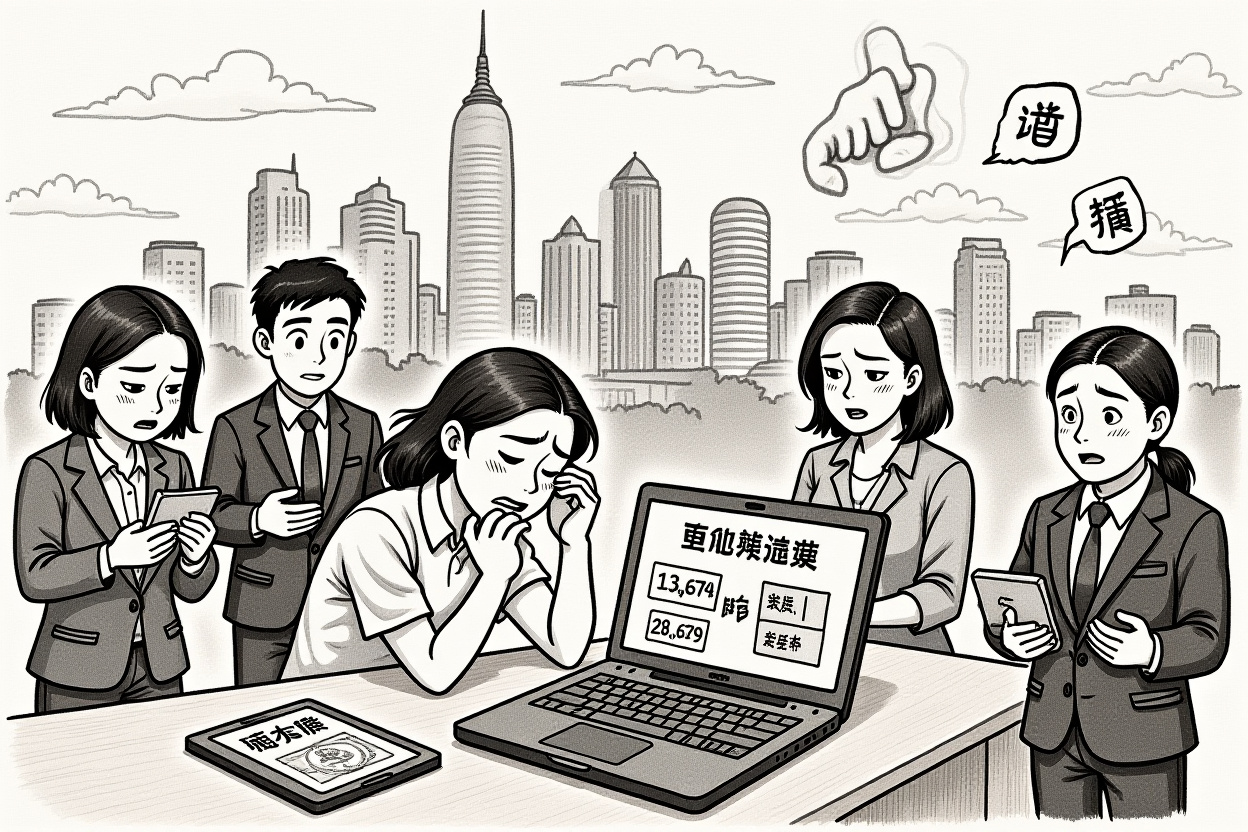
Case Study: Ms. Chen’s Descent into a 26,859-Yuan Repayment Nightmare
A stark illustration comes from Ms. Chen (陈女士), a university student who, between 2020 and 2021, took out five loans totaling 13,674 yuan from Fenqile for everyday expenses. Seduced by promises of "low interest" and minimum monthly payments as low as 18.23 yuan, she agreed to terms spanning 12 to 36 months. The advertised annual interest rates ranged from 32.08% to 35.90%, but the effective cost was higher due to additional charges. By February 2026, her total repayment obligation had skyrocketed to 26,859 yuan—nearly double the borrowed amount.
After stopping payments in August 2022 due to financial exhaustion, Ms. Chen faced over 1,000 days of delinquency, accompanied by aggressive debt collection that notified her relatives and partner, exacerbating mental health struggles. This case, which trended on social media, underscores how mini-loans exploit psychological vulnerabilities: the perception of manageable installments masks the true cost, leading to a snowball effect where debt accumulates relentlessly.
The Mechanics of Obfuscation: From "Low APR" to Hidden Fee Layers
Fenqile’s marketing materials prominently feature appeals like "borrow up to 200,000 yuan with APRs as low as 8%" and "1 yuan per day interest for 10,000-yuan loans." However, user agreements and payment flows reveal a different story. Common complaints cite unexpected fees—membership fees, guarantee fees, credit assessment fees—tacked on after loan disbursement. These are often buried in lengthy electronic contracts, violating transparency principles.
For instance, in complaints documented on the Black Cat platform (黑猫投诉), a consumer finance oversight portal, users report:
– Being charged guarantee fees without clear prior disclosure, as in the case of a borrower from Sichuan who paid 1,102.14 yuan extra on two loans of 49,880 yuan each via Fenqile’s "Lehua Borrow" (乐花借钱) product.
– Actual repayments exceeding contractual calculations. A Hangzhou borrower, Mr. Meng, found his 10,300-yuan loan at a 6% stated APR required total repayments of 12,425.4 yuan instead of the expected 10,643 yuan—a discrepancy of about 1,782 yuan attributed to hidden costs.
This fee layering pushes comprehensive financing costs toward 36%, the de facto maximum under historical regulatory tolerance, despite newer rules aiming to lower ceilings. The mini-loan business model thus thrives on information asymmetry, where borrowers focus on monthly affordability while overlooking long-term liabilities.
Regulatory Crackdown: Guidelines Versus Ground Realities in Mini-Loan Supervision
Chinese authorities have not been idle in addressing usury and consumer protection in the lending sector. On December 19, 2025, the People’s Bank of China (中国人民银行) and National Financial Regulatory Administration (国家金融监督管理总局) jointly issued the "Guidelines on Comprehensive Financing Cost Management for Small Loan Companies" (小额贷款公司综合融资成本管理工作指引). This directive explicitly prohibits new loans with comprehensive costs exceeding 24% annualized and mandates that, by the end of 2027, all new lending must stay within four times the one-year Loan Prime Rate (LPR), which currently translates to roughly 15-16%.
Furthermore, starting in 2026, local financial regulators are empowered to take corrective actions—including halting new loan issuance and incorporating violations into dynamic credit reporting—for entities breaching the 24% threshold. These measures aim to curb the excesses of mini-loans and protect vulnerable borrowers from predatory practices.
Enforcement Challenges and Regulatory Arbitrage
Despite these clear directives, enforcement remains patchy. Mini-loan operators like Fenqile navigate the rules by reclassifying interest as fees or extending loan tenures to dilute annualized cost calculations. For example, by offering a 400-yuan loan over 36 months, the APR might appear lower on surface calculations, but the total interest paid relative to principal remains exorbitant. This regulatory arbitrage is facilitated by the digital nature of platforms, which can quickly adjust product structures in response to oversight.
Additionally, the involvement of third-party partners—such as banks like Shanghai Bank (上海银行) that provide funding—complicates accountability. Borrowers often struggle to identify the actual lender, hindering complaints to regulators. As noted in a Black Cat complaint from February 12, 2026, a user lamented Fenqile’s refusal to disclose the funding source, preventing direct recourse against the bank for tolerating high-cost lending.
The gap between policy and practice highlights the need for stronger coordination between central and local regulators, as well as enhanced fintech monitoring tools to track real-time lending costs across platforms.
Fenqile and Lexin Group: A Legacy of Campus Lending in Mini-Loan Operations
To understand the persistence of high-cost mini-loans, one must examine the history of Fenqile and its parent, Lexin Group (乐信集团). Founded in 2013 by Xiao Wenjie (肖文杰), Lexin pioneered installment e-commerce in China, initially gaining traction by offering credit to university students for electronics purchases. This "campus loan" (校园贷) model fueled rapid growth but drew regulatory ire in 2016 due to defaults and abusive collection practices.
In response, Lexin rebranded as a fintech company, expanding its user base to broader "credit consumption populations" and listing on Nasdaq in 2017. However, its core subsidiary, JI’an Fenqile Network Microfinance Co., Ltd. (吉安市分期乐网络小额贷款有限公司), licensed in 2016, continues to operate mini-loan products that retain echoes of its controversial origins.
Persistent Ties to Student Lending and Aggressive Tactics
Evidence suggests that Fenqile has not fully abandoned campus-oriented marketing. On Black Cat, over 922 complaints specifically mention "campus loans" in relation to Fenqile, with reports of promoters setting up booths on university grounds to sign up students. Moreover, more than 20,000 complaints detail violent debt collection methods, including harassing phone calls to borrowers’ social circles—family, colleagues, and even village heads—which violate guidelines against intimidation.
These practices are compounded by extensive data harvesting. As investigated by Economic Reference News (经济参考报), Fenqile’s app collects dozens of personal data points—from ID cards and bank details to facial recognition and location—upon user agreement. This information is shared with third parties like merchants, payment partners, and credit enhancement agencies, raising severe privacy concerns. The mini-loan ecosystem, thus, not only entraps borrowers financially but also exploits their personal data for broader commercial gains.
Consumer Backlash: Mounting Complaints and Legal Avenues for Redress
The scale of discontent is quantifiable. As of early 2026, Black Cat hosts over 160,000 complaints against Fenqile, with common themes being opaque pricing, obstacles to early repayment, and unauthorized fee charges. This surge reflects growing consumer awareness and the availability of digital platforms for grievance airing, which can influence regulatory attention and corporate reputation.
Legal Interpretations and Rights Protection Strategies
From a legal standpoint, China’s consumer protection laws and judicial interpretations provide grounds for challenging excessive interest. Courts have historically capped supported interest at 24% for private lending, with amounts between 24% and 36% subject to negotiation. However, for mini-loans, the complexity arises in defining "comprehensive financing costs," which include all fees beyond stated interest.
Lawyers advising affected borrowers, such as those cited in Southern Daily (南方日报) reports, emphasize that consumers can demand refunds for costs exceeding 24% and report violations to local financial supervision bureaus. Additionally, platforms’ failure to transparently disclose fees may constitute deceptive practices under the Consumer Rights Protection Law (消费者权益保护法), enabling claims for damages.
For investors, this legal risk translates into potential liabilities for companies like Lexin, which may face class-action lawsuits or regulatory penalties that impact earnings and stock performance. The mini-loan sector’s reliance on contentious practices thus poses a material risk that must be factored into equity valuations.
Socio-Economic Fallout: How Mini-Loans Erode Financial Health and Privacy
The impact of mini-loans extends beyond individual cases to broader societal effects. Young borrowers, often new to credit, develop poor financial habits, while the stress from debt collection can lead to mental health issues like depression, as seen with Ms. Chen. This undermines the consumer base’s long-term economic productivity and stability.
Privacy Erosion in the Digital Lending Age
Mini-loan platforms operate in a data-driven environment where personal information is currency. Fenqile’s privacy policy, for instance, allows sharing user data with numerous third parties, increasing risks of misuse or breaches. This commodification of privacy is particularly alarming given the sensitivity of financial and biometric data, which could be exploited for fraud or unwanted marketing.
Regulators are taking note. Recent amendments to China’s Personal Information Protection Law (个人信息保护法) impose stricter consent requirements, but enforcement in the fast-moving fintech space remains a challenge. For consumers, the trade-off between access to credit and loss of privacy is a hidden cost of mini-loans, one that compounds the financial burden.
Market Implications: Investor Guidance on Navigating Mini-Loan Risks
For institutional investors and fund managers focused on Chinese equities, the mini-loan phenomenon presents both risks and opportunities. Companies like Lexin Group, with significant exposure to high-yield lending, may see volatility as regulations tighten. Monitoring compliance with cost caps and consumer complaint trends is essential for assessing stock resilience.
Forward-Looking Regulatory Trends and Sector Evolution
The regulatory direction is clear: authorities are prioritizing consumer protection and financial stability, which will likely force mini-loan providers to lower margins and innovate toward sustainable models. This could include partnerships with traditional banks for lower-cost funding or shifts toward fee-based services rather than interest dependency.
Investors should watch for signals from key bodies like the People’s Bank of China (中国人民银行) and National Financial Regulatory Administration (国家金融监督管理总局) regarding enforcement actions. Additionally, the performance of alternative lending platforms that adhere to guidelines may offer investment avenues as the market consolidates.
Synthesizing the Mini-Loan Dilemma: Paths Forward for Stakeholders
In summary, China’s mini-loan sector, exemplified by players like Fenqile, stands at a crossroads. While providing credit access, current practices involving opaque fees, high effective interest rates, and aggressive tactics are unsustainable under evolving regulations. The case of borrowing 13,000 yuan to repay 26,000 yuan is not an outlier but a symptom of systemic issues that demand urgent address.
For consumers, vigilance is key: scrutinize loan agreements for hidden costs, utilize complaint platforms like Black Cat, and seek legal advice when rights are infringed. For regulators, enhancing real-time monitoring and cross-jurisdictional coordination will bridge the gap between policy and practice. For investors, conducting thorough due diligence on fintech firms’ lending practices and regulatory compliance is crucial to mitigate risks in portfolios.
The mini-loan narrative is a cautionary tale in China’s financial innovation journey. As the market matures, stakeholders must balance innovation with ethics, ensuring that credit serves as a tool for empowerment rather than a trap for the young and vulnerable. By heeding these insights, professionals can navigate the complexities and contribute to a more stable and equitable financial ecosystem.