



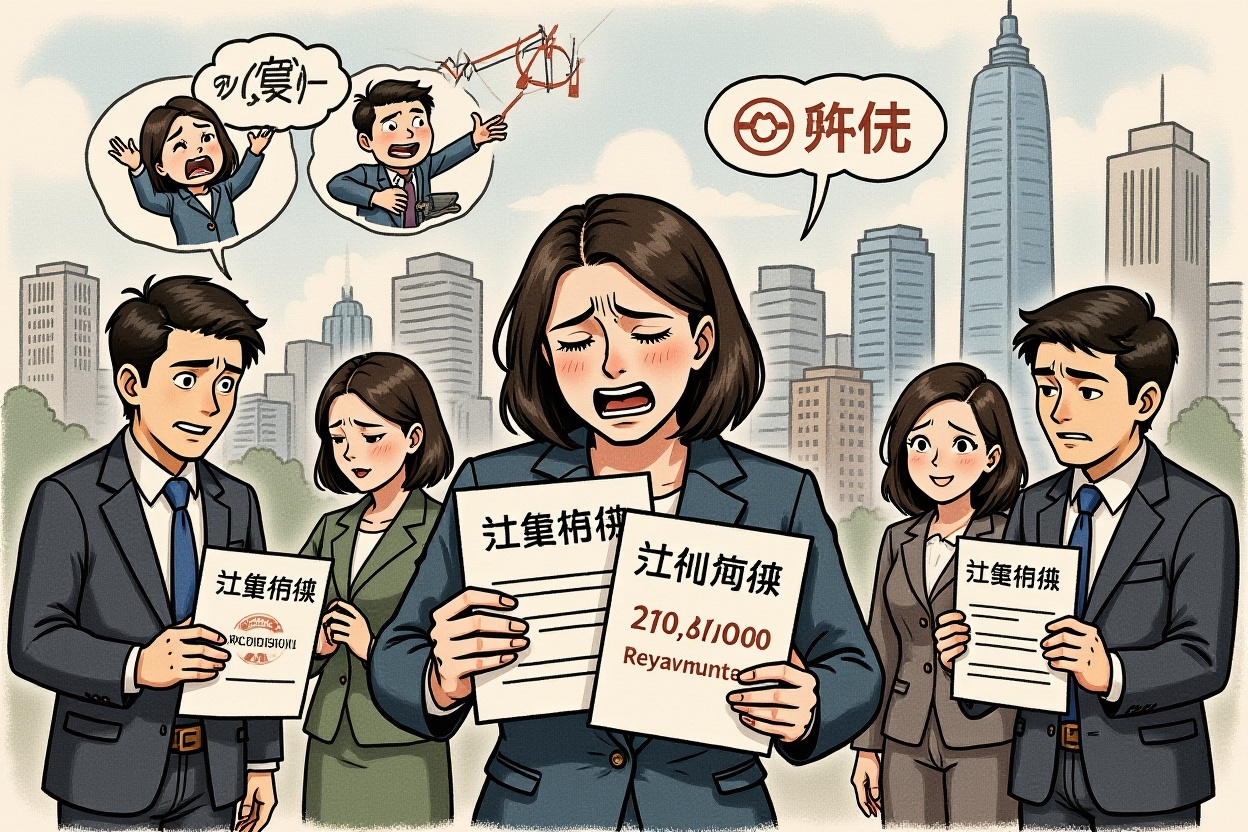
Exploring the deceptive practices of China’s mini-loan platforms where borrowers like Ms. Chen face repayments double their principal, highlighting regulatory gaps and market risks.
Executive Summary:
- Mini-loan platforms like Fenqile (分期乐) lure borrowers with low apparent rates but impose hidden fees, pushing effective annual rates to nearly 36%.
- Regulatory caps at 24% are often circumvented through opaque charges, leading to debt snowballing and financial distress for young consumers.
- Despite bans on campus lending, these platforms continue to target students, using aggressive debt collection tactics that violate privacy and cause mental health issues.
- The business model raises significant concerns for fintech investors, with potential regulatory crackdowns impacting companies like Lexin Group.
- Consumers and investors must scrutinize terms and advocate for stricter enforcement to protect vulnerable borrowers.
As Chinese consumers seek quick cash for holidays or emergencies, platforms offering mini-loans present an enticing solution. With promises of low interest and easy approvals, these services attract millions, particularly young adults. However, beneath the surface lies a troubling reality: borrowers often end up repaying double their principal due to hidden fees and extended terms. The recent case of Ms. Chen, who borrowed 13,674 yuan and faces a 26,859 yuan repayment, underscores the predatory nature of some mini-loans. This article delves into the mechanics of these loans, regulatory responses, and the broader implications for China’s fintech sector and international investors. Understanding the mini-loan trap is crucial for anyone involved in Chinese consumer finance.
The Allure and Reality of Mini-Loans
Mini-loans, characterized by small amounts and long repayment periods, seem designed for convenience but often lead to financial quagmires. These products, often marketed as “mini” or “micro” loans, appeal to those needing immediate funds without large commitments. However, the cumulative cost can be staggering, turning a small debt into a burdensome obligation.
Case Study: Ms. Chen’s Debt Spiral
In 2020-2021, Ms. Chen, a university student, took five loans from Fenqile (分期乐) totaling 13,674 yuan. With annual interest rates between 32.08% and 35.90%, and terms up to 36 months, her total repayment ballooned to 26,859 yuan. The initial appeal of low monthly payments, as low as 18.23 yuan per month for a 400 yuan loan, masked the cumulative cost. This case highlights how mini-loans exploit psychological biases, making borrowers focus on short-term affordability over long-term expense.
How Fees and Interest Compound
Platforms like Fenqile advertise rates as low as 8% but add membership fees,担保费 (guarantee fees), and credit assessment charges, pushing effective rates to the legal ceiling of 36%. For example, extending a 400 yuan loan over 36 months results in significant interest accumulation. The debt snowballs as fees are compounded over time, demonstrating how mini-loans use duration to maximize profit. According to complaints on Black Cat投诉平台 (Black Cat Complaint Platform), over 160,000 users report similar issues with hidden costs.
Regulatory Framework and Gaps
Chinese authorities have introduced measures to curb excessive lending costs, but enforcement remains a challenge. The regulatory landscape is evolving to address the risks posed by mini-loans and other high-cost credit products.
New Guidelines from Authorities
In December 2025, the 中国人民银行 (People’s Bank of China) and the 国家金融监管总局 (National Financial Regulatory Administration) issued the “小额贷款公司综合融资成本管理工作指引” (Guidelines for the Management of Comprehensive Financing Costs of Small Loan Companies). These directives cap comprehensive financing costs at 24% for new loans and aim to reduce them to within four times the one-year LPR by 2027. This move directly targets the mini-loan sector, aiming to protect consumers from usurious rates.
Enforcement Challenges
Despite regulations, platforms find loopholes. For instance, Fenqile has been accused of charging fees beyond the principal and interest, such as担保费 (guarantee fees) that are not clearly disclosed. Regulatory bodies must enhance monitoring to ensure compliance, as seen in cases where hidden fees evade caps. Local financial management agencies are tasked with correcting violations, but implementation varies across regions, creating gaps that mini-loan providers exploit.
The Persistent Shadow of Campus Lending
Mini-loans have roots in the controversial “校园贷” (campus loans), and traces remain despite regulatory bans. The targeting of students continues to be a contentious issue in China’s consumer finance market.
Historical Context and Evolution
Fenqile’s parent company, Lexin Group, founded by Xiao Wenjie (肖文杰), grew rapidly by targeting students with分期乐 (Fenqile) as a分期购物电商 (installment shopping e-commerce) platform. After a 2016 crackdown on校园贷 (campus loans) by regulators, it rebranded as a fintech firm but continues to face accusations. Over 922 complaints on Black Cat投诉平台 (Black Cat Complaint Platform) relate to campus loans, indicating that mini-loans still permeate educational institutions.
Current Complaints and Practices
Users report that promotion agents still operate on campuses, and aggressive debt collection involves harassing family and friends. The privacy policy of Fenqile allows sharing of sensitive data, such as身份证号码 (ID numbers) and人脸信息 (facial recognition data), with third parties like增信机构 (credit enhancement agencies). This exacerbates risks for young borrowers, leading to mental health issues and social stigma, as seen in Ms. Chen’s case where催收人 (debt collectors) contacted her loved ones.
Business Model and Consumer Protection
The profitability of mini-loans relies on opaque practices that undermine consumer rights. Understanding this model is key to assessing risks for both borrowers and investors.
Transparency Issues and Hidden Costs
Reports from 中国消费者 (China Consumer) show instances where actual repayments exceeded contracted amounts due to undisclosed fees. For example, Mr. Meng from Hangzhou paid 1,782 yuan extra on a 10,300 yuan loan, and沙某 (Mr. Sha) from Sichuan was charged 1,102.14 yuan in担保费 (guarantee fees) without clear disclosure. These mini-loans often bury costs in冗长的电子协议 (lengthy electronic agreements), making it difficult for consumers to fully understand their obligations.
Debt Collection Tactics and Privacy Concerns
Aggressive催收 (debt collection) methods, including public shaming and data breaches, violate privacy and cause mental distress. The 经济参考报 (Economic Reference News) investigation revealed that platforms collect extensive personal information, which is shared with partners, raising data security issues. For more details, refer to the 经济参考报 report on their website. This erosion of trust can damage brand reputation and attract regulatory scrutiny, impacting the sustainability of mini-loan businesses.
Market Implications and Investor Insights
For international investors, the mini-loan sector presents both opportunities and significant risks. As China’s fintech landscape matures, understanding these dynamics is crucial for informed decision-making.
Impact on Fintech Companies like Lexin
Lexin Group, listed on Nasdaq under ticker LX, faces reputational and regulatory risks. If enforcement of the new guidelines tightens, profitability could decline as mini-loans become less lucrative. Investors must assess the sustainability of business models reliant on high-interest mini-loans, considering potential shifts towards lower-margin, compliant products. The company’s stock performance may be volatile as news of regulatory actions or consumer complaints emerge.
Risks for International Investors
Understanding regulatory trends is key. As China pushes for consumer protection, companies adapting to lower margins may thrive, while others could face penalties. For instance, the case of Ms. Chen and similar mini-loan scandals can trigger investor caution. Diversification and due diligence are essential for navigating this volatile segment. Investors should monitor announcements from the 国家金融监管总局 (National Financial Regulatory Administration) and review company disclosures for compliance with interest rate caps.
The mini-loan phenomenon in China exposes critical vulnerabilities in consumer finance. While offering short-term relief, these loans often lead to long-term debt, driven by non-transparent fees and aggressive practices. Regulatory efforts are underway, but effective implementation is needed to protect borrowers, especially the youth. For investors, this signals a need for cautious engagement with fintech firms involved in high-cost lending. Moving forward, stakeholders should advocate for greater transparency, support regulatory enforcement, and prioritize ethical lending practices to ensure a healthier financial ecosystem. Stay informed on regulatory updates and market trends to make sound investment decisions in China’s evolving equity landscape.