



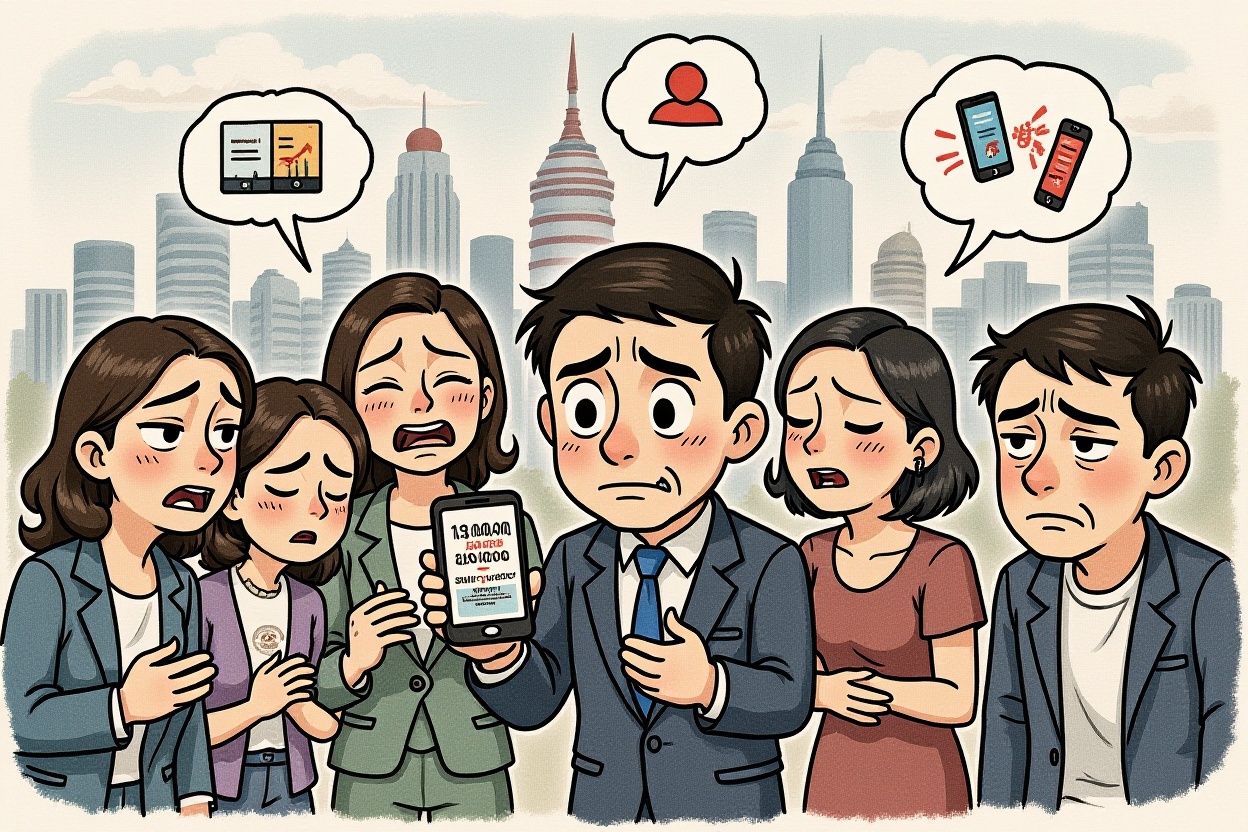
– Mini-loans from platforms like Fenqile (分期乐) are trapping young borrowers with effective APRs up to 36%, doubling debt through opaque fees and long tenures.
– Regulatory guidelines from the People’s Bank of China (中国人民银行) and National Financial Regulatory Administration (国家金融监督管理总局) cap costs at 24%, but enforcement gaps allow persistent high-interest lending.
– Fenqile’s historical ties to campus lending and current practices raise concerns about data privacy, aggressive collection, and consumer protection in China’s fintech sector.
– Investors must scrutinize lending portfolios for compliance risks, while borrowers face mental health impacts from debt spirals and privacy violations.
– The mini-loan model highlights systemic issues in consumer finance, urging tighter oversight and due diligence for sustainable market growth.
As Chinese consumers geared up for Lunar New Year festivities, a tempting offer flashed across smartphones: Fenqile (分期乐), a popular fintech platform, promised loan limits soaring to 50,000 yuan with just ‘one-click activation.’ For many cash-strapped youths covering red packets and travel, it seemed a lifeline. Yet beneath this veneer of convenience lies a harsh reality—mini-loans are plunging borrowers into crippling debt cycles. Recent headlines spotlight a case where a borrower, Ms. Chen (陈女士), faces repaying 26,859 yuan on a 13,674 yuan loan, underscoring how these seemingly small credits balloon through near-36% annualized rates. This incident has ignited scrutiny over China’s mini-loan sector, where financial technology masks predatory practices that threaten young earners and investor confidence alike. With regulatory winds shifting, understanding this debt trap is crucial for stakeholders navigating China’s volatile equity markets.
The Anatomy of a Mini-Loan Debt Spiral
Case Study: Ms. Chen’s 1,000-Day Ordeal
Ms. Chen (陈女士), a university student at the time, fell prey to Fenqile’s (分期乐) mini-loans between 2020 and 2021, borrowing 13,674 yuan across five transactions. What began as a 400-yuan expense stretched into a 36-month tenure, with promoters touting ‘low interest’ and ‘monthly payments as low as 18.23 yuan.’ However, the effective annual percentage rates (APRs) ranged from 32.08% to 35.90%, pushing her total repayment to 26,859 yuan—nearly double the principal. After defaulting in August 2022, she endured over 1,000 days of collection harassment, where agents contacted her family and friends, exacerbating mental health struggles like depression. This mini-loan trap exemplifies how elongated terms and high APRs ensnare borrowers, a pattern echoed in thousands of complaints on platforms like Black Cat Complaint (黑猫投诉).
Opaque Fee Structures and Snowballing Costs
Fenqile’s (分期乐) front-end advertising promises ‘annual rates as low as 8%’ and ‘20,000 yuan maximum loans,’ but hidden charges inflate costs. Consumers report unexplained fees for membership, guarantees, and credit assessments, often buried in lengthy digital agreements. For instance, a Zhejiang borrower, Mr. Meng (孟某), took a 10,300-yuan loan at a 6% stated rate but paid 1,782 yuan extra over 12 months, while a Sichuan user, Mr. Sha (沙某), was charged 1,102.14 yuan in undisclosed guarantee fees on a 49,880-yuan loan. These practices violate transparency norms, with the China Consumer Association (中国消费者协会) noting failures to disclose ancillary costs clearly. The mini-loan model thrives on this opacity, leveraging small, frequent borrowings to accumulate substantial profits from fees and interest.
Regulatory Crackdown on High-Cost Lending
New Guidelines from PBOC and NFRA
Enforcement Challenges and Market RealitiesDespite these rules, enforcement is uneven. Fenqile (分期乐), operated by Jishan Fenqile Network Microfinance Co., Ltd. (吉安市分期乐网络小额贷款有限公司), continues offering loans with effective APRs approaching 36%, as evidenced by Black Cat Complaint (黑猫投诉) data showing over 160,000 grievances. Regulators struggle to monitor digital platforms that obscure true costs through partner banks like Shanghai Bank (上海银行). Investors in parent company Lexin Fintech Holdings (乐信集团), listed on Nasdaq, face risks from potential fines or operational curbs. The mini-loan sector’s resilience highlights how profitability drives circumvention, urging tighter oversight for market stability.
Fenqile’s Evolution from Campus Lending to Fintech Giant
Historical Roots in Student Loans
Ongoing Consumer Complaints and Collection AbusesBeyond high interest, Fenqile faces allegations of violent collection. Over 20,000 complaints cite threats, privacy breaches, and ‘communication list bombing’—where agents harass borrowers’ contacts, including family and colleagues. The Economic Reference Report (经济参考报) investigated how Fenqile’s app collects extensive personal data, from ID photos to location info, and shares it with third parties like banks and credit enhancers. This mini-loan ecosystem exploits data for profit, eroding consumer trust and highlighting systemic risks in China’s fintech landscape.
The Human and Market Toll of Mini-Loan Practices
Privacy Violations and Mental Health Impacts
Mini-loans like those from Fenqile (分期乐) exact a heavy human cost. Borrowers report anxiety and depression from relentless collection, exacerbated by data misuse. The privacy policy allows sharing with ‘third-party merchants and payment partners,’ raising cybersecurity concerns. For young professionals, this debt stress undermines financial health, potentially reducing consumption and productivity—a drag on China’s economic vibrancy. As mini-loans proliferate, these social externalities demand attention from policymakers and investors assessing corporate governance.
Investment Implications for China’s Equity Markets
For institutional investors, mini-loan risks translate into volatility for fintech stocks. Lexin’s (乐信集团) reliance on high-margin lending could face headwinds from stricter enforcement, impacting earnings and share prices. Due diligence must evaluate compliance with the 24% APR cap and fee transparency. Moreover, sectors tied to consumer finance, like banking and technology, may see contagion if defaults spike. The mini-loan phenomenon underscores the need for ESG criteria that account for ethical lending, as sustainable practices gain traction globally.
Navigating the Future of Mini-Loans in China
Strategic Recommendations for Borrowers and Regulators
Borrowers should scrutinize loan agreements for hidden fees and opt for regulated products from traditional banks. Financial literacy initiatives can empower youth to avoid debt traps. Regulators must enhance monitoring of digital platforms, leveraging AI to detect APR violations and imposing stiffer penalties. Collaboration with groups like the China Banking and Insurance Regulatory Commission (中国银行保险监督管理委员会) can streamline enforcement, ensuring mini-loans serve genuine needs without exploitation.
Call to Action for Global Investors
As China refines its financial ecosystem, investors must prioritize due diligence on lending practices. Analyze fintech firms’ adherence to new caps and their exposure to consumer complaints. Diversify portfolios with companies championing transparency, and advocate for stronger governance in shareholder engagements. The mini-loan sector’s evolution offers lessons in balancing innovation with protection—a critical insight for capital allocation in emerging markets.
China’s mini-loan crisis, epitomized by Fenqile’s (分期乐) high-cost credits, reveals deep fissures in consumer finance. From Ms. Chen’s doubled debt to regulatory loopholes, the stakes are high for young borrowers and investors alike. While guidelines from the PBOC and NFRA signal progress, effective implementation will determine whether mini-loans become a sustainable tool or a persistent risk. For market participants, vigilance and ethical investment are paramount to navigating this dynamic landscape.