



Executive Summary
This analysis delves into the burgeoning yet controversial mini-loan sector in China, exemplified by platforms like Fenqile (分期乐). Key takeaways include:
– Mini-loans, often marketed with low upfront payments, frequently carry hidden fees and exorbitant effective annual percentage rates (APRs) that can approach 36%, far exceeding regulatory guidelines.
– Despite regulatory caps intended to limit comprehensive financing costs to 24% APR, enforcement remains inconsistent, allowing platforms to use complex fee structures to maintain high profitability.
– The industry’s roots in controversial campus lending practices persist, with ongoing reports of aggressive marketing to students and severe debt collection tactics that violate privacy and well-being.
– Consumer protection is undermined by opaque data practices, where extensive personal information is collected and shared with third parties, often without clear consent.
– For investors and market participants, these practices pose significant reputational, regulatory, and systemic risks within China’s consumer finance and fintech landscape.
The Hidden Debt Trap of Mini-Loans
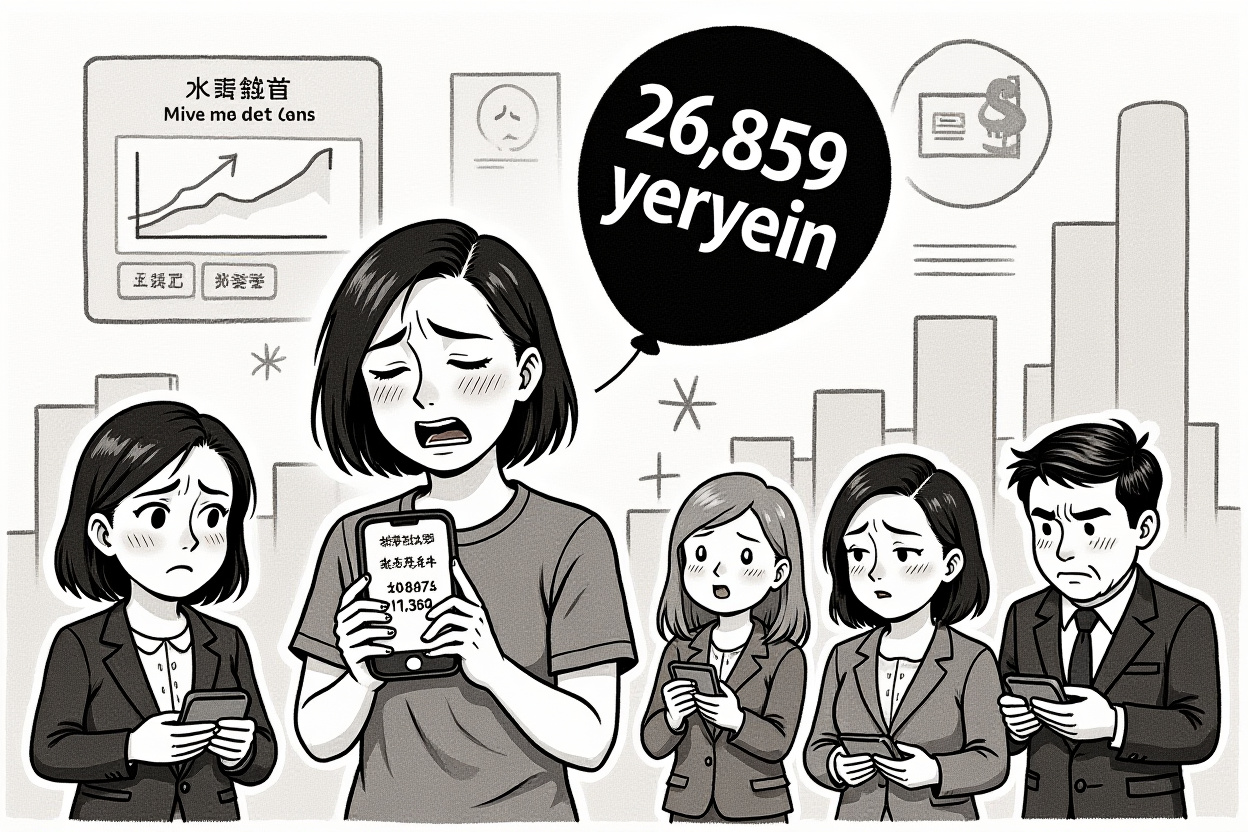
As Chinese families prepared for Lunar New Year expenditures—from red envelopes to family trips—many turned to easily accessible digital credit. Platforms like Fenqile (分期乐) advertised enticing credit limit increases, promising quick cash. However, beneath this facade of convenience lies a harsh reality: these so-called mini-loans are ensnaring young borrowers in cycles of debt that can double the original amount borrowed. The case of Ms. Chen, who borrowed 13,674 yuan and faces repayment of 26,859 yuan, is a stark illustration of how these high-interest mini-loans operate.
This phenomenon is not isolated. It highlights a systemic issue where affordable-looking installment plans mask true borrowing costs, pushing effective APRs to the legal brink and beyond. For international investors monitoring Chinese equity markets, understanding the mechanics and risks of these mini-loans is crucial, as they impact consumer health, regulatory scrutiny, and the valuation of related fintech firms.
The Opaque Cost Structure of Mini-Loans
The allure of mini-loans lies in their presentation: small amounts, stretched repayments, and seemingly manageable monthly installments. However, this structure often disguises a complex web of fees that inflate the true cost of borrowing to alarming levels.
Case Study: From 13,674 Yuan to 26,859 Yuan in Debt
Ms. Chen’s experience, as reported by Phoenix Finance (凤凰网财经), is a textbook example. While a university student, she took five loans from Fenqile (分期乐) between 2020 and 2021, totaling 13,674 yuan, for everyday expenses like a 400-yuan purchase spread over 36 months. The contracted APRs ranged from 32.08% to 35.90%, with promoters emphasizing “low interest” and “monthly payments as low as 18.23 yuan.” By August 2022, unable to repay, she defaulted, and her debt had ballooned to 26,859 yuan due to accruing interest and fees—nearly double the principal. The psychological toll was compounded by aggressive debt collectors who notified her family and friends, leading to significant distress.
How Fees and Terms Inflate the True Cost of Borrowing
Platforms like Fenqile (分期乐) often advertise headline-grabbing rates, such as “APR as low as 8%.” Yet, the actual comprehensive financing cost includes various opaque charges:
– Membership fees
– Guarantee fees (担保费)
– Credit assessment fees
– Service charges
These are frequently buried in lengthy electronic agreements, not prominently disclosed alongside the principal and stated APR. On consumer complaint platform Hei Mao (黑猫投诉), over 160,000 grievances target Fenqile (分期乐), with users alleging that these add-ons push effective APRs to the 36% region. For instance, one borrower reported a 36% APR and demanded a refund of all costs exceeding 24%, as per regulatory limits.
Real-world cases documented by China Consumer (中国消费者) reveal consistent patterns. In Hangzhou, a borrower took a 10,300-yuan loan at a 6% stated APR but ended up repaying 12,425.4 yuan—an extra 1,782 yuan. Similarly, in Sichuan, a borrower was charged an undisclosed 1,102.14-yuan guarantee fee on a larger loan. This lack of transparency transforms mini-loans from a financial tool into a debt trap, where the snowball effect of compounded costs overwhelms borrowers.
Regulatory Framework and Compliance Gaps
Chinese authorities have recognized the risks posed by high-cost lending, implementing rules to curb excessive interest rates. However, the mini-loan industry demonstrates significant gaps between regulation and practice, allowing platforms to navigate around caps.
PBOC and NFRA’s 24% APR Cap: Intent vs. Reality
On December 19, 2025, the People’s Bank of China (中国人民银行) and the National Financial Regulatory Administration (国家金融监管总局) jointly issued the Guidelines for the Management of Comprehensive Financing Costs of Small Loan Companies. These guidelines explicitly forbid new loans with a comprehensive financing cost exceeding 24% per annum and mandate that, in principle, all new loans should have costs reduced to within four times the one-year Loan Prime Rate (LPR) by the end of 2027. From 2026 onward, local financial regulators are required to correct violations, halt new lending, and incorporate dynamic credit reporting management for loans above 24%.
Despite this clear regulatory红线, platforms continue to operate at the edge. The guidelines target “comprehensive financing cost,” but mini-loan providers often disaggregate costs into various fees, making it challenging for borrowers and regulators to assess the true APR. This evasion tactic allows the effective cost of mini-loans to remain high, often hovering near the 36% mark that was previously a common judicial upper limit for private lending.
Enforcement Challenges and Platform Evasion Tactics
Enforcement is fragmented across local jurisdictions, and the rapid innovation in fee structures outpaces regulatory oversight. Platforms argue that fees are for “services” like credit assessment or担保, not interest, thus technically complying with APR caps while still extracting high revenue. This loophole is central to the business model of many mini-loan operators, who rely on volume and high effective yields to sustain profitability. For investors, this creates a regulatory risk premium; any sudden crackdown or stricter interpretation of the rules could significantly impact the earnings of companies like Lexin Group (乐信集团), the parent of Fenqile (分期乐).
The Lingering Shadow of Campus Loans
The mini-loan industry’s origins are deeply tied to the controversial campus lending sector, which faced severe regulatory backlash in the mid-2010s. Despite rebranding efforts, ethical and operational shadows remain, affecting consumer trust and regulatory perception.
Lexin Group’s Evolution from Student Lending to Fintech
Fenqile (分期乐) is operated by Jianxi Fenqile Network Small Loan Co., Ltd. (吉安市分期乐网络小额贷款有限公司), but the ultimate controller is Nasdaq-listed Lexin Group (乐信集团). The core entity, Shenzhen Fenqile Network Technology Co., Ltd. (深圳市分期乐网络科技有限公司), was founded in 2013 by entrepreneur Xiao Wenjie (肖文杰), who now leads Lexin Group. The platform claims partnerships with licensed institutions like Shanghai Bank (上海银行) to target “credit consumption populations.”
Lexin’s growth story is emblematic of China’s fintech boom. It began as a pioneer in installment e-commerce, selling its first smartphone on credit and scaling to trillion-yuan transaction volumes. However, this early expansion was fueled by lending to university students—a practice that drew regulatory ire. After a 2016 crackdown on “campus loans” (校园贷), Lexin pivoted, restructuring and listing in the U.S. in 2017 to present itself as a legitimate fintech player. Yet, the legacy of those practices persists.
Ongoing Complaints and Ethical Concerns in Lending Practices
Searching “Fenqile campus loan” on Hei Mao (黑猫投诉) yields over 922 complaints, indicating that the platform still engages with student borrowers. Reports include:
– Promoters conducting on-campus marketing stalls
– Loans issued to individuals who identified as students at the time of borrowing
– Over 20,000 complaints related to violent debt collection, including harassment of family, colleagues, and even village heads
These tactics, such as “blasting” the borrower’s contact list (爆通讯录), violate privacy and can lead to severe psychological distress, as seen in Ms. Chen’s case. For a industry professing to serve young adults, these practices undermine financial inclusion goals and attract regulatory scrutiny that could destabilize business models.
Data Privacy and Consumer Protection Issues
Beyond high costs, mini-loan platforms engage in extensive data collection and sharing, raising significant consumer protection concerns. This aspect is critical for understanding the full ecosystem risk.
Collection and Sharing of Personal Information
As investigated by Economic Reference (经济参考报), using Fenqile (分期乐) software requires agreeing to privacy terms that authorize the collection of dozens of personal data points, including:
– Name and ID card details
– Bank card information
– Income and employment data
– Facial recognition biometrics
– Geolocation and address details
This information is not retained solely by the platform; privacy policies state it is “shared” with third parties such as merchants, payment partners,清算 banks, credit enhancement agencies, and industry self-regulatory bodies. The lack of granular consent and transparency means borrowers often unknowingly trade their data for credit access.
Impact of Aggressive Debt Collection on Borrowers
The integration of data collection with collection practices creates a potent tool for coercion. Debt collectors leverage accessed contact lists to apply social pressure, exacerbating the borrower’s financial and mental health crisis. This complete chain—from enticing loan offers to invasive data harvesting to relentless collection—traps consumers, eroding trust in digital financial services. For policymakers, this highlights the need for stronger data governance frameworks alongside lending regulations.
Market Implications for Investors and Stakeholders
The mini-loan sector’s practices have broad ramifications for China’s financial markets, affecting everything from consumer debt levels to the valuation of fintech equities. International investors must weigh these factors carefully.
Risks and Opportunities in China’s Consumer Finance Sector
On one hand, mini-loans tap into a genuine demand for flexible credit among young, digitally-native consumers. The addressable market is vast, and responsibly managed, such products could enhance financial inclusion. However, the current model, dominated by high-interest mini-loans, carries substantial risks:
– Regulatory intervention: Tighter enforcement of cost caps or data rules could compress margins and force business model overhauls.
– Reputational damage: Public backlash and media exposés, like the recent Weibo (微博) trending incident, can erode brand value and user acquisition.
– Systemic risk: Widespread over-indebtedness among young borrowers could dampen consumer spending and increase non-performing loans, affecting broader economic indicators.
Companies like Lexin Group (乐信集团) face the challenge of balancing growth with compliance. Their stock performance may become increasingly sensitive to regulatory announcements and consumer sentiment shifts.
The Role of Fintech in Financial Inclusion vs. Exploitation
Fintech, at its best, can democratize access to credit. However, the mini-loan example shows how innovation can veer into predatory territory when oversight is lax. For investors, discerning between sustainable platforms and those reliant on exploitative practices is key. Metrics to watch include:
– Transparency in pricing and fee disclosure
– Adherence to regulatory cost thresholds
– Ethical collection practices and data handling
– Demographic breakdown of borrowers to avoid over-exposure to vulnerable groups like students
Engagement with company management on these points can provide insights into long-term viability and ESG (Environmental, Social, and Governance) alignment.
Synthesizing the Mini-Loan Dilemma
The mini-loan industry in China represents a critical junction in the evolution of consumer finance. While offering convenience, its current trajectory—marked by opaque fees, high effective interest rates, and aggressive tactics—poses severe risks to young borrowers and systemic stability. Regulatory frameworks are evolving, but enforcement must catch up to close gaps exploited by platforms.
For investors and financial professionals, this underscores the importance of due diligence beyond surface-level fintech narratives. Scrutinizing the underlying economics of lending models, compliance records, and consumer protection measures is essential when evaluating exposure to Chinese consumer finance equities. The call to action is clear: stakeholders should advocate for and support transparent, fair lending practices that align with regulatory intent, ensuring that mini-loans serve as a tool for empowerment, not a trap for financial distress. As the market matures, those who prioritize sustainable and ethical operations will likely emerge as resilient players in China’s dynamic financial landscape.