



Executive Summary
Before diving into the details, here are the key takeaways from this analysis of China’s mini-loan sector:
– Mini-loans, often marketed as low-cost, convenient credit, are ensnaring young Chinese borrowers in debt traps, with documented cases requiring repayment of nearly double the principal amount due to hidden fees and extended terms.
– Platforms like Fenqile (分期乐) are pushing effective annualized rates to the regulatory brink of 36%, despite new rules capping comprehensive financing costs at 24%, highlighting significant compliance and enforcement gaps.
– The legacy of campus lending persists, with reports of aggressive on-campus promotion and violent debt collection, raising serious consumer protection and data privacy concerns.
– For investors, the sustainability of fintech business models reliant on high-margin consumer loans is under threat as regulatory scrutiny intensifies and social backlash grows, potentially impacting valuations and market stability.
The Allure and Peril of Easy Credit in China
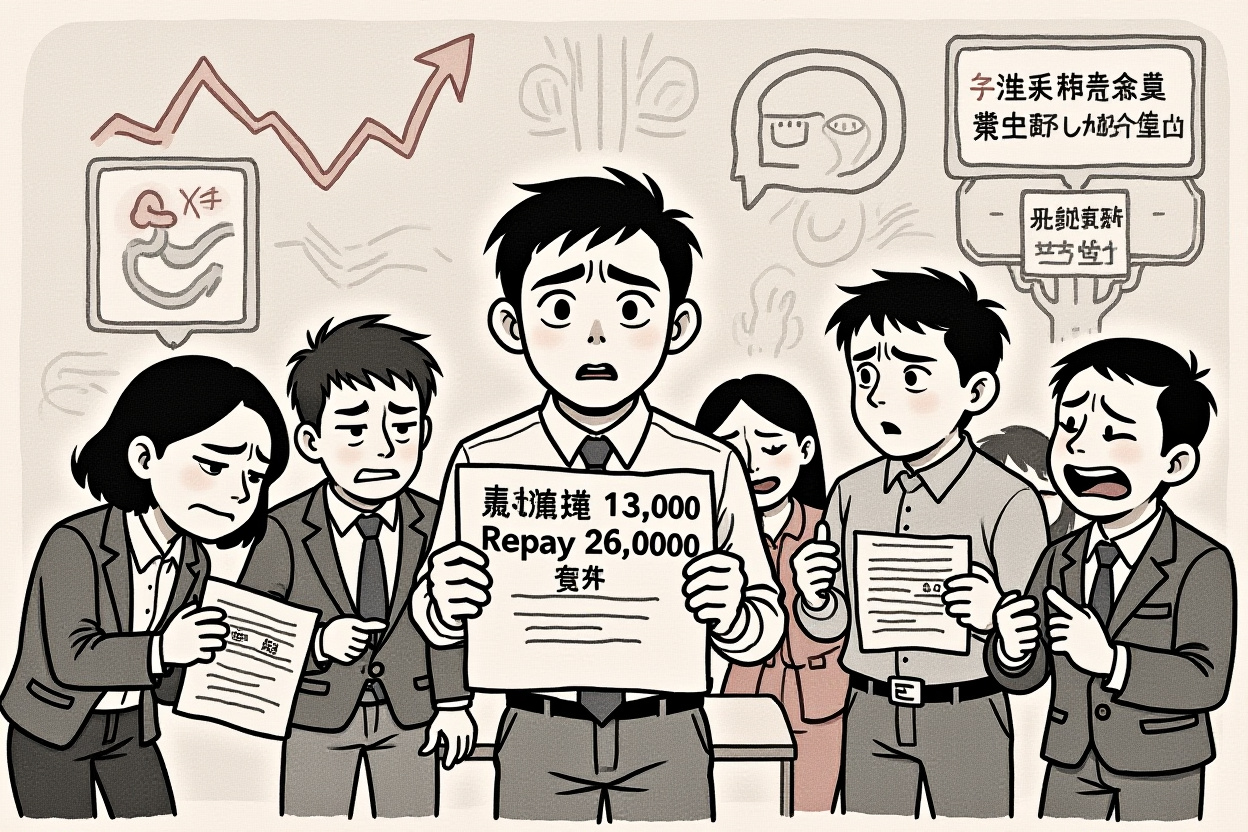
As Chinese consumers, particularly the youth, face mounting financial pressures from holiday spending to daily expenses, the promise of quick cash from digital lenders has become increasingly tempting. Platforms dangle offers of “low interest” and “minimal monthly payments” to attract users, but the reality is far grimmer. This mini-loan phenomenon, exemplified by cases where borrowing 13,000 yuan requires repaying 26,000 yuan, is not just a personal finance issue; it’s a systemic risk eroding financial health and challenging regulatory frameworks. The proliferation of these mini-loans in China underscores a critical juncture for the consumer credit market, where convenience masks crippling debt cycles.
Deconstructing the Mini-Loan Debt Trap
At the heart of the crisis are lending practices that transform small, seemingly manageable loans into overwhelming financial burdens. By extending repayment periods and layering on opaque fees, lenders ensure that borrowers pay far more than they initially anticipated.
Case Study: Ms. Chen’s (陈女士) Harrowing Experience with Fenqile
Ms. Chen (陈女士), a university student at the time, fell into the mini-loan web through Fenqile, lured by offers to split even a 400 yuan purchase over 36 months. Between 2020 and 2021, she borrowed a total of 13,674 yuan across five loans, with annual interest rates ranging from 32.08% to 35.90%. The sales pitch of “monthly payments as low as 18.23 yuan” masked the true cost: after stopping payments in August 2022 due to inability to repay, she now faces a total repayment demand of 26,859 yuan—nearly double the principal. Her case, which sparked public outcry after trending on Weibo, illustrates how mini-loans in China can snowball into unmanageable debt, compounded by aggressive collection tactics that harassed her family and friends, leading to severe psychological distress.
The Anatomy of Opaque Fee Structures
Beyond stated interest rates, platforms like Fenqile often impose additional charges that inflate costs. Complaints on platforms like Black Cat Complaint reveal a pattern:
– Unclear membership fees, guarantee fees, and credit assessment fees added without transparent disclosure.
– For example, one borrower reported a comprehensive annualized rate of 36%, while another cited a 1,450 yuan “credit assessment fee” atop agreed interest.
– Investigations by China Consumer journal found instances where actual repayments exceeded contract calculations by thousands of yuan, as seen with Mr. Meng (孟某) from Hangzhou and Mr. Sha (沙某) from Sichuan, who faced hidden guarantee fees buried in lengthy electronic agreements.
These practices effectively push the true cost of mini-loans to the legal limit, exploiting regulatory grey areas and lack of consumer awareness.
Regulatory Crackdowns and Persistent Loopholes
Chinese authorities have stepped up efforts to rein in predatory lending, but enforcement remains a challenge as lenders adapt their strategies to maintain profitability.
The 24% Cap and LPR Linkage Directive
In December 2025, the People’s Bank of China (中国人民银行) and the National Financial Regulatory Administration (国家金融监督管理总局) jointly issued the “Guidance on the Management of Comprehensive Financing Costs for Small Loan Companies,” which explicitly prohibits new loans with comprehensive costs exceeding 24% annualized. It further mandates that by the end of 2027, all new loans should align with four times the one-year Loan Prime Rate (LPR). From 2026, local financial authorities must correct violations, halt new lending, and incorporate oversight into dynamic credit reporting. This move aims to protect borrowers from usurious rates prevalent in the mini-loan sector.
Innovative Evasion and Compliance Gaps
Despite these rules, platforms circumvent caps through fee diversification and term extension. For instance, Fenqile’s marketing promotes “annual rates as low as 8%,” yet user experiences reveal effective rates nearing 36% when ancillary charges are included. The gap between regulation and reality highlights the need for stricter monitoring and consumer education. As mini-loans continue to proliferate, regulators face the uphill task of ensuring transparency, especially with digital contracts that often obscure critical terms.
The Unshakable Legacy of Campus Lending
Fenqile’s operator, Lexin Group (乐信集团), founded by Xiao Wenjie (肖文杰), built its early growth on campus lending, a practice heavily restricted since 2016. However, evidence suggests that mini-loans still target students, perpetuating risks.
Historical Roots and Current Manifestations
Lexin’s origins as a campus-focused分期乐 brand allowed rapid expansion, but regulatory crackdowns forced a rebranding towards broader fintech. Yet, complaints persist: over 922 entries on Black Cat Complaint reference “campus loans” with Fenqile, detailing on-campus promotion booths and loans issued to students. This indicates that the mini-loan model remains intertwined with vulnerable young borrowers, despite public assurances of compliance.
Aggressive Collection and Social Harm
With over 20,000 complaints citing violent debt collection—including threats, privacy breaches, and harassment of family and colleagues—the social toll is severe. Such tactics not only violate regulations but also exacerbate mental health issues among borrowers, as seen in Ms. Chen’s case. The persistence of these methods underscores a culture of impunity in parts of the industry, where profit priorities override ethical lending standards.
Data Privacy and Consumer Vulnerability
The mini-loan ecosystem extends beyond lending to extensive data harvesting, raising alarms about consumer rights in China’s digital finance space.
Information Exploitation and Sharing Practices
As reported by Economic Reference News, using platforms like Fenqile requires consent to collect dozens of personal data points—from ID photos to location info—which are then shared with third parties like payment processors and credit enhancers. This creates a cycle where borrowers, from the moment they click “agree,” lose control over their financial and personal data, potentially leading to unauthorized use or leakage.
Legal Recourse and Protection Measures
Consumers often lack recourse due to complex contracts and limited awareness. However, legal experts advise borrowers to:
– Scrutinize all fees and terms before signing digital agreements.
– Report violations to local financial bureaus or consumer protection agencies, citing specific regulations like the 24% cap.
– Seek legal action for unauthorized fees or harassment, as precedents from media exposures show potential for restitution.
Strengthening data protection laws and enforcement could mitigate these risks, but current gaps leave many exposed in the mini-loan market.
Market Implications for Investors and Fintech Stability
The turmoil surrounding mini-loans has broader ramifications for China’s financial markets, affecting investor confidence and sectoral growth.
Business Model Sustainability Under Scrutiny
For companies like Lexin Group, reliance on high-margin mini-loans faces headwinds from regulatory tightening and social backlash. As authorities clamp down on costs and collection practices, profitability may decline, impacting stock performance—Lexin is listed on Nasdaq, making it vulnerable to investor sentiment shifts. The mini-loan sector’s evolution will test whether fintech innovators can pivot to sustainable, lower-cost models without exploiting borrowers.
Investor Due Diligence and Forward Outlook
Institutional investors and fund managers must factor in:
– Regulatory risks: Non-compliance could lead to fines, operational restrictions, or delisting threats.
– Reputational damage: Consumer boycotts or media scandals can erode brand value and customer trust.
– Market opportunities: As reforms progress, ethically aligned lenders may gain competitive advantage, but short-term volatility is likely.
Monitoring developments from bodies like the People’s Bank of China (中国人民银行) is crucial for anticipating policy shifts that could reshape the mini-loan landscape.
Navigating the Future of Consumer Credit in China
The mini-loan crisis reveals deep-seated issues in China’s push for financial inclusion, where accessibility has sometimes come at the cost of consumer protection. While regulations are stepping up, effective implementation requires concerted effort from regulators, platforms, and consumers themselves. For young borrowers, the lesson is clear: scrutinize offers, understand true costs, and seek alternatives like savings or formal bank loans. For investors, diligence on compliance and social impact is now non-negotiable in assessing fintech stocks. As China aims to balance innovation with stability, the resolution of the mini-loan dilemma will serve as a bellwether for the health of its consumer finance sector. Stay informed by following regulatory announcements and engaging with expert analyses to make prudent decisions in this dynamic market.