



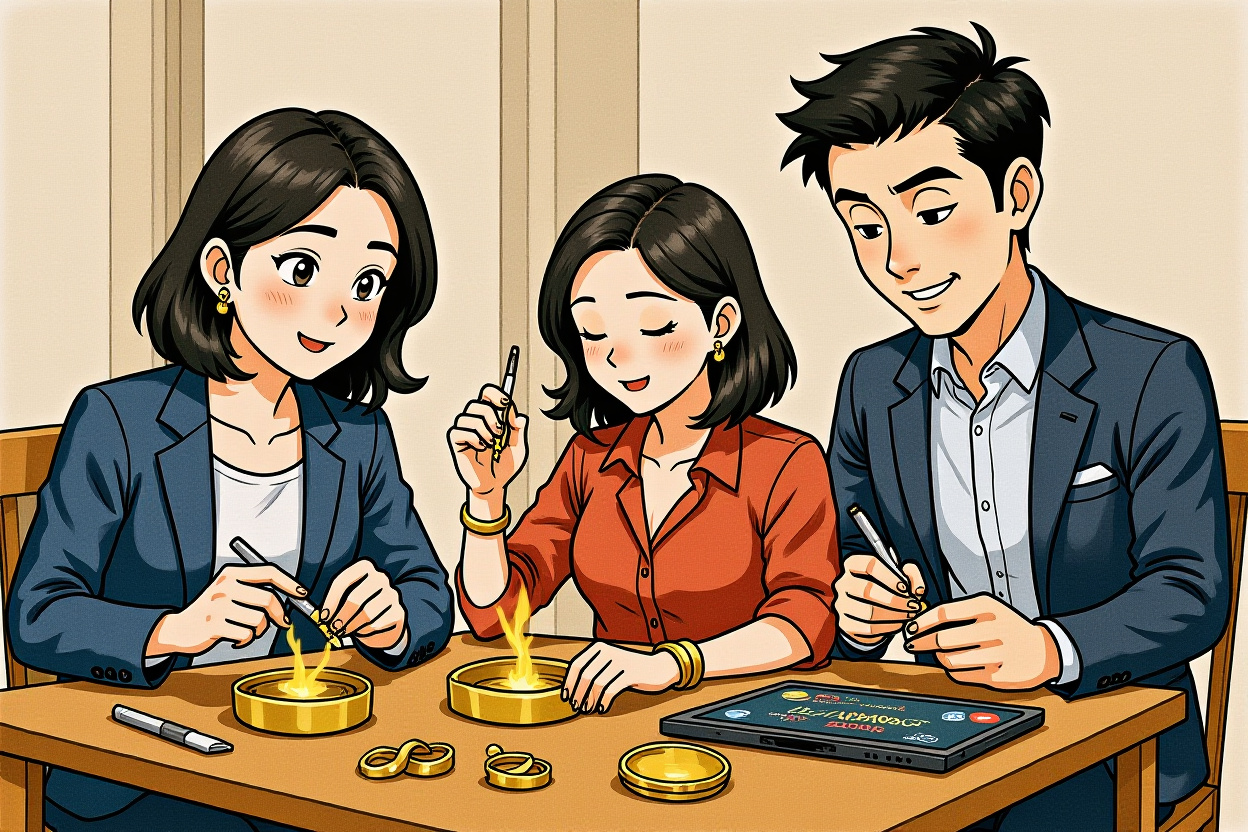
The global gold market is experiencing a historic rally, and China is at the epicenter of a fascinating consumer and cultural phenomenon. Overnight on March 27th (U.S. Eastern Time), spot gold and silver prices skyrocketed, with gold briefly surpassing $2,255 per ounce. By March 28th, this surge rippled through China’s domestic market, pushing the per-gram retail price of pure gold jewelry from major brands perilously close to the 1,400 yuan psychological barrier. This price explosion has not only captivated investors but has also ignited an unexpected trend: a surge in do-it-yourself gold crafting, or “home goldsmithing,” particularly among younger generations seeking value and personalization. However, industry experts are sounding the alarm, urging caution as this seemingly thrifty and creative hobby carries significant financial and safety risks that many enthusiasts are dangerously underestimating.
Executive Summary: Key Takeaways from the Gold Rush
- Record-High Prices: Major Chinese gold jewelry brands, including Lao Feng Xiang (老凤祥) and Chow Sang Sang (周生生), have seen per-gram prices surge by 27-32 yuan in a single day, nearing 1,400 yuan/gram, driven by strong international momentum and robust domestic demand.
- Youth-Driven DIY Trend: A booming “home goldsmithing” movement, fueled by social media tutorials with billions of views, is attracting young consumers looking to repurpose old jewelry and avoid high brand premiums, blending financial prudence with personalized fashion.
- Professional Revival: The trend is revitalizing the traditional goldsmithing trade, creating new career paths for young artisans, particularly “post-00s” generations, who combine technical skill with modern design aesthetics.
- Significant Hidden Risks: Experts from bodies like the Ningbo Product Quality Inspection Institute warn that amateur home goldsmithing poses severe dangers, including toxic fume inhalation from impure metals, fire hazards from high-temperature equipment, and substantial, unexpected financial loss due to gold wastage from operational errors.
- Market Implications: This trend reflects a broader shift in Chinese consumer behavior towards value-conscious, experiential, and emotionally resonant investments, presenting both challenges and opportunities for the traditional jewelry retail sector and ancillary industries.
The Spark: Analyzing China’s Gold Price Surge
The recent vertical climb in gold valuations is a global story with profound local implications. The overnight spike on international markets immediately translated into aggressive price adjustments by China’s leading jewelry retailers on March 28th. This rapid pass-through highlights the sensitivity of the domestic market to global benchmarks and the intense competition among brands to manage margins amid volatile input costs.
Retail Price Adjustments at a Glance
Data from brand announcements revealed sharp single-day increases:
- Lao Feng Xiang (老凤祥): Quoted 1,396 yuan/gram, up 28 yuan from 1,368 yuan.
- Lao Miao Gold (老庙黄金): Quoted 1,397 yuan/gram, up 32 yuan from 1,365 yuan.
- Chow Sang Sang (周生生): Quoted 1,391 yuan/gram, up 27 yuan from 1,364 yuan.
This price environment creates a powerful financial incentive for consumers to reconsider how they interact with gold. The high brand premium embedded in finished jewelry—covering design, marketing, and retail overhead—becomes increasingly difficult to justify for cost-conscious buyers, especially the younger generation. This economic reality is the primary fuel for the home goldsmithing trend, as individuals seek to extract more value from their existing gold holdings or new purchases by taking production into their own hands.
A New Generation’s Golden Revolution: The Rise of DIY Goldsmithing
Far from being a mere financial calculation, the move towards DIY gold crafting represents a significant cultural and consumer shift. The ancient craft of goldsmithing, involving melting, casting, shaping, and polishing raw gold into rings, bracelets, and necklaces, is experiencing a remarkable renaissance. On Chinese social media platforms, topics related to “打金” (gold crafting) have amassed over 1.3 billion views, creating a vast community of aspiring artisans and curious onlookers.
Value, Memory, and “New Guochao”
Professional goldsmiths report that crafting a basic piece takes one to three hours, with labor fees ranging from 10 to 40 yuan per gram. More complex techniques like非遗花丝 (intangible cultural heritage filigree) or手工錾刻 (hand chasing) command higher fees. For many young consumers, this model offers a compelling alternative. It allows them to repurpose old, perhaps outdated family heirlooms into modern designs, preserving the metal’s intrinsic value and emotional memory while aligning with contemporary aesthetics. This process transforms gold from a static asset into an active participant in personal narrative, creating what consumers describe as a “new Guochao” trend that merges aesthetic appeal, sentimental value, and financial utility.
Wang Huiqun (王惠群), Secretary-General of the Shanghai Gold & Jewellery Trade Association, advises consumers to exercise due diligence: “Goldsmithing involves specific processing techniques and environmental requirements. It’s important to choose a larger-scale workshop, observe the craftsman’s skills, ask questions upfront about anything unclear, and reach a formal agreement.” This professional guidance, however, is often bypassed by those venturing into home goldsmithing.
Professional Craftsmen Adapt: The ‘Post-00s’ Reshape an Ancient Trade
The consumer demand surge is simultaneously revitalizing the professional goldsmithing trade, attracting a new wave of young talent. Shop owners note that recognizing the trend’s growth three years ago, they established businesses that now employ teams where the goldsmiths are predominantly “post-00s” (born after 2000), with the oldest being just 28. This youthful influx brings heightened creativity, better understanding of client preferences, and a fresh perspective to a traditional skill set.
A Viable Career Path in a Creative Economy
The barrier to entry in this field appears relatively low, with no strict age or academic degree requirements, making it accessible to recent graduates and career-changers alike. Compensation is attractive for skilled labor. According to Zhou Baolin (周宝林), store manager at a gold workshop in Shanghai’s Yuyuan area, “In the goldsmithing industry, the basic monthly salary is around 10,000 yuan. For technicians with superior skills, like master engravers, the salary can generally reach about 15,000 yuan per month.” This economic viability, combined with creative satisfaction, is carving out a genuine new professional track, demonstrating how traditional industries can evolve to meet modern market demands.
The Allure and Peril of Home Goldsmithing
While professional services thrive, a parallel and riskier movement has captured the public imagination: fully amateur home goldsmithing. Social media platforms are flooded with tutorials and success stories, promoting the idea that with a basic kit purchased online for 100-200 yuan, anyone can become their own jeweler. These kits typically include long-nose pliers, torches, files, borax, molds, and crucibles. The process, as detailed in videos, involves steps like preparing a mold with oil-based clay, heating with a torch, and carefully casting the molten metal.
A Trail of Failed Attempts and Financial Loss
Despite the polished tutorials, the reality is often starkly different. Staff at a Beijing goldsmithing shop report a noticeable increase in customers seeking help after failed home attempts. The fantasy of saving on labor costs quickly dissolves when faced with the technical precision required. Common failures include improperly prepared石膏模具 (plaster molds) causing castings to shatter, or焊接 (soldering) errors leading to broken pieces. Each mistake results in gold being trapped in molds, lost as filings, or otherwise rendered unrecoverable. The subsequent cost of professional repair often far exceeds the original labor fee one aimed to avoid, turning a quest for savings into a net financial loss. This property damage is the most common pitfall for those experimenting with home goldsmithing.
Expert Warnings: Beyond Financial Risk Lies Physical Danger
The risks extend far beyond wasted money. Wang Chao (王超), Director of the Gold and Jewelry Inspection Center at the Ningbo Product Quality Inspection Institute, provides a sobering technical assessment. While conceding that home goldsmithing is theoretically possible for highly skilled individuals, he highlights grave concerns.
“Gold’s melting point is over 1,000 degrees Celsius. Operating at such high temperatures at home certainly carries risks,” Wang states. He recommends strict safety measures: operating in a ventilated area, wearing thick gloves, using long tongs, and maintaining distance from the heat source. However, he emphasizes the unpredictability of the materials themselves: “You need to consider the purity of the metal. If it’s mixed with other, more volatile metals—for example, if there’s mercury present—when heated, these inferior metals, with lower melting points, may vaporize. In a poorly ventilated environment, this could easily lead to poisoning.”
Furthermore, the quality of consumer-grade molds is inconsistent, often containing defects that only become apparent after the casting fails. The combination of high-risk equipment, toxic material hazards, and low-probability success rates makes amateur home goldsmithing a potentially dangerous undertaking.
Navigating the Golden Frontier: Insights for Investors and Consumers
The convergence of soaring gold prices and the DIY crafting trend presents a unique moment for market observers. For investors, it underscores the deep, multifaceted demand for gold in China, not just as a central bank asset or investment vehicle but as a deeply ingrained cultural and personal store of value. The willingness of consumers to engage physically with the metal suggests a confidence in its long-term worth, potentially providing a floor for prices even amid volatility.
For consumers and financial professionals advising them, the key is balanced rationality. The desire to optimize the value of gold holdings is prudent. Repurposing old jewelry through a reputable professional service is a sensible strategy that marries financial logic with personal expression. However, the leap to unguided home experimentation is fraught with peril. Director Wang Chao’s advice is definitive: the public should “rationally view the possibilities and limitations of home goldsmithing.” The initial low cost of tools is a deceptive lure, masking the high likelihood of precious metal loss and personal injury.
As gold continues its prominent role in both global portfolios and local fashion trends, understanding the full spectrum of its market—from futures trading to social media crafting videos—becomes essential. The current home goldsmithing craze is a vivid case study in how financial markets, consumer behavior, and digital culture intersect, creating new opportunities while resurrecting ancient risks. For those looking to participate, the safest path forward is to respect the metal, value the craft, and partner with accredited professionals who can transform gold’s potential into both beautiful adornment and sound financial practice.