



A National Stage for a Nascent Industry
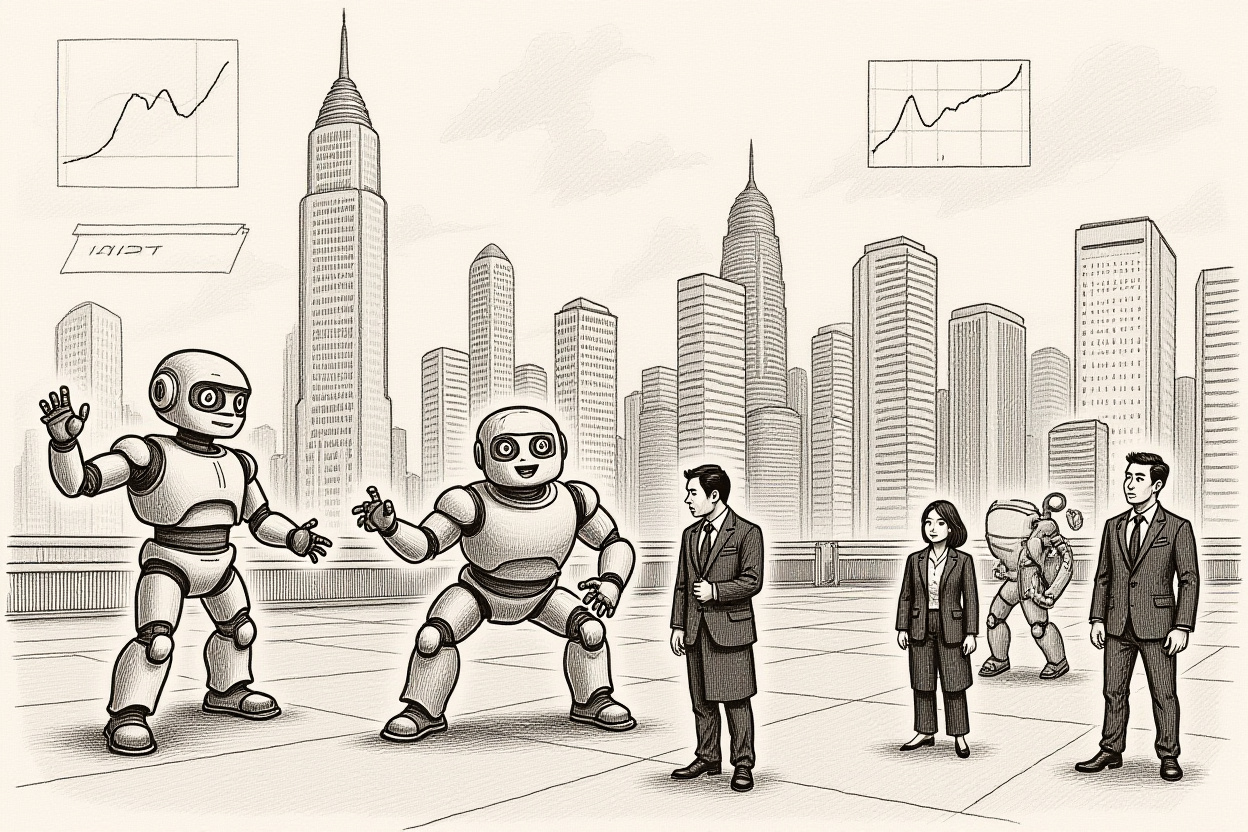
For decades, the China Central Television (CCTV) Spring Festival Gala has been more than just a variety show; it is a cultural institution and a powerful barometer for national technological trends. The 2026 edition solidified this role, transforming from a mere showcase into the ultimate test ground for China’s burgeoning embodied intelligence sector. The gala’s central stage was no longer reserved solely for celebrity performers but was shared with a new cast: humanoid robots from four of the country’s most prominent startups.
This collective debut marked a pivotal moment. It signaled a strategic push to move cutting-edge robotics from isolated labs and niche exhibitions into the living rooms of hundreds of millions of viewers. The spectacle, however, is merely the opening act. The real drama—and the critical challenge for investors—unfolds after the lights dim, as these companies must prove their technologies can survive and thrive in the unforgiving arena of real-world applications. The gala is not just a performance; it is the opening salvo in a high-stakes battle for commercial viability and market dominance.
The 2026 Gala’s Robotic Lineup: A Strategic Showcase
The 2026 Gala featured a curated “robot troupe” that represented the vanguard of China’s domestic efforts. Their participation was a state-endorsed signal of the sector’s strategic importance.
– Unitree Robotics (宇树科技): Building on its breakout 2025 Gala appearance, Unitree returned with a highly symbolic performance. It partnered with the renowned Henan Tagou Martial Arts School for a program titled “Wu BOT,” blending traditional Chinese martial arts with robotic precision. Its designation as the “Gala Robot Partner” underscored its leading market position.
– Songyan Power (松延动力): Appearing in a comedy sketch titled “Grandma’s Favorite” with veteran comedians, its role as the “Gala Humanoid Robot Partner” highlighted a focus on interactive, companion-like applications.
– Magic Atom (魔法原子): Supporting a musical act called “Intelligent Creation of the Future,” its title of “Gala Intelligent Robot Strategic Partner” suggested a broader AI and strategic systems focus.
– Galaxy General (银河通用): Featuring in a micro-movie with top comedians, its specific designation as the “Gala Designated Embodied AI Model Robot” pointed to a core competency in large language models and AI-driven mobility.
The nuanced differences in their official titles—Partner, Humanoid Partner, Strategic Partner, Designated Model—were not arbitrary. They revealed a deliberate narrative, showcasing a diverse ecosystem with varying technical pathways and strategic positioning, rather than a monolithic industry.
Beyond the Spotlight: The Gala’s Dual Mission for Embodied AI
The value of the CCTV Gala for these companies extends far beyond a few minutes of prime-time exposure. In the pre-dawn of an industry projected by IDC to see user spending in China reach $77 billion by 2030, with a staggering 94% CAGR, the gala serves two critical, market-shaping functions.
First, it acts as a mass-scale public relations and education campaign. For the average consumer, sophisticated robotics can seem abstract or intimidating. By integrating robots into familiar, celebratory programming, the gala normalizes their presence and demystifies the technology. It builds public acceptance, which is a prerequisite for future consumer adoption.
Second, and more crucially for the professional audience of investors and corporate clients, the gala serves as a high-stakes credibility test. A flawless performance on live national television, with its complex choreography, unpredictable variables, and zero tolerance for major failure, is a powerful testament to a platform’s basic stability, coordination, and reliability. It provides a level of validation that a controlled lab demo or a corporate roadshow cannot match. For venture capital firms, supply chain partners, and potential B2B customers, a successful Gala appearance de-risks the perception of the technology and the company behind it.
The Investment Thesis: Validation and Visibility
From an investment perspective, securing a slot on the Gala is a significant non-financial milestone. It indicates several positive attributes:
– Technical Maturity: The company has moved past the pure R&D phase to possess a robust, stage-ready platform.
– Operational Excellence: It can execute complex, time-sensitive projects under extreme pressure.
– Strategic Alignment: Its vision and capabilities are recognized and endorsed at the highest levels of national media and, by extension, industrial policy.
This validation can translate into tangible financial benefits, including easier access to later-stage funding, more favorable partnership terms, and a stronger brand to leverage in sales negotiations. The Gala, therefore, functions as a powerful catalyst, accelerating the transition from a promising startup to a credible industry contender.
The Great Differentiation: Unveiling Divergent Paths to Market
While the four companies shared the stage, their subtly different titles hinted at the strategic forks in the road ahead. The post-Gala landscape will be defined by how each firm capitalizes on its showcased strengths to attack specific market segments. This differentiation is key for investors assessing which business models are most likely to succeed.
Contrasting Technical and Commercial Roadmaps
The industry is already stratifying based on core technology and target applications:
– The Full-Stack Platform Player (e.g., Unitree Robotics): Companies following this path focus on developing robust, general-purpose humanoid platforms capable of dynamic movement and complex tasks. Their Gala performances demonstrate agility and durability. Their commercial path likely leads first to industrial logistics and advanced manufacturing, where mobility and dexterity are prized.
– The AI-First Software Integrator (e.g., Galaxy General): These firms may leverage proprietary large language models (LLMs) and AI stacks as their core IP, potentially using third-party or customized hardware. Their Gala role focused on interaction and cognitive tasks. Their market entry could be through specialized service robots in healthcare, retail, or hospitality, where natural interaction is paramount.
– The Niche Solution Provider: Some may find success not in building general humanoids but in perfecting a specific capability—like ultra-precise manipulation for electronics assembly or unique mobility for inspection—and selling it as a subsystem or tailored solution.
This divergence means investors must look beyond the unified “robot” label. The ultimate test ground will judge not just if a robot can dance, but if its particular architecture and intelligence are suited to solving expensive, real-world problems at scale.
The Real Examination: Three Gauntlets of Commercialization
As one industry insider starkly noted, “Robots can’t dance on stage forever.” The applause fades, and the ultimate test ground shifts from the televised stage to the gritty floors of factories, warehouses, and homes. For embodied intelligence firms, the path to sustainable revenue involves navigating three increasingly difficult gauntlets.
Gauntlet One: The Factory Floor – Reliability is King
The first and most immediate market is industrial automation. Factories offer structured environments, clear ROI calculations based on labor displacement, and repetitive tasks. However, the tolerance for error is zero. A robot that stumbles during a Gala dance can get back up; a robot that fails on a 24/7 production line causes immediate financial loss.
The challenge here is not complexity but relentless reliability. Can the robot perform high-speed pick-and-place, precision assembly, or quality inspection for thousands of cycles without failure? Can it operate in environments with dust, temperature fluctuations, and electromagnetic interference? Success in this gauntlet requires engineering rigor over flashy demos and promises a steady, scalable revenue stream from B2B clients.
Gauntlet Two: Commercial Service – The Need for Adaptive Intelligence
The next level of difficulty is deploying robots in dynamic commercial spaces like hotels, malls, hospitals, and logistics centers. Here, the environment is semi-structured. The robot must navigate around unpredictable humans, handle a wider variety of objects, and understand context-based commands.
The skills tested shift from pure mechanics to integrated perception and decision-making. Can the robot’s vision system distinguish between a shopping cart and a child running by? Can its conversational AI handle a customer’s vague request? This gauntlet tests the “embodied intelligence” stack—the seamless fusion of sensing, AI, and actuation.
Gauntlet Three: The Home – The Distant Horizon
The final and most challenging frontier is the consumer home. This is a completely unstructured, chaotic, and cost-sensitive environment. Challenges include cluttered floors, unpredictable pets and children, a vast array of unique objects, and highly variable lighting. Furthermore, the robot must be exceptionally safe, intuitive to use, and affordable.
While this market represents the largest long-term opportunity, it remains the most distant. Most industry experts agree that widespread home adoption of general-purpose humanoids is a decade or more away. Companies aiming directly for this market today face the steepest path to commercialization, though they may capture significant early-adopter and premium branding value.
Implications for the Investment Landscape
The 2026 CCTV Gala marks a clear inflection point for China’s embodied intelligence sector, with profound implications for investors. The era of valuation based on prototype videos and research papers is closing. The new phase demands scrutiny of commercial traction, technical differentiation, and clear paths to profitability.
Shifting Metrics: From Hype to Hard Numbers
Investors must now adjust their due diligence frameworks. Key metrics are evolving:
– Pilot Programs to Recurring Contracts: The focus shifts from counting pilot announcements to tracking the conversion of pilots into multi-unit, recurring revenue contracts.
– Technical Specs to Total Cost of Ownership (TCO): Instead of just comparing motor torque or processor speed, analysis must center on the robot’s reliability (mean time between failures), ease of deployment, and overall operational cost compared to human labor or incumbent solutions.
– Burn Rate to Gross Margin: As companies scale production, investor attention will intensify on unit economics, supply chain management, and the trajectory toward positive gross margins.
The ultimate test ground is the balance sheet. Companies that prioritized sustainable business models over purely technological spectacle will begin to separate from the pack in the coming 18-24 months.
Regulatory and Ecosystem Considerations
Successful navigation of the commercialization gauntlets also depends on external factors. Investors should monitor:
– Regulatory Evolution: Guidelines for robot safety, data privacy, and public space deployment from bodies like the Ministry of Industry and Information Technology (MIIT, 工业和信息化部) will shape the pace of adoption.
– Supply Chain Development: The availability and cost of critical components (high-torque actuators, specialized sensors, AI chips) domestically will impact scalability and margins.
– Talent Wars: The competition for elite engineers in robotics, AI, and systems integration will be fierce, impacting R&D velocity and operational costs.
Navigating the Post-Gala Landscape
The curtain has fallen on the 2026 CCTV Spring Festival Gala, but the main performance for China’s embodied intelligence industry is just beginning. The event successfully served as the ultimate test ground for initial technological credibility, propelling the sector into the mainstream consciousness and validating its strategic importance. However, the much more consequential examination has now commenced in laboratories, factories, and boardrooms across the country.
The four companies that shared the spotlight have earned a valuable, yet temporary, advantage. The coming years will reveal which of their technical philosophies and business strategies are best suited to conquer the brutal gauntlets of real-world application. For sophisticated investors, this transition from spectacle to substance creates both risk and opportunity. The key is to look beyond the viral dance videos and analyze fundamental commercial progress. Focus on firms demonstrating not just robotic dexterity, but business model resilience, pragmatic market entry strategies, and a clear line of sight to generating tangible value for enterprise customers.
Monitor quarterly reports for growing order books from industrial and commercial clients. Attend industry conferences not just for product launches, but for case studies presented by early adopters. The ultimate test ground has shifted, and the metrics for success have become decidedly more rigorous. The companies that pass this next, harder test will define the future of not just Chinese robotics, but of global automation.