



Executive Summary
- China is advancing a massive 500 billion yuan (approximately $70 billion) high-speed rail project, the East-West artery or Yangtze River High-Speed Rail, which will feature the world’s largest diameter shield tunneling machine and fastest underwater rail tunnel at 89 meters below the Yangtze River.
- The 2,000-kilometer line connecting Shanghai to Chengdu and Chongqing is set to reduce travel times significantly, from 9 hours to 5.5 hours to Chongqing, and is expected to be fully operational by 2030, driving economic integration across the Yangtze River Economic Belt (长江经济带).
- Key beneficiaries include inland cities like Hefei and central Jiangsu, while coastal regions may see less direct impact, highlighting strategic prioritization of mega-cities and economic corridors in China’s infrastructure planning.
- The project underscores China’s commitment to high-value infrastructure under the National 15th Five-Year Plan (国家“十五五”规划), with potential to generate nearly 1.5 trillion yuan in upstream and downstream industry value-added growth, offering lucrative opportunities for investors in construction, materials, and technology sectors.
- As part of the ‘八纵八横’ (Eight Vertical and Eight Horizontal) high-speed rail network, this East-West artery signals a shift toward more selective, cost-effective mega-projects, with implications for regional development and global market dynamics in Asian equities.
The Dawn of a Mega-Project: China’s East-West Artery Takes Shape
The rumble of heavy machinery echoes beneath the Yangtze River, heralding a new era in Chinese infrastructure. Recently, news of a high-speed rail being constructed 89 meters underwater has captivated global attention, with the 14-kilometer Chongtai Yangtze Tunnel (崇太长江隧道) breakthrough marking a pivotal milestone. This tunnel, linking Chongming in Shanghai to Taicang in Jiangsu, will allow trains to cross the Yangtze without deceleration, setting the stage for what is dubbed China’s strongest East-West artery. This artery, officially known as the Yangtze River High-Speed Rail or Shanghai-Chongqing-Chengdu High-Speed Rail (沪渝蓉高铁), spans approximately 2,000 kilometers with an investment exceeding 500 billion yuan, positioning it as a cornerstone of national development. For international investors and market watchers, this project isn’t just about steel and concrete; it’s a strategic play that could redefine economic flows across China’s most populous and productive regions, making the East-West artery a focal point for growth opportunities.
Engineering Marvels: Breaking Records with the East-West Artery
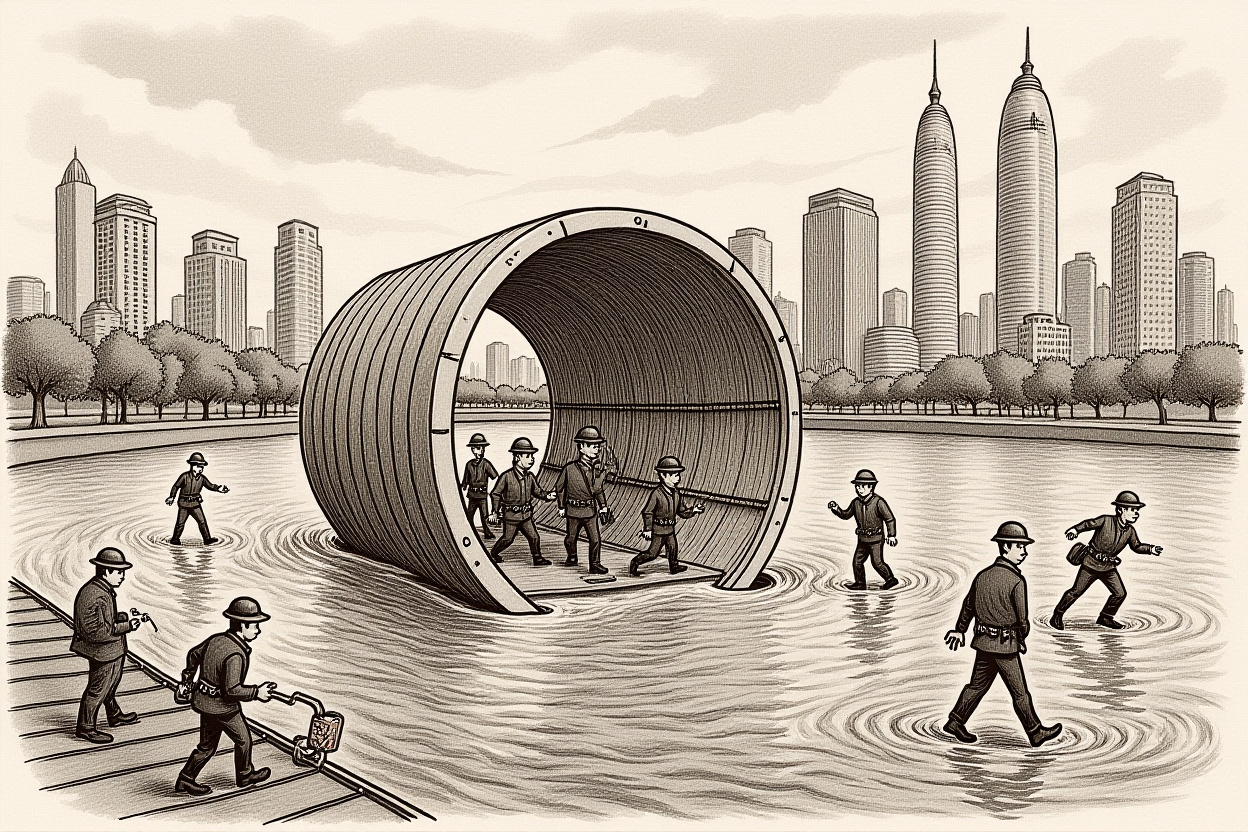
The East-West artery is pushing the boundaries of engineering, with innovations that underscore China’s technological prowess. At its heart lies the Chongtai Yangtze Tunnel, which boasts two world records: it utilizes China’s domestically developed, world’s largest diameter high-speed rail shield tunneling machine, and it is poised to become the fastest underwater rail tunnel globally. These feats are not merely symbolic; they enable seamless connectivity, reducing travel times from Shanghai to Chongqing to just 5.5 hours upon completion around 2030, down from the current 9 hours. Such efficiency gains are critical for a corridor that traverses six provinces—Shanghai, Jiangsu, Anhui, Hubei, Chongqing, and Sichuan—each contributing significantly to China’s GDP and housing over 40% of the nation’s population. The East-West artery’s integration into the ‘八纵八横’ high-speed rail network and its inclusion in the National 15th Five-Year Plan’s 109 key projects highlight its strategic importance, promising to accelerate the movement of people, goods, and capital across the Yangtze River Economic Belt (长江经济带).
Key Technological Innovations and Timeline
The project’s success hinges on advanced engineering solutions. For instance, the shield tunneling machine, with a diameter exceeding 15 meters, is designed to navigate complex geological conditions, minimizing disruption to river ecosystems. Construction is phased, with segments like the North Yangtze High-Speed Rail (北沿江高铁) and Hefei-Wuhan High-Speed Rail (合武高铁) progressing independently, aiming for full connectivity by 2030. According to reports from China Central Television (CCTV), this East-West artery is expected to catalyze nearly 1.5 trillion yuan in industry value-added growth, underscoring its economic multiplier effect. For investors, tracking these milestones offers insights into supply chain demands, particularly for companies involved in tunneling technology and rail infrastructure, as detailed in resources like the National Development and Reform Commission (NDRC) announcements.
The Economic Imperative: Justifying a 500 Billion Yuan Investment
Why allocate over 500 billion yuan—averaging 2.5 billion yuan per kilometer, with some sections exceeding 3 billion yuan—to this East-West artery, especially when existing infrastructure like the Shanghai-Wuhan-Chengdu Railway (沪汉蓉铁路) and the Yangtze River waterway already serve the region? The answer lies in addressing critical gaps in passenger capacity and fostering industrial synergy. The current Shanghai-Wuhan-Chengdu Railway, though upgraded, operates at speeds of 160-200 km/h, insufficient for the massive客流需求 (passenger demand) of a belt generating 65 trillion yuan in GDP. In contrast, high-speed rail can handle daily passenger flows of hundreds of thousands, as seen with the Beijing-Shanghai High-Speed Rail, which peaks at 900,000人次 daily. By shifting passenger traffic to the new East-West artery, the older line can focus on freight, enhancing logistics efficiency and supporting the Yangtze River Economic Belt’s industrial clusters. This dual approach maximizes infrastructure utility, making the investment not just a transport upgrade but a strategic economic lever.
Cost Drivers and Regional Economic Impact
Cost escalations are driven by regional challenges: in the east, land acquisition and拆迁成本 (demolition costs) for the Shanghai-Hefei segment alone surpass 300 billion yuan, while in the west, rugged terrain necessitates 178 bridges and 131 tunnels on the Chongqing-Yichang stretch, with a bridge-tunnel ratio of 94.86%. Despite this, the East-West artery’s economic rationale is compelling. It connects three major city clusters—the Yangtze River Delta (长三角), the Middle Yangtze (长江中游), and Chengdu-Chongqing (成渝)—all ranked among China’s top five urban agglomerations. This connectivity is projected to reduce travel times to Chengdu from 10.5 to 7 hours, fostering business integration and tourism. For institutional investors, this signals growth in sectors like real estate, logistics, and consumer services along the corridor, with potential for elevated equity valuations in related Chinese companies. As highlighted by analysts, the East-West artery exemplifies China’s shift toward high-return infrastructure, prioritizing projects with clear demographic and economic dividends.
Strategic Connectivity: Linking China’s Powerhouse City Clusters
The East-West artery is more than a rail line; it’s a strategic conduit designed to amplify the economic might of China’s premier city clusters. By stitching together the Yangtze River Delta, known for its innovation and export prowess; the Middle Yangtze, a hub for manufacturing; and Chengdu-Chongqing, a rising tech and logistics center, this project creates a cohesive economic corridor. The reduced temporal distance—slashing hours off key routes—will facilitate labor mobility, supply chain optimization, and cross-regional investment, essential for sustaining China’s high-quality development goals. For instance, the integration of Hefei, which lies上百公里 (over 100 kilometers) from the Yangtze, into this network via the North Yangtze High-Speed Rail, could transform it into a central node, attracting industries and talent. This East-West artery thus serves as a backbone for the Yangtze River Economic Belt, aligning with national policies aimed at reducing regional disparities and boosting inland growth.
Travel Time Reductions and Synergistic Benefits
Upon completion, travel times will see dramatic improvements: Shanghai to Wuhan could drop to under 3 hours, enhancing business connectivity. These gains are backed by data from the China State Railway Group (中国国家铁路集团), which notes that high-speed rail corridors typically see passenger volume increases of 20-30% in their first year. For the East-West artery, this could translate to millions of additional trips annually, stimulating local economies. Moreover, by relieving congestion on existing lines, the project enables focused freight movement on the Yangtze River, which carries over 2.5 billion tons of cargo yearly. Investors should monitor companies involved in intermodal logistics and port operations, such as those in Wuhan or Chongqing, for growth opportunities. The East-West artery’s role in this ecosystem cannot be overstated; it is poised to become a linchpin for regional competitiveness, much like the role of the U.S. Interstate Highway System in the 20th century.
Regional Impact Analysis: Winners, Losers, and Market Implications
While the East-West artery promises broad benefits, its impact will be uneven, revealing China’s infrastructure priorities. Major beneficiaries include cities like Hefei, which gains direct access to coastal markets; central Jiangsu areas like Taizhou and Yangzhou, overcoming previous connectivity gaps; and the Dabie Mountain region (大别山地区) between Hubei and Anhui, set to receive a developmental boost from the Hefei-Wuhan segment. Conversely, traditional Yangtze port cities such as Anqing, Jiujiang, Yueyang, and Jingzhou are excluded, and provinces like Jiangxi and Hunan miss out entirely. This selectivity stems from cost-benefit analyses that favor超大特大城市 (super-large and mega-cities) with high passenger densities—officials mandate that new 350 km/h lines require近期双向客流密度 (recent two-way passenger density) of 25 million人次 annually. Thus, the East-West artery reflects a pragmatic approach: it avoids蜿蜒曲折 (meandering) river paths to control costs, focusing instead on economic hubs. For investors, this means equity opportunities in beneficiary regions’ construction and real estate sectors, while overlooked areas may see slower growth, emphasizing the need for diversified portfolios in Chinese markets.
Investment Opportunities and Sectoral Gains
The construction phase alone offers lucrative prospects. Key sectors poised to benefit include:
– Steel and cement producers: Demand for materials will surge, particularly from companies like Baowu Steel Group (宝武钢铁集团).
– Engineering and technology firms: Suppliers of tunneling equipment and signaling systems, such as CRRC Corporation Limited (中国中车), stand to gain contracts.
– Tourism and retail: Reduced travel times could boost spending in cities like Chengdu and Wuhan, benefiting listed consumer stocks.
According to a report by the China International Capital Corporation Limited (中金公司), infrastructure projects of this scale typically yield ROI of 8-10% over a decade, making the East-West artery a compelling case for long-term investment. However, risks include potential delays due to regulatory hurdles or funding constraints, as seen with other mega-projects. Investors are advised to track progress via official channels like the Ministry of Transport (交通运输部) website for updates.
Future Outlook: Implications for Investors and the Global Economy
As the East-West artery moves toward its 2030 completion, it heralds a new phase in Chinese infrastructure—one characterized by selectivity and strategic emphasis on high-return corridors. With the ‘八纵八横’ network nearing completion, the era of breakneck rail expansion may slow, making projects like this East-West artery critical for sustaining economic momentum. For global investors, this translates to actionable insights: focus on equities in engineering, renewable energy integration along the route, and tech firms enabling smart rail systems. Moreover, the project could enhance China’s Belt and Road Initiative (BRI) by showcasing advanced tunneling expertise for export. Economically, the East-West artery is projected to contribute 0.2-0.3% annual GDP growth to the Yangtze River Economic Belt over the next decade, according to estimates from the People’s Bank of China (中国人民银行) researchers. This positions it as a barometer for China’s domestic consumption and integration trends, influencing broader Asian market sentiments.
Call to Action for Market Participants
For institutional investors and corporate executives, now is the time to engage. Conduct due diligence on companies involved in the East-West artery’s supply chain, explore ETF options focused on Chinese infrastructure, and monitor policy shifts from the NDRC that could affect project timelines. Additionally, consider the environmental, social, and governance (ESG) angles, as China emphasizes green infrastructure; firms with sustainable practices may outperform. As this East-West artery reshapes regional dynamics, staying informed through reliable sources like Yuan Trends’ analysis will be key to capitalizing on emerging opportunities. Ultimately, this project isn’t just about trains—it’s about the future of economic connectivity in Asia, and savvy investors should position themselves accordingly to ride the wave of growth it promises.