



Executive Summary
Key insights from the investigation into blind box trading platforms in China:
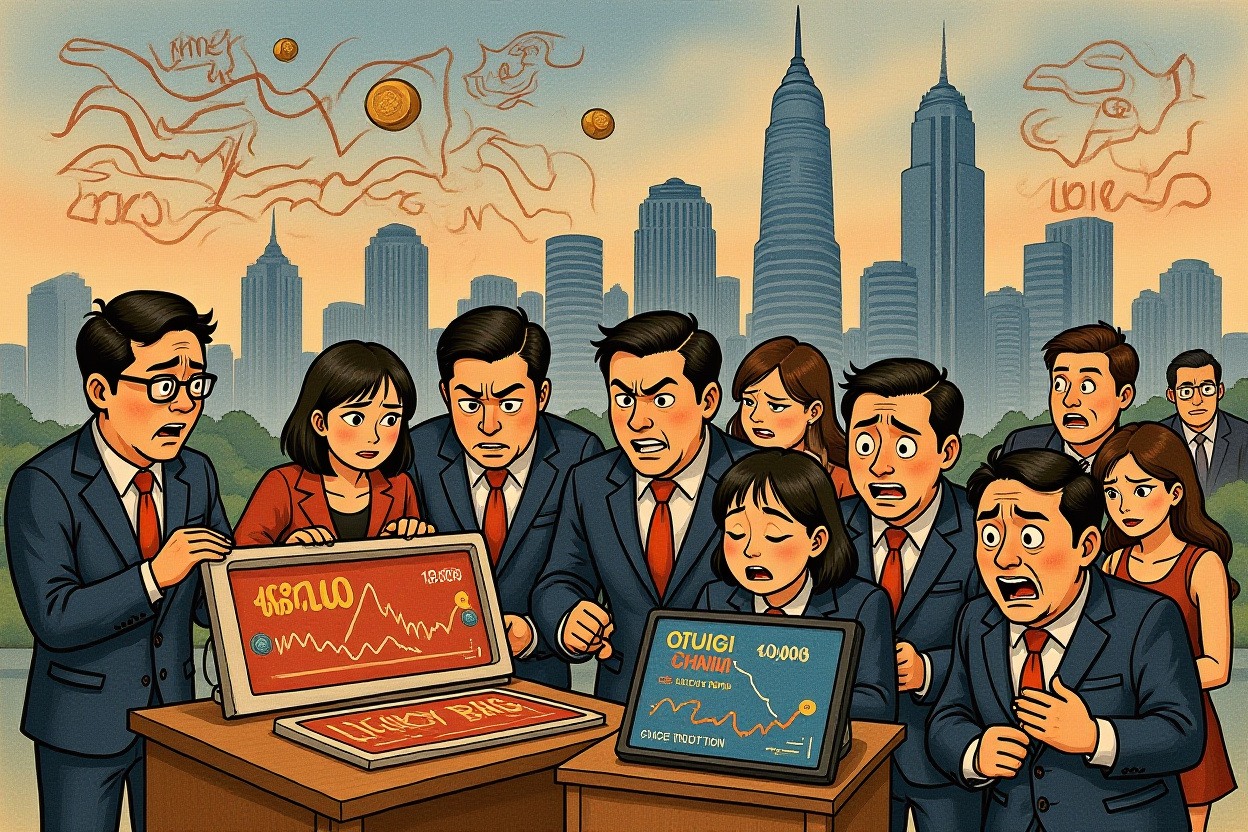
- Users on platforms like QianDao App are reporting losses exceeding 100,000 RMB, with some individuals losing over a million yuan through addictive ‘Lucky Bag’ mechanisms.
- The trading models mimic gambling behaviors, featuring high-risk, high-reward structures that exploit psychological triggers similar to casino games.
- Current regulatory frameworks lack clear guidelines for classifying these activities as gambling, creating legal grey areas that leave users unprotected.
- Market volatility in collectible valuations compounds financial risks, with popular items like Labubu collectibles losing 20% of their value within months.
- Platform algorithms and payment systems face user allegations of manipulation, yet complaint mechanisms remain inadequate for addressing these concerns.
The Hidden Addiction in Collectible Markets
What begins as innocent entertainment quickly morphs into financial disaster for participants in China’s burgeoning blind box trading ecosystem. Zhou Kui (周奎), a typical user, describes his three-year descent into what he calls ‘gambling addiction’ through QianDao App’s Lucky Bag feature. Like countless others, he started with small purchases, tempted by the possibility of scoring rare collectibles worth significantly more than his initial investment. The reality proved far darker, with Zhou accumulating 170,000 RMB in losses despite multiple attempts to quit. This pattern repeats across China’s blind box trading platforms, where the line between hobby and hazard blurs dangerously.
The psychological pull of these platforms operates on the same principles that drive casino gambling. Users experience intermittent reinforcement – occasional big wins amid consistent losses – that triggers dopamine responses and compulsive behavior. Shen Zhenyu (沈振宇), founder of QianDao App, acknowledged in an August interview with LatePost that professional players on the platform ‘necessarily lose, at least 30%’ overall. Yet this reality does little to deter participants caught in the cycle of ‘the more you buy, the more you lose; the more you lose, the more you buy,’ as Zhou Kui (周奎) summarizes his experience. The blind box trading platform model capitalizes on this vulnerability, creating ecosystems where financial hemorrhage becomes the norm rather than the exception.
Case Study: From Enthusiasm to Financial Ruin
Zhou Kui’s (周奎) journey exemplifies the typical trajectory. He began in May 2023, initially making small purchases of 39.9 RMB per try. An early win of a 500 RMB collectible reinforced the illusion of easy money, hooking him into progressively larger investments. By November 2023, he had lost 100,000 RMB and publicly vowed to stop, only to relapse and increase his losses to 170,000 RMB by 2024. His story mirrors that of Lin Yu (林羽), who lost over 230,000 RMB within a month of intensive participation. These aren’t isolated incidents – the platform hosts users with total transaction volumes exceeding 10 million RMB and losses in the millions, demonstrating the scale of the problem within blind box trading platforms.
Mechanics of Modern Gambling Masquerading as Commerce
QianDao App’s Lucky Bag system operates through two primary mechanisms that distinguish it from traditional blind box sales. In standard blind box commerce, consumers purchase from a series where values remain relatively consistent. The Lucky Bag model introduces extreme volatility by pooling 100 different collectibles from various IPs and styles, with values ranging from几十元 (dozens of RMB) to 5,000 RMB based on secondary market prices. Participants pay between几十元 to 200 RMB per draw, creating a classic gambling scenario where the house always maintains advantage. The blind box trading platform then facilitates immediate resale, enabling the rapid cycling of funds that characterizes gambling environments.
The ‘Sell Out Then Open’ mode presents particularly dangerous dynamics. Unlike the ‘Sell Out and Open’ approach where all participants receive their items simultaneously after full sales, this instant-reveal format provides immediate gratification (or disappointment). Players refer to hitting high-value items in the first five draws as ‘爆头’ (headshot), creating a terminology system that further gamifies the experience. Mathematically, the structure ensures most participants lose – if a player spends 200 RMB per draw and typically receives items worth under 50 RMB, they need to hit a 5,000 RMB item within 30-40 draws just to break even. The blind box trading platform algorithms appear designed to make this outcome statistically unlikely for most users.
Platform Strategies and User Countermeasures
Regular participants develop elaborate strategies to beat the system, though these often prove futile. Users like Zhou Kui (周奎) attempt to identify patterns in winning numbers, believing that platform algorithms show repetition during specific timeframes. Others like Lin Yu (林羽) employ ‘包车’ (chartering) tactics, attempting to purchase all remaining items in a Lucky Bag to guarantee securing the high-value piece. This approach backfired spectacularly in her case when platform glitches during payment processing knocked her out of queue positions, allowing other users to snatch the prized items. The blind box trading platform interface itself becomes part of the problem, with users reporting sudden crashes and payment delays at critical moments that cost them thousands.
Legal Limbo: When Does Commerce Become Gambling?
The fundamental question surrounding these blind box trading platforms concerns their legal classification. As Li Shuo (李烁), senior lawyer at Zhejiang Kending (Guangzhou) Law Firm, explains, the Lucky Bag mechanism partially exhibits gambling characteristics that could constitute blind box gambling under certain interpretations. The critical elements include users paying money for random gift distribution, unreasonable gift values, and the ability to immediately resell items for cash. However, Chinese law lacks explicit standards for categorizing these relatively new business models, leaving enforcement inconsistent and users vulnerable.
Current regulations demonstrate significant gaps in addressing platform responsibility. The 2023 ‘Blind Box Business Behavior Guidelines (Trial)’ issued by the State Administration for Market Regulation provides some direction but contains limited provisions specifically governing online transaction platforms. As one legal professional specializing in blind box e-commerce noted, ‘Laws and regulations have certain lag. For new formats like second-hand trading platforms, existing regulations aren’t completely applicable.’ The core issue remains that secondary trading platforms like QianDao App position themselves as intermediaries rather than direct sellers, blurring liability lines when problems arise.
Regulatory Framework and Future Developments
The legal assessment hinges on both subjective intent and objective business practices. Subjectively, China’s Criminal Law Article 303 (2023 revision) targets those who participate in gambling or make gambling their profession with the purpose of obtaining money, property, or property benefits. Objectively, platforms must demonstrate features like detachment from physical transactions, direct cash-out capabilities, and unilateral price adjustments to qualify as gambling operations. As Li Shuo (李烁) clarifies, ‘If platform behavior complies with market logic, and consumers also aim for consumption, it doesn’t involve related crimes.’ This ambiguity creates the perfect environment for blind box trading platforms to operate in grey areas while users bear the financial consequences.
A February 2025 article in China Court News highlighted characteristic elements of gambling-style blind box sales: platforms using blind boxes to provide lottery opportunities rather than selling physical goods; platforms raising blind box prices to profit from all players (‘抽头渔利’); players randomly winning prizes (gambling on outcomes); losers losing all principal (‘血本无归’); and prize transaction cash-out (‘下分’). While these descriptions don’t carry legal force, they signal judicial awareness of the problems proliferating across blind box trading platforms. The coming years will likely see increased regulatory scrutiny as losses mount and public attention grows.
Market Realities and Collector Consequences
The blind box market introduces unique financial risks beyond the immediate gambling aspects. Collectible values fluctuate dramatically based on market trends, meaning that even successful ‘wins’ can depreciate rapidly. Lin Yu (林羽) initially joined QianDao App to obtain Labubu Valentine’s Day limited edition vinyl toys that were unavailable through other channels. After accumulating five units through substantial investment, she found herself unable to sell them as market prices dropped from 5,000 RMB to 3,900 RMB – a 22% depreciation that compounded her losses. This volatility transforms blind box trading platforms from entertainment venues into high-risk investment spaces where participants lack the tools to make informed decisions.
Platform economics further complicate the situation. Unlike physical blind box purchases where consumers typically make one-time transactions, digital platforms enable immediate resale and reinvestment. As one experienced QianDao App user explained, ‘Offline, consumers might buy once and leave, regardless of outcome, with no way to immediately liquidate goods. But on online platforms, purchased goods can be resold for cash balance after six hours, then immediately used to buy new Lucky Bags.’ This creates continuous cycling of funds that mirrors casino chip systems, intensifying the gambling mentality among participants. The blind box trading platform design thus actively encourages the very behaviors that lead to financial harm.
Psychological Factors and Addiction Patterns
User testimonials consistently highlight the psychological drivers behind continued participation despite mounting losses. Zhou Kui (周奎) acknowledges, ‘I know this is gambler’s psychology – the more you lose, the more you want to recover. Even knowing there’s a problem, I can’t help myself. Everyone no longer simply likes the dolls, but likes the feeling of winning.’ This addiction to the ‘winning sensation’ overrides rational financial decision-making, particularly when platforms employ variable ratio reinforcement schedules – the same psychological mechanism that makes slot machines so compelling. The blind box trading platform environment essentially weaponizes behavioral psychology against users’ financial interests.
Navigating the Future of Blind Box Regulation
The escalating losses on blind box trading platforms demand coordinated response from regulators, platforms, and users. Currently, complaint mechanisms prove inadequate, with users like Lin Yu (林羽) reporting that customer service robots cannot address their concerns about algorithm transparency and payment system irregularities. As platforms grow to significant scale, regulatory pressure will likely increase for them to implement protective measures such as spending limits, cooling-off periods, and clearer odds disclosure. These interventions could help align blind box trading platforms with responsible gambling principles while preserving their entertainment value.
International precedents offer potential roadmaps for Chinese regulators. Japan’s comprehensive regulation of gacha mechanics in mobile games, implemented after similar controversies, provides one model for balancing consumer protection with business interests. The key lies in distinguishing between harmless entertainment and predatory systems designed to exploit psychological vulnerabilities. For blind box trading platforms operating in China, proactive self-regulation might preempt more restrictive government intervention while rebuilding user trust.
Protective Measures and User Recommendations
Investors and participants should approach blind box trading platforms with heightened caution. Financial professionals recommend treating any money allocated to these platforms as entertainment expenses rather than investments, with strict predetermined limits. Users should document all transactions and technical issues, as these records become crucial when seeking recourse through consumer protection channels. Most importantly, recognizing the gambling parallels can help individuals self-regulate their participation before losses spiral out of control. The blind box trading platform phenomenon serves as a stark reminder that innovative business models sometimes repackage ancient risks in digital clothing.
Balancing Innovation and Protection in Digital Markets
The rise of blind box trading platforms represents both the ingenuity of China’s digital commerce sector and its regulatory challenges. These platforms have created vibrant communities around collectible culture while generating substantial economic activity. However, the human cost of uncontrolled gambling mechanics cannot be ignored, with real people suffering real financial damage. As the market evolves, stakeholders must collaborate to establish clearer boundaries that allow innovation to flourish while protecting vulnerable participants.
The solution lies not in eliminating blind box trading platforms but in transforming them into transparent, accountable marketplaces. Platforms should voluntarily implement features like loss limits, mandatory breaks after extended sessions, and detailed odds disclosure for each Lucky Bag. Regulatory bodies could develop specific certification standards for compliant platforms, while consumer education campaigns should highlight the risks alongside the rewards. Through these coordinated efforts, China can pioneer responsible frameworks for emerging digital commerce models that balance excitement with ethical operation.
Path Forward for Stakeholders
The blind box trading platform controversy underscores broader questions about financial consumer protection in rapidly digitizing economies. Users like Zhou Kui (周奎) and Lin Yu (林羽) represent thousands of Chinese consumers caught between innovative entertainment and financial predation. Their experiences highlight urgent needs for legal clarity, platform accountability, and user education. As regulatory bodies consider updates to gambling and e-commerce statutes, they must address the unique characteristics of these hybrid models that blur traditional categories.
Moving forward, all market participants share responsibility for creating healthier ecosystems. Platform operators should proactively implement safeguard features beyond minimum legal requirements. Regulators must accelerate the development of specific guidelines for blind box trading platforms. Most importantly, users must educate themselves about the psychological and financial risks, setting strict personal boundaries before engaging. The future of China’s collectibles market depends on striking this balance – preserving the excitement of discovery while eliminating the devastating losses that currently plague too many participants. The time for action is now, before more users learn the hard way that some lucky bags contain only empty promises.