



Executive Summary
– The meteoric rise of AI productivity tools like ‘OpenClaw’ (龙虾) in China echoes past speculative bubbles, urging caution among equity market participants.
– Substantial operating costs and unclear ROI reveal that ‘raising the lobster’ often burdens SMEs more than it empowers them, impacting bottom lines.
– True business success hinges not on tools, but on securing high-value contracts and market opportunities—the ‘甲方爸爸’ (client patriarch) dynamic remains paramount.
– Government and corporate initiatives are accelerating AI integration, but investors must differentiate between hype and sustainable value creation.
– Strategic adoption, coupled with rigorous due diligence, is essential for leveraging AI in China’s volatile equity landscape.
The AI Gold Rush: When Every Entrepreneur Wants to ‘Raise the Lobster’
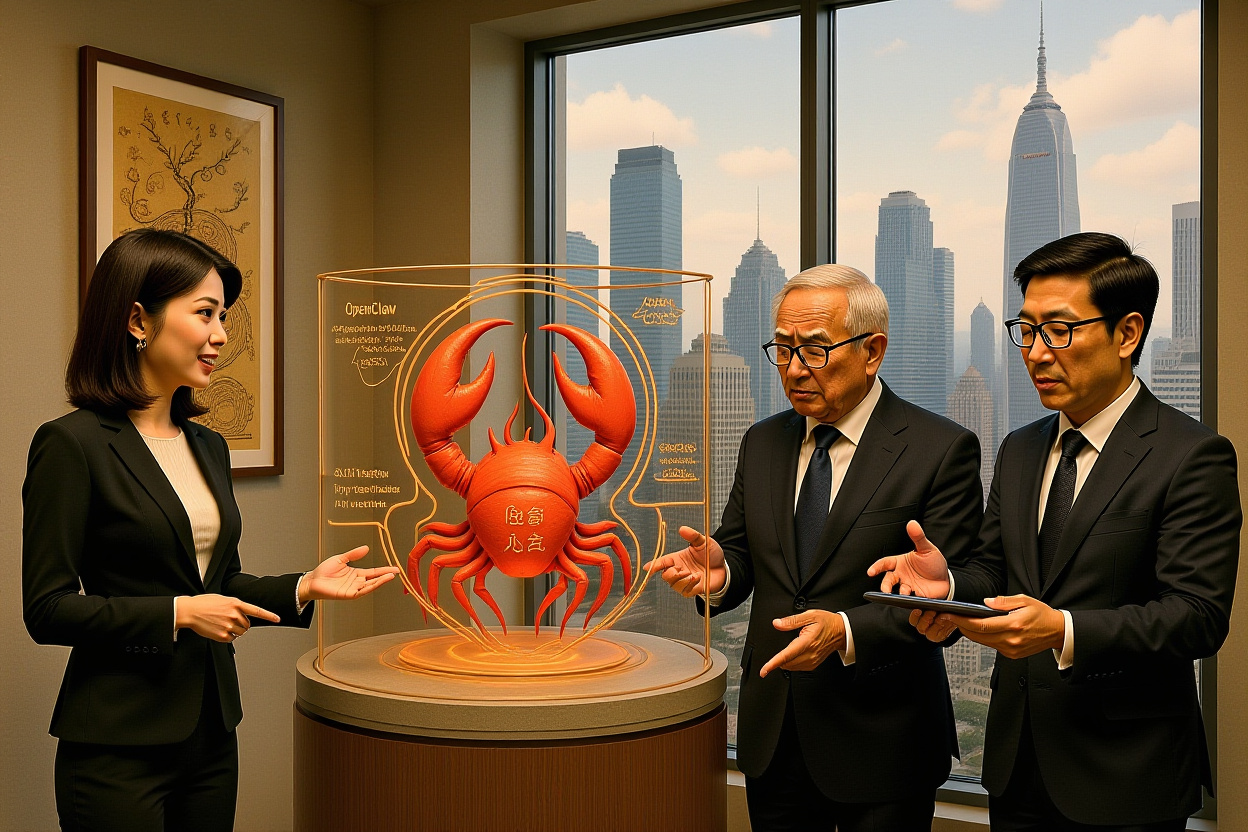
The Chinese business landscape is currently gripped by a feverish obsession that has spread from startup WeChat groups to corporate boardrooms: the rapid adoption of advanced AI-driven automation tools, colloquially dubbed ‘raising the lobster.’ This phrase, a direct translation of the trending Mandarin term ‘养龙虾,’ symbolizes the hope that deploying tools like OpenClaw will magically scale operations, generate wealth, and solve complex business challenges. For global investors monitoring Chinese equities, understanding this ‘raising the lobster’ phenomenon is critical. It represents not just a technological shift, but a potent market sentiment driver that can inflate valuations in the tech sector while obscuring fundamental weaknesses. The initial allure is undeniable—early adopters boast of automated social media management on Xiaohongshu (小红书) and streamlined travel bookings. Yet, beneath the surface, this frenzy raises pressing questions about cost, utility, and the perennial search for real business opportunities in a competitive economy. The central thesis for market professionals is clear: possessing the tool is meaningless without the project to use it on.
The ‘Lobster’ Frenzy: Decoding China’s AI Adoption Wave
Almost overnight, OpenClaw and similar AI assistants have become ubiquitous among Chinese entrepreneurs and SMEs. This section breaks down the drivers and immediate market reactions.
What Is OpenClaw and Why Has It Captured the Market’s Imagination?
OpenClaw, while a fictionalized name in this context, represents the broader category of generative AI and automation platforms that have surged in popularity. In reality, companies like Baidu’s Ernie Bot (文心一言) or Tencent’s混元 are pushing similar capabilities. The appeal lies in promises of operational efficiency—automating customer service, content creation, and data analysis. For time-pressed fund managers, the narrative suggests that companies leveraging such tools could see margin expansion and competitive edges. However, the ‘raising the lobster’ metaphor aptly captures the resource-intensive nature of this adoption: these tools require significant investment in premium models, API calls, and skilled prompt engineering, much like tending to a high-maintenance crustacean.
Early Adopters: A Mixed Bag of Anecdotes and Outcomes
Initial user experiences, as reported in business circles, vary wildly. Some claim revolutionary time savings, while others, like the anecdote in the original text, find that ‘raising the lobster’ for stock trading leads to faster losses. This dichotomy highlights a key risk for investors: the gap between technological capability and practical application. A Shanghai-based tech analyst, Zhang Wei (张伟), notes, ‘Many SMEs are rushing to ‘raise the lobster’ without a clear workflow integration strategy. It’s a cost center before it becomes a profit driver.’ This sentiment is crucial for assessing Chinese tech stocks; companies touting AI adoption must demonstrate tangible use cases to justify premium valuations.
Historical Parallels: From Rabbit Farming to AI Hype
China’s economic history is replete with cycles of speculative enthusiasm. The current ‘raising the lobster’ craze finds a direct antecedent in the 1980s long-haired rabbit farming boom, offering sobering lessons for today’s markets.
The 1980s Rabbit Farming Bubble: A Cautionary Tale
In the 1980s, as China opened up, rabbit fur exports became a lucrative venture. Farmers in Shanghai and beyond abandoned stable jobs, with some rural teachers quitting to raise rabbits, feeding them premium milk powder. The mantra ‘家养一群兔,赛过小金库’ (A household raising a group of rabbits is better than a small gold vault) fueled a bubble. When international prices corrected, many were left with unsustainable debts. Similarly, today’s AI tool adoption risks creating a bubble in related tech equities if fundamentals don’t support the hype. The parallel underscores that rapid, herd-like adoption often precedes market corrections.
Economic Impacts and the Inevitable Correction
Then, as now, government policy played a role. Today, initiatives like the ‘Artificial Intelligence Development Plan’ from the Ministry of Industry and Information Technology (工业和信息化部) encourage adoption, but also risk inflating expectations. For investors, historical patterns suggest monitoring sectors like cloud computing and semiconductors for overvaluation signs. The rabbit farming episode ended with a market glut; the ‘raising the lobster’ trend could lead to an oversaturation of AI-powered services, squeezing profits for all but the most strategic players.
The Hidden Costs of Raising the Lobster
Beneath the promotional tutorials lies a stark financial reality: ‘raising the lobster’ is an expensive endeavor. This has direct implications for corporate profitability and, by extension, stock performance in China’s SME-heavy indices.
Operating Expenses and the ROI Mirage
As cited, an industry insider spends over 1,000 RMB daily on AI model subscriptions, translating to a monthly ‘poverty line’ of 20,000 RMB income just to break even. For small businesses, this can erode thin margins. List the key cost components:
– Premium API access fees for high-end models.
– Computational resources and cloud storage costs.
– Training and hiring specialists for prompt engineering.
– Integration with existing CRM and ERP systems.
Without clear revenue gains, these expenses become a drain, reminiscent of the photovoltaic loan scams mentioned, where promised returns failed to materialize. Investors should scrutinize cost structures in tech and consumer discretionary sectors where AI adoption is rampant.
Case Studies: Social Media vs. High-Frequency Trading
Contrasting applications reveal the opportunity cost. Using AI for social media management might boost brand visibility, but using it for algorithmic trading—a domain requiring deep market knowledge—has led to losses for amateurs. This dichotomy illustrates that ‘raising the lobster’ succeeds only when applied to areas with inherent opportunity. A fund manager at China International Capital Corporation Limited (中金公司) stated, ‘AI is a tool, not a strategy. In equities, it aids analysis, but cannot replace the insight needed to secure deals.’ For market participants, this means focusing on firms that use AI to enhance core competencies, not as a panacea.
Market Dynamics: Implications for Chinese Equity Investors
The ‘raising the lobster’ trend is reshaping investment theses across sectors. Here’s how sophisticated investors can navigate this landscape.
Sector Analysis: Tech Enablers vs. Traditional Industries
Companies providing AI infrastructure—like Alibaba Cloud (阿里云) or iFlyTek (科大讯飞)—may see sustained demand, but their stock prices already reflect high expectations. Conversely, traditional firms adopting AI could experience volatility; those without clear projects (the ‘甲方爸爸’) may see wasted CAPEX. For example, a manufacturing company using AI for supply chain optimization only benefits if it has large orders to manage. Investors should look for businesses with robust client pipelines and strategic AI deployment plans, rather than those merely ‘raising the lobster’ for its own sake.
Regulatory Framework and Government Initiatives
The Chinese government is actively promoting AI through policies like the ‘Next Generation Artificial Intelligence Development Plan.’ However, regulatory scrutiny from bodies like the China Securities Regulatory Commission (CSRC, 中国证监会) ensures market stability. Outbound link: For official details, refer to the MIIT website on AI guidelines. This support can boost sectors, but investors must watch for overreach and compliance costs. The key is to balance policy tailwinds with fundamental analysis, ensuring that ‘raising the lobster’ aligns with national priorities without becoming a speculative bubble.
Strategic Insights: Beyond the Tool, Focus on Opportunity
The core lesson from this frenzy is that success in Chinese markets—whether for businesses or investors—depends on securing opportunities, not just tools. This section offers actionable guidance.
Identifying Real Value in AI Investments
To avoid the trap of ‘raising the lobster’ without purpose, focus on these indicators:
– Companies with long-term client contracts that guarantee revenue streams.
– Firms that integrate AI into existing high-margin products or services.
– Management teams with clear metrics for AI ROI, not just adoption stories.
– Sectors where AI solves genuine pain points, like healthcare diagnostics or fintech risk assessment.
By prioritizing opportunity over tool acquisition, investors can better assess equity valuations and avoid hype-driven losses.
Actionable Steps for Businesses and Investors
For corporate executives: Before ‘raising the lobster,’ conduct a thorough opportunity audit. Secure projects and client commitments first. For institutional investors: Incorporate AI adoption metrics into due diligence, but weight them against traditional fundamentals like P/E ratios and cash flow. The ‘raising the lobster’ phenomenon should be a lens, not a driver, for investment decisions. As People’s Bank of China Governor Pan Gongsheng (潘功胜) has emphasized, technological innovation must serve real economic needs to sustain growth.
Synthesizing the ‘Lobster’ Paradox for Market Success
The ‘raising the lobster’ craze in China encapsulates a timeless business truth: tools are enablers, not creators, of wealth. In equity markets, this translates to a caution against chasing narrative-driven stocks without underlying strength. The historical echo of rabbit farming reminds us that frenzies fade, leaving only those with solid foundations. For global investors, the takeaway is to look beyond the AI hype and evaluate Chinese companies based on their ability to secure and execute on lucrative opportunities—the modern equivalent of the ‘包工头’ (contractor) landing big projects. The call to action is clear: in your portfolio, prioritize firms that master the art of opportunity capture, not just tool adoption. ‘Raising the lobster’ might be trendy, but building a business empire requires the vision to find the next big deal. Stay informed, analyze critically, and let strategic insight guide your investments in China’s dynamic markets.