



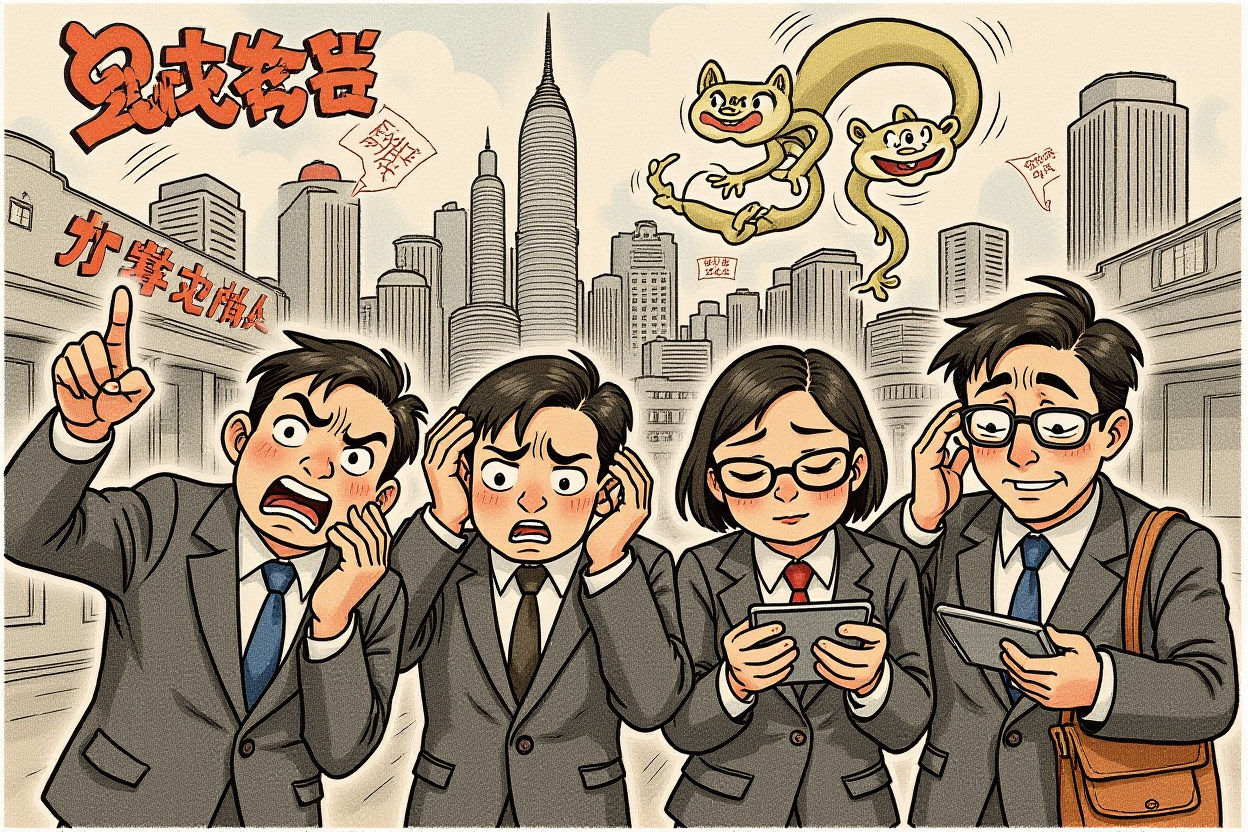
Market Turmoil Unfolds
On August 14, 2025, China’s stock markets staged a dramatic reversal that left investors reeling. The Shanghai Composite Index surged past the psychological 3700-point barrier during morning trading, sparking optimism – only to collapse in a swift, broad-based selloff by afternoon. This sudden A-share market plunge saw over 4,600 stocks tumble into negative territory, erasing earlier gains and highlighting the fragile equilibrium beneath China’s equity rally. Market participants scrambled for explanations as indices closed deep in the red: Shanghai Composite down 0.46%, Shenzhen Component falling 0.87%, and the growth-focused ChiNext Index plunging 1.08%. The abruptness of this reversal underscores how technical levels, shifting capital flows, and regulatory signals can converge to trigger volatility.
Key Developments Driving the Plunge
- Shanghai Composite surrendered 3700-point breakthrough within hours as selloff accelerated
- Non-bank deposits surged by 1.39 trillion yuan ($192 billion) indicating capital rotation into equities
- Military stocks nosedived after Great Wall Military Industry warned of possible trading suspension
- Retail participation spikes as household deposits dropped by 0.78 trillion yuan ($108 billion)
- Multiple banks issued warnings against using credit card funds for stock investments
Technical Resistance: The 3700-Point Ceiling
The 3700 level on the Shanghai Composite represents a critical technical barrier that has capped rallies since 2021. Historical data reveals this zone contains dense clusters of investor positions established during previous rallies – creating formidable overhead supply. When prices approach such resistance without sufficient volume, reversals become statistically probable. Market technicians observed worrying signals before the A-share market plunge unfolded:
- Price-action divergence where indices climbed while momentum indicators trended downward
- Declining trading volume during the approach to 3700 signaled weakening conviction
- Historical resistance tests at this level have triggered 5 major pullbacks since 2021
Volume Thresholds for Breakouts
Sustained breakthroughs above key resistance require exceptional volume – typically 20-30% above 30-day averages. On August 14, turnover reached just 1.02 trillion yuan ($141 billion), falling short of the 1.3 trillion yuan ($180 billion) threshold that marked successful breakouts in 2020. Without institutional buying pressure to absorb selling orders, the rally collapsed under its own weight.
Sector Performance Divergence
Beneath the broad market decline, stark sectoral variations emerged. Innovation-driven sectors bucked the downturn while cyclical stocks bore the brunt of selling pressure.
Outperforming Sectors
Digital currency stocks led gains after policy documents hinted at expanded fintech trials. Hengbao Co., Ltd. surged 10% on record volume. Brain-computer interface firms extended rallies with Innovation Medical hitting its daily limit-up. Semiconductor shares like Cambricon (寒武纪) jumped 10% amid chip self-sufficiency drives.
Military Sector Meltdown
Aerospace stocks plunged with Aerospace Changfeng (航天长峰) tumbling 10%. This reversal followed Great Wall Military Industry’s regulatory filing noting its 115% surge in 10 trading days ‘divorced from fundamentals’. The company explicitly warned of requesting trading suspension if volatility continued – triggering panic selling across defense shares. This episode highlights how overheated speculative rallies can amplify broader market reversals.
Deposit Migration: Fueling Volatility
Central bank data released August 13 revealed a striking capital rotation trend. The 1.39 trillion yuan ($192 billion) year-on-year increase in non-bank financial institution deposits coincided with a 0.78 trillion yuan ($108 billion) drop in household bank deposits. This deposit shift toward equities signals:
- Heightened retail participation as households chase market returns amid low deposit rates
- Increased market sensitivity to technical levels as inexperienced investors panic-sell
- Potential liquidity risks if redemption waves accelerate during corrections
Historical parallels exist with the 2015 leverage-fueled bubble where household savings inflows preceded violent corrections. Though systemic risks remain lower today, this capital rotation amplifies intraday swings.
Regulatory Warnings Surface
Concurrently, financial institutions began issuing explicit cautions about speculative behavior. Weibin Rural Commercial Bank published guidelines stating: ‘Credit card funds shall not be used for investment activities including stocks, funds, or futures.’ This mirrors broader regulatory concerns about:
- Debt-funded speculation creating systemic vulnerabilities
- Retail investors using high-interest credit for volatile equity bets
- Margin trading risks as household leverage reaches 62.3% of disposable income
These warnings contributed to the risk-off sentiment during the afternoon selloff as traders anticipated tighter capital controls.
Historical Context and Market Psychology
The 3700 level has repeatedly acted as a bull-bear battleground. During 2021’s attempted breakout, the index spent just 8 trading days above 3700 before collapsing 15%. Market memory creates self-reinforcing behavior at these psychological barriers. Behavioral finance patterns observed during this A-share market plunge include:
- Anchoring bias where investors fixate on round-number resistance levels
- Herding effects accelerating selling once 3700 broke downward
- Loss aversion triggering stop-loss orders clustered near technical supports
These psychological factors transform technical levels into self-fulfilling prophecies during volatile sessions.
Forward Outlook and Strategic Implications
Post-plunge analysis suggests three critical monitoring areas. First, watch for volume confirmation in any 3700 retest – sustainable breakouts require turnover exceeding 1.3 trillion yuan ($180 billion). Second, track household deposit data for signs of continued equity allocation. Third, monitor regulatory statements regarding leverage controls.
Portfolio Considerations
Investors should reassess exposure considering volatility triggers:
- Rebalance toward sectors with policy tailwinds like semiconductors and renewables
- Avoid highly leveraged retail favorites trading at 100%+ monthly gains
- Maintain cash reserves for potential buying opportunities below 3500 support
While technical damage requires time to repair, China’s structural reform narrative remains intact. The Shanghai Composite maintains its 200-day moving average uptrend despite the plunge. For long-term investors, this pullback may present selective entry points in innovation leaders. Consult certified financial advisors to align positions with risk tolerance and monitor key technical levels before adding exposure. Consider dollar-cost averaging into quality names rather than timing volatile breakouts.