



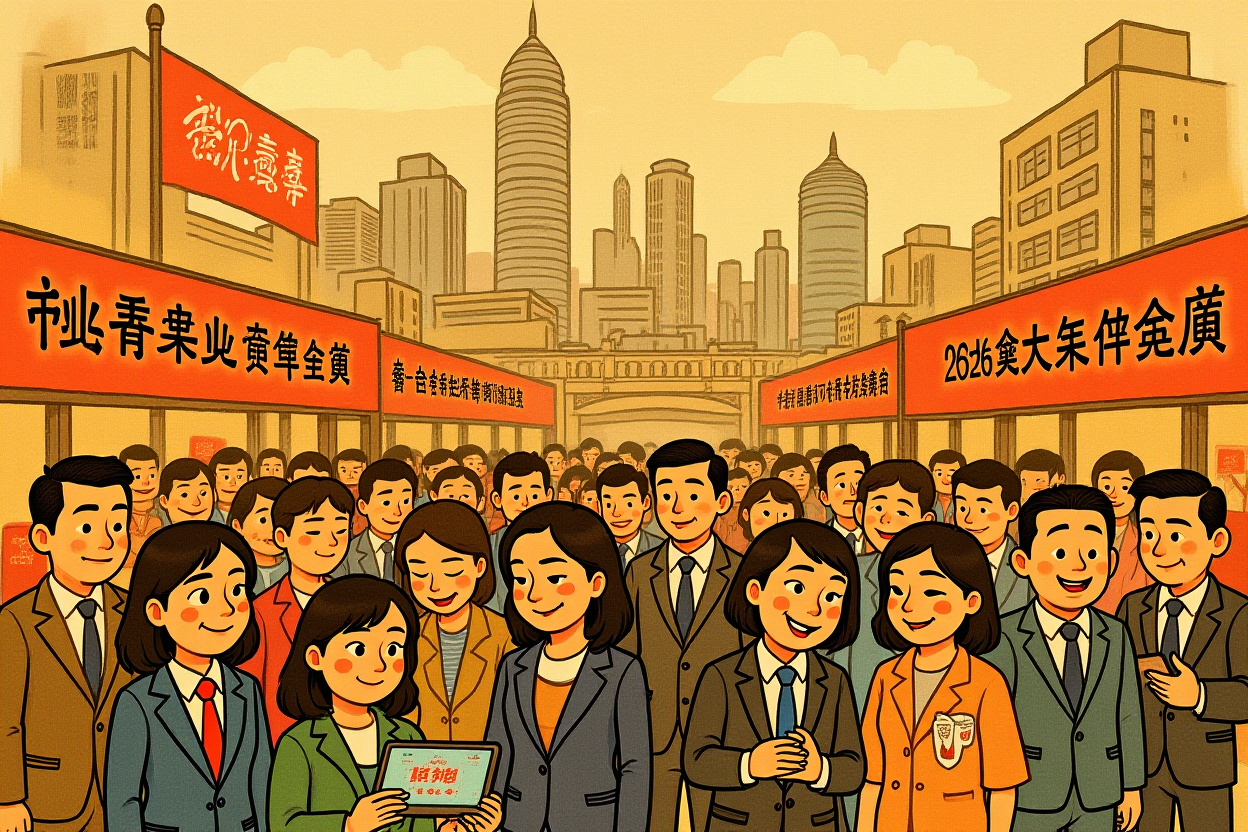
– Over 120,000 attendees at Chengdu’s Financial City Twin Towers (金融城双子塔) signal robust consumer sentiment and potential spending revival.
– Municipal initiatives like the ‘2026 Chengdu New Year Shopping Festival’ (2026成都新春欢乐购) highlight targeted economic stimulus driving retail and hospitality sectors.
– The integration of cultural events with commerce showcases innovative urban economic strategies that can boost related stocks in tourism and entertainment.
– Broader economic indicators from the celebration suggest positive trends for domestic consumption, a key driver for China’s equity market performance.
– Investors should monitor consumer discretionary and services sectors for opportunities linked to urban festival-driven growth.
The Scale of Celebration and Its Economic Implications
The gathering of over 120,000 people at Chengdu’s Financial City Twin Towers (金融城双子塔) on New Year’s Eve was not merely a social event; it was a powerful display of Chengdu’s consumer economy resurgence. For financial professionals, such crowd numbers translate directly into metrics for consumer confidence and spending potential. In a post-pandemic landscape, where domestic consumption is pivotal for China’s economic growth, events of this magnitude serve as real-time barometers for market sentiment.
Crowd Dynamics and Consumer Sentiment Indicators
Data indicating 120,000 participants in the Jiaozi Avenue (交子大道) area underscores a rebound in public engagement and discretionary spending. Historically, mass gatherings during holidays correlate with increased retail sales and tourism revenue. According to industry analysts, cities like Chengdu, with their vibrant cultural scenes, often lead in consumer-driven economic recovery. This event mirrors broader trends where Chinese consumers are gradually returning to pre-pandemic activity levels, bolstering sectors such as leisure and entertainment in equity markets.
Tourism and Hospitality Sector Boost
The influx of visitors to landmarks like Chunxi Road (春熙路) and Jinjiang River (锦江) highlights a surge in tourism, a critical component of Chengdu’s GDP. Hotels, restaurants, and local vendors reported heightened activity, suggesting a short-term revenue spike. For investors, this points to potential outperformance in stocks related to the Chengdu Tourism Group (成都文旅集团) or broader Chinese consumer discretionary indices. Monitoring such patterns can inform allocations in hospitality and travel-related equities.
Retail and Commerce During the Festivities
Chengdu’s New Year celebrations were strategically coupled with commercial initiatives, amplifying economic impact. The ‘2026 Chengdu New Year Shopping Festival’ (2026成都新春欢乐购) and ‘Nianli Xishi’ (年礼喜市) market created a direct pipeline for consumer spending. This alignment of festivity with commerce is a testament to municipal efforts to stimulate local economies, offering lessons for investors assessing regional growth strategies.
Analysis of the Shopping Festival’s Economic Footprint
Events featuring traditional products like hotpot base sauces and Dengying beef (灯影牛肉) from established brands drove foot traffic and sales. The inclusion of innovative offerings, such as herbal products from Pengzhou (彭州), reflects diversification in consumer goods that can attract niche market interest. For equity markets, this underscores the resilience of local retail chains and potential in small to mid-cap stocks within the consumer staples sector. Outbound links to Chengdu Municipal Government announcements on economic stimulus could provide further context for policy-driven growth.
Local Businesses and Revenue Streams
Over 200 locations were connected via the ‘New Year逛吃地图’ (新春逛吃地图), facilitating widespread commercial activity. This organized approach not only boosts immediate revenue but also enhances brand visibility for participating businesses. In financial terms, such initiatives can lead to improved earnings reports for publicly traded companies with operations in Chengdu, influencing stock valuations. The focus on Chengdu’s consumer economy resurgence is evident here, as coordinated efforts translate into measurable economic output.
Cultural Events as Economic Drivers
Beyond traditional retail, the integration of cultural experiences like the ‘Rongcheng Xishi’ (蓉城囍事) collective wedding certification ceremony at the Twin Towers showcases how non-traditional revenue streams contribute to economic vitality. These events create unique value propositions that attract spending on experiences rather than just goods, aligning with global trends in the experience economy.
Weddings and Experiential Commerce
The symphony-accompanied wedding ceremony during the countdown represents a blend of culture and commerce, potentially boosting sectors like event planning and luxury services. For investors, this highlights opportunities in companies specializing in experiential marketing or wedding-related industries within China. The focus on Chengdu’s consumer economy resurgence is reinforced by such innovative engagements that drive spending in high-margin areas.
Integrating Tradition with Modern Commerce
Activities such as the intangible cultural heritage ‘water iron flowers’ (水上铁花) at Tianfu Dayan (天府大屋檐) and night cruises on Jinjiang River (夜游锦江) merge tourism with cultural preservation, creating sustainable economic models. These attractions not only draw crowds but also support local artisans and service providers, contributing to broader economic ecosystems. In equity terms, this can benefit sectors tied to cultural tourism and heritage conservation, often supported by government policies.
Broader Economic Indicators and Market Sentiment
The widespread participation across Chengdu, from Xiling Snow Mountain (西岭雪山) to Dongjiao Memory (东郊记忆), indicates a city-wide economic uplift. Such dispersion of activities suggests inclusive growth that can buffer against regional economic downturns, providing stability for market investments.
Correlation with Domestic Consumption Trends
National data from the National Bureau of Statistics (国家统计局) often shows holiday spending as a key indicator of consumer health. Chengdu’s event aligns with recent upticks in retail sales and service sector output, hinting at a broader recovery in Chinese consumption. For fund managers, this reinforces the case for overweight positions in consumer-driven equities, particularly in urban centers like Chengdu experiencing Chengdu’s consumer economy resurgence.
Implications for Equity Markets in Related Sectors
Sectors such as entertainment, retail, and tourism are likely to see positive momentum from such events. Stocks of companies like Alibaba Group (阿里巴巴集团) with e-commerce ties to regional sales, or China Tourism Group (中国旅游集团) with assets in Sichuan, could benefit. Monitoring quarterly reports from these entities for holiday-driven revenue spikes can offer tactical investment insights. The People’s Bank of China (中国人民银行) Governor Pan Gongsheng (潘功胜) has emphasized domestic consumption’s role in economic stability, making such events relevant for monetary policy considerations.
Government and Policy Support
Chengdu’s municipal government played a proactive role in orchestrating the celebrations, reflecting broader policy support for economic stimulation. Initiatives like the shopping festival and tourism maps are part of strategic urban development plans that aim to boost local GDP and attract investment.
Municipal Initiatives and Economic Stimulus
The deployment of resources for event management and infrastructure, such as enhanced public transport and safety measures, demonstrates government commitment to fostering economic activity. For investors, this signals reduced regulatory risks and potential subsidies for businesses in event-driven sectors. Policies promoting ‘night economy’ (夜间经济) and cultural tourism can lead to long-term growth, benefiting equity portfolios with exposure to Chengdu’s market.
Long-term Urban Development Strategies
Chengdu’s focus on becoming a hub for lifestyle and consumption aligns with national goals to rebalance the economy towards services. The success of New Year events can accelerate urban renewal projects and foreign direct investment. In financial markets, this may uplift real estate and infrastructure stocks in the region, as seen in projects linked to the Chengdu High-Tech Zone (成都高新区). The sustained focus on Chengdu’s consumer economy resurgence through such strategies offers a blueprint for other cities, influencing broader economic forecasts.
Synthesizing Insights for Market Participants
Chengdu’s New Year Eve celebration encapsulated more than festivity; it was a vivid demonstration of economic resilience and consumer dynamism. The integration of mass participation with commercial and cultural elements underscores a multifaceted recovery that can inform investment decisions across Chinese equity markets. As domestic consumption continues to be a linchpin for growth, events like these provide actionable data for assessing sectoral strengths.
For institutional investors and corporate executives, the key takeaway is to leverage such urban phenomena as leading indicators. Monitoring similar events in other Chinese cities can offer comparative insights, while engaging with local economic reports enhances due diligence. Consider adjusting portfolios to capitalize on consumer discretionary and services sectors, particularly in regions with strong municipal support. Ultimately, Chengdu’s consumer economy resurgence is a microcosm of broader trends, urging a proactive approach to market opportunities in China’s evolving economic landscape.