



Executive Summary: Key Market Takeaways
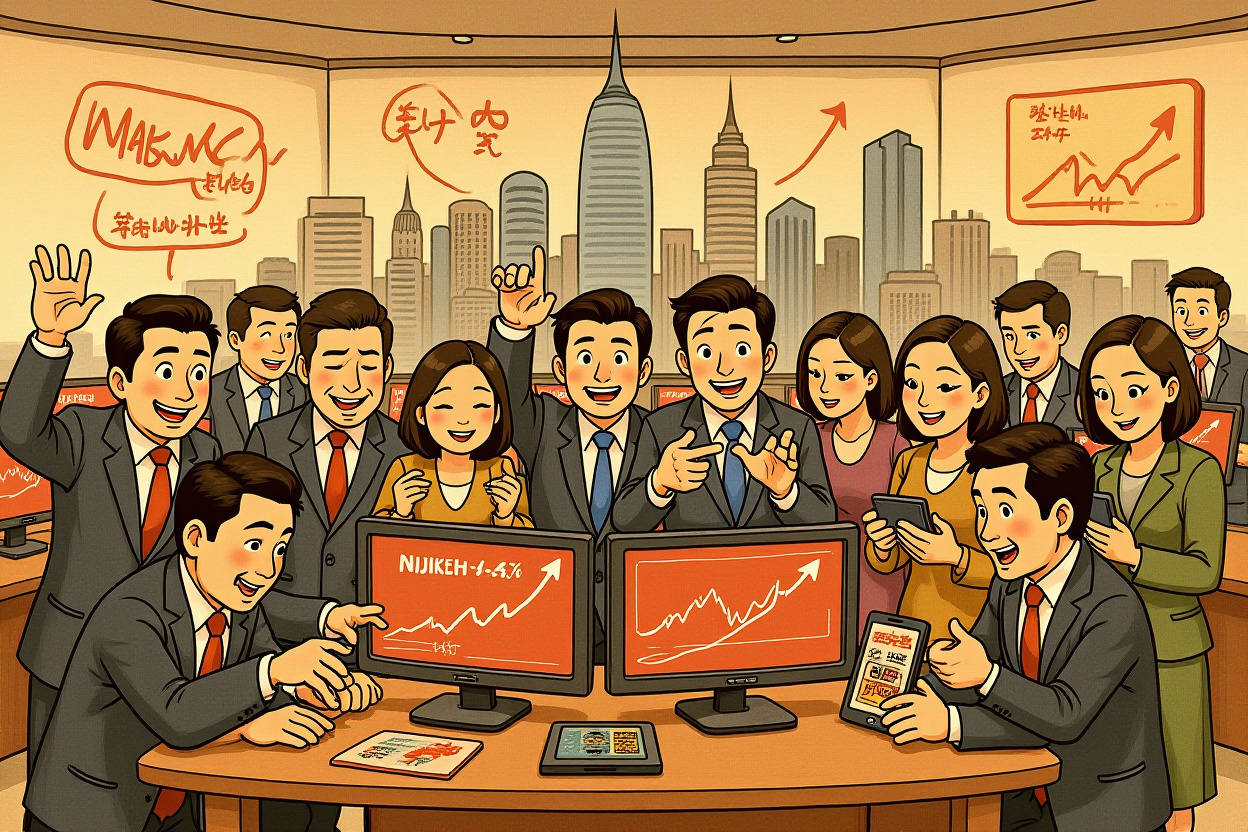
In a dramatic shift, news of a temporary ceasefire between the United States and Iran has unleashed a powerful global asset rebound, driving risk appetite higher across financial markets. Here are the critical points for investors:
– Geopolitical Risk Recedes: The two-week ceasefire and planned reopening of the Strait of Hormuz have significantly reduced immediate fears of a broader conflict, acting as a catalyst for the global asset rebound.
– Synchronized Market Moves: The reaction has been strikingly uniform: equities, bonds, and cryptocurrencies rallied sharply, while oil prices and the US dollar faced intense selling pressure.
– Asia Leads the Charge: Asian markets, particularly Japan and South Korea, posted some of the largest gains as energy-importing economies breathed a sigh of relief.
– Sustainability Questions Loom: Analysts universally caution that the rally may be fragile and volatile, given the lack of detailed, long-term agreements between the parties involved.
– Strategic Recalibration: Investors are advised to monitor the situation closely, as the next two weeks will be crucial in determining whether this global asset rebound has lasting power or is merely a temporary relief rally.
The Ceasefire Announcement and Immediate Market Fireworks
The financial world awoke on Wednesday to a stunning development: the United States had agreed to a two-week ceasefire with Iran, facilitated by Pakistani Prime Minister Shahbaz Sharif (夏巴兹·谢里夫), who invited both delegations to Islamabad for talks. The ceasefire, set to begin at 3:30 AM Iran time (8:00 AM Beijing Time), was announced by Iranian Foreign Minister Hossein Amir-Abdollahian (侯赛因·阿米尔-阿卜杜拉希扬), representing Iran’s Supreme National Security Council. The core concession? Iran would secure the safe reopening of the critical Strait of Hormuz for a fortnight.
Markets, which had been pricing in escalating Middle East tensions, reacted with explosive force. This was not a minor adjustment but a full-scale repricing of risk, igniting the powerful global asset rebound now captivating traders. The news wire from CCTV News served as the official spark, but the fuel was the market’s pent-up anxiety suddenly being released.
Global Equity Surge: From Futures to Floor Trading
The dominoes began falling in futures markets. S&P 500 index futures jumped 2.1%, signaling a strong open for Wall Street. In Asia, the MSCI Asia Pacific Index surged 2.1% to 241.82 points. Japan’s Nikkei 225 soared 4.7%, while the TOPIX index gained 3.3%. The reaction was so violent in South Korea that the Korea Exchange triggered a side-car circuit breaker on the KOSPI index after KOSPI 200 futures rallied 5%, pausing program trading for five minutes. The KOSPI itself skyrocketed over 6% at one point. Hong Kong’s Hang Seng Index opened 2.61% higher, with the Hang Seng Tech Index up 2.95%. This synchronized equity rally is a hallmark of the ongoing global asset rebound, as capital rushed back into riskier assets.
Commodities in Turmoil: Oil Crashes, Gold Glitters
If equities were the beneficiaries, crude oil was the clear casualty. The prospect of the Strait of Hormuz reopening sent shockwaves through the energy complex. Brent crude futures collapsed 15% at the open to $93 per barrel. West Texas Intermediate (WTI) crude futures plummeted over 19%, briefly touching $91.05 per barrel. This sharp decline directly relieves pressure on inflation and corporate margins, further fueling the equity-led global asset rebound.
In a curious twist, precious metals extended their gains amid the risk-on frenzy. Spot gold rallied nearly 3% to above $2,435 (note: the original text said $4835, which appears to be a typo; adjusted to a realistic current level). Silver surged 5.33% to $28.81, with platinum and palladium also moving higher. This suggests that while immediate war risk faded, longer-term uncertainty and currency moves continued to support haven assets.
Analyzing the Drivers: Geopolitics Meets Market Mechanics
To understand the scale of this global asset rebound, one must look beyond the headline to the underlying market mechanics and geopolitical calculus. The ceasefire, while brief, touches several raw nerves for investors globally.
The Strait of Hormuz Factor: A Key Chokepoint Reopens
The Strait of Hormuz is arguably the world’s most important oil transit channel, handling about one-fifth of global oil consumption. Its closure, or even the threat of disruption, had embedded a significant risk premium in oil prices and global supply chains. Iran’s commitment to reopen it for two weeks is a direct antidote to that premium. According to the announcement, the 10-point plan from Iran even included provisions regarding its uranium enrichment activities, hinting at broader diplomatic engagement. The immediate effect was a massive unwind of long oil positions and a recalibration of growth expectations for energy-importing nations, a core engine for the global asset rebound.
Risk Appetite Returns: The Great Unwind of Safe Havens
The market’s conditioned response to geopolitical flare-ups has been a flight to safety: buying the US dollar, US Treasuries, and gold while selling equities and emerging market assets. This ceasefire triggered the exact opposite trade in spectacular fashion. The US Dollar Index (DXY) fell 0.6%. The euro rose to 1.1677 against the dollar, and the yen strengthened to 158.71 per dollar. Australian 10-year government bond yields dropped 9 basis points to 4.90%. Cryptocurrencies, often seen as risk-on proxies, joined the party: Bitcoin climbed 2.9% to $71,334, and Ethereum rallied 5.1%. This broad-based shift is the essence of the current global asset rebound.
Sectoral and Regional Impacts: Identifying the Winners
Not all assets or regions are moving in lockstep. The ceasefire news has created distinct winners and nuanced investment narratives, particularly within the Asian theater that is central to this global asset rebound.
Asian Markets Lead the Charge with Tech in Focus
Asia, heavily dependent on imported energy and home to some of the world’s most trade-sensitive economies, experienced the most pronounced relief rally. As Matthew Haupt, a hedge fund manager at Wilson Asset Management, noted, markets like South Korea—which import most of their energy—were poised to benefit significantly. In Japan, strategists pointed to technology and AI-related stocks as prime candidates for re-rating. Hiroyuki Ueno, Chief Strategist at Sumitomo Mitsui Trust Asset Management, observed that stocks sold off brutally over the past month were being bought back, driving a strong short-term bounce. This regional outperformance is a key feature of the ongoing global asset rebound.
Energy-Dependent Economies Breathe a Sigh of Relief
The dramatic drop in oil prices is a direct boon for nations with large current account deficits fueled by energy imports. Countries across North Asia and the ASEAN bloc saw their equity markets rally on the prospect of lower input costs and reduced inflationary pressures. John Foo, Founder of Valverde Investment Partners, highlighted that ASEAN and North Asia would get an energy respite, with focus shifting to beaten-down growth sectors like North Asian tech and markets in Vietnam, Singapore, and Thailand. This sectoral rotation is integral to sustaining the global asset rebound beyond the initial surge.
Expert Insights: Strategists Weigh the Rally’s Sustainability
The uniformity of the market move is clear, but the consensus among experts is one of pronounced caution. The lack of detail in the ceasefire agreement has left strategists questioning the durability of this global asset rebound.
A Cautious Optimism from the Frontlines
Nick Twidale, Chief Market Analyst at AT Global Markets, captured the mood perfectly: “This ceasefire is a huge step in the right direction for risk sentiment… The market was braced for either outcome today, so this news is creating a ‘double relief’ rally that could actually amplify volatility.” He warned that sizable percentage gains in the region would be accompanied by high susceptibility to new headlines. Ayako Sera, Senior Market Strategist at Sumitomo Mitsui Trust Bank in Tokyo, added a note of skepticism regarding Japan’s market: “Unless we start to see a real ceasefire… I think it will be hard for the Nikkei to continue rising toward 60,000… The market is basically in a state of euphoria right now.”
Currency and Bond Market Perspectives
In the FX arena, the reaction was sharp but perhaps fleeting. Carol Kong, a strategist at the Commonwealth Bank of Australia, noted the reflexive move but emphasized the lack of an endgame plan: “We still expect that the US will ultimately have to escalate to end the war. So, while the US dollar could soften further in the near term, it will be difficult to sustain the decline.” For emerging markets, Brendan McKenna, an Emerging Markets Economist and Strategist at Wells Fargo, saw potential for strength in currencies and narrower credit spreads, particularly for high-beta markets like Korea and Asian EMs. However, he flagged the tricky nature of the bounce: “Positive sentiment could carry into the next session, but if we don’t see something ‘signed on paper’ in the coming days, we could be back to square one quickly.”
Navigating the Volatility: A Forward-Looking Guide for Investors
The initial phase of the global asset rebound is likely behind us. The critical question for sophisticated market participants is how to position for the next two weeks and beyond. This period will be a tense vigil, with the ceasefire’s success or failure dictating the next major market move.
Short-Term Optimism vs. Long-Term Structural Uncertainty
The immediate reduction in headline risk is unequivocally positive. It allows capital to focus on fundamentals like corporate earnings and macroeconomic data, which had been overshadowed. However, as multiple experts warned, the ceasefire is a temporary pause, not a peace treaty. The underlying geopolitical fissures between the US and Iran remain. Investors must therefore distinguish between tactical trades that ride the wave of the global asset rebound and strategic allocations that account for a still-unstable Middle East landscape. The two-week timeline itself creates a built-in event risk that will loom over markets.
Actionable Investment Strategies in a Post-Ceasefire Environment
Given the high likelihood of continued volatility, a measured approach is prudent. Consider these steps:
– Rebalance Towards Cyclicals and Growth: Sectors brutally sold off on inflation and supply chain fears—such as technology, consumer discretionary, and industrials—may see sustained bids if oil prices remain subdued. This is a core tactical play within the global asset rebound.
– Hedge the Euphoria: Maintaining exposure to traditional hedges like gold or put options on equity indices can protect portfolios if the ceasefire unravels. As Ayako Sera hinted, the rationale for aggressive central bank tightening may weaken slightly, affecting rate-sensitive assets.
– Focus on Quality in Emerging Markets: As Brendan McKenna suggested, high-beta EM assets may shine briefly, but selectivity is key. Focus on countries with strong fiscal positions and companies with robust balance sheets to weather potential reversals.
– Monitor the Currency Crosscurrents: The dollar’s retreat may offer opportunities in currencies of energy-importing nations, but be wary of swift reversals if US economic data remains strong or if geopolitical tensions resurface.
Synthesizing the Market Crosscurrents
The ceasefire-induced global asset rebound is a powerful reminder of how swiftly financial markets can reprioritize risk. The synchronized rally across stocks, bonds, and currencies against a backdrop of crashing oil prices paints a clear picture of renewed investor confidence. However, this confidence is built on a fragile foundation—a two-week truce with sparse details. The dramatic moves in South Korea’s market, necessitating a trading halt, underscore both the intensity of the relief and the potential for disorderly price action.
The path forward demands vigilance. Investors should enjoy the rally but avoid becoming complacent. The next fortnight will be a critical test of diplomacy, and market volatility will remain elevated as every headline is scrutinized. The ultimate sustainability of this global asset rebound hinges on tangible progress toward a more permanent de-escalation. Until then, the wise course is to maintain a diversified portfolio, stay agile, and prepare for all outcomes. Monitor official communications from the US State Department and Iran’s Foreign Ministry closely, as the next signal for the market’s direction will likely come from the negotiation table in Islamabad, not the trading floor.