



Executive Summary
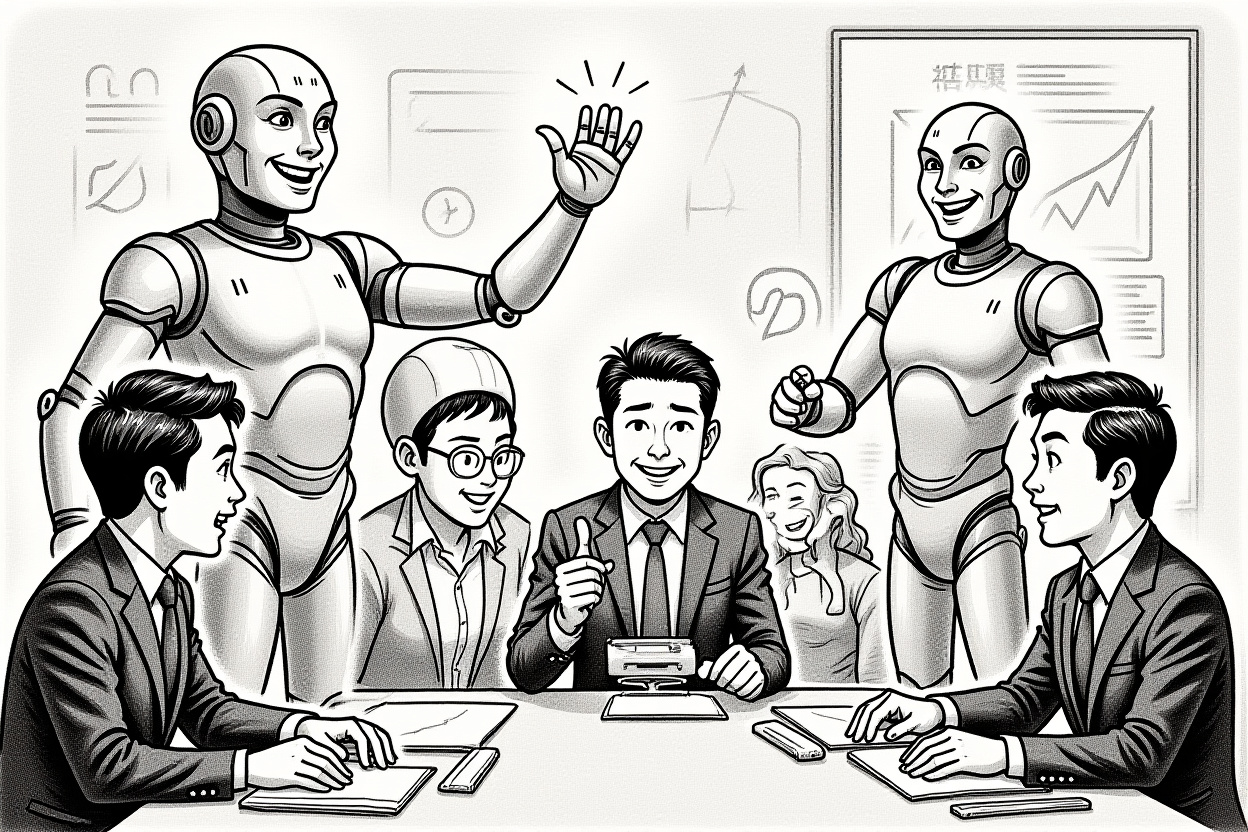
– The 2026 CCTV Spring Festival Gala served as a national showcase for four top Chinese embodied intelligence firms: Magic Atom, Galaxy Universal, Yushu Technology, and Songyan Power, highlighting humanoid robots in performances.
– This event marks a pivotal shift from laboratory demonstrations to real-world commercialization, with the industry facing critical tests in industrial, commercial, and domestic applications.
– IDC projects China’s embodied intelligent robot user spending to reach $77 billion by 2030, with a 94% CAGR, underscoring the market’s explosive growth potential.
– The Gala acts as embodied intelligence’s ultimate test field, validating technological readiness while exposing the challenges of scalability and reliability in unstructured environments.
– 2026 is poised as a watershed year, where success will be measured by tangible orders and practical deployments rather than stage performances or funding rounds.
The National Stage Lights Up for Robotics
The CCTV Spring Festival Gala, China’s most-watched television event, has long been a barometer for technological trends, from 5G rollouts to AI integrations. In 2026, it transformed into embodied intelligence’s ultimate test field, with humanoid robots taking center stage in a coordinated display of domestic innovation. This wasn’t merely a spectacle; it was a strategic unveiling, signaling that China’s embodied AI sector is transitioning from concept to reality. For global investors and industry watchers, the Gala provided a rare, high-stakes preview of which players might lead the next wave of automation—and which could stumble when the lights dim.
The focus phrase, embodied intelligence’s ultimate test field, encapsulates the Gala’s dual role: a public relations triumph and a rigorous assessment of robustness under pressure. Unlike controlled lab environments, the live broadcast demanded flawless execution, with millions scrutinizing every move. This visibility pressures companies to demonstrate not just technical prowess but also commercial viability, as stakeholders from venture capital to manufacturing clients tune in. The performance underscored how China is leveraging its cultural megaphone to accelerate tech adoption, similar to past pushes in electric vehicles or digital payments.
The Four Contenders: A Deep Dive into Strategic Positioning
Four companies shared the spotlight, each with distinct titles hinting at their niche:
– Yushu Technology, labeled the “Gala Robot Partner,” built on its 2025 breakout with a martial arts routine, “Wu BOT,” alongside the Henan Tagou Martial Arts School. Its repeated Gala appearances suggest strong backing and performance reliability, positioning it as a frontrunner in entertainment and public demonstrations.
– Songyan Power, the “Gala Humanoid Robot Partner,” featured in a comedy sketch, indicating a focus on human-robot interaction and narrative integration, potentially for service or companion roles.
– Magic Atom, dubbed the “Gala Intelligent Robot Strategic Partner,” supported a song performance, emphasizing AI-driven coordination and perhaps targeting educational or promotional applications.
– Galaxy Universal, the “Gala Designated Embodied Large Model Robot,” appeared in a micro-film, highlighting its AI model capabilities for complex, scenario-based tasks, likely aimed at commercial or industrial uses.
These nuanced distinctions reveal a maturing market where firms are carving out specialized paths rather than competing head-on. For investors, this diversity reduces direct competition risks but raises questions about which segment—industrial, commercial, or consumer—will yield the earliest profits. The Gala served as embodied intelligence’s ultimate test field by forcing these companies to articulate their value propositions under national scrutiny, a precursor to customer pitches in boardrooms worldwide.
From Stage to Reality: The Commercialization Crucible
While the Gala offered a glamorous debut, the real challenge begins off-stage. Industry insiders often quip, “Robots can’t dance forever,” emphasizing that sustained success hinges on practical applications. The embodied intelligence sector must now navigate a tripartite gauntlet: industrial, commercial, and domestic environments, each with escalating complexities. This transition is where embodied intelligence’s ultimate test field truly manifests—not in choreographed routines, but in unpredictable, cost-sensitive settings that demand resilience and adaptability.
Industrial Applications: The First and Most Critical Frontier
Factories represent the low-hanging fruit for embodied intelligence, with clear pain points like labor shortages in sorting, assembly, and logistics. According to data from the Ministry of Industry and Information Technology (MIIT), China’s manufacturing sector faces a deficit of over 30 million workers by 2030, driven by demographic shifts and rising wages. Robots that excel on stage must prove they can handle 24/7 operations with near-zero error rates. For instance, a misstep in a Gala dance is forgivable, but a malfunction on an automotive assembly line can halt production, costing millions per minute.
Key hurdles include:
– Environmental robustness: Factories often have poor lighting, dust, and temperature variations that can disrupt sensors and actuators.
– Integration with legacy systems: Many Chinese factories use outdated machinery, requiring robots to interface seamlessly without costly upgrades.
– Cost-effectiveness: With thin profit margins, manufacturers need rapid ROI, pushing companies to balance advanced features with affordability.
Companies like Galaxy Universal, with its large-model focus, may target quality inspection roles, while Songyan Power’s interactive skills could suit collaborative assembly. The Gala performance was a proxy for precision, but the industrial sector will demand relentless validation—a true embodiment of the ultimate test field.
Commercial and Domestic Scenes: The Long Road to Mass Adoption
Beyond factories, embodied intelligence faces tougher trials in commercial spaces like retail, hospitality, and healthcare. These settings involve dynamic human interactions, requiring robots to perceive, decide, and act in real-time. A robot that flawlessly follows a scripted Gala skit might falter when a customer asks an unexpected question in a crowded mall. This gap highlights the need for advanced computer vision, natural language processing, and obstacle avoidance—capabilities that are still evolving.
In homes, the challenges multiply due to highly unstructured environments. Safety becomes paramount, as robots must navigate around children, pets, and clutter without causing harm. Affordability is another barrier; while industrial robots can command high prices due to productivity gains, consumer models must be priced for mass appeal. The journey from Gala showcase to household helper is fraught with technical and economic obstacles, making it the final and most demanding phase of embodied intelligence’s ultimate test field.
Market Explosion: Data-Driven Growth Projections
The potential is staggering. IDC forecasts that China’s embodied intelligent robot user spending will surge to $77 billion by 2030, growing at a compound annual rate of 94%. This near-doubling year-over-year trajectory underscores why investors are flocking to the sector, with venture capital inflows exceeding $2 billion in 2025 alone, according to PitchBook data. The Gala spotlight has amplified this interest, but sustained growth depends on translating hype into revenue.
Investment Cycles and Innovation Drivers
China’s embodied intelligence boom is fueled by several factors:
– Policy support: Initiatives like “Made in China 2025” and the 14th Five-Year Plan prioritize robotics and AI, offering subsidies and R&D grants. For example, the Ministry of Science and Technology has allocated over $1.5 billion for AI projects, including embodied systems.
– Ecosystem maturity: With giants like Huawei and Baidu developing underlying AI platforms, startups can focus on application layers, accelerating innovation.
– Global competition: As the U.S. and Japan advance in robotics, China’s push is partly strategic, aiming for self-reliance in critical technologies.
However, this influx of capital has led to valuation bubbles, with some pre-revenue companies commanding unicorn status. The Gala served as a reality check, separating firms with demonstrable tech from those relying on buzz. As the market consolidates, players that passed this initial test will likely attract further funding, while others may struggle to secure Series B rounds.
Regulatory and Economic Backdrop: Navigating the Chinese Landscape
Operating in China’s embodied intelligence sector requires adept navigation of regulatory frameworks and economic policies. The Cyberspace Administration of China (CAC) and the Ministry of Industry and Information Technology (MIIT) are increasingly scrutinizing AI ethics and data security, which impacts robot deployment in sensitive areas like healthcare or public spaces. For instance, new guidelines on AI governance, released in late 2025, mandate transparency in algorithmic decision-making, a hurdle for autonomous robots.
Government Endorsement and Strategic Imperatives
The Gala’s inclusion of embodied intelligence wasn’t accidental; it reflects state-backed promotion of homegrown tech, akin to past showcases for high-speed rail or solar power. This endorsement lowers market entry barriers by building public trust and attracting corporate clients. However, it also comes with expectations: companies must align with national goals, such as reducing dependency on foreign robotics imports, which currently account for 60% of China’s industrial robot market, per International Federation of Robotics data.
Economically, embodied intelligence ties into broader trends like aging demographics and urbanization. With China’s workforce shrinking, robots offer a solution to maintain productivity. The Gala, as embodied intelligence’s ultimate test field, thus serves a macroeconomic purpose, signaling readiness to address these challenges. Investors should monitor policy shifts, as subsidies or procurement mandates could quickly alter competitive dynamics.
Technical Hurdles and Business Model Evolution
The path from Gala glory to profitability is littered with technical obstacles. Reliability remains a top concern; many robots function well in controlled settings but degrade in real-world conditions. For example, sensor failures in dusty warehouses or software glitches during peak retail hours can erode client confidence. Companies must invest heavily in testing and iteration, a process the Gala accelerated by providing a high-profile beta environment.
From B2B to B2C: Scaling the Revenue Ladder
Current business models are predominantly B2B, focusing on industrial and commercial leases or sales. Yushu Technology, for instance, has partnered with logistics firms for warehouse automation, while Magic Atom targets schools for STEM education. The Gala exposure helps secure these early contracts by demonstrating capability. However, gross margins are often slim due to high component costs, especially for precision actuators and AI chips, many of which are imported.
To achieve scalability, firms must:
– Localize supply chains: Reducing reliance on foreign parts, particularly from sanctions-affected regions, is critical for cost control and geopolitical resilience.
– Develop recurring revenue streams: Subscription models for software updates or maintenance services can enhance lifetime value.
– Foster ecosystem partnerships: Collaborating with cloud providers or IoT platforms can reduce development burdens and speed deployment.
The ultimate test field extends beyond technology to business acumen, where cash flow and customer retention will determine survivors. The Gala’s spotlight may have drawn first glances, but long-term contracts will seal deals.
Synthesizing the Journey Ahead for China’s Embodied Intelligence
The 2026 CCTV Spring Festival Gala was more than a show; it was a seminal moment that crystallized the progress and perils of China’s embodied intelligence sector. By serving as embodied intelligence’s ultimate test field, it validated technological milestones while exposing the rugged road to commercialization. The four showcased companies—Magic Atom, Galaxy Universal, Yushu Technology, and Songyan Power—now face a market that demands not just stageworthy performances but ironclad reliability in factories, adaptability in stores, and affordability in homes.
Key takeaways for investors and executives include:
– Prioritize firms with clear industrial or commercial pipelines over those focused solely on entertainment or demonstrations.
– Monitor regulatory developments, as policy tailwinds or headwinds could rapidly impact market access and funding.
– Assess technical differentiation, particularly in AI model robustness and hardware durability, which are critical for scaling beyond niche applications.
As the industry pivots from spectacle to substance, the embodied intelligence’s ultimate test field will shift to quarterly earnings reports and client case studies. For those navigating this space, the call to action is clear: look beyond the Gala’s glow and scrutinize real-world traction. Engage with companies that are transparent about their deployment challenges and growth metrics, and consider diversified exposure across the value chain, from component suppliers to end-user integrators. The robots have danced; now, they must deliver.