



Executive Summary
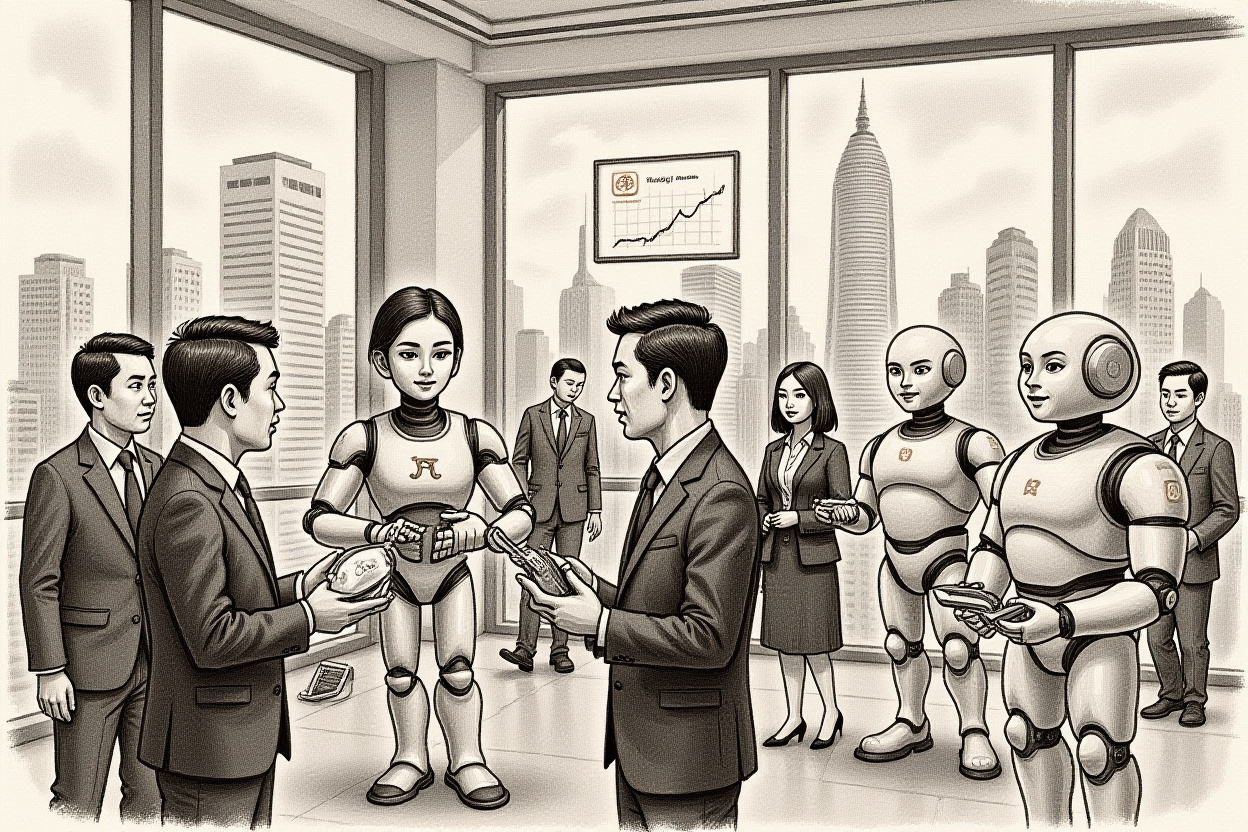
As the curtains rose on the 2026 CCTV Spring Festival Gala, a new era for Chinese technology unfolded. This annual spectacle, watched by hundreds of millions, served as the ultimate testing ground for embodied intelligence, showcasing the rapid advancement of domestic humanoid robotics. The performance highlighted critical shifts in the industry, from laboratory innovation to real-world application. Key takeaways include:
– The 2026 Gala featured four leading Chinese embodied intelligence companies—Magic Atom (魔法原子), Galaxy Universal (银河通用), Yushu Technology (宇树科技), and Songyan Power (松延动力)—marking their collective debut on a national stage and signaling industry maturity.
– These appearances underscore the transition from hype to commercialization, with embodied intelligence moving beyond entertainment into practical domains like manufacturing, logistics, and potentially households.
– IDC projects China’s embodied intelligence robot user spending to reach $770 billion by 2030, with a staggering 94% compound annual growth rate, positioning it as a high-growth sector for investors.
– The industry now faces three critical barriers to scale: integration into industrial settings, adaptation to dynamic commercial environments, and the long-term challenge of affordable, safe household adoption.
– 2026 is poised to be a watershed year, shifting the competitive focus from fundraising and showcases to tangible customer orders, repeat business, and sustainable revenue models.
The Spring Festival Gala as a National Stage for Technological Ambition
For decades, the CCTV Spring Festival Gala has served as a cultural touchstone and a powerful platform for showcasing China’s technological prowess. In 2026, it evolved into something more profound: the ultimate proving ground for embodied intelligence. This field, which integrates artificial intelligence with physical robotics to interact with the real world, took center stage in a way that captivated both domestic and international audiences. The Gala’s role extends beyond mere entertainment; it acts as a validation mechanism, signaling to consumers, investors, and policymakers which technologies are ready for prime time.
The embodied intelligence segment at the 2026 Gala was not a solitary act but a coordinated display of national capability. This strategic presentation underscores China’s ambition to lead in next-generation robotics, using the Gala’s massive viewership to accelerate public acceptance and commercial interest.
A Collective Debut of Domestic Champions
The 2026 performance marked a pivotal moment as four homegrown embodied intelligence firms shared the limelight. Yushu Technology (宇树科技), returning after a breakout appearance in 2025, partnered with the Henan Tagou Martial Arts School for a wushu routine titled “武 BOT.” Songyan Power (松延动力) featured in a comedy sketch with veteran performers Cai Ming (蔡明) and Wang Tianfang (王天放). Magic Atom (魔法原子) supported a musical performance, while Galaxy Universal (银河通用) appeared in a micro-film with popular actors Shen Teng (沈腾) and Ma Li (马丽). This ensemble approach highlighted the diversity of applications, from entertainment to service-oriented tasks, within the embodied intelligence ecosystem.
Beyond Viral Moments: The Gala’s Strategic Significance
The Gala offers more than fleeting viral fame. For embodied intelligence companies, it provides unparalleled brand exposure and a stamp of approval from one of China’s most trusted institutions. This credibility is crucial for attracting enterprise clients, securing follow-on funding, and building partnerships across the supply chain. As noted by industry observers, the Gala has become the first display window for commercialization, testing whether these robots can perform under pressure and in front of a live audience. Success here is often seen as a prerequisite for broader market entry, making it a critical milestone in the journey from concept to reality.
Decoding the Divergence: Partner Titles Reveal Strategic Paths
A subtle yet telling detail from the 2026 Gala was the variation in official partner titles assigned to each company. Yushu Technology was dubbed the “Gala Robot Partner,” Songyan Power the “Gala Humanoid Robot Partner,” Magic Atom the “Gala Intelligent Robot Strategic Partner,” and Galaxy Universal the “Gala Designated Embodied Large Model Robot.” These nuanced distinctions reflect deeper divergences in technical architecture, product focus, and long-term business strategy within the embodied intelligence landscape.
Such differentiation is not merely semantic; it signals to the market where each firm is placing its bets. For instance, a focus on “humanoid” versus “intelligent” robotics may indicate priorities in form factor or AI capability. Understanding these paths is essential for investors assessing which companies are best positioned for specific applications, from industrial automation to consumer-facing roles.
Market Backing and Growth Projections
The confidence displayed on the Gala stage is bolstered by robust market forecasts. According to IDC, China’s embodied intelligence robot user spending is projected to reach $770 billion by 2030, growing at an annual compound rate of 94%. This explosive growth trajectory underscores the sector’s potential but also heightens the urgency for companies to move from demonstration to deployment. The Gala serves as a catalyst, aligning public perception with this optimistic outlook and encouraging capital flow into the industry.
For institutional investors, these projections highlight embodied intelligence as a high-stakes arena. Early movers who successfully navigate the commercialization hurdles could capture significant market share, while those that remain reliant on stage performances may struggle to survive. The Gala, therefore, is not just a showcase but a selection event, identifying which players have the technical depth to transition into sustainable businesses.
The Real Examination Begins After the Curtain Falls
When the Gala’s lights dim and the social media buzz fades, the embodied intelligence industry confronts its most daunting challenge: proving value beyond the stage. As one industry insider starkly put it, “Robots can’t dance on stage forever.” The transition from controlled performances to unstructured, real-world environments is where true viability is tested. This phase separates contenders from pretenders, demanding reliability, adaptability, and cost-effectiveness that go far beyond choreographed routines.
The journey from showcase to scale involves navigating three sequential barriers, each more complex than the last. Overcoming these is essential for embodied intelligence to evolve from a technological curiosity into a foundational component of China’s economy.
Barrier One: Conquering the Factory Floor
Industrial automation represents the most immediate and lucrative market for embodied intelligence. Tasks like sorting, assembly, loading, inspection, and transportation in manufacturing facilities face chronic labor shortages. However, factories are unforgiving environments that prioritize uptime, precision, and low operational costs. A robot that stumbles during a Gala performance might be forgiven, but a minute of downtime on a production line translates directly into financial loss.
Key requirements for success here include:
– High durability and 24/7 operational reliability.
– Seamless integration with existing manufacturing execution systems (MES).
– A compelling return on investment (ROI) through labor substitution and efficiency gains.
Companies like Yushu Technology and Songyan Power are increasingly targeting this segment, but success requires extensive field testing and iterative improvement based on real feedback from factory managers.
Barrier Two: Adapting to Dynamic Commercial Spaces
Beyond factories, embodied intelligence must prove itself in commercial settings such as retail stores, warehouses, hotels, and hospitals. These environments introduce variables like unpredictable human traffic, diverse obstacles, and varied task demands. Here, robots need advanced perception, decision-making, and interaction capabilities—going beyond pre-programmed movements to handle spontaneous situations.
For example, a robot that navigates a crowded supermarket must avoid children, shopping carts, and answer customer queries. This tests the integrated system of sensors, AI models, and mechanical actuators that define embodied intelligence. Firms like Magic Atom and Galaxy Universal, with their focus on interactive and service-oriented models, are likely eyeing these applications, but the technical hurdle is significant.
Scaling the Final Frontier: The Home as the Ultimate Goal
The most ambitious and challenging market for embodied intelligence is the household. Domestic environments are highly unstructured, with uneven floors, scattered objects, pets, children, variable lighting, and ambiguous user commands. All the complexities avoided in industrial and commercial settings converge here, demanding robots that are exceptionally safe, intelligent, user-friendly, and affordable.
While this segment offers the largest addressable market—millions of potential homes—it remains the longest-term play. Current cost structures and technological limitations make widespread household adoption a future aspiration rather than a near-term reality. However, progress in other domains will lay the groundwork, driving down costs and improving capabilities through economies of scale and R&D breakthroughs.
The Core Metrics: Adoption and Revenue
Ultimately, the embodied intelligence sector will be judged by two straightforward metrics: adoption rates and revenue generation. Without genuine customer orders, repeat purchases, and scalable income streams, even the most impressive Gala performances and lofty valuations are unsustainable. The industry is shifting from a phase dominated by venture capital funding and flashy demonstrations to one focused on client acquisition and unit economics.
This transition is already underway. According to reports from Chinese media outlets like Xiaofanzhuo and Zimu AI, companies are increasingly competing for pilot projects and long-term service contracts rather than merely seeking media attention. This pragmatic turn is a healthy sign of maturation, aligning technological development with market needs.
2026: The Watershed Year for Embodied Intelligence
The 2026 Spring Festival Gala may be remembered as the inflection point where embodied intelligence moved from the fringe to the forefront of China’s tech agenda. This year marks the beginning of a more disciplined era, where survival depends on delivering tangible value rather than capturing fleeting headlines. For investors, this means conducting deeper due diligence, looking beyond demo videos to assess order books, patent portfolios, and partnerships with industrial conglomerates.
The focus phrase embodied intelligence encapsulates this entire journey—from its showcase on national television to its struggle for commercial relevance. As the industry navigates this critical phase, stakeholders must remain vigilant, supporting innovations that address real pain points while avoiding hype-driven investments.
Strategic Guidance for Market Participants
For institutional investors and corporate executives monitoring this space, several actionable insights emerge:
– Prioritize companies with demonstrated deployments in industrial or commercial settings, as these indicate higher technology readiness levels (TRL).
– Monitor regulatory developments from bodies like the Ministry of Industry and Information Technology (工业和信息化部), which will shape safety standards and market access for robotics.
– Look for firms with robust ecosystems, including partnerships with semiconductor suppliers, software developers, and end-user industries, to ensure scalability.
– Consider the competitive landscape: while Chinese companies are advancing rapidly, they face global rivals from the U.S., Japan, and Europe, making international market strategies a key differentiator.
From Stage to Sustainable Impact
The 2026 CCTV Spring Festival Gala provided a dazzling snapshot of China’s progress in embodied intelligence, but the real work is just beginning. The companies that shone on stage must now prove their mettle in factories, warehouses, and eventually homes. This journey will be fraught with technical hurdles, economic constraints, and competitive pressures, but the potential rewards are immense.
As the industry pivots from performance to practicality, the ultimate testing ground shifts from the Gala’s stage to the global marketplace. For savvy investors and business leaders, this transition presents a unique opportunity to engage with a transformative technology at a pivotal moment. The call to action is clear: look beyond the spectacle, evaluate the underlying business models, and position strategically to capitalize on the embodied intelligence revolution as it moves from concept to cornerstone of the digital economy.