



Executive Summary
- The 2026 CCTV Spring Festival Gala served as a national platform for four Chinese embodied AI companies—魔法原子 (Magic Atom), 银河通用 (Galaxy Universal), 宇树科技 (Unitree Robotics), and 松延动力 (Songyan Power)—to demonstrate humanoid robots, signaling a shift from lab concepts to commercial readiness.
- This high-profile exposure underscores China’s aggressive push in embodied intelligence, with IDC projecting the market to reach $770 billion in user spending by 2030, offering substantial growth opportunities for investors.
- Differentiated partnership titles at the Gala reveal varied strategic approaches, highlighting how companies are positioning for industrial, commercial, and domestic adoption amid intensifying competition.
- The real test begins post-Gala, as firms must prove reliability in practical applications like manufacturing and healthcare to achieve sustainable revenue, making 2026 a potential industry inflection point.
- For global investors, the event provides critical insights into China’s technological advancements and regulatory support, but requires careful evaluation of execution risks and market scalability.
The Spring Festival Gala: A National Stage for Technological Ambition
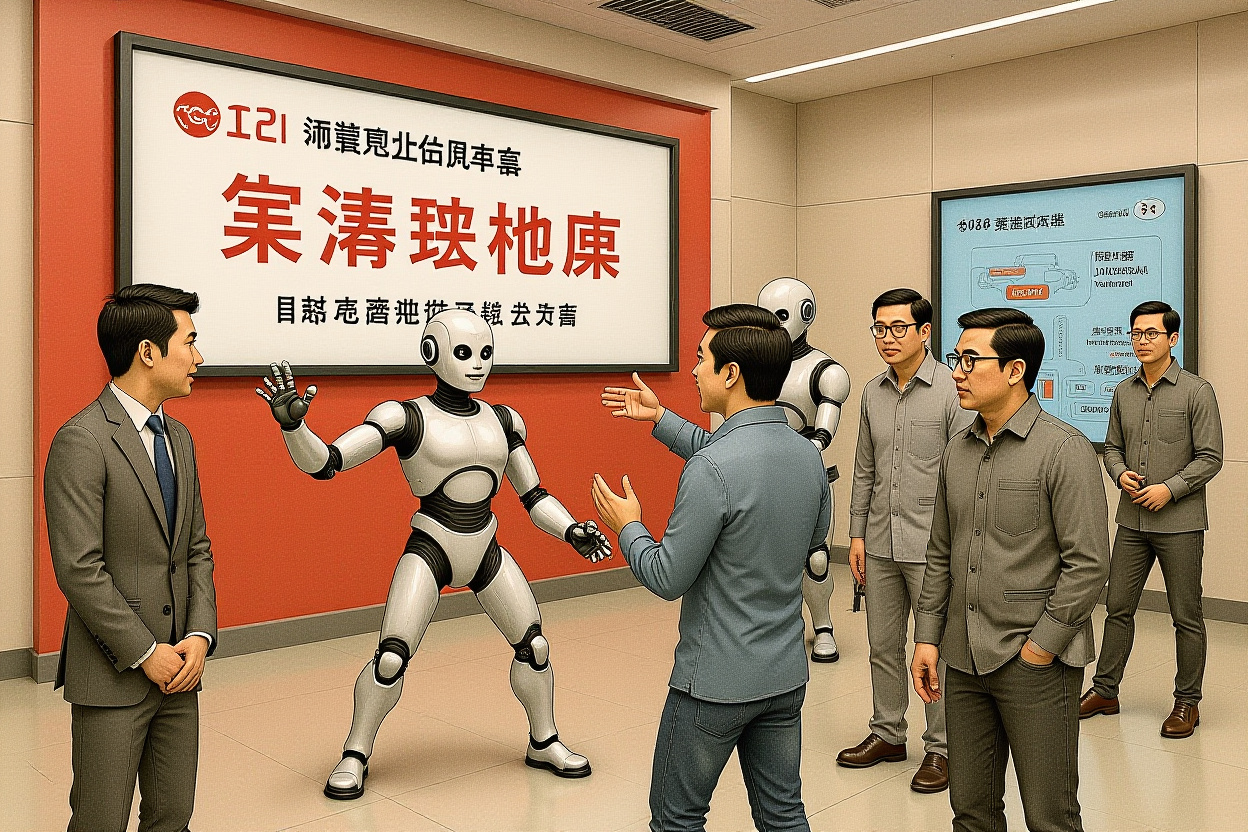
For decades, the CCTV Spring Festival Gala has transcended mere entertainment to become a barometer for China’s technological trends, watched by over a billion viewers globally. In 2026, this tradition reached a new zenith as the stage transformed into a dynamic showcase for embodied AI, with humanoid robots taking center stage in a display that captured the world’s attention. This event wasn’t just a performance; it was a strategic declaration of China’s prowess in robotics and artificial intelligence, aimed at both domestic and international audiences. The Spring Festival Gala has effectively become the ultimate proving ground for these technologies, blending cultural spectacle with industrial ambition to signal a new era in automation.
The 2026 edition marked a pivotal shift from fragmented tech demonstrations to a coordinated ‘集团军’ (group army) approach, with four leading firms—魔法原子 (Magic Atom), 银河通用 (Galaxy Universal), 宇树科技 (Unitree Robotics), and 松延动力 (Songyan Power)—sharing the limelight. This collective亮相 (debut) highlights how embodied AI is moving from niche research to mainstream relevance, backed by state media endorsement that amplifies investor confidence. For sophisticated market participants, the Spring Festival Gala offers a rare glimpse into the competitive landscape, where technological differentiation meets public perception, shaping capital flows in China’s equity markets.
Showcasing China’s Technological Prowess to Global Investors
The Gala’s robot performances, from synchronized dances to martial arts routines, were meticulously choreographed to demonstrate agility, coordination, and AI integration. 宇树科技 (Unitree Robotics), in particular, built on its 2025春晚 (Spring Festival Gala) success by partnering with the河南塔沟武术学校 (Henan Tagou Martial Arts School) for a program titled《武 BOT》(Wu BOT), blending traditional culture with cutting-edge tech. Such collaborations aren’t merely artistic; they serve as live proof-of-concepts, reassuring institutional investors about the maturity of Chinese robotics. According to industry analysts, the Spring Festival Gala acts as a ‘第一展示窗口’ (first display window), accelerating commercial adoption by building public trust and showcasing real-world applications beyond controlled environments.
Data from国际数据公司 (International Data Corporation, IDC) supports this optimism, predicting that China’s embodied intelligent robot user spending will hit $770 billion by 2030, with a compound annual growth rate of 94%. This explosive trajectory is fueled by government initiatives like ‘中国制造2025’ (Made in China 2025) and supportive policies from bodies such as the工业和信息化部 (Ministry of Industry and Information Technology, MIIT). For fund managers, the Spring Festival Gala provides a tangible metric to assess which companies are leveraging such tailwinds effectively, turning technological flair into marketable solutions.
Decoding the Players: Strategic Differentiation in a Crowded Field
Beneath the glitz of the Spring Festival Gala, a subtle battle of positioning unfolded, revealed through the varied partnership titles accorded to each company. 宇树科技 (Unitree Robotics) was labeled a ‘春晚机器人合作伙伴’ (Spring Festival Gala Robot Partner), 松延动力 (Songyan Power) as a ‘春晚人形机器人合作伙伴’ (Spring Festival Gala Humanoid Robot Partner), 魔法原子 (Magic Atom) as a ‘春晚智能机器人战略合作伙伴’ (Spring Festival Gala Intelligent Robot Strategic Partner), and 银河通用 (Galaxy Universal) as a ‘春晚指定具身大模型机器人’ (Spring Festival Gala Designated Embodied Large Model Robot). These distinctions, though seemingly minor, reflect deep strategic forks in technology roadmaps and market targeting, critical for investors evaluating long-term viability.
宇树科技 (Unitree Robotics), for instance, has capitalized on its春晚 (Spring Festival Gala) fame to secure over 12 major event appearances and 7 dedicated robot competitions in 2025 alone, as reported by凤凰网财经《公司研究院》 (ifeng.com Finance ‘Corporate Research Institute’). This visibility has translated into increased venture capital interest, with the company reportedly eyeing an IPO on the科创板 (Science and Technology Innovation Board, STAR Market). In contrast, 松延动力 (Songyan Power) focused on collaborative小品 (sketch) performances, like with actors蔡明 (Cai Ming) and王天放 (Wang Tianfang) in《奶奶的最爱》(Grandma’s Favorite), emphasizing human-robot interaction—a key for commercial service robotics. Understanding these nuances helps investors allocate capital to firms aligned with specific growth vectors, from industrial automation to consumer-facing roles.
Investment Implications of Varied Technology Roadmaps
魔法原子 (Magic Atom) and 银河通用 (Galaxy Universal) represent other facets of the embodied AI spectrum. Magic Atom’s involvement in歌曲《智造未来》(Song ‘Intelligent Creation Future’) highlights its focus on entertainment and educational applications, while Galaxy Universal’s partnership with comedians沈腾 (Shen Teng) and马丽 (Ma Li) in微电影《我最难忘的今宵》(Micro-movie ‘My Most Unforgettable Tonight’) underscores its push into narrative-driven AI, potentially for advertising or hospitality. For corporate executives, these differences signal where supply chain opportunities might emerge, such as in sensor manufacturing or software development. The Spring Festival Gala thus acts as a litmus test, separating companies based on their ability to integrate AI models with physical robotics, a core challenge in embodied intelligence.
From a financial perspective, the varied titles also hint at partnership depths and revenue models. Strategic partners like Magic Atom may have longer-term contracts with中央电视台 (China Central Television, CCTV), offering stability, while designated partners like Galaxy Universal might be leveraging the exposure for pilot projects with enterprise clients. Investors should monitor subsequent announcements from these firms, such as partnerships with automotive manufacturers or logistics giants, to gauge commercialization progress. The Spring Festival Gala’s role as a ‘试金石’ (touchstone) cannot be overstated; it filters hype from substance, guiding capital toward technologies with genuine market fit.
The Real Challenge: Transitioning from Stage to Sustainable Market
As the春晚 (Spring Festival Gala) curtains close, the embodied AI industry faces a stark reality: performance artistry must evolve into practical utility to secure survival. The adage ‘机器人,不能永远只在舞台上跳舞’ (robots can’t dance on stage forever) resonates deeply here, underscoring that流量 (traffic) from events like the Spring Festival Gala is ephemeral without tangible applications. For institutional investors, this transition period is where risks and rewards crystallize, demanding scrutiny of companies’ abilities to navigate three critical hurdles: industrial adoption, commercial deployment, and domestic integration.
Industrial Adoption: The First and Most Lucrative Hurdle
Factories represent the most immediate revenue stream for embodied AI, with applications in分拣 (sorting),装配 (assembly), and搬运 (transportation). However, as noted by experts, industrial environments demand extreme reliability—7×24小时不间断运行 (24/7 operation) with minimal downtime—a far cry from the controlled春晚 (Spring Festival Gala) stage. Companies like 宇树科技 (Unitree Robotics) have begun piloting robots in manufacturing hubs such as Guangdong and Jiangsu provinces, but scalability remains a question. Investors should look for metrics like mean time between failures (MTBF) and cost-per-task efficiency, which are often disclosed in regulatory filings or industry reports from sources like the中国机器人产业联盟 (China Robotics Industry Alliance, CRIA).
Data from国家统计局 (National Bureau of Statistics, NBS) indicates that China’s industrial robot installation grew by 15% year-over-year in 2025, driven by labor shortages and automation mandates. This creates a ripe market for embodied AI firms, but competition is fierce with established players like沈阳新松机器人自动化股份有限公司 (Siasun Robot & Automation Co., Ltd.). The Spring Festival Gala showcased companies’ technological flair, but their success hinges on securing contracts with giants like华为技术有限公司 (Huawei Technologies Co., Ltd.) or比亚迪股份有限公司 (BYD Company Limited). For fund managers, tracking order books and client testimonials post-Gala will be crucial to identifying winners in this space.
Commercial and Domestic Scenarios: The Long Road to Profitability
Beyond factories, embodied AI must conquer商用场景 (commercial scenarios) such as retail, healthcare, and hospitality, where environments are unstructured and交互 (interaction) is key. The Spring Festival Gala demonstrated basic interaction capabilities, but real-world settings require advanced computer vision and natural language processing—areas where Chinese firms are investing heavily, backed by policies from the国家发展和改革委员会 (National Development and Reform Commission, NDRC). For example, Galaxy Universal’s collaboration with沈腾 (Shen Teng) hints at potential for customer service robots, but scalability depends on reducing costs below human labor equivalents.
The ultimate frontier is家庭 (household) adoption, a market with immense potential but steep challenges in safety, affordability, and usability. The Spring Festival Gala’s家庭-themed segments, like松延动力 (Songyan Power)’s小品 (sketch), subtly normalized robot companionship, yet industry estimates suggest mass adoption is at least a decade away. Investors should balance optimism with caution, focusing on companies that prioritize modular designs and partnerships with smart home ecosystems, such as those led by小米集团 (Xiaomi Corporation) or阿里巴巴集团 (Alibaba Group). The Spring Festival Gala may have sparked interest, but sustained revenue will come from iterative improvements and regulatory approvals from bodies like the国家市场监督管理总局 (State Administration for Market Regulation, SAMR).
Market Outlook: Investment Opportunities and Risks in Embodied AI
The 2026春晚 (Spring Festival Gala) has set the stage for a transformative year in China’s embodied AI sector, with implications for equity valuations and portfolio strategies. According to IDC’s forecast, the 94% CAGR underscores a hyper-growth phase, but investors must differentiate between speculative froth and fundamental value. The Spring Festival Gala serves as a catalyst, potentially boosting stock prices of listed affiliates or attracting venture capital to private firms, but due diligence is paramount given the high burn rates typical in robotics startups.
Growth Projections and Sector Dynamics
IDC’s $770 billion projection for 2030 is anchored in China’s dual-circulation strategy and technological self-reliance goals, which prioritize domestic innovation in AI and robotics. This aligns with initiatives like the’十四五’规划 (14th Five-Year Plan), which earmarks funds for research in具身智能 (embodied intelligence). For investors, this policy backdrop reduces regulatory uncertainty, but challenges persist, such as global supply chain disruptions or intellectual property disputes. The Spring Festival Gala highlighted Chinese firms’ capabilities, but international competitors from the U.S. and Japan remain formidable, making export potential a key metric to watch.
Financial instruments like robotics-focused ETFs on the上海证券交易所 (Shanghai Stock Exchange, SSE) or深圳证券交易所 (Shenzhen Stock Exchange, SZSE) offer diversified exposure, but direct investments in companies like宇树科技 (Unitree Robotics)—if it goes public—could yield higher returns. Analysts recommend monitoring quarterly reports for R&D spend versus revenue growth, as well as partnerships with state-owned enterprises, which often signal government backing. The Spring Festival Gala’s media blitz may drive short-term sentiment, but long-term success depends on achieving profitability in core applications, a point emphasized by industry leaders like Pan Gongsheng (潘功胜), Governor of the中国人民银行 (People’s Bank of China), in recent speeches on technological innovation.
Risk Factors and Investor Considerations
Key risks include technological immaturity, as seen in some春晚 (Spring Festival Gala) performances where robots exhibited lag or errors, and market saturation, with over 50 Chinese startups vying for dominance. Additionally, economic slowdowns could dampen capital expenditure in automation, affecting industrial demand. Investors should:
- Assess balance sheets for debt levels and cash reserves, using data from sources like the中国证券监督管理委员会 (China Securities Regulatory Commission, CSRC).
- Evaluate management teams for experience in scaling hardware businesses, as embodied AI requires robust supply chains.
- Diversify across the value chain, from component suppliers like宁波均胜电子股份有限公司 (Ningbo Joyson Electronic Corp.) to integrators.
The Spring Festival Gala has illuminated the path forward, but prudent investment requires a focus on metrics like customer acquisition cost and lifetime value, rather than mere stage presence. For global investors, engaging with local analysts or attending events like the世界机器人大会 (World Robot Conference) can provide deeper insights beyond the春晚 (Spring Festival Gala) spectacle.
Regulatory and Economic Context: Shaping the Future of Embodied AI
China’s embodied AI boom is inextricably linked to its broader economic policies and regulatory frameworks, which the Spring Festival Gala subtly reinforces. The event’s coordination with state media reflects alignment with national goals, such as reducing dependency on foreign technology and fostering ‘专精特新’ (specialized and sophisticated) enterprises. For business professionals, understanding this context is essential to anticipating market shifts and regulatory approvals that could impact investment timelines.
Government Support and Global Competitiveness
Agencies like the科学技术部 (Ministry of Science and Technology, MOST) have launched funding programs for robotics research, while local governments offer tax incentives for AI deployments in智慧城市 (smart city) projects. The Spring Festival Gala’s inclusion of robots dovetails with these efforts, promoting domestic innovation to a global audience. However, investors must also consider geopolitical tensions, such as U.S. export controls on AI chips, which could affect the supply of关键零部件 (key components) for companies like魔法原子 (Magic Atom).
On the global stage, China’s embodied AI push, highlighted by the Spring Festival Gala, positions it as a contender against leaders like Boston Dynamics or Tesla. This competitiveness is bolstered by China’s vast data pools and manufacturing infrastructure, but success hinges on international standards compliance. For corporate executives, this means assessing partnerships for cross-border collaboration, potentially with firms in the欧盟 (European Union) or东盟 (Association of Southeast Asian Nations, ASEAN). The Spring Festival Gala may be a domestic event, but its implications ripple worldwide, influencing trade policies and investment flows in emerging tech sectors.
Synthesizing Insights for Strategic Decision-Making
The 2026 CCTV Spring Festival Gala has unequivocally marked a turning point for China’s embodied AI industry, transforming a cultural institution into a strategic platform for technological validation. From showcasing humanoid robots in captivating performances to revealing the nuanced strategies of leading firms, the event has provided a comprehensive snapshot of a sector on the cusp of commercialization. For investors and business leaders, the key takeaway is that the Spring Festival Gala is not an endpoint but a starting gun for a rigorous race toward practical application and profitability.
As the industry moves beyond the春晚 (Spring Festival Gala) spotlight, focus must shift to execution metrics: order volumes, pilot successes in industrial settings, and progress toward cost reductions. Companies that leverage their Gala exposure to secure partnerships—such as with automotive or logistics giants—will likely emerge as frontrunners, while those reliant solely on表演 (performance) may falter. The projected $770 billion market by 2030 offers immense opportunity, but it demands a disciplined investment approach, balancing innovation with risk management.
For actionable next steps, investors should: monitor quarterly earnings reports from robotics-related listed companies on Chinese exchanges; engage with industry reports from firms like高盛集团 (Goldman Sachs Group) or摩根士丹利 (Morgan Stanley) on AI trends; and consider diversified exposure through sector-specific funds. The Spring Festival Gala has illuminated the potential, but the real work—and the real returns—will come from navigating the complexities of adoption in factories, stores, and homes. By staying informed and critical, global market participants can capitalize on China’s embodied AI revolution while mitigating the inherent uncertainties of a rapidly evolving landscape.